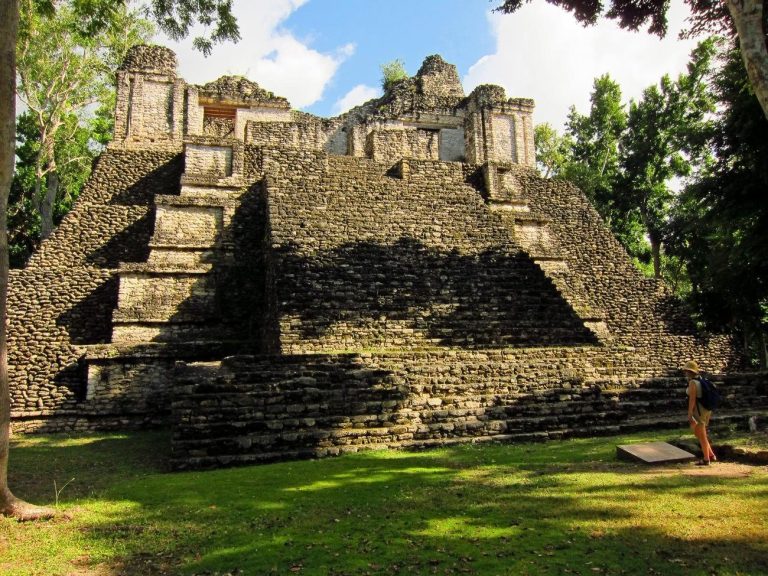
Chacchoben: A Maya Archaeological Settlement in Mexico
Site at a Glance
- Rating
- 4.7
- Popularity
- Medium
- Country
- Mexico
- Primary era
- Classical
- External website
- Open
- Eras represented
- Classical, Medieval
- Civilizations
- Maya
- Site type
- City
On this page12 sections
History
Chacchoben is a Maya archaeological site in Chetumal, Quintana Roo, Mexico. Settlement at the site began around 200 BC during the Late Preclassic period, while the surrounding area had been inhabited since about 1000 BC. The settlement later continued through the Classic and Late Postclassic periods, developing into a major center with civic, religious, administrative, and residential architecture.
Early Settlement and Monumental Growth
Chacchoben became especially monumental during the Early Classic period, when its principal public buildings were erected. At its height, the settlement included extensive temple complexes, an administrative center, and many residential structures. Construction declined around AD 700, after which the site was eventually virtually abandoned. It was later partly reoccupied during the Late Postclassic period.
The site is the largest Maya settlement so far reported in the Lakes Region and the largest settlement discovered in its immediate area. Its political status remains uncertain. Chacchoben may have been an independent kingdom, or it may have been controlled by a larger regional center. A possible connection with Dzibanche and the Kaan dynasty has been proposed, while the architecture and recovered materials also point toward links with a regional capital in the Petén, a region of northern Guatemala and adjoining areas associated with major Maya centers.
Later History and Archaeological Rediscovery
Following the Spanish conquest in the sixteenth century and the conversion of Maya communities to Christianity, Chacchoben fell into obscurity. In the 1940s, Servilliano Cohuo established a farm near the ruins. He cleared part of the area, built a house, and lived there with his family. The archaeologist Loring Hewen apparently visited the site, which was briefly described in a 1962 letter to the ethnohistorian Ralph Roys. At that time, the principal pyramid was apparently still being used for religious worship.
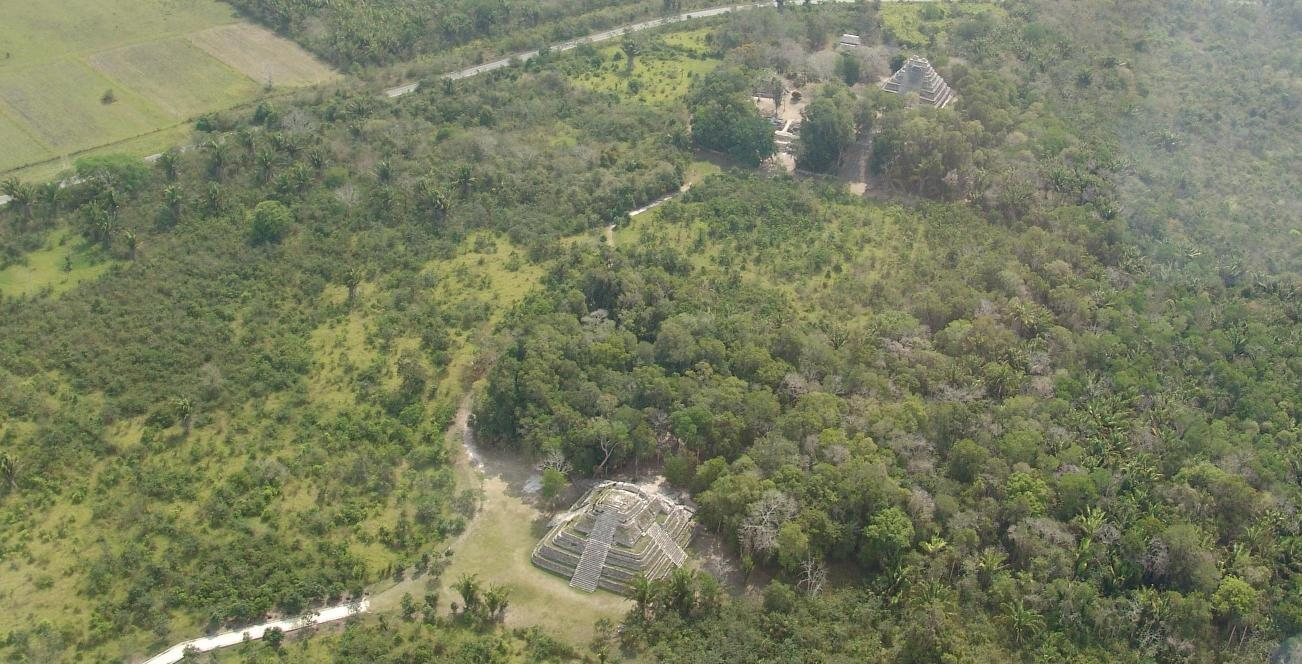
In 1972, the American archaeologist Peter Harrison identified Chacchoben from a helicopter after noticing unusual hills in otherwise flat terrain. He carried out the first professional investigations, prepared the first maps, and formally reported the ruins to the Mexican government. The hills were natural accumulations that had covered temples and other buildings over roughly two thousand years.
After Cohuo’s death in 1991, the National Institute of Anthropology and History took over the site. Archaeological investigation and restoration began in 1994 under the institute, with Juan Rique directing the research. A substantial part of Chacchoben was restored and opened to the public in 2002, while other areas remain overgrown and unrestored. Work continues on several mounds thought to contain additional buildings.
Remains
Layout and Architectural Character
The discovered portion of Chacchoben covers approximately 70 hectares and contains architectural groups of different ranks. The principal groups are the Gran Basamento, Las Vías, and Group II, which contains the settlement’s tallest building. The central Great Plaza was crossed by a broad artery, with stalls, stone houses associated with the upper social class, and a ballcourt along its sides.
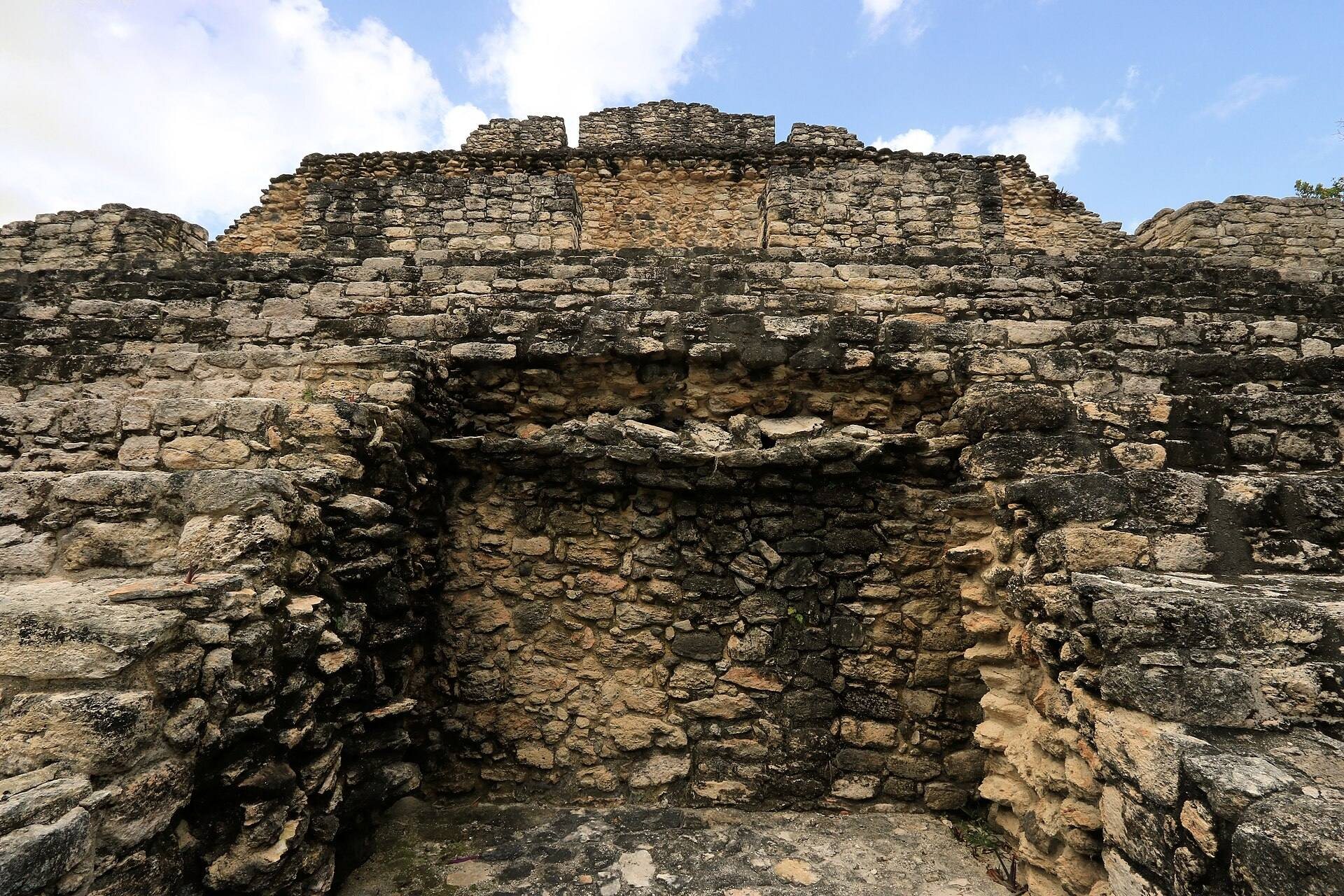
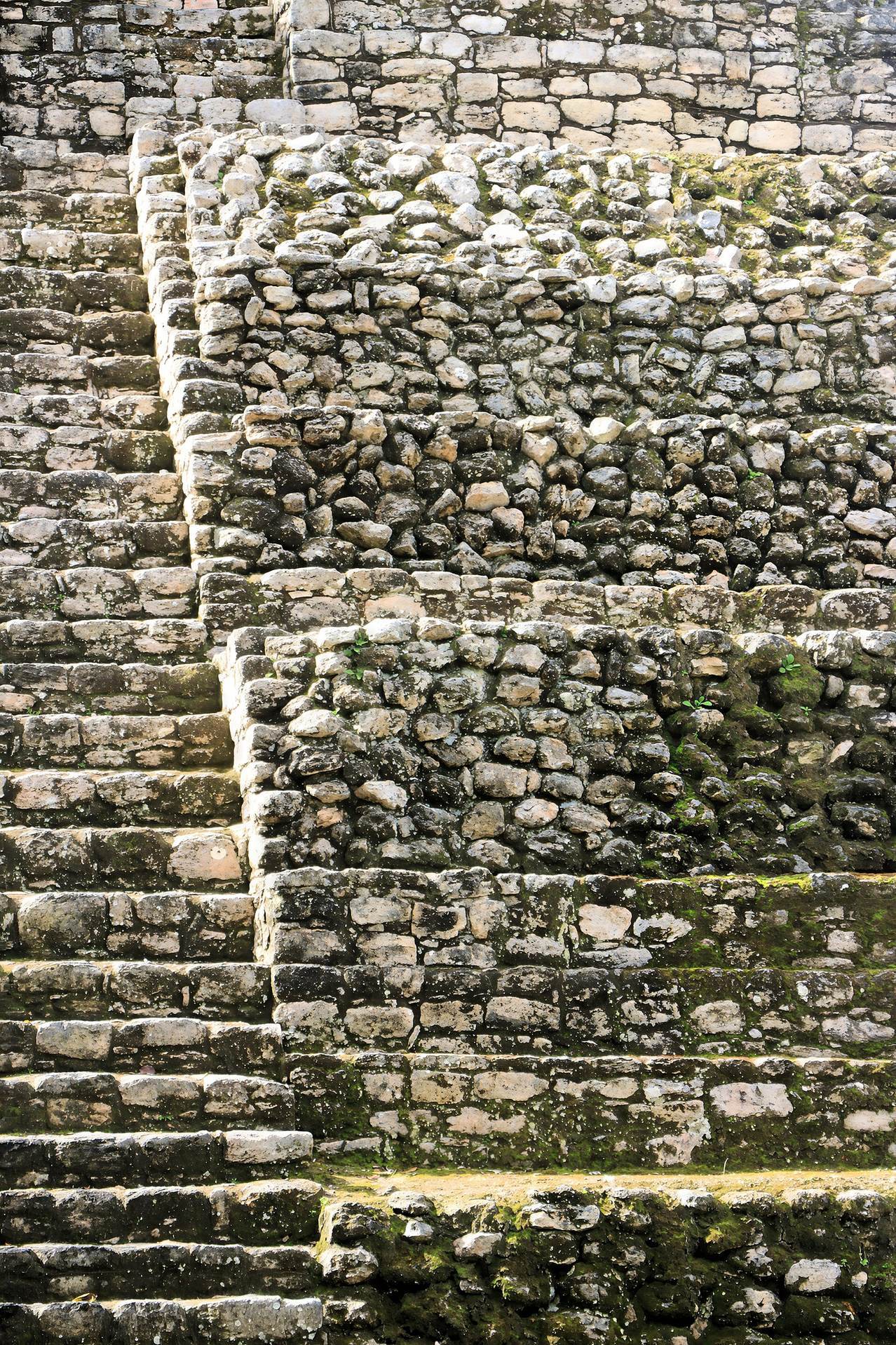
Chacchoben’s buildings follow an architectural tradition characteristic of cities in the Petén region. Early structures have recessed corners in their wall panels, while later buildings have rounded corners. Construction also uses a recurring arrangement of a base molding, an intermediate wall section, and a sloping apron-style surface called a talud. The buildings are notably restrained in ornamentation compared with the richly decorated architecture of Tulum and Chichén Itzá. Materials recovered at the site show stronger similarities to those from northern Belize than to materials from northern Yucatán.
Gran Basamento
Platform and Twin Pyramids
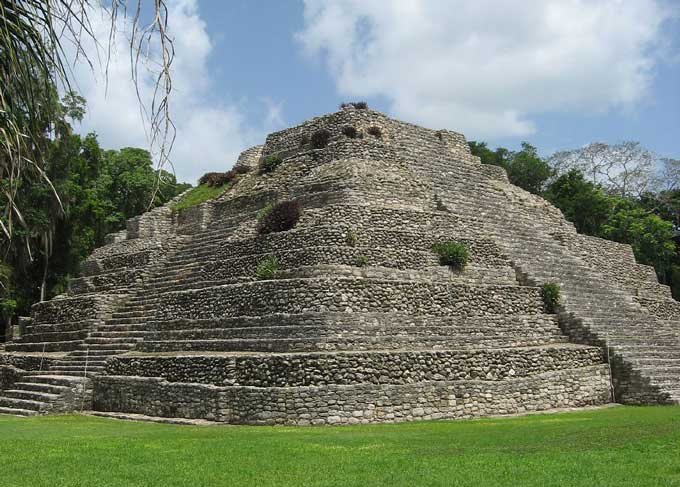
The Gran Basamento is a large raised platform complex that probably functioned as an acropolis, an elevated group containing important temples, elite buildings, or administrative spaces. It includes two twin pyramids with temples and altars, together with smaller buildings probably used as priests’ residences. Large quantities of incense burners were recovered from the platform, its two principal temples, and other parts of the settlement. These vessels were used to burn aromatic substances in rituals, and some Late Postclassic examples include human, divine, or other figurative forms.
Stairs, Pillars, and Stela
Broad stairs cut into the rock led from a nearby rise to the Gran Basamento. Two stone pillars stood at the top. One contained an opening through which the setting sun at the winter solstice illuminated a small area of the Great Plaza. Archaeologists suggest that a stela or statue may once have stood in that location.
A large stone slab identified as a stela stands at the base of the largest pyramid. A stela is a freestanding stone monument that often carries inscriptions or images recording rulers, rituals, or important events. Chacchoben has two known stelae with Maya hieroglyphic texts, but erosion has made both inscriptions illegible. Some structures in the Gran Basamento retain traces of their original red surface paint, and shaded areas have been installed to limit further deterioration caused by sunlight.
Great Plaza and Residential Areas
Great Plaza
The Great Plaza formed a central civic space crossed by a broad artery. Stalls, elite-associated stone houses, and a ballcourt stood along its sides, placing public, residential, and recreational features within the same principal architectural area.
Las Vías
Las Vías was a residential complex arranged around an elongated rectangular courtyard. Low stone platforms bordered the courtyard, and houses built on them were made partly from perishable materials. The complex represents one of the residential areas within Chacchoben’s wider civic and ceremonial settlement.
Excavated and Vegetated Areas
A circular path passes three excavated and restored pyramids, as well as numerous walls and staircases. Other mounds remain under investigation, and some structures are still covered by vegetation. The continuing work is focused in part on mounds believed to contain additional buildings, extending knowledge of the settlement beyond its restored architectural groups.