Lingshed Monastery: A Gelug Buddhist Monastery in Ladakh
Site at a Glance
- Rating
- 4.7
- Popularity
- Very Low
- Country
- India
- Primary era
- Medieval
- Eras represented
- Medieval, Modern
- Civilizations
- Tibetan
- Site type
- Religious
- Remains
- Monastery
On this page12 sections
History
Lingshed Monastery is a Tibetan Buddhist monastery in the Zanskar region of Ladakh, India. Founded in the 1440s by Changsems Sherabs Zangpo, a disciple of Je Tsongkhapa, it belongs to the Gelug school, a major Tibetan Buddhist tradition known for its organized monastic and scholarly life. The monastery is the principal religious center for Lingshed and the surrounding villages of Skyumpata, Yulchung, Nyeraks, Dibling, and Gongma.
Early Buddhist foundations
The Lingshed area has been inhabited for nearly a thousand years, from approximately the beginning of the second millennium CE. Its name is associated with the area’s former reputation as a hunting ground. Buddhist activity in the wider valley predates the present monastery. Earlier remains include a cave monastery and two walls with paintings dedicated to Rinchen Zangpo, an influential translator associated with the transmission of Buddhist scriptures and teachings into Tibet during the late tenth and early eleventh centuries. Local tradition also recalls former Kadampa and Drukpa Kagyu monasteries in the valley.
The monastery is also known as Lingshed Gompa or Kumbum. The name Kumbum means “a hundred thousand images.” According to local tradition, Sherabs Zangpo saw an auspicious shining light on a rock after crossing Hanuma-La Pass. He built a chorten, a Buddhist reliquary monument or stupa, around the rock, which later became the basis of the central shrine of Tashi ‘Od Bar.
Regional religious center
Lingshed lies in the Trans-Sengge-La region between Ladakh and Zanskar, along the traditional route from Lamayuru toward central Zanskar through Photoskar and onward to Padum. Its position helped connect the monastery with the villages and religious communities of the surrounding mountains.
In 1779, the Ladakh king Tsewang Namgyal donated Lingshed and its surrounding lands, together with the Zanskari monasteries and villages of Karsha, Mune, Phuktal, and Rangdum, to Lobsang Gelek Yeshe Dragpa, the third incarnation of the Ngari Rinpoche lineage. Ngari Rinpoche denotes both this reincarnate-lama lineage and its holders. Since then, Lingshed has belonged to the lineage’s religious estate. In 1783, Ngari Rinpoche founded Rangdum Monastery at the edge of the Karsha Valley as his ecclesiastical seat, and Lingshed became subordinate to it.
The Ladakh Chronicles state that the deposed ruler Lha-chen-Lha-dbaṅ-rnam-rgyal and his wife were sent to Lingshed after his younger brother seized the throne and had him blinded. The couple reportedly had three sons at Lingshed.
Modern monastic development
Kyabje Dagom Rinpoche founded the Jangchub Tensung Dorje Center at Lingshed in 1994. About 60 monks were resident at the monastery in the mid-1990s, and the center accommodated approximately 60 monks. The monastery was electrified in 2016 through solar microgrids, and it maintains a Labrang, a Tibetan Buddhist monastic establishment associated with a lama’s residence and administration, in Leh.
Remains
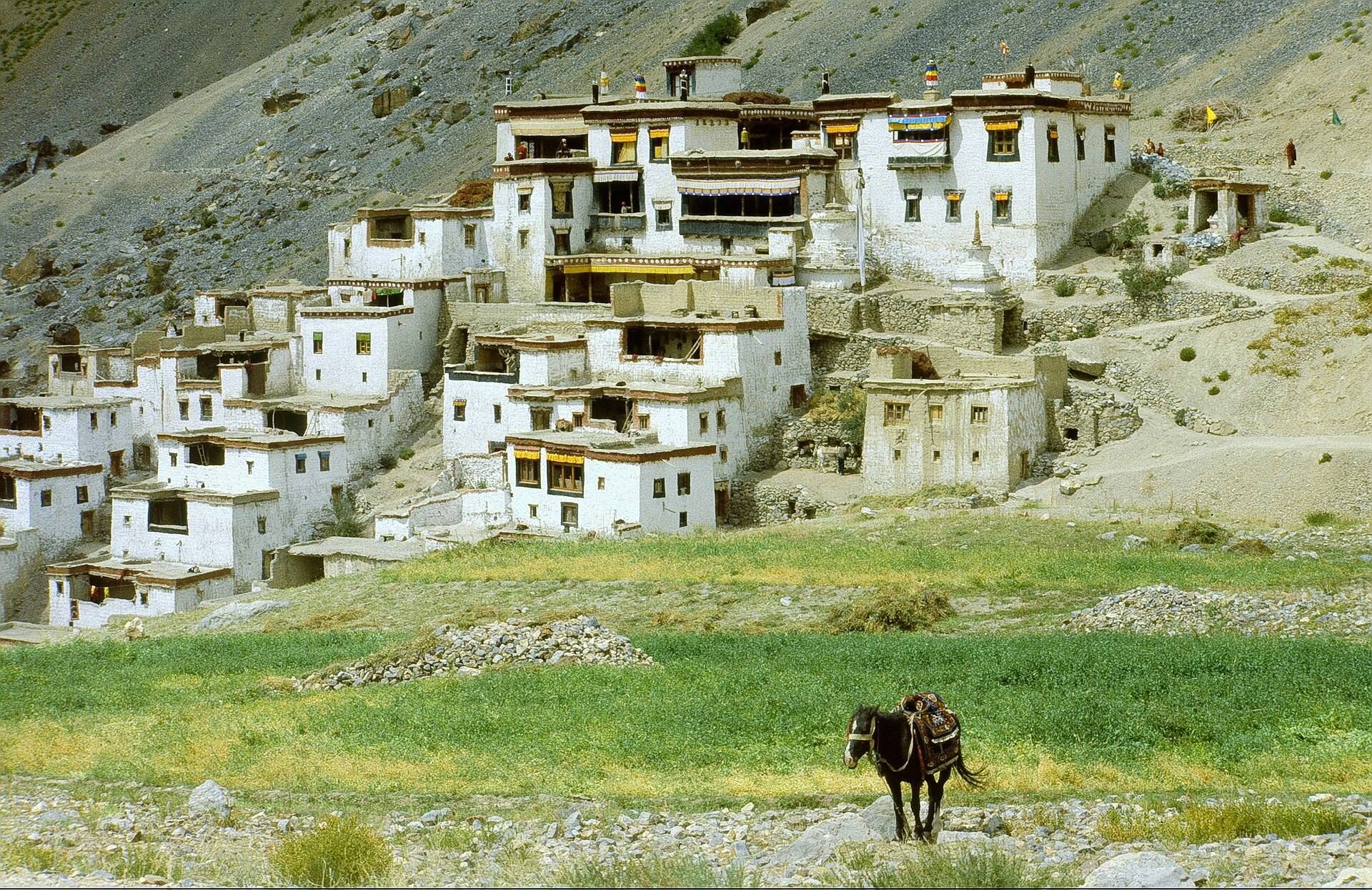
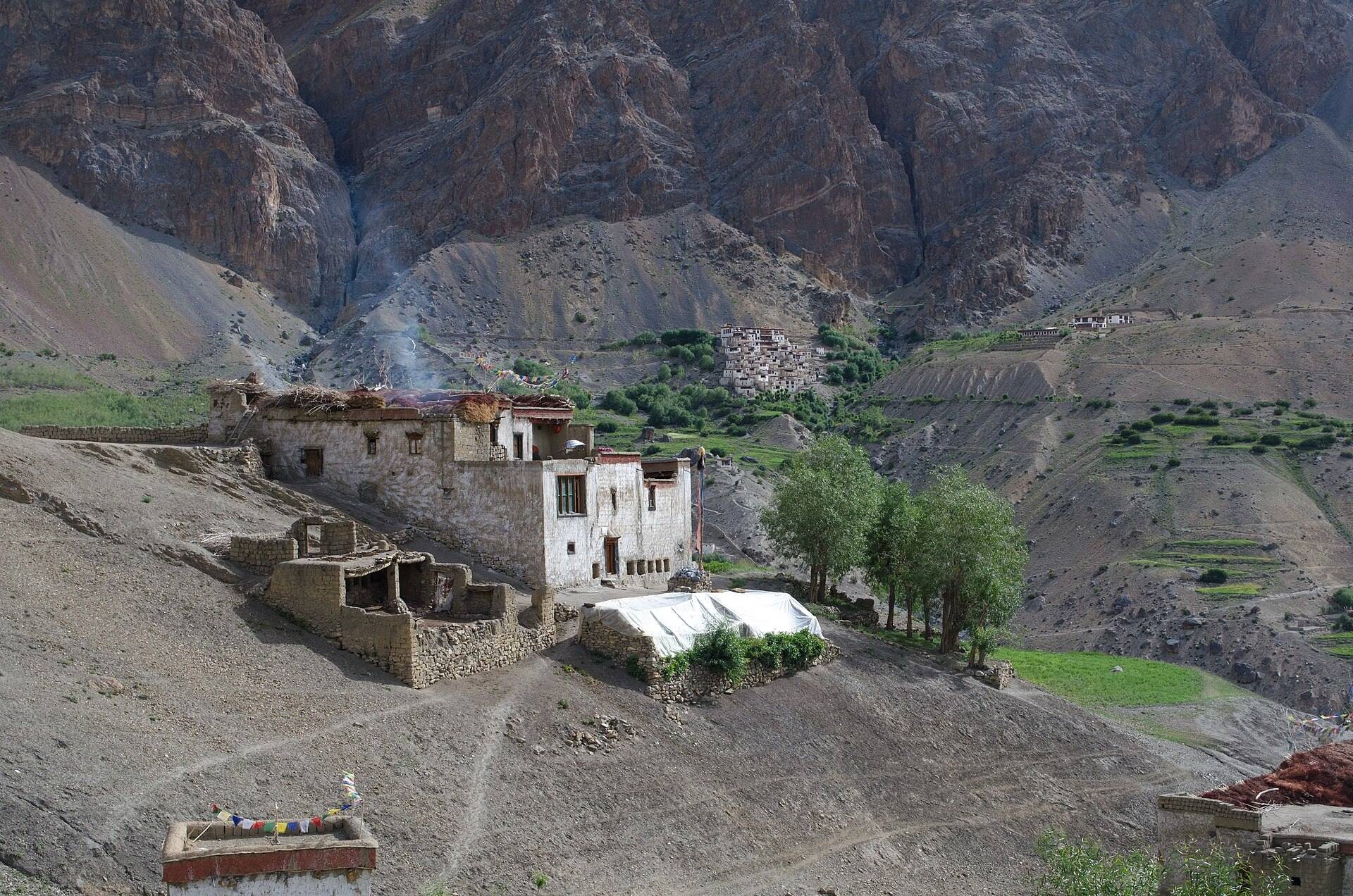
The monastery stands at approximately 3,950 metres above sea level on a slope above the northeastern side of Lingshed village in the Zanskar mountains. Its buildings form a three-storey complex of adobe and timber-frame construction, generally whitewashed in the traditional manner of the area. The complex contains six principal shrines, kitchens, storerooms, and a zimchung, an upper residential apartment for Ngari Rinpoche or other visiting high lamas. The zimchung occupies the highest part of the complex.
Main temples
Dukhang
The Dukhang, whose name means “assembly hall,” is the largest temple in the complex. It serves as the principal setting for daily prayers and rituals.
Tashi ‘Od Bar
The Tashi ‘Od Bar shrine is dedicated to Chenresig, also known as Avalokiteshvara, a major Mahayana Buddhist bodhisattva associated with compassion. Its central shrine is connected with the rock around which Sherabs Zangpo is said to have built a chorten.
Chamba Khang
The Chamba Khang was built in 1993 and is dedicated to Chamba, or Maitreya, the Buddha expected to appear in the future. It is situated above the Dukhang.
Kanjur Lakhang
The Kanjur Lakhang is also positioned above the Dukhang. It houses sacred scriptures, including more than 200 texts of the Tanjur, the Tibetan Buddhist collection of commentaries and treatises related to the Buddha’s teachings.
Residential and village buildings
Monks’ residences extend below the central complex in long lines. Their economic management is separate from that of the temples, prayer rooms, kitchens, and storerooms that the monks specifically regard as the gompa. The monastery’s religious network also includes a smaller gonlak temple in each of the five surrounding villages it serves: Skyumpata, Yulchung, Nyeraks, Dibling, and Gongma.
Earlier remains in the Lingshed area
The wider Lingshed area preserves the remains of an earlier cave monastery and two painted walls dedicated to Rinchen Zangpo. These features represent earlier Buddhist activity in the valley alongside the later monastery complex.