Cliff Palace: An Ancestral Puebloan Cliff Dwelling in Mesa Verde
Site at a Glance
- Rating
- 4.8
- Popularity
- Medium
- Country
- United States
- Primary era
- Medieval
- External website
- Open
- Eras represented
- Medieval
- Civilizations
- Unclassified
- Site type
- Domestic
On this page10 sections
History
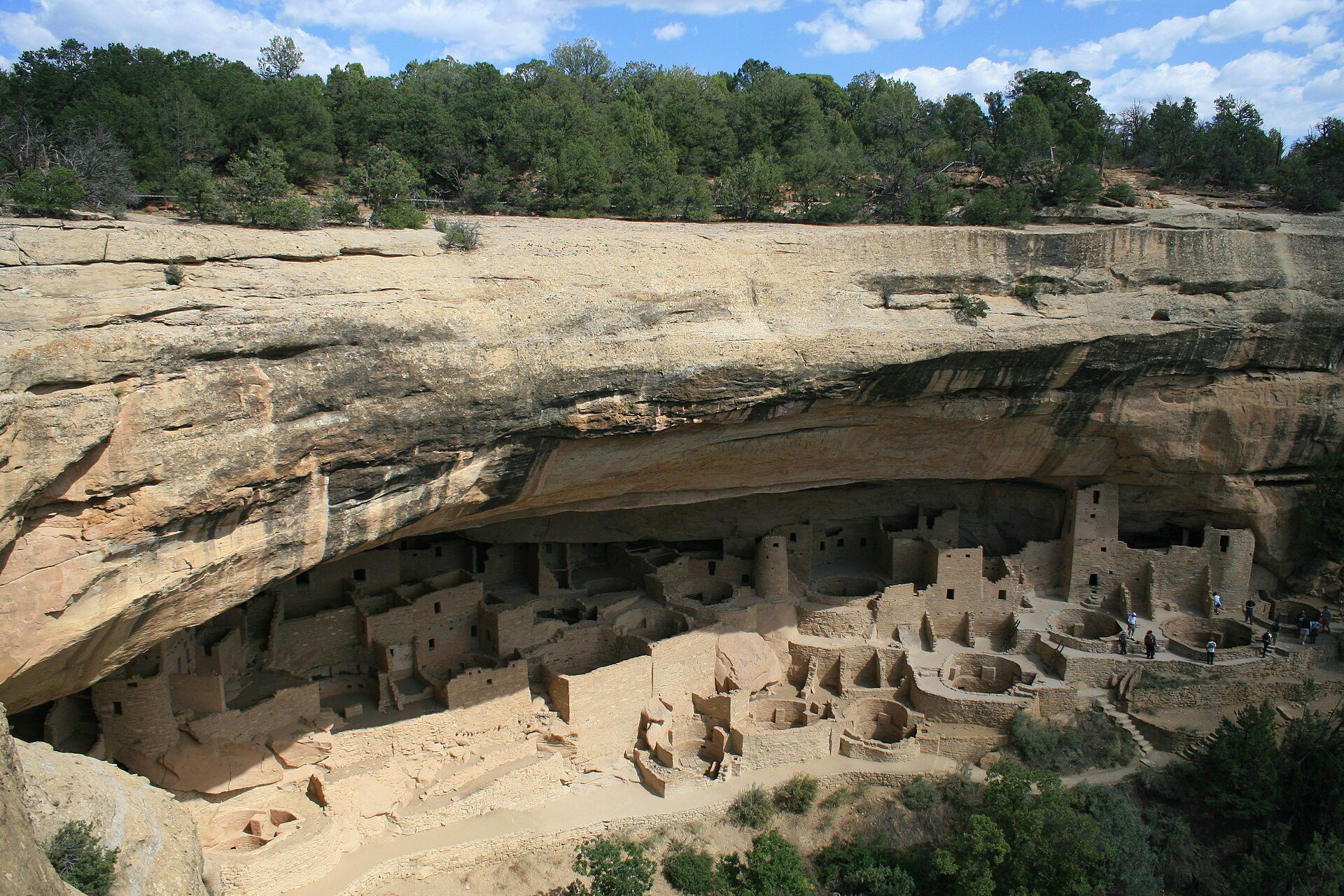
Cliff Palace is a large Ancestral Puebloan cliff dwelling in Mesa Verde National Park, Colorado, United States. Constructed beneath an overhanging rock shelter between about AD 1190 and 1260, it was occupied from approximately AD 1200 to 1300 and is regarded as the largest cliff dwelling in North America. The settlement belonged to the Indigenous communities of the Mesa Verde region and may have served as a social, administrative, and ceremonial center.
Construction and occupation
Dendrochronology, the dating of wooden timbers through their annual growth rings, places the main building and rebuilding activity between AD 1190 and 1260. Much of the complex appears to have been constructed within roughly two decades. Its position beneath a massive cliff overhang provided a defensible setting during a period of increasing competition and changing climate.
The inhabitants cultivated cereal crops on the mesa above the dwelling. Reaching those fields required many residents to climb from the cliff settlement and make the difficult return journey after working above the canyon. Archaeologists estimate a population of about 100 to 120 people, based on the interpretation that each living room accommodated approximately three or four residents.
Cliff Palace may have governed or coordinated activity beyond its own rooms. Its unusually high proportion of ceremonial rooms compared with surrounding Mesa Verde communities has led archaeologists to propose that it served as the center of a larger political community. It may also have accommodated more clans than the smaller settlements nearby.
Abandonment and rediscovery
The settlement was abandoned by about AD 1300, although the reasons remain debated. Prolonged droughts may have disrupted food production, while climatic change, competition, and possible raids from northern groups have also been proposed. The inhabitants may have departed rapidly but in an organized way, taking valuable possessions with them.
Richard Wetherill and his brother-in-law, Charlie Mason, rediscovered Cliff Palace in December 1888 while searching for stray cattle. During the same period they also rediscovered Spruce Tree House and Square Tower House. At Cliff Palace, they encountered artifacts including a stone axe with its handle still attached and observed parts of several human skeletons. Wetherill took the first collection of artifacts to Durango, Colorado, on March 2, 1889.
In the decade that followed, visitors damaged fragile walls and removed artifacts. Richard Wetherill and others then supported the creation of a protected park for Cliff Palace and the region’s other archaeological sites. Mesa Verde National Park was established in 1906.
Archaeology and protection
Formal excavation began in 1906, when Jesse Walter Fewkes of the Smithsonian Institution investigated the alcove and repaired walls that were crumbling. Earlier looting had already removed much material, but excavation still produced evidence that helped archaeologists interpret the community and its society.
Cliff Palace now forms part of Mesa Verde National Park, in Montezuma County in southwestern Colorado and within the former homeland region of the Ancestral Puebloans. Mesa Verde became a UNESCO World Heritage property in 1978 under cultural criterion iii. A World Heritage property is a cultural or natural place recognized internationally for outstanding universal value under the World Heritage Convention.
Remains
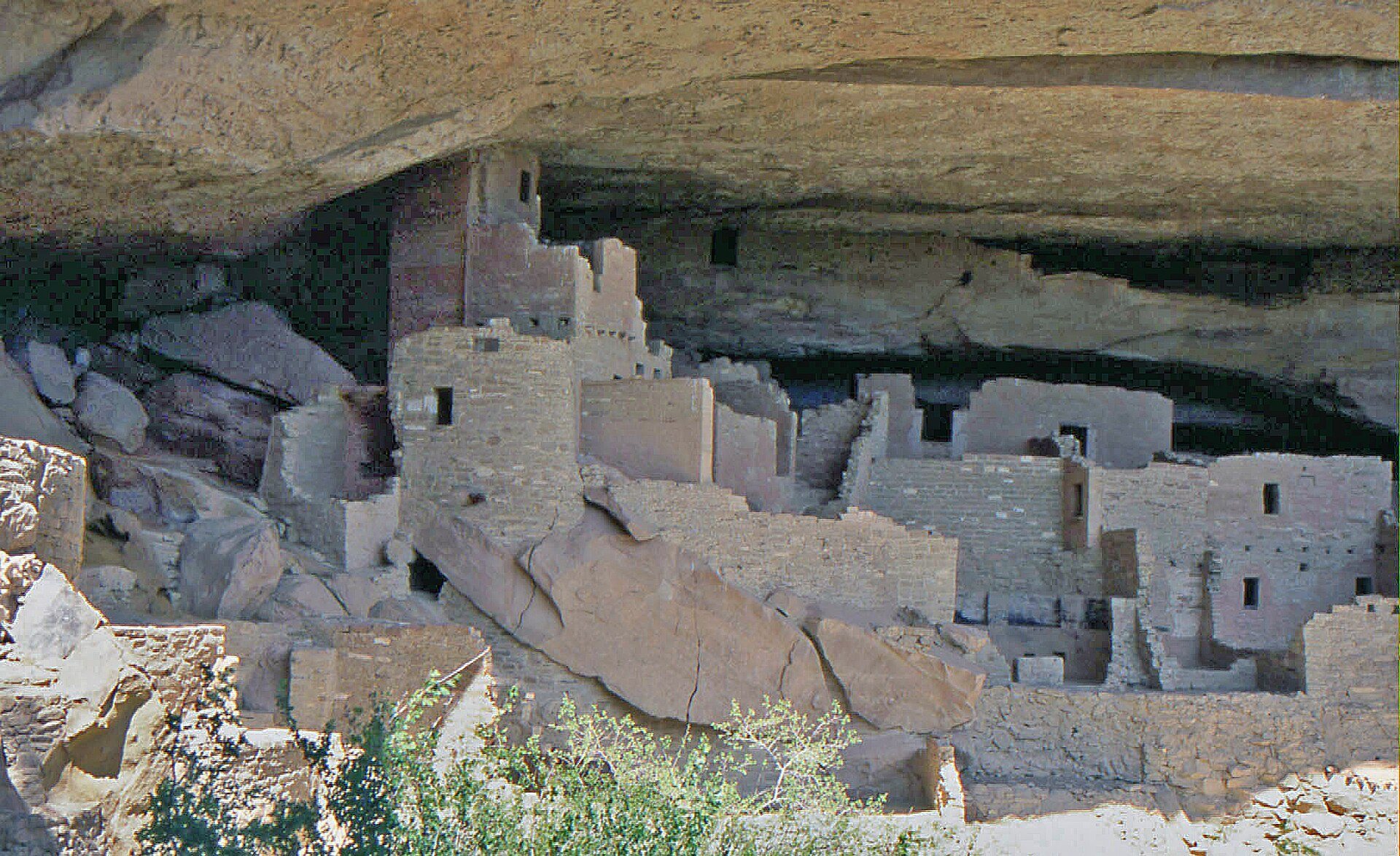
Cliff Palace occupies a deep canyon beneath a broad, massive rock shelter. Its buildings were made chiefly from sandstone blocks and wooden beams. Builders shaped the stone with harder rocks and set it in mortar composed of soil, water, and ash, adding smaller stones to fill gaps and strengthen the walls. Stone gathered from the river below was also incorporated into the complex. Thin plaster once covered many interior and exterior surfaces, and surviving areas retain yellow, white, and red color as well as decorative pattern drawings.
Rooms and ceremonial spaces
Kivas and ritual architecture
Different archaeological classifications count the complex in different ways. A broad count identifies about 150 rooms, while a more detailed division recognizes 21 kivas, two additional rooms with kiva-like structures, 25 living rooms, nine storage rooms, and several open areas. The kivas and kiva-like rooms together make 23 ceremonial structures.
A kiva is a usually circular, partly underground room used for ceremonial and communal purposes in Puebloan communities. Most of Cliff Palace’s kivas have six upright stone pilasters that supported the roof, a central firepit, a ventilation opening with a chimney, and a small floor opening called a sipapu. A sipapu was associated with the ritual emergence of living beings into the world.
The two southernmost kivas are joined by an underground tunnel. Its purpose is uncertain, although archaeologists have proposed that it allowed ritual appearances and disappearances. The complex has approximately one kiva for every nine rooms, a proportion that helped inspire interpretations of Cliff Palace as a regional ceremonial and administrative center.
Living rooms and work areas
The 25 interpreted living rooms contain domestic features such as hearths. Most measure about 6 by 8 feet and average approximately 6 feet in height. Their low ceilings produced poor ventilation, and soot and smoke remain visible on the roofs of some rooms. The complex also includes open spaces, with larger areas interpreted as courtyards for gathering and social activity and smaller areas considered work spaces for tasks such as sharpening tools and grinding meal.
Storage rooms and towers
Nine elevated rooms in the upper part of the alcove are interpreted as storage rooms or granaries. Their raised position may have helped protect food from snow, sunlight, and other severe weather. Wooden ladders provided access to these rooms.
Large square and cylindrical towers stand within the settlement. Some were free-standing, while others were integrated with roofs, walls, and surrounding rooms. The tallest rises from the cave floor almost to the ceiling, reaches about 27 feet, or 7.9 meters, and contains four internal levels.
A large square tower in the northern part of Cliff Palace had fallen into ruins by the late nineteenth century. The National Park Service later restored it, using reconstruction materials in slightly different colors so that rebuilt portions could be distinguished from surviving original fabric. At nearly 8 meters high, the tower is described as the tallest structure in Mesa Verde.
Objects and food remains
Excavation recovered pottery, yucca sandals, textiles made from feathers, yucca, and cotton, wooden farming tools, a stone axe, arrow points, hatchets, drills, grinding stones, and stone balls. Food remains included corn, squash, pumpkin, beans, and gourds. These objects and plant remains provide material evidence for household activity, farming, craft production, and food preparation within the settlement.