Kumbheshwar Temple: A Five-Storey Shiva Temple in Patan
Site at a Glance
- Rating
- 4.6
- Popularity
- Low
- Country
- Nepal
- Primary era
- Medieval
- Eras represented
- Classical, Medieval, Early Modern
- Civilizations
- Licchavi, Malla
- Site type
- Religious
- Remains
- Temple
On this page9 sections
History
Kumbheshwar Temple is a Hindu temple dedicated to Shiva in Patan, Lalitpur, Nepal, commonly dated to around 1392 in the fourteenth century and attributed to the medieval Malla king Jayasthiti Malla. Regarded as the oldest temple in Patan, it stands about 200 metres north of Patan Durbar Square.
Early Origins and Foundation
The history of the site may reach back to the Licchavi period, generally dated from about AD 400 to 750, or even earlier. Licchavi-era statues are located throughout the complex, although they may have been moved there from other places. A pillar from the same period stands beside the north gate of the main sanctuary.
An inscription from the temple’s own period links its foundation to Jaya Bhima, a wealthy patron. He commissioned the building as a meritorious act intended to cure his wife’s fever. She died despite the vow, but Jaya Bhima completed the work, creating the foundation of the present monument.
Malla Period Development
The temple may first have had only two roof tiers. Three further tiers are associated in different traditions with Srinivas Malla, his son, or the original construction around 1392. If all five tiers were already in place at the foundation, the work linked with the late seventeenth century was probably a restoration rather than an addition.
During the eighteenth and early nineteenth centuries, Kumbheshwar received sustained royal attention because of its central position in Patan. Several monarchs gave land and statues to the temple, and its bell was recast in 1802. The complex also became associated with major Hindu observances, including Janai Purnima, Shivaratri, Teej, and Bala Chaturdashi.
Earthquakes and Reconstruction
An earthquake in 1808 destroyed or severely damaged the original temple, although the full extent of the loss is uncertain. A wealthy local resident ordered its reconstruction soon afterward. The central tower that stands today belongs to the period of that earthquake, while smaller elements survived, including the shelter above the entrance gate dated to 1780.
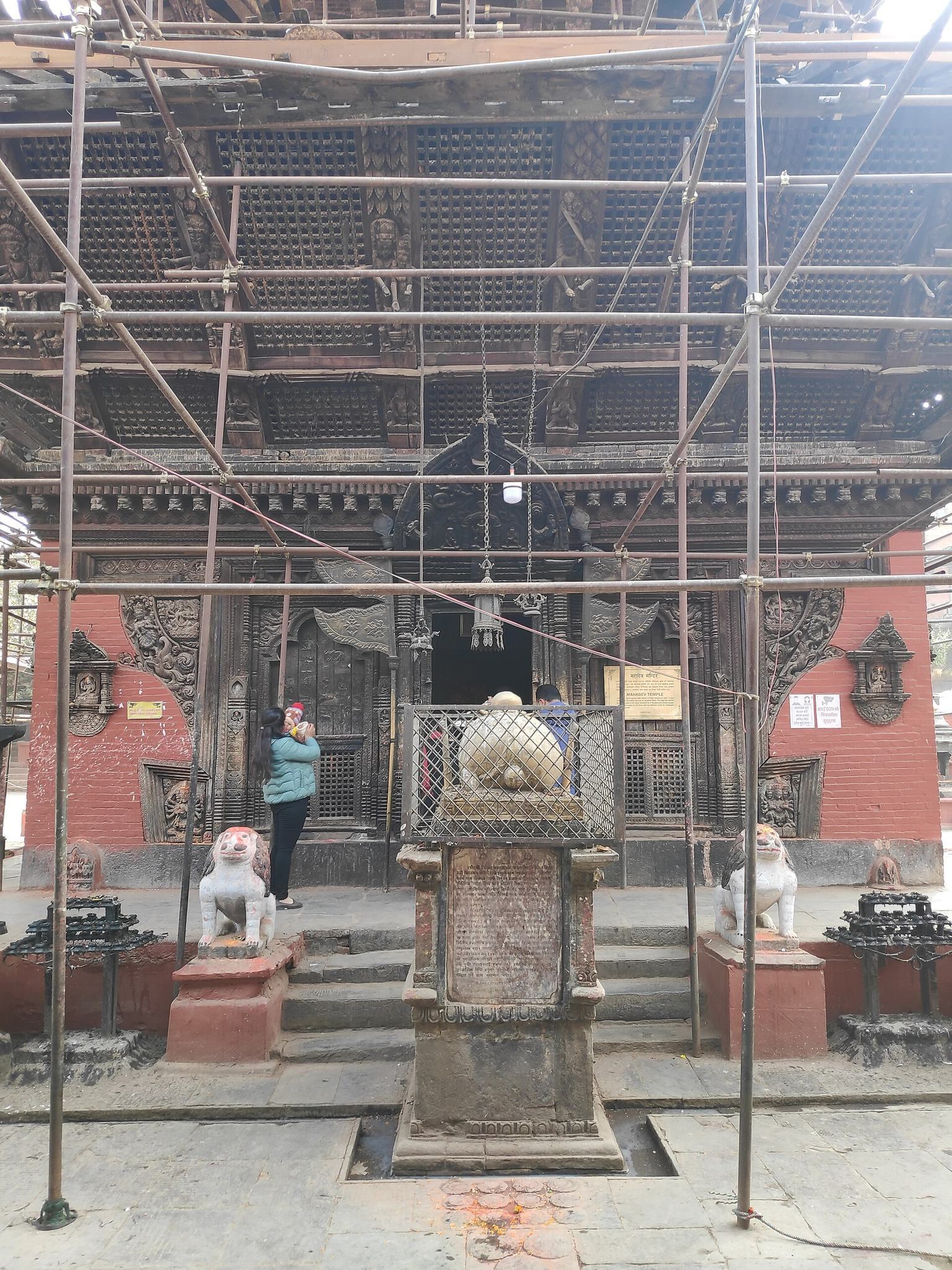
The April 2015 earthquake caused moderate damage, particularly across the three upper floors. Restoration was completed in 2021, returning the principal building to its earlier appearance. The temple’s water traditions remain closely tied to the complex. During Janai Purnima, bathing in its ponds is traditionally regarded as equivalent to bathing at Gosainkunda, a sacred water site about 43 kilometres north of Kathmandu, because local belief holds that the ponds receive water from there.
Names and Local Traditions
Stories about Kumbheshwar are also connected with the name Lalitpur. One tradition tells of a farmer from Kathmandu who struck the ground with a wooden staff and found a spring. A king then called him “Lalit,” meaning “beautiful,” and the settlement became known as Lalitpur. Another story says that a pilgrim recovered a lost water vessel at the temple, linking the word “kumbha,” meaning water vessel, with Kumbheshwar. These explanations remain uncertain local traditions.
Remains
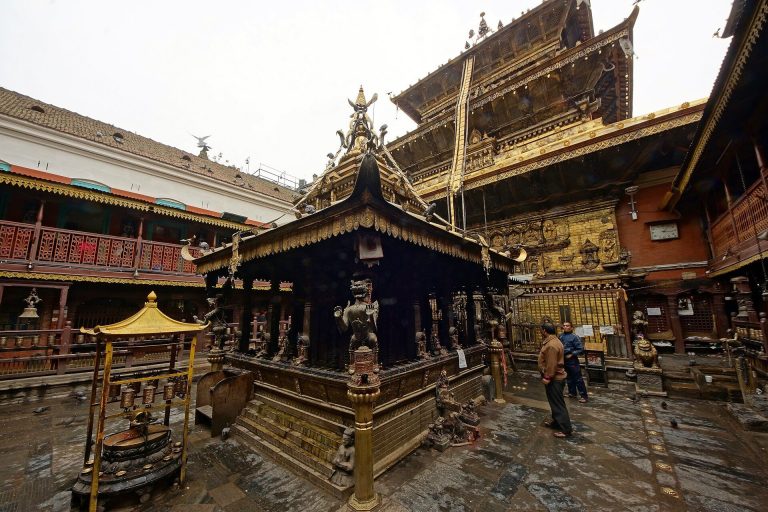
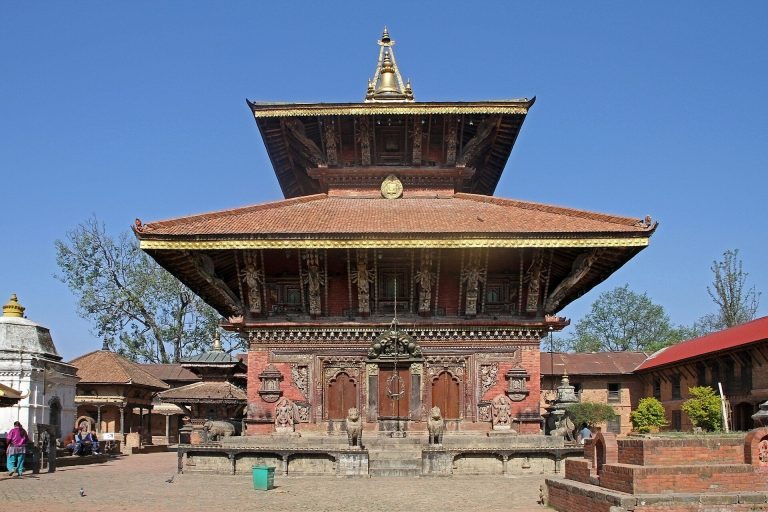
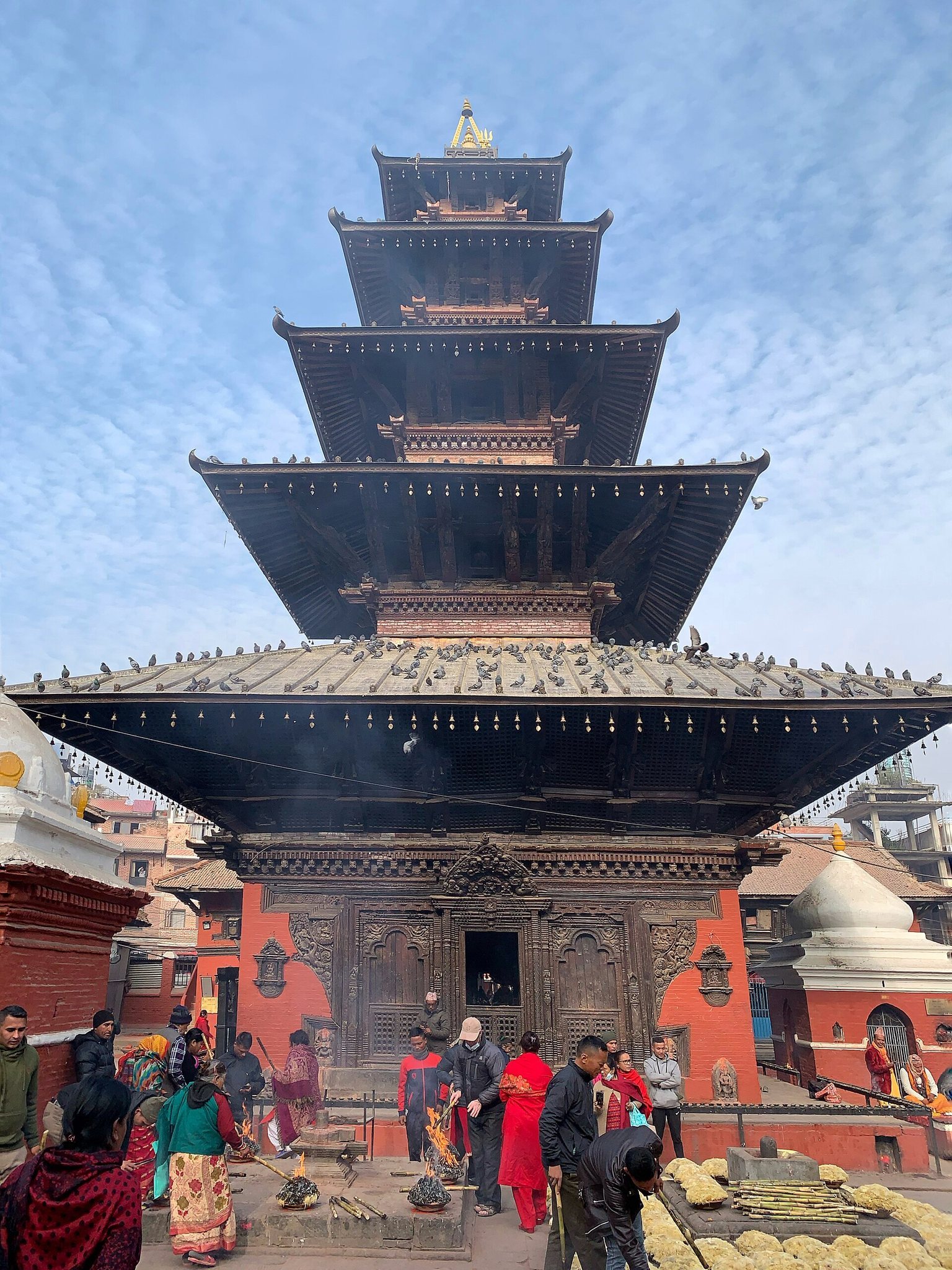
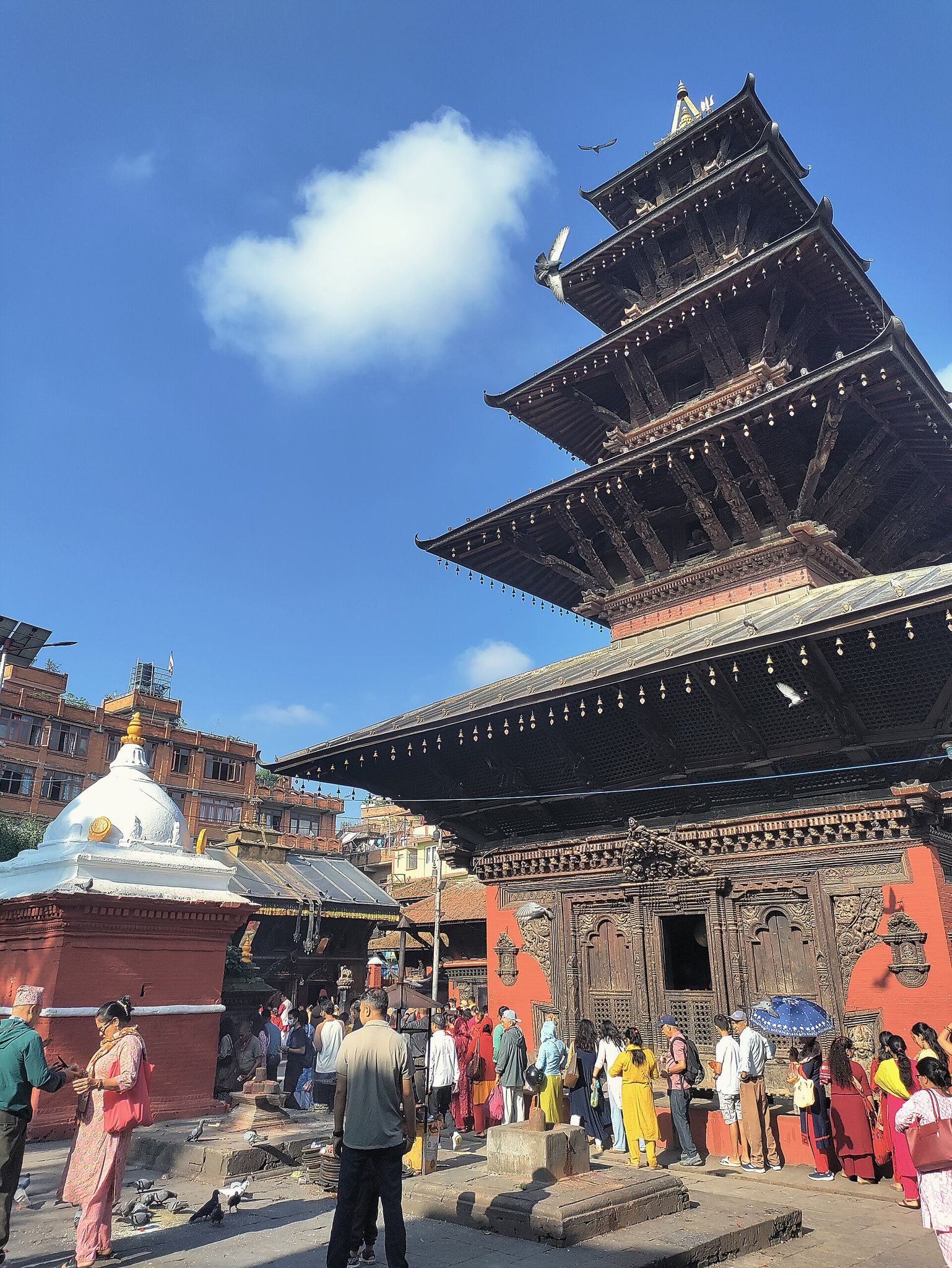
Kumbheshwar is a free-standing, five-storey pagoda, a multi-tiered building with successive projecting roof levels. Its tall roofs rise above a wooden structure noted for fine carving and graceful proportions. It is one of only two five-storey temples in the Kathmandu Valley, the other being Nyatapola Temple in Bhaktapur. The complex is built over a natural spring, and its principal structures, shrines, ponds, entrance features, and surviving Licchavi-era elements form a group centered on sacred water and worship.
Main Temple
A large kneeling statue of Nandi, the bull regarded as Shiva’s vehicle and attendant, faces the main temple at the entrance. The image identifies the building’s dedication to Shiva. The central tower dates from the reconstruction period following the 1808 earthquake. Its three upper floors, damaged in 2015, were restored by 2021. The entrance area retains a shelter above the gate dating from 1780.
Water Installations
Two hiti ponds lie at the base of the main temple. A hiti is a traditional Nepalese water installation, often formed as a stone-lined or stepped source or basin. The complex includes Sattal, Misha Hiti, and Konti Hiti among its named water features. The ponds serve religious bathing and social gathering, continuing the site’s long association with the natural spring beneath it.
Associated Shrines and Earlier Elements
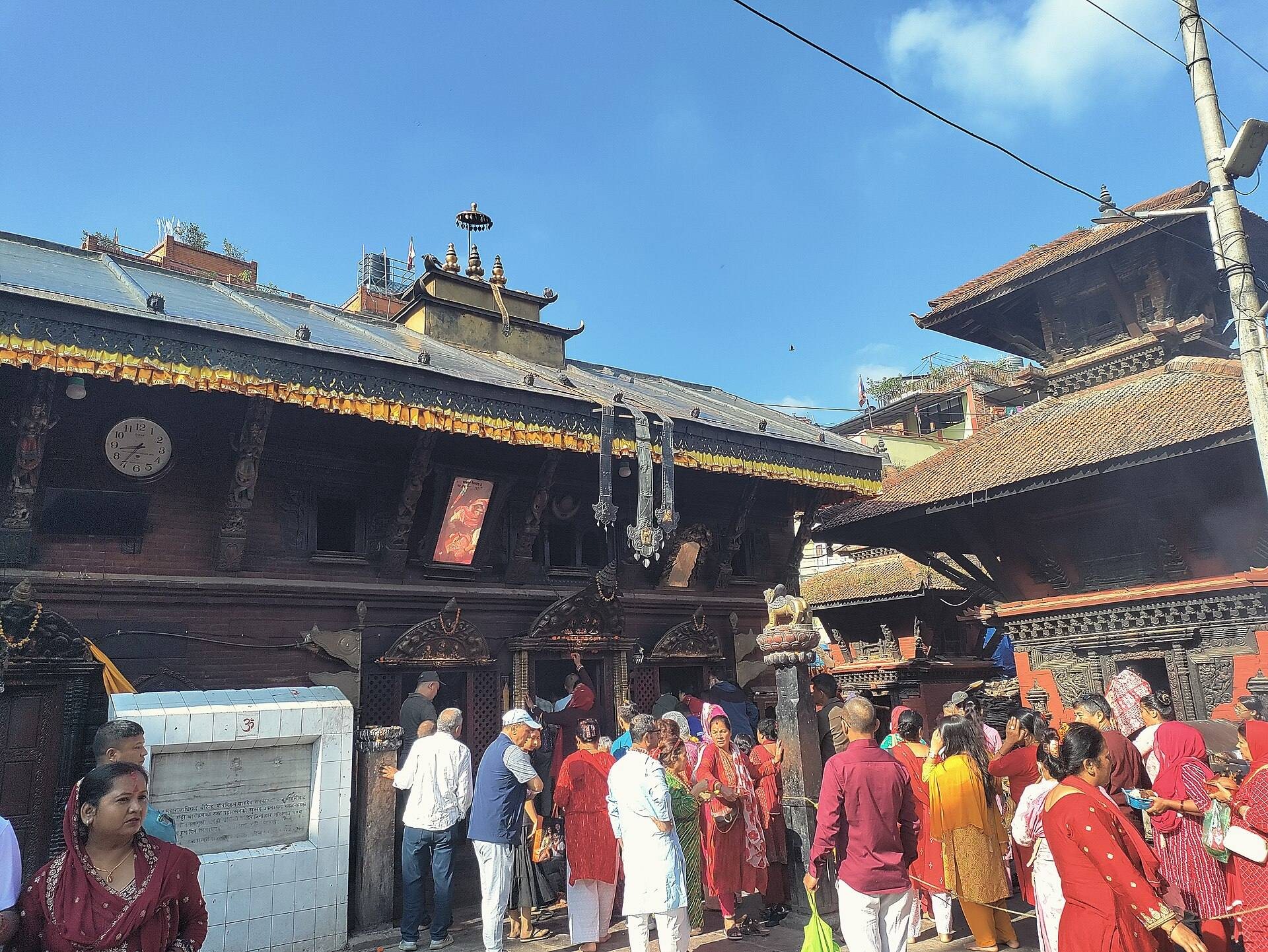
Additional sacred buildings include shrines dedicated to Bagalamukhi, a Hindu goddess associated with restraining hostile forces, and Ulmanta Bhairava, a fierce manifestation of Shiva. Licchavi-period statues are distributed through the complex, although their original positions are uncertain because some may have been transferred there later. A Licchavi-period pillar remains at the north gate of the main sanctuary.