Kondoa Rock Art Sites: Ancient Painted Rockshelters in Tanzania
Site at a Glance
- Rating
- 4.1
- Popularity
- Very Low
- Country
- Tanzania
- Primary era
- Stone Age
- Eras represented
- Stone Age
- Civilizations
- Unclassified
- Site type
- Civic
- Remains
- Rock Art
On this page11 sections
History
Kondoa Rock Art Sites are a series of ancient painted rockshelters near Kolo in central Tanzania. The shelters lie approximately 20 kilometres north of Kondoa town, along the western rim of the Maasai Steppe. Their art represents successive or overlapping cultural traditions, while associated archaeological deposits preserve evidence of human activity from the late Pleistocene, the geological epoch before the present Holocene.
Protection and World Heritage status
The Tanzania Antiquities Department declared the sites national monuments in 1937, and they were registered as National Historic Sites of Tanzania. In 2006, the Kondoa region was inscribed as a UNESCO World Heritage Site because the paintings provide exceptional evidence of cultural traditions and remain directly associated with living beliefs, rituals, and artistic practices. The World Heritage property includes many individual locations, with estimates ranging from 150 to 450 decorated rockshelters. Concrete posts mark its boundaries.
Living traditions and changing interpretations
The shelters remain part of local religious and cultural life. Sandawe communities have used some of them for simbó healing ceremonies, while Maasai communities have used others for ritual feasting. Local agro-pastoral Irangi communities also continue to use certain shelters for ritual healing. These practices point to continuing cultural importance among different ethnic and linguistic communities that have occupied the region.
Some ritual actions, including throwing melted animal fat, threaten the condition of the paintings. Tensions have also arisen because government management has not fully recognized local belief systems. Excavation and conservation therefore require care at places that remain sacred. The Tanzanian government and the Antiquities Division of the Ministry of Natural Resources and Tourism continue to manage and investigate the property.
Around 1970, Sandawe people were still producing rock paintings. Ten Raa grouped the stated purposes of painting into magical acts, such as depicting an animal intended for killing; casual images; and sacrificial practices, including representations connected with rain-making and healing ceremonies on particular clan-spirit hills. These observations have influenced interpretations of earlier images, although Bwasiri and Smith cautioned that Sandawe rain-making ceremonies may derive from Bantu traditions formed through prolonged cultural contact. Later ethnographic evidence must therefore be used carefully when reconstructing the history of the art.
Archaeological investigation
Mary and Louis Leakey began excavating Kisese II in 1935, and Raymond Inskeep enlarged the excavation trench in 1956. Inskeep uncovered ostrich-eggshell beads and nearly 6,000 stone artifacts in their archaeological layers. The beads later made radiocarbon dating possible, while the excavators studied the sequence of deposits to establish the site’s chronology.
Kisese II is important for examining social changes between the Middle Stone Age and the Later Stone Age, African archaeological periods associated broadly with earlier and later phases of stone-tool production. Few well-dated sites cover this transition, which may have lasted at least 5,000 to 10,000 years. The evidence at Kondoa consequently links the painted shelters with a long record of changing lifeways rather than with a single period or community.
Remains
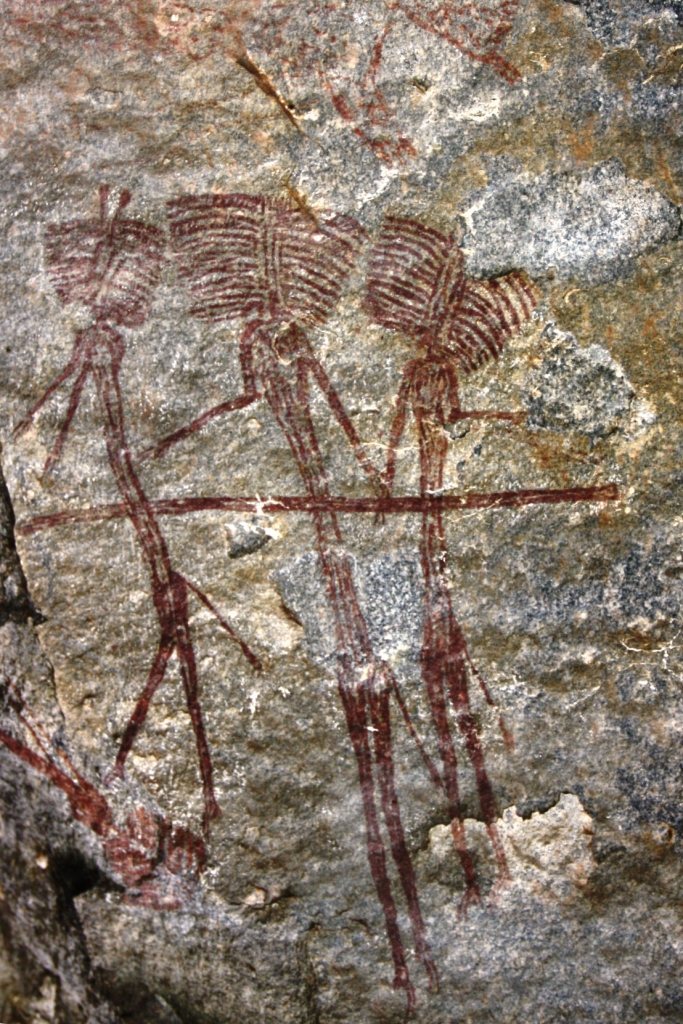
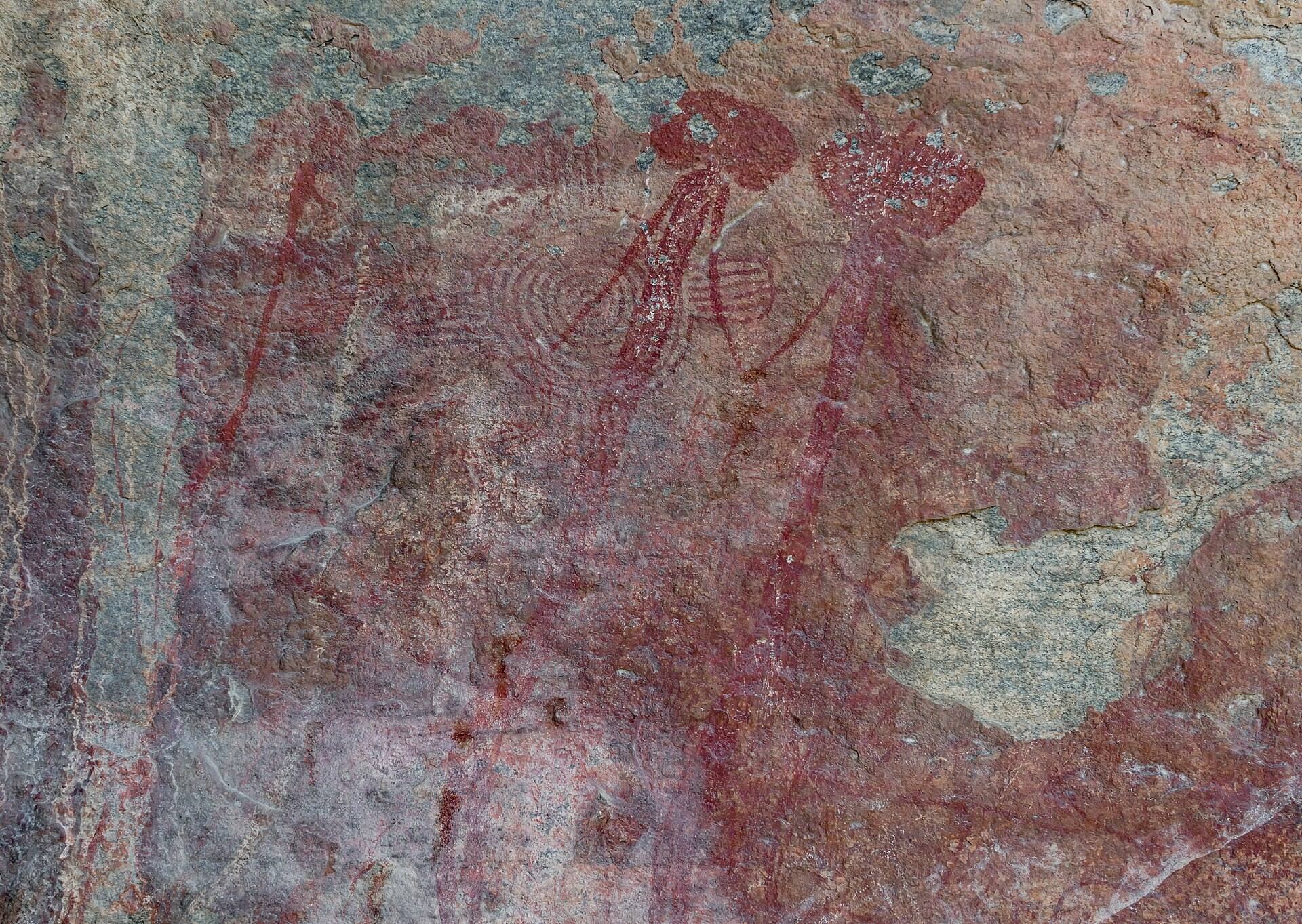
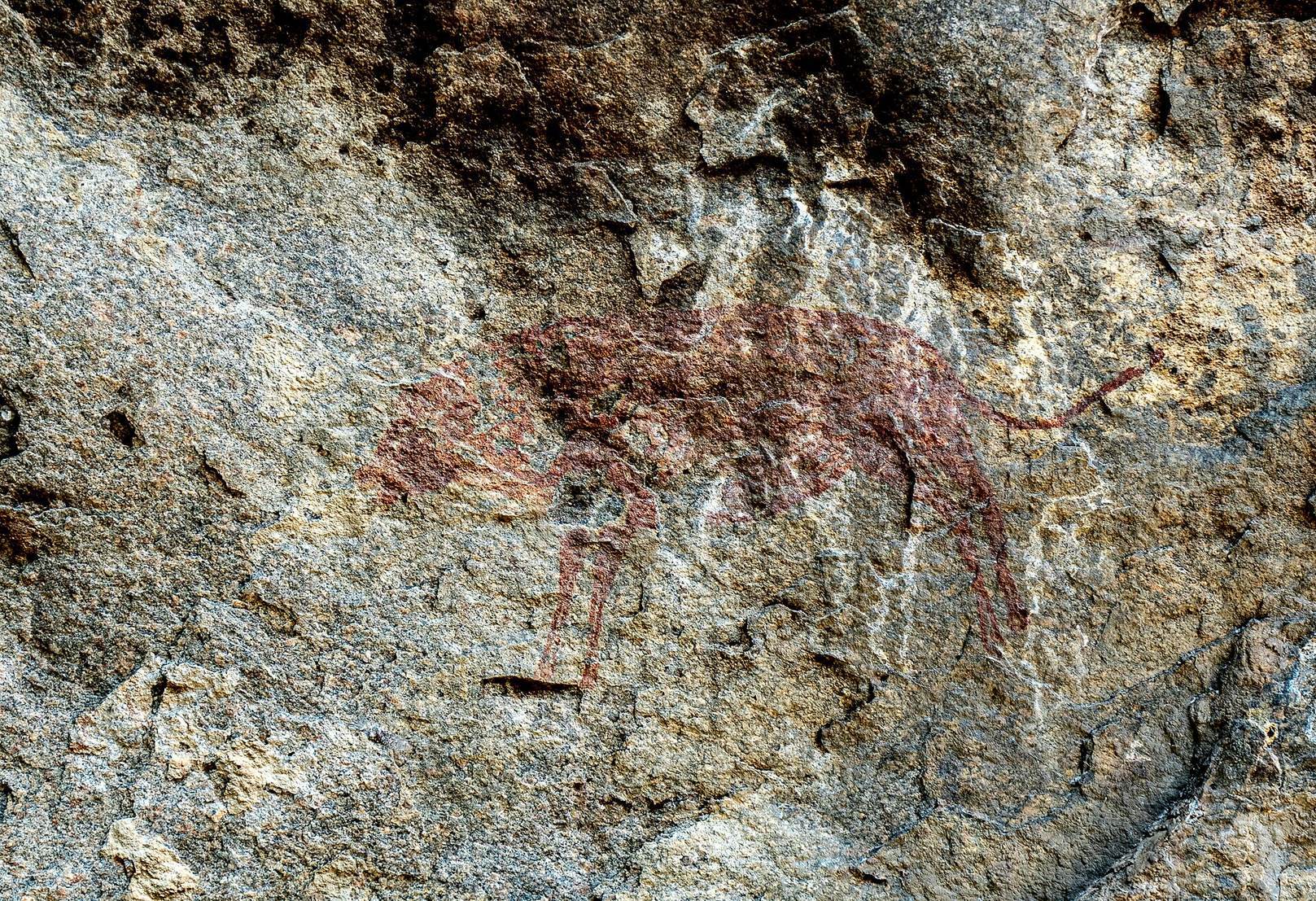
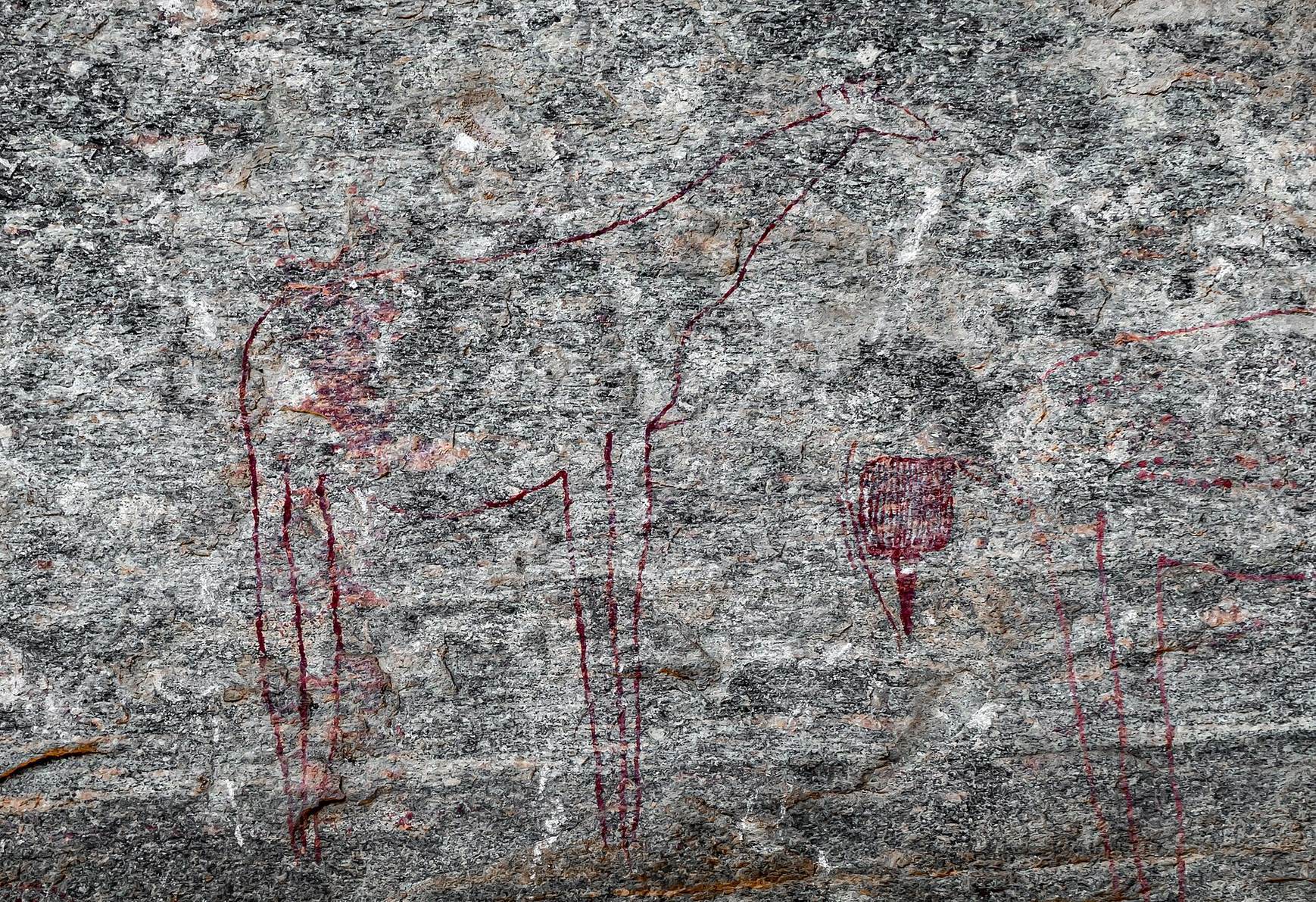
The property consists of natural rockshelters formed among large piles of granite boulders. Many face away from prevailing winds, and geological rifting created flat rock surfaces suitable for painting. The overhangs and shallow cavities protected those surfaces from weathering. Paintings show elongated human figures, animals, and hunting scenes, with later images sometimes placed over earlier ones.
Painted shelters
Kisese II Rockshelter
Kisese II preserves paintings associated with the Naturalistic tradition, generally executed in red, together with occupation deposits on its floors dating to more than 40,000 years ago. Its archaeological material includes Middle Stone Age and Later Stone Age assemblages, ostrich-eggshell beads, pottery, and other remains. Seven Holocene individuals were also buried at the shelter.
Mungomi wa Kolo
Mungomi wa Kolo, locally called Kolo 1, contains mainly fine-line drawings in red ochre. The images depict people and animals and belong to the painted shelter tradition found across the Kondoa region.
Paintings near Kondoa-Irangi
In 1929, T. A. M. Nash published an overview of paintings near Kondoa-Irangi. The group included a human figure holding a stick, an elephant, giraffes, a possible fragment of a rhinoceros, and a humanoid figure whose head consists of concentric circles with continuous lines extending through the body. The subjects of some other figures remain uncertain. Nash questioned whether the human-and-elephant scene represented a hunt because the human figure appeared peaceful.
Kisese II archaeological deposits
The oldest ostrich-eggshell beads from Kisese II have radiocarbon dates of approximately 46,200 to 42,700 calibrated years before present. Radiocarbon dating estimates the age of organic material, while calibrated dates are adjusted against independent chronological measurements. The shelter’s nearly 6,000 lithic artifacts range from flakes to cores. Most were made from locally available quartz-based stone using either the Levallois method, in which a prepared core produces a planned flake, or the Later Stone Age microlithic method, which uses small stone tools or components. The assemblage shows that some Middle Stone Age technologies continued into the Later Stone Age.
Painting traditions
The red images are generally associated with the Naturalistic tradition and with hunter-gatherers. Later white paintings frequently depict cattle and have been attributed to Bantu farmers following the Bantu expansion into the area. Paintings combining white and red have been associated with Cushitic and Nilotic pastoralists. Except where recent production was directly observed, the paintings lack direct dates, so these cultural assignments depend on their styles, subjects, and relationships to one another.