Songjiang Mosque: A Yuan- and Ming-Period Sunni Mosque in Shanghai
Site at a Glance
- Rating
- 4.8
- Popularity
- Very Low
- Country
- China
- Primary era
- Medieval
- Eras represented
- Medieval
- Civilizations
- Ming, Yuan
- Site type
- Religious
- Remains
- Mosque
On this page8 sections
History
Songjiang Mosque is an active Sunni mosque in Songjiang District, Shanghai, China. Founded by descendants of Gao Kegong, a Yuan-dynasty Muslim official and painter, it was first built in the 1360s during the reign of Toghon Temür, the last emperor of the Yuan dynasty. The Yuan was established by the Mongol ruling house, and the mosque is regarded as Shanghai’s oldest mosque.
Yuan and Ming foundations
The mosque was rebuilt in 1391, after the Ming dynasty succeeded the Yuan in China. It was enlarged three times during the Ming period, while its architectural character continued to reflect both Yuan and Ming traditions. The Muslim community associated with the mosque descended from Gao Kegong and developed a religious setting in which Islamic practice was expressed through Chinese building forms.
Qing and modern preservation
The complex underwent four renovations during the Qing dynasty, the ruling house that followed the Ming and governed China until 1912. On 26 August 1908, the Shanghai municipal government placed Songjiang Mosque under cultural-heritage protection. Further renovation took place in 1985, and the mosque reopened to the public in 1989 while continuing its religious function.
Remains
Layout and architectural character
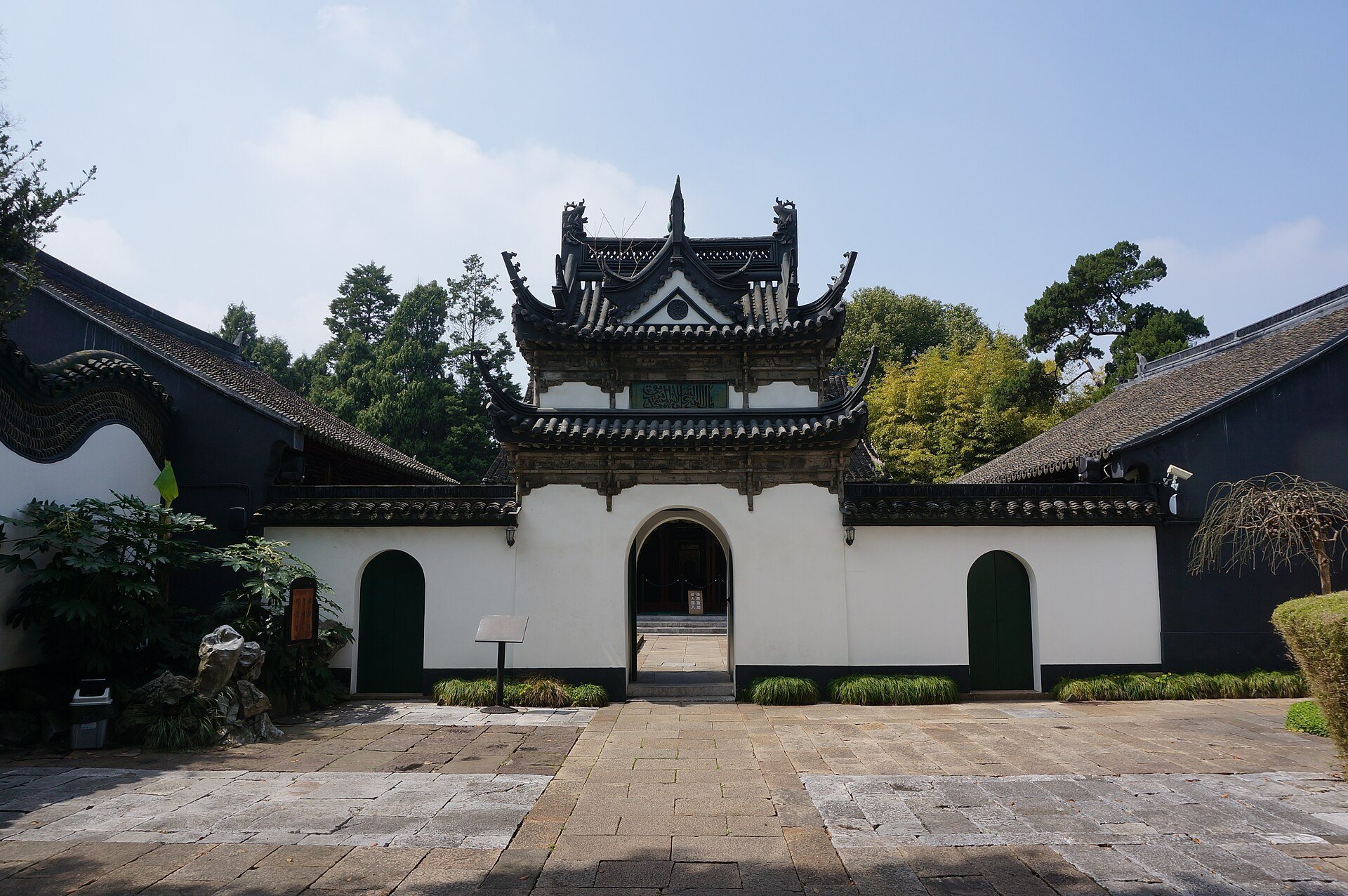
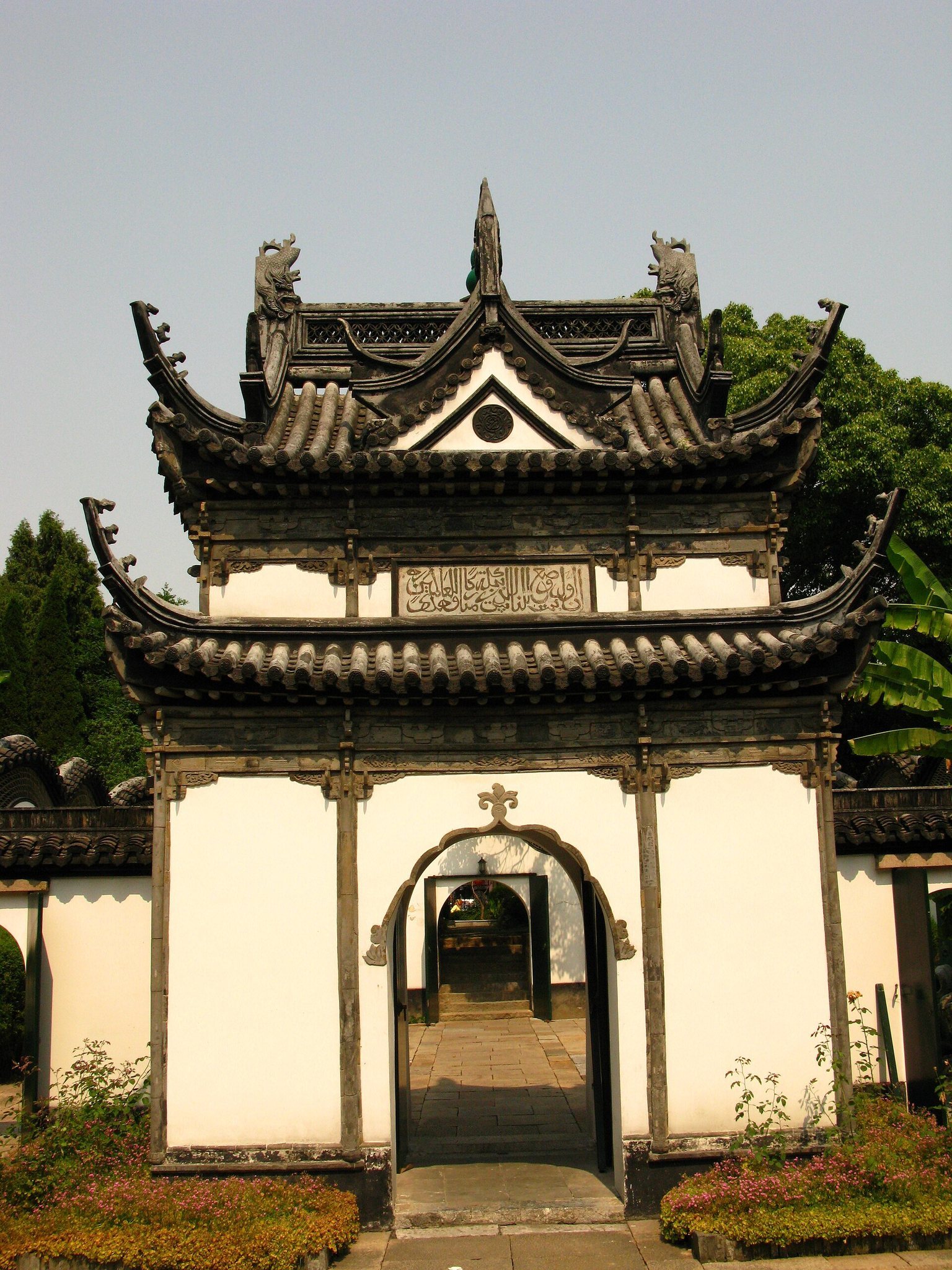
Covering approximately 4,900 square metres at 75 Gangbeng Alley, the mosque faces north and is arranged in front and rear sections. Its architecture combines traditional Hui Muslim Chinese palace architecture with Arabic motifs and Arabic calligraphy. Hui Muslims are a Chinese Muslim ethnic group whose religious and architectural traditions bring Islamic practice together with elements of Chinese culture and building methods. The complex includes a main hall, a prayer niche, a corridor, two sermon halls, and a bathroom, with features associated with both Yuan and Ming architectural styles.
Prayer buildings
Eastern prayer tower
A tower occupies the eastern part of the complex. Designed in an Arabic style, it has transverse ridges and domed roofs and is used for Muslim prayer.
Western prayer hall
The prayer hall stands in the western part of the mosque opposite the tower. It is divided into front and rear halls. The front hall has architectural characteristics associated with the Ming period, while the rear hall reflects Yuan-period characteristics.