Sirpur Group of Monuments: A Multireligious Historical and Archaeological Complex in India
Site at a Glance
- Rating
- 4.3
- Popularity
- Low
- Country
- India
- Primary era
- Medieval
- Eras represented
- Medieval
- Civilizations
- Unclassified
- Site type
- City
On this page20 sections
History
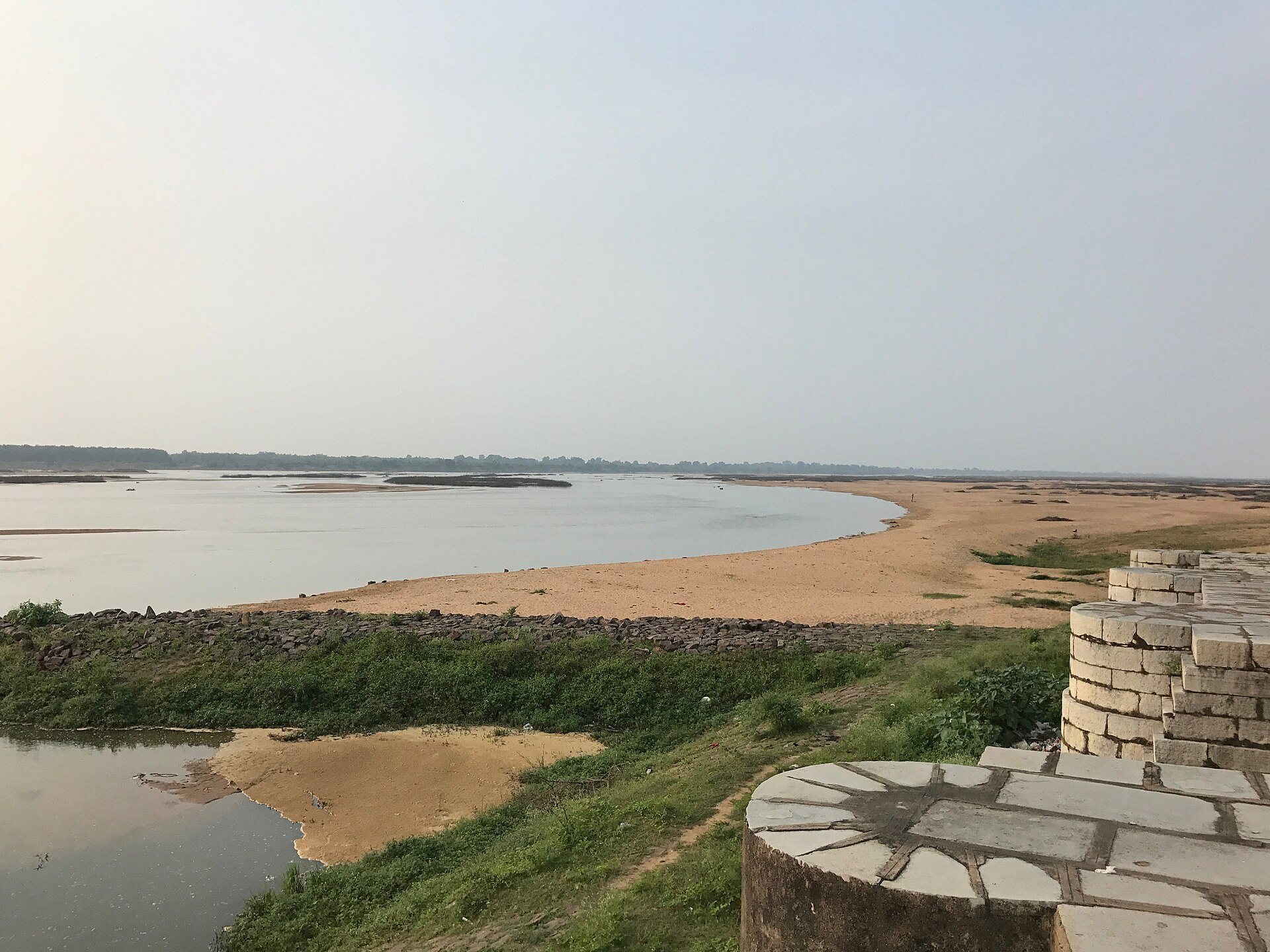
The Sirpur Group of Monuments is a large archaeological complex near the Mahanadi River in Sirpur, Chhattisgarh, India, built and developed by Hindu, Buddhist, and Jain communities mainly between the 5th and 12th centuries CE. Anciently known as Shripur and Sripura, Sirpur became an important religious and commercial centre of South Kosala, a kingdom associated broadly with parts of present-day Chhattisgarh and adjoining regions.
Early South Kosala and the rise of Sirpur
The Allahabad Pillar inscription of the 4th century CE refers to Sirpur as Sripura. Inscriptions and written records from the 5th to the 8th centuries further describe the town’s importance, while archaeological deposits indicate human activity from at least the middle of the 1st millennium BCE. Sirpur served first as a capital of the Sharabhapuriya dynasty and later as a capital under the Panduvamshi dynasty, two ruling houses that controlled South Kosala during successive phases of its early-medieval history.
Religious institutions received support from Hindu rulers, including the Shaiva king Teevardeva. Shaiva denotes the Hindu tradition centred on Shiva. During the 8th century, King Shivagupta Balarjuna established or patronised temples and monasteries serving Hindu, Buddhist, and Jain communities. This royal support helped create a settlement in which several religious traditions operated alongside one another and sometimes shared artistic forms.
Religious and commercial prosperity
The Chinese Buddhist pilgrim Hiuen Tsang visited Sirpur in 639 CE. He described a prosperous region governed by a benevolent Kshatriya king, a member of the warrior ruling class, and reported approximately 10,000 Mahayana Buddhist monks living in about 100 monasteries. He also mentioned more than 100 temples. Mahayana is a major Buddhist tradition that emphasises the bodhisattva path, through which practitioners seek spiritual liberation while assisting others.
The earliest dated monument at Sirpur is the Lakshmana Temple, generally placed around 595 to 605 CE. Other temples along the Mahanadi between Rajim and Kharod date from approximately 600 to 710 CE. Excavations have also revealed a market dated to the 6th or 7th century, a bathhouse from the 6th century, and an underground granary. These remains place religious activity within a settlement that also had commercial and communal infrastructure.
Dynastic change and later activity
Sirpur’s political setting changed during the 11th century. The Kalachuri dynasty took control of the region, while eastern South Kosala came under the Somavamshi kingdom. The history of Sirpur during the 12th and 13th centuries remains less clear, but the youngest archaeological deposits contain ruins mixed with chilum fragments and coins from the Sultanate period. These finds indicate that the settlement remained active at least into the early Delhi Sultanate era.
The cause of Sirpur’s decline and ruin has not been established. One interpretation connects the destruction with an earthquake that devastated the region and encouraged abandonment. Another links it to invasion and plunder. Coins bearing the name of Sultan Alauddin Khalji, a ruler of the Delhi Sultanate, may reflect trade rather than destruction, and localised subsidence at one monument may have resulted from soil movement. Neither the coins nor the structural collapse by themselves determine the final cause of the site’s decline.
Rediscovery and archaeological investigation
Sirpur attracted wider archaeological attention after Alexander Cunningham visited in 1882 and reported on the Lakshmana Temple. Cunningham was a British archaeologist and colonial official who became the first director-general of the Archaeological Survey of India. After neglect during the early 20th century and the two World Wars, excavation resumed in 1953, continued during the 1990s, and expanded especially after 2003, when investigators identified 184 mounds and excavated some of them.
The excavations revealed a large multireligious settlement containing Hindu temples, Buddhist and Jain monasteries, a market, a bathhouse, and evidence of extensive religious syncretism. Sirpur also emerged as an important early-medieval centre for bronze production. Similarities between some Sirpur works and sculptures from the Ellora Caves and Ratnagiri may reflect the movement of artistic ideas and artists.
The Archaeological Survey of India, India’s national institution for archaeological research, conservation, and monument protection, manages the site and operates a museum in the Lakshmana Temple precinct. The museum preserves excavated architectural fragments and artworks associated with Shaiva, Vaishnava, Buddhist, and Jain traditions, dating from the 6th to the 12th centuries.
Remains
The monument complex extends across approximately 3 square kilometres near the Mahanadi River. More than 20 medieval temples have been excavated, while about 50 further mounds remain under archaeological investigation. The remains include Hindu, Buddhist, Jain, Shakti, and Tantric monuments. Excavations have identified 22 Shiva temples, five Vishnu temples, Buddhist viharas, Jain monasteries, monolithic images of Buddha and Mahavira, a market, an underground granary, and a 6th-century bathhouse.
Principal Hindu temples
Lakshmana Temple
The Lakshmana Temple is a 7th-century brick temple standing on a raised stone platform, or jagati, measuring approximately 40 by 80 feet. A jagati is a temple platform that can also provide space for circumambulation. The eastern-facing temple retains much of its sanctum entrance, tower, and carved doorway. Its outer sanctum frame measures about 22 by 22 feet, while the inner sanctum measures about 10 by 10 feet.
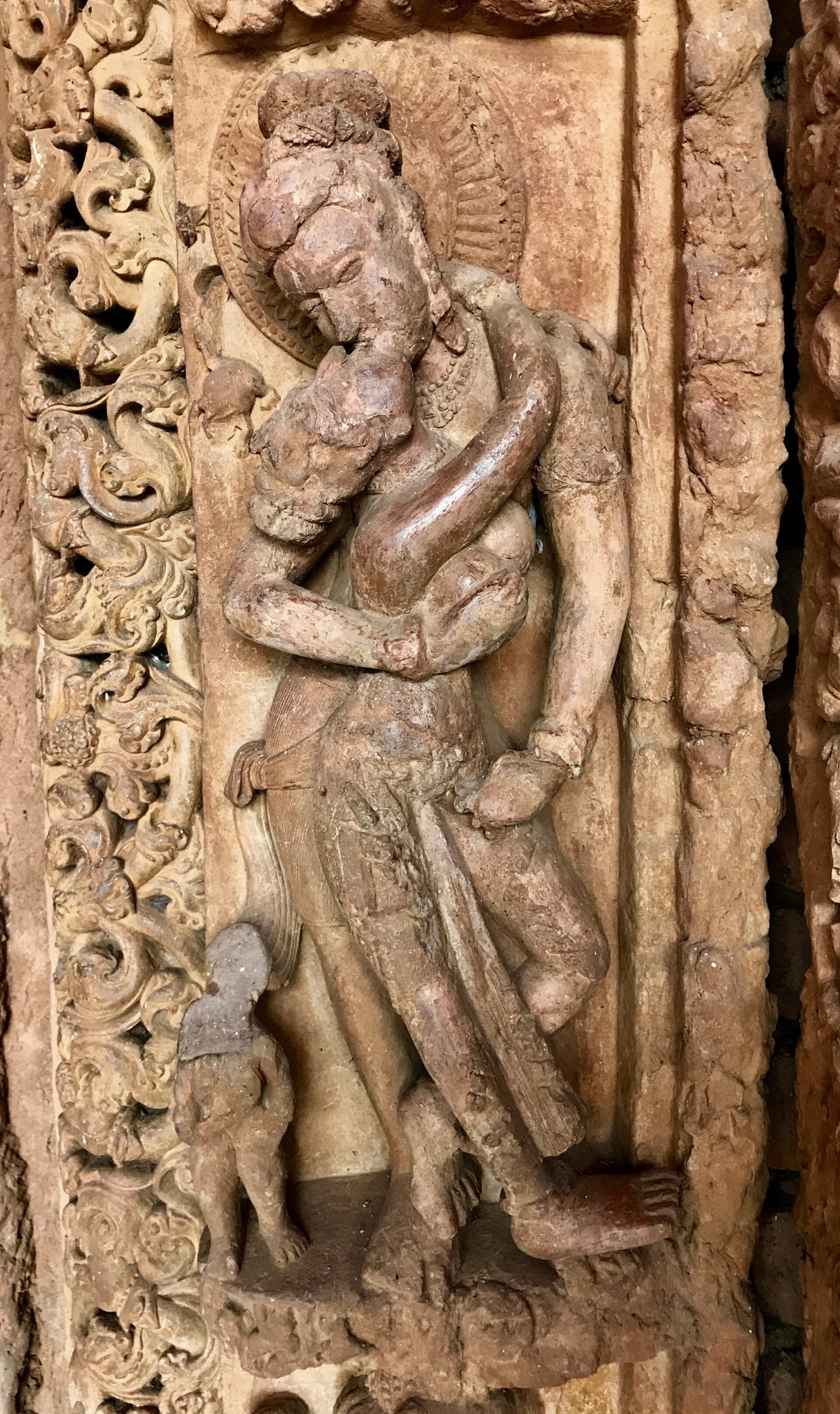
The temple’s main construction uses brick, with stone forming the carved sanctum frame. An outlined vestibule leads toward the sanctum, and the remains of an oblong pillared hall survive through their pillar bases. The doorway carving includes Vishnu reclining on the serpent Sesha, a scene of Krishna, and bands representing Vishnu’s ten avatars. Other panels show daily life, courtship, and embracing couples. Small images recovered from the ruins have been installed at the site, while additional fragments and artworks are preserved in the nearby museum.
Rama Temple and associated shrine
The Rama Temple lies less than 100 metres southeast of the Lakshmana Temple. Its surviving remains include the outlines of several shrines and a brick fragment from the lower part of the original structure. The temple probably dates to around 600 CE. Its raised platform has a stellate, or star-shaped, plan and is regarded as an early example of this form in central India.
Immediately north of the Rama Temple is the outline of another shrine traditionally associated with Lakshmana. Its platform has a different plan from the stellate platform of the Rama Temple. Together, the remains show the variety of temple layouts used at Sirpur during the early medieval period.
Gandheshwar Temple
Gandheshwar is an active Shiva temple on the bank of the Mahanadi. Stone steps connect the riverbank with the sanctum. The building incorporates recovered ruins and imagery from Hindu, Buddhist, and Jain traditions. A stone wall slab carries an 8th-century inscription dedicated to Buddha. Written in Nagari script and beginning with the Om symbol, the inscription provides a visible example of the religious interaction expressed in the monument complex.
Baleshwar Mahadev group
The Baleshwar Mahadev group lies about 50 metres northwest of the Teevardev monument, across the Sirpur road. Three excavated Shiva temples retain high circumambulatory platforms, while another survives at foundation level. Built under Shivagupta Balarjuna, the group dates to the middle of the 8th century.
Two of the temples stand side by side and open westward, an orientation that differs from that of most Sirpur temples. Each contains a pillared hall, a vestibule, and a stellate sanctum made of brick and stone. The star-shaped sanctum consists of two squares, with one rotated 45 degrees against the other. Excavated artworks show women and couples wearing 8th-century dress, and a marble Shiva linga remains in the sanctum. A linga is an aniconic representation of Shiva used in worship.
Surang Tila
Surang Tila is Sirpur’s largest temple complex. Its pillared terrace rises about 30 feet above the surrounding group, and stone steps connect it with the ruined platform of the lower hall. Part of the stairway has collapsed, probably because of localised ground subsidence. The upper terrace probably functioned as a hall and contains numerous carved pillars arranged in a navaranga pattern, a nine-part or nine-bay arrangement.
The terrace connects with five sanctums containing two grey Shiva lingas, one black granite Shiva linga, and two Vishnu shrines. The complex is built of white stone. Excavations in 2006 and 2007 brought an inscription to light; now preserved in the Raipur museum, it indicates that the temple functioned during the reign of Shivagupta Balarjuna and places the complex in the 7th or 8th century.
Two buildings lie beneath the Surang Tila terrace. One probably served as a residence for Buddhist priests and monks. The other was a small Tantric temple containing a 16-sided Shiva linga that may belong to a later period. Before excavation, Surang Tila appeared as a soil mound containing tunnels used by local people.
Water, fortification, and settlement features
Rakela Tal
Rakela Tal is a man-made lake south of the Rama Temple on the eastern side of the Sirpur road. Lotus-filled water surrounds the ruins of an old fort and several Hindu and Buddhist monuments interspersed with farmland. A modern Krishna temple also stands in the area. The lake and its associated remains form one of the site’s distinct landscape settings.
Buddhist and Jain remains
Ananda Prabhu Kuti Vihara
The Ananda Prabhu Kuti Vihara was a Buddhist temple and a 14-room monastery established by the monk Anand Prabhu, also called Ananda Prabha in inscriptions, with support from Shivagupta Balarjuna. A vihara is a Buddhist monastery or monastic residence. The complex included a monument to Avalokiteshvara, a bodhisattva associated with compassion, and an image of Makaravahini Ganga.
A Sanskrit inscription in Nagari script dates from the middle of the 8th century. It begins with Om and Siddham, praises Buddha, commends Balarjuna, and records the establishment of monastery residences and a free feeding house for monks. The foundation was to receive rice and condiments in perpetuity, and the inscription is signed by the artist who produced it.
Swastika Vihara
Excavated in the 1950s, the Swastika Vihara has a ground plan resembling a swastika. Finds from the complex include a Buddha image, metal Buddhist idols, and an image of Padmapani holding a fly whisk. Padmapani is a form of Avalokiteshvara commonly shown with a lotus.
Teevardev Vihara
The Teevardev Vihara, also called Tivradeva, lies about 1 kilometre from the Lakshmana Temple near a Shiva temple. Built under a Shaiva king and his Buddhist queen, it combines Buddhist and Hindu artistic themes. Its imagery includes Buddha figures, Buddhist works, the goddesses Ganga and Yamuna, scenes of desire and embracing couples, episodes from the Panchatantra, and Gajalakshmi.
Jain basati
A Jain basati and monastery complex was discovered near the river, approximately 100 metres from an 8th-century Shiva temple. A basati is a Jain monastic establishment. The ruins yielded a bronze image of Adinatha, also called Rishabha, dated to the 9th century. Jain tradition regards Adinatha as the first Tirthankara, a spiritual teacher who attained liberation and showed the path to others.
Sculpture, inscriptions, and artistic remains
Sirpur’s excavated material includes bronze sculptures, stone images, inscriptions, temple fragments, and decorative pieces associated with Shaiva, Vaishnava, Buddhist, and Jain traditions. Some monuments combine imagery from more than one religious tradition, including an 8th-century sculpture of an embracing couple. These works, together with the surviving buildings and inscriptions, illustrate the varied religious and artistic activity that developed at Sirpur between the 6th and 12th centuries.