Pyramids of Meroe: Royal and Elite Burial Grounds of Kush
Site at a Glance
- Rating
- 4.8
- Popularity
- Very Low
- Country
- Sudan
- Primary era
- Classical
- Eras represented
- Iron Age, Classical
- Civilizations
- Kushite
- Site type
- Burial
- Remains
- Necropolis
On this page12 sections
History
The Pyramids of Meroe are three Kushite burial cemeteries at Meroë in Sudan, near Bagrawiya village and about 200 kilometres northeast of Khartoum. Built mainly between about 300 BC and AD 300, they served the later Kingdom of Kush, an ancient Nubian state centred in present-day Sudan. The cemeteries held the remains of rulers, royal family members, senior officials, and other members of the elite.
The three cemeteries
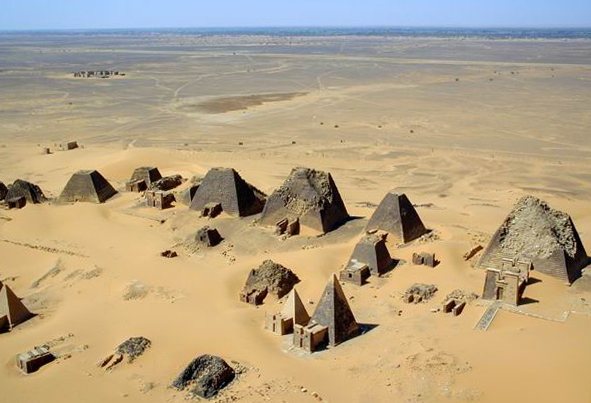
The burial grounds are known as Bagrawiya North, South, and West. They occupy low hills covering roughly one-quarter of a square kilometre and together contain more than 900 pyramids and graves, including at least 147 pyramids. The western cemetery had already received burials by the ninth century BC and remained in use for the longest period. It appears to have served mainly high dignitaries, their families, and other non-royal elites, although a few pyramids there may have belonged to members of the royal family.
High-ranking burials were established in the southern cemetery by at least the reign of Aspelta, around 580 BC. Ergamenes, who ruled around 280 BC, was the first ruler securely associated with a pyramid at Meroe and the first king buried in the southern cemetery. That cemetery was abandoned around 250 BC, after which the northern cemetery became the main burial ground for Kushite kings.
Royal burial and religious change
The southern cemetery contains about 220 burials, at least 90 of them with above-ground structures, including at least 24 pyramids. Its large pyramids include those of Kings Arqamani and Amanislo. The northern cemetery contains 41 known pyramids associated with 30 kings, eight reigning queens, and three other people who may have been crown princes.
The adoption of pyramid burial reflected strong Egyptian influence on Nubian ruling-class culture, religion, and material life. Meroitic funerary practice incorporated Egyptian ideas about the afterlife, offerings, and preserving the memory of the dead, while gradually developing its own forms from the third century BC onward. Osiris, the Egyptian god of judgment and the afterlife, remained important, as did Isis, associated with protection and restoration, and Anubis, associated with embalming and care of the dead. Inscriptions invoking Isis and Anubis requested bread and water as eternal nourishment for the deceased.
Queen Mernua provides an earlier example of Meroitic burial. She was buried around 600 BC, approximately 300 years before the main royal pyramid tradition at Meroe. Her pyramid was the only known one to remain unplundered and therefore preserves evidence of the burial practices of its own period. The later development of Meroitic funerary customs can also be traced through the changing decoration of pyramid temples and the objects placed in burial chambers.
Exploration and archaeological work
Most of the pyramids were robbed in antiquity, limiting knowledge of their original contents. In 1834, Giuseppe Ferlini, an Italian physician and adventurer, visited Meroe with official permission from Sudan’s Governor-General, Ali Khurshid Pasha, in search of treasure. He dismantled pyramids from the top downward and used explosives, destroying more than 40 Nubian pyramids. Pyramid N6 was almost completely demolished. Ferlini found jewellery belonging to Queen Amanishakheto and tried to sell it to European museums. Museums in Berlin and Munich eventually acquired the objects.
About a decade later, the Prussian expedition led by Karl Richard Lepsius surveyed the cemeteries systematically, prepared a plan, and copied numerous scenes from the pyramid temples. George Andrew Reisner carried out systematic excavations in the pyramid fields during the 1920s and recovered rich finds. Dows Dunham published the results in major volumes during the 1950s and 1960s, while the German architect and archaeologist Friedrich Hinkel restored some pyramids in recent decades.
The first numbering system was created by the Lepsius expedition, while modern references generally follow Reisner’s numbering. Identifying individual owners remains uncertain for some pyramids. Names were commonly preserved in the small pyramid temples, whereas inscribed objects from burial chambers were uncommon and offering tables could be moved from their original positions. The site forms part of the UNESCO World Heritage property Archaeological Sites of the Island of Meroe, inscribed in 2011. Flooding threatened the pyramids for the first time in September 2020.
Remains
The cemeteries preserve clusters of steep-sided sandstone pyramids, small mortuary temples, and underground burial chambers. Most pyramids stand between 10 and 30 metres high. They are considerably smaller than the major pyramids of ancient Egypt and generally use local sandstone, although brick became more common in later periods. The surviving site is ruined and partly restored.
Pyramids and burial chambers
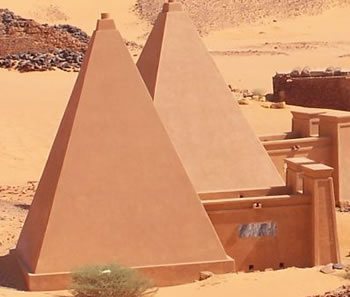
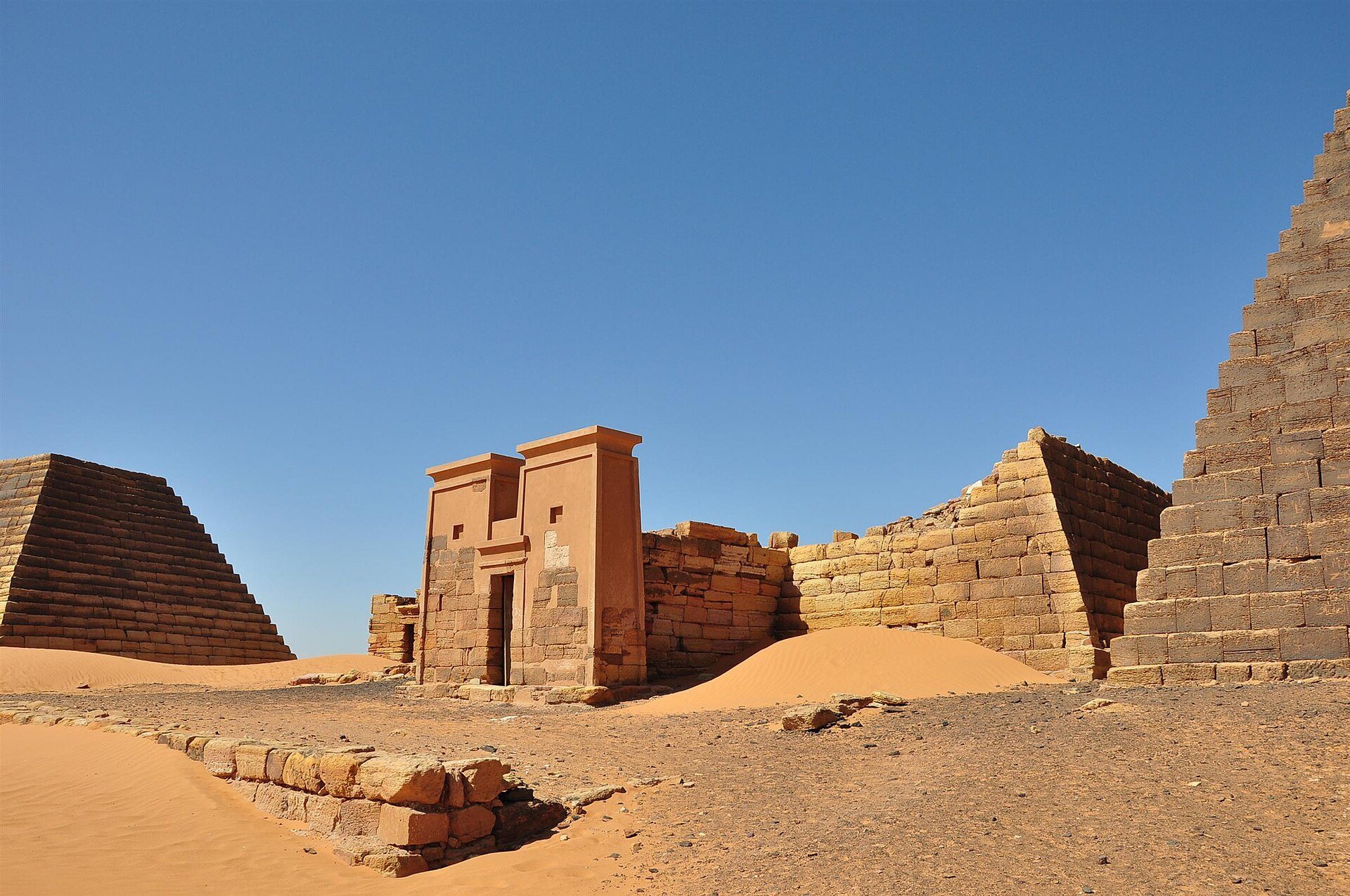
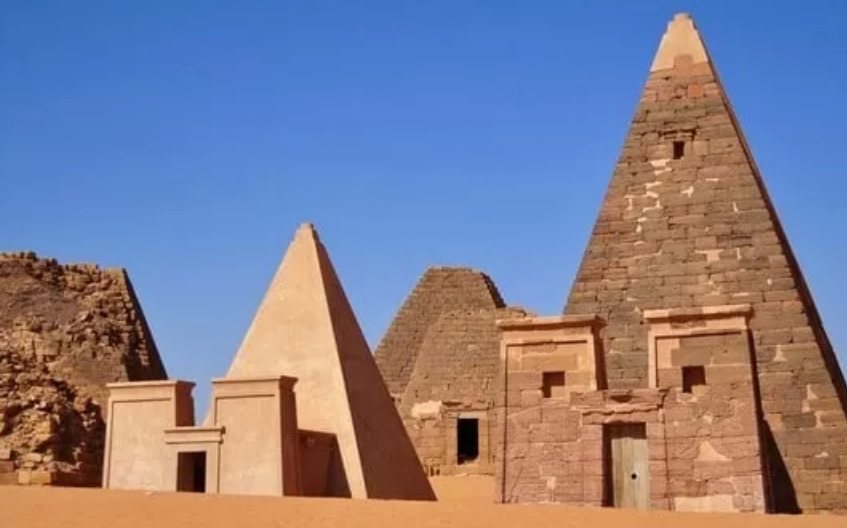
A typical complex consists of a pyramid, a small mortuary temple in front, and underground chambers reached from the area before the temple. Some complexes also had an enclosing wall. Royal tombs generally contained three chambers, with the first two often decorated with pillars and the deceased placed in the final chamber. Queens’ tombs generally had two underground chambers, as did the tombs of later kings.
Meroitic pyramids usually have a steep angle of about 72 degrees, compared with approximately 54 degrees for Egyptian pyramids. Most were stepped rather than covered with smooth stone and stood on low bases. Their tops appear to have been slightly flattened, and some may have ended in a small flat cylinder. Royal pyramids form two broad size groups. The earlier group, from Ergamenes around 280 BC to Amanishakheto at the end of the first century BC, has an average side length of about 18 metres. The later group begins with Natakamani around AD 50 and averages only about 6.6 metres across, while pyramids of Kandakes, ruling queens or queen mothers, were larger than those of kings.
Southern, northern, and western cemeteries
Southern cemetery
The southern cemetery contains about 220 burials and at least 24 pyramids. Among its larger monuments are the pyramids associated with Arqamani and Amanislo. The cemetery preserves the early phase of high-ranking Meroitic burial, beginning at least in the time of Aspelta and continuing through the burial of Ergamenes.
Northern cemetery
The northern cemetery became the principal royal burial ground after the southern cemetery was abandoned around 250 BC. Its pyramids include N6, N7, N11, N12, N14, N19, N21, and N22. Pyramid N21 preserves a stepped form, while Pyramid N19 is recorded with a smooth-faced exterior. The chapel of N17 produced a relief now held in the Egyptian Museum in Berlin, and the temple of N12 preserves a relief showing offerings. Plans and architectural records also survive for pyramids including N7.
Western cemetery
The western cemetery contains more than 800 graves, at least 82 of them pyramids. Its long period of use and the character of its burials associate it chiefly with high officials, their families, and other non-royal elites. The cemetery occupies part of the same low-hill landscape as the royal burial grounds and preserves numerous elite tombs and pyramids.
Mortuary temples and decoration
Mortuary temples are generally built of sandstone and contain one or two rooms preceded by a pylon, a monumental gateway at the front of an Egyptian-style temple. Their outer faces commonly carry shallow sunk relief, carved below the surrounding surface, including scenes of a king striking enemies in a motif adopted from Egyptian art. The interiors use shallow raised relief, in which the carved figures project above the wall surface.
Three main forms of temple decoration are recognized. Type A, dating to the third century BC, presents Egyptian-style offering scenes with Egyptian hieroglyphs. Type B, used from the second century BC to the first century AD, depicts the judgment of the dead and scenes from the Book of the Dead. Type C begins with Natakamani and emphasizes seated images of the deceased or tomb owner, often accompanied by Isis, Nephthys, a queen, a prince, or Anubis offering incense or water. The rear wall shows Osiris or a false door, a carved symbolic doorway associated with communication between the dead and the living.
Reliefs in the pyramid chapels identify the deceased and show encounters with deities or scenes from the underworld. These images preserve the continued importance of Egyptian funerary religion even as Meroitic burial customs developed distinctive forms.
Burial goods
Queen Mernua’s unplundered tomb contained several nested coffins, a mummy richly decorated with amulets, numerous ushabtis bearing her name, and grave goods made for her burial. Ushabtis were small funerary figures intended to perform work for the deceased in the afterlife.
Later burial chambers contain objects connected with everyday life, including imported Hellenistic metal vessels, bronze sculptures, pottery, wine amphorae, jewellery probably worn during life, and furniture placed in the tomb. Hellenistic objects came from the cultural world that developed after the Greek conquests in the Mediterranean and Near East. Egyptian-style amulets continued to appear, while evidence also points to the burial of servants and animals with rulers. Animal burials were found around the pyramids, and some chambers contained more than one body.
