Jeffers Petroglyphs: A Native American Rock-Art Site in Minnesota
Site at a Glance
- Rating
- 4.6
- Popularity
- Low
- Country
- United States
- Primary era
- Stone Age
- External website
- Open
- Eras represented
- Stone Age, Medieval, Early Modern
- Civilizations
- Unclassified
- Site type
- Civic
- Remains
- Rock Art
On this page7 sections
History
Jeffers Petroglyphs is a pre-contact Native American rock-art site near Comfrey in southwestern Minnesota, United States, with carvings dating from approximately 7,000 BCE to 1750 CE. The site preserves images made by removing or abrading parts of the rock surface, and the area was inhabited by Dakota people during the early historic period.
Early and Later Carvings
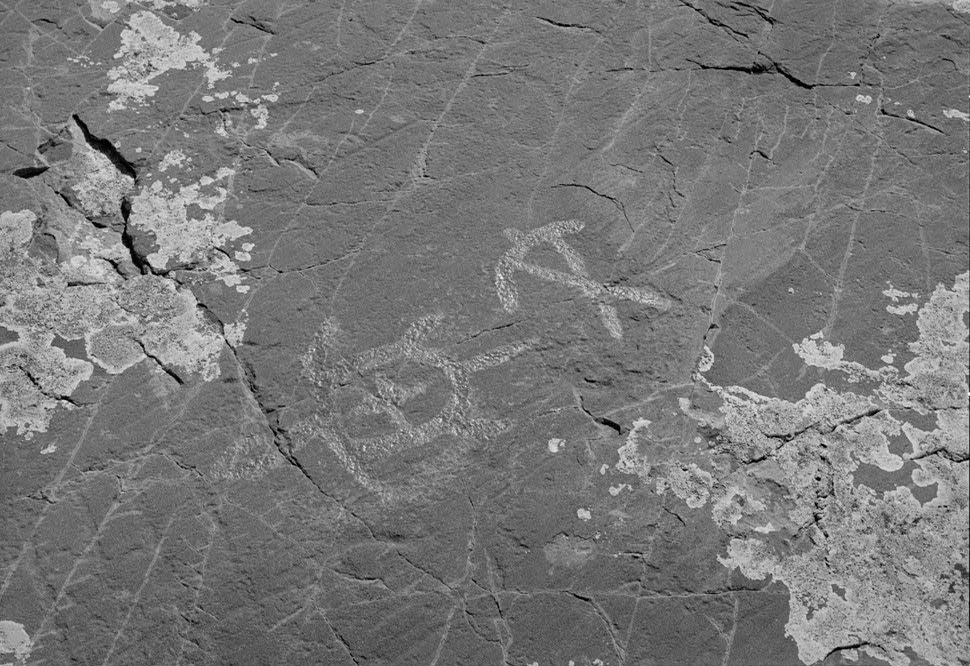
The exact age of the carvings is unknown. The earliest images are estimated to date from approximately 7,000 to 5,000 BCE. Some atlatl symbols, depicting a device used to throw a spear or dart with increased force and range, closely resemble examples from Indian Knoll in Kentucky that date to around 3000 BCE. Carvings of projectile points also resemble designs used by hunters during the Late Archaic period, a later phase of North American prehistory associated mainly with hunter-gatherer societies before widespread agriculture.
Other images appear to belong to later traditions. Thunderbirds, dragonflies, turtles, and representations of shamans have been associated with the Otoe, Sioux, and Iowa and are believed to date from approximately 900 to 1750 CE. Some carvings resemble motifs found in Dakota hide paintings, quillwork, and beadwork, while others differ from Plains Indian traditions and appear substantially earlier.
Meaning and Cultural Importance
The purpose of the carvings remains uncertain. Hunting magic, sacred ceremonies, and records of events in the lives of warriors, shamans, and chiefs have all been proposed, but these interpretations are not established facts. Some Native Americans regard Jeffers as sacred ground and a highly spiritual place rather than simply an archaeological site. Dakota elder Jerry Flute described it as a place where Grandmother Earth speaks about the past, present, and future.
Preservation and Historical Recognition
The Minnesota Historical Society purchased the site from W. R. Jeffers Jr. in 1966. Jeffers Petroglyphs was added to the U.S. National Register of Historic Places in 1970, the federal list of sites recognized for their historical significance, and is also listed on the Minnesota State Register of Historic Places. The Minnesota Historical Society maintains the site.
Remains
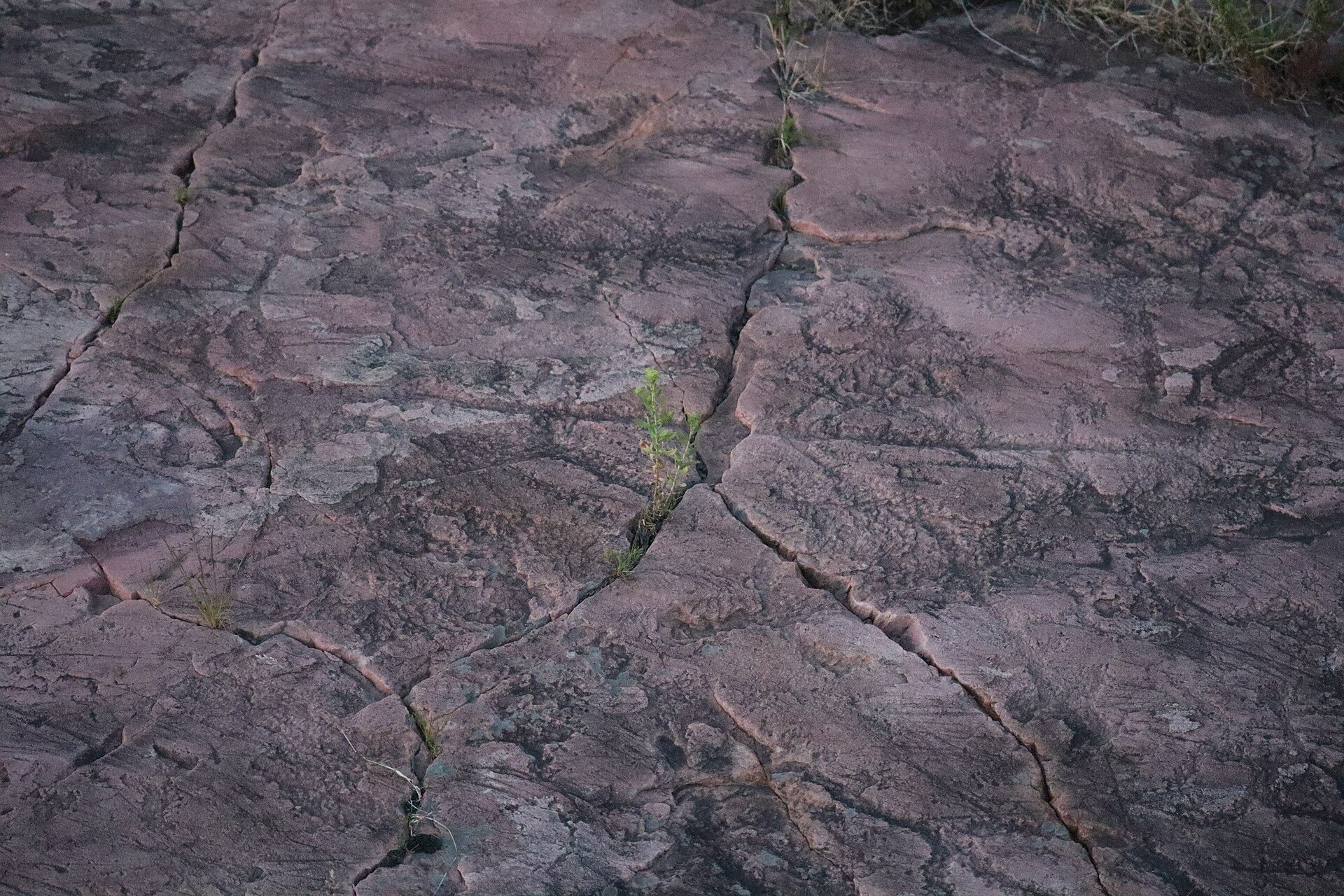
The site consists of an exposed Red Rock Ridge outcrop surrounded by relatively undisturbed prairie. Red Rock Ridge is a 23-mile (37-kilometre) exposure of Sioux quartzite, a hard metamorphic rock formed from sandstone, extending from Watonwan County to Brown County. The exposed rock surface measures approximately 150 by 650 feet (50 by 200 metres). Glaciers flattened and smoothed the bedrock about 14,000 years ago, creating the surface on which the images were made.
Rock Art
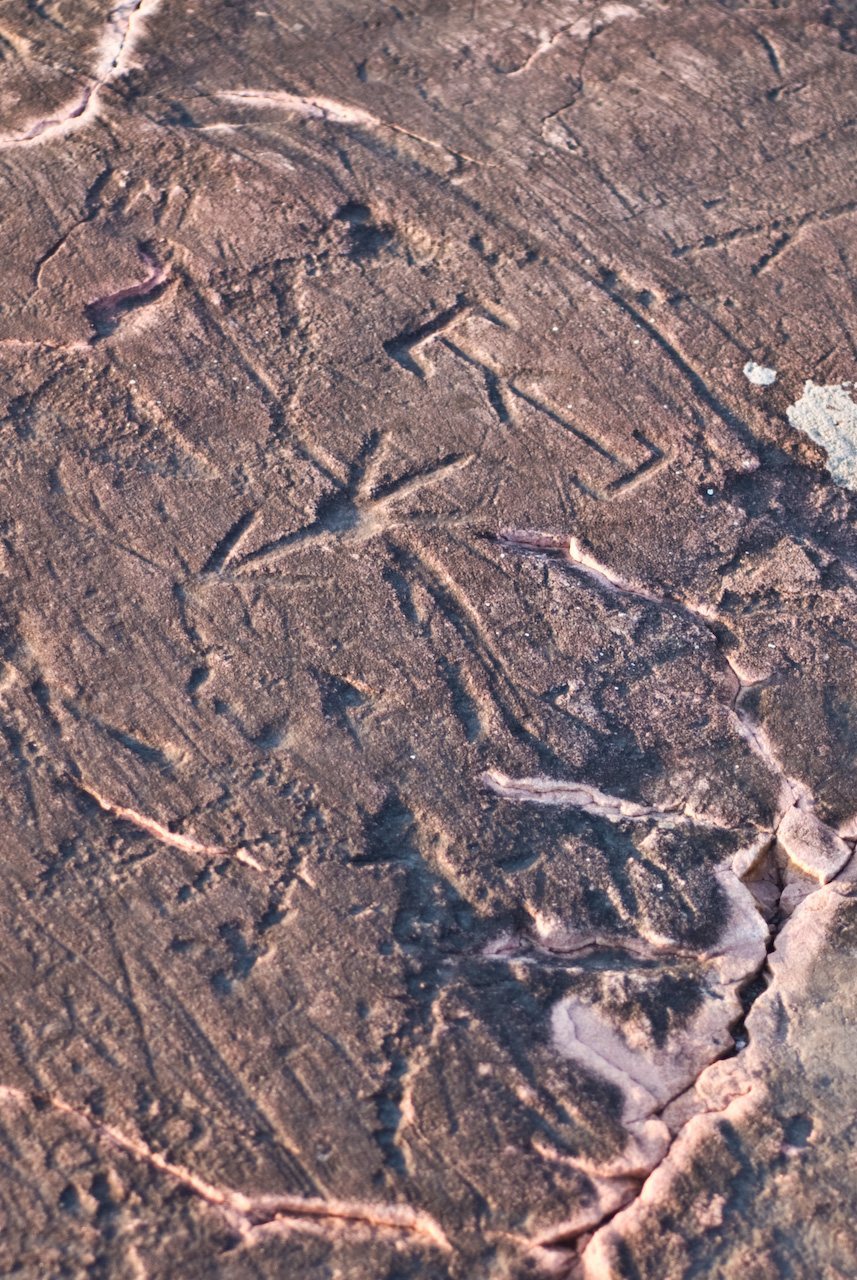
More than 4,000 Native American images are pecked into the quartzite bedrock. The surviving designs include atlatls, projectile points, thunderbirds, dragonflies, turtles, and representations of shamans. Their varied forms reflect the broad chronological range associated with the site, from early images linked to Late Archaic hunting traditions to later carvings connected with Otoe, Sioux, and Iowa traditions.
Prairie Setting and Wagon Tracks
Several old wagon ruts cross the exposed rock and the surrounding site area. One is believed to follow the former stagecoach route between New Ulm, Minnesota, and Sioux Falls, South Dakota. The site is bordered by Rock Ridge Prairie Scientific and Natural Area to the northwest and Red Rock Prairie, a Nature Conservancy preserve, to the east.
The surrounding prairie contains prairie bush clover, a federally threatened plant, along with big bluestem, Indian grass, gray-headed coneflower, Maximilian’s sunflower, cordgrass, and coreopsis. Wildlife associated with the prairie includes upland sandpipers, regal fritillaries, and Poweshiek skippers.