Kolomoki Mounds State Park: A Woodland Period Earthwork Complex in Georgia
Site at a Glance
- Rating
- 4.7
- Popularity
- Low
- Country
- United States
- Primary era
- Medieval
- External website
- Open
- Eras represented
- Classical, Medieval
- Civilizations
- Unclassified
- Site type
- Religious
- Remains
- Sanctuary
On this page9 sections
History
Kolomoki Mounds State Park preserves a major Woodland-period earthwork complex near Blakely in southwestern Georgia, United States. Built by communities associated with the Swift Creek and Weeden Island cultures, the site developed during the first millennium CE, with major construction dating to approximately 350–600 CE and the visible mounds built or enlarged between about 350 and 950 CE. Kolomoki is one of the largest and earliest such complexes in the southeastern United States and the largest in Georgia.
A Regional Woodland Center
The Woodland period was a long era in eastern North America associated with settled communities, pottery production, ceremonial earthworks, and regional exchange before European colonization. At Kolomoki, Swift Creek and Weeden Island communities created a large population center that included villages, burial mounds, ceremonial structures, and an open plaza. These archaeological traditions extended across parts of present-day Georgia, Alabama, Florida, South Carolina, and Tennessee.
The complex covered approximately 300 acres near the Chattahoochee River. Its central settlement probably housed between 1,500 and 2,000 people in thatched houses arranged around a large plaza. The plaza provided a setting for public ceremonies, rituals, and games, while the surrounding earthworks organized the community’s ceremonial and social life.
Protection, Loss, and Recovery
Kolomoki Mounds was designated a National Historic Landmark in 1964 and entered the National Register of Historic Places in 1966. A National Historic Landmark is recognized by the United States government for exceptional national historical importance, while the National Register lists properties valued for their historical, architectural, archaeological, engineering, or cultural associations.
In March 1974, thieves entered the park museum and removed virtually all of the displayed artifacts. The stolen collection included more than 129 pottery vessels and effigies, numerous arrowheads, and other archaeological objects. Police and dealers later helped recover many pieces in Miami and St. Augustine, Florida, although more than 70 artifacts remained missing.
In April 2026, an unidentified man returned a pot approximately 1,500 years old to the park visitor center, leaving before staff could open the package. As of May 2026, he was not considered a suspect in the 1974 theft. The Georgia Department of Natural Resources planned to consult federally recognized tribal partners about the returned object and future recoveries.
Remains
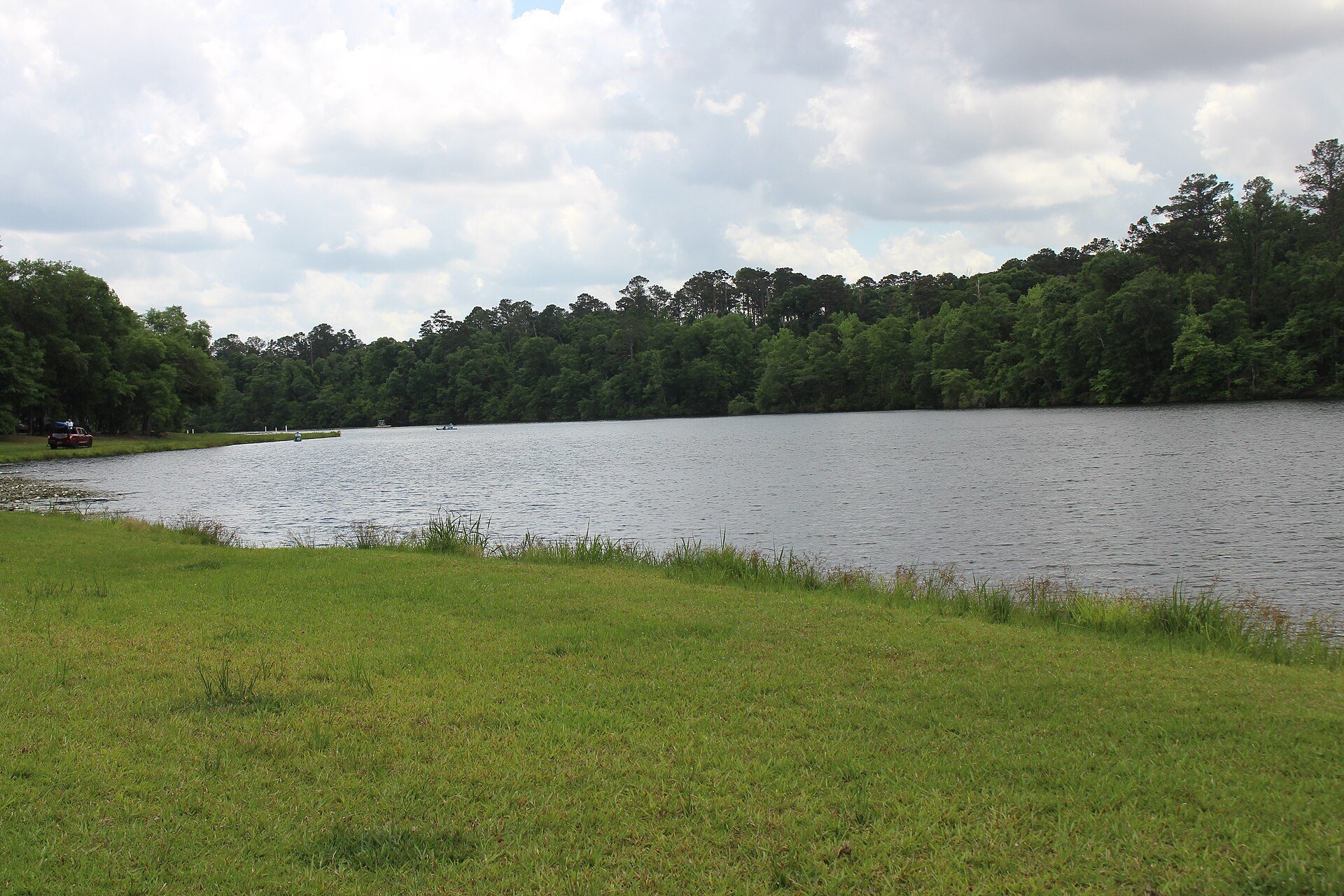
Kolomoki’s surviving complex includes eight visible earthen mounds, a ceremonial plaza, archaeological areas, and remains of the surrounding settlement. The earthworks were arranged according to a complex cosmological scheme. Mounds A, D, and E form an axis aligned with the sun at the spring equinox, while Mounds F and D align with the sun at the summer solstice. The site occupies approximately 300 acres, with soils composed mainly of dark red sandy loams and loamy sands. Pale brown sands occur beside the western shore of Kolomoki Lake, and alluvial loams lie at its northern end.
Principal Earthworks
Temple Mound
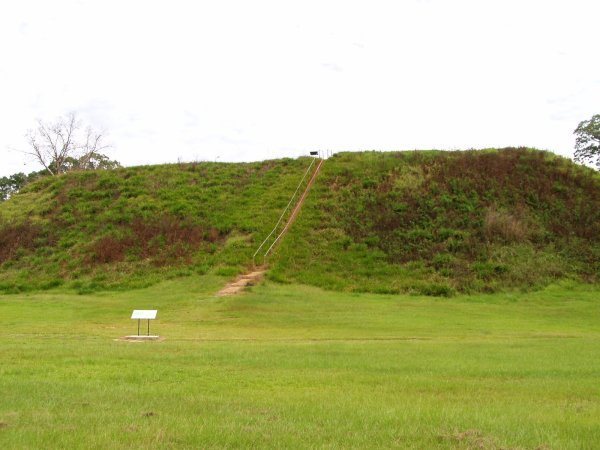
The Temple Mound is approximately 56 feet, or 17 metres, high, with a base measuring about 100 by 60 metres. Its construction required more than two million basket loads of earth, each holding approximately one cubic foot, or about 28 litres. A temple mound is a large earthen platform believed to have supported an important building or ceremonial structure.
The mound’s southern half rises approximately three feet, or one metre, above the rest and probably formed the platform for such a structure. Steps lead to the summit, which provides a view across much of the Kolomoki Archaeological Area. The houses of the settlement stood around the central plaza in front of the mound, where public ceremonies, rituals, and games took place.
Mound D
Mound D is a centrally placed, conical earthwork approximately 20 feet, or 6.1 metres, high. Excavation revealed 77 burials and ceremonial pottery, including effigy vessels shaped or decorated to represent deer, quail, owls, and other animals and birds. The mound began as a square platform about six feet, or 1.8 metres, high, made from yellow clay. Sixty pottery vessels, including effigy pottery, were placed along its eastern wall.
Later burials and additional layers of yellow clay enlarged the structure into a roughly circular mound about 10 feet, or three metres, high before its final height was reached. Burials concentrated on the eastern side, with skulls oriented toward the rising sun. Iron and copper objects and pearl beads accompanied some burials, and the completed mound was covered with red clay.
Other Ceremonial and Burial Mounds
The visible earthworks also include two burial mounds and four smaller ceremonial mounds. Burial mounds were constructed over human burials, while ceremonial mounds served ritual or communal purposes. Together with the Temple Mound and Mound D, these earthworks define the central arrangement of the complex and remain connected to the plaza and settlement areas.
Archaeological Presentation
The park museum incorporates part of an excavated mound, allowing artifacts to be viewed within an archaeological setting. It also presents a film explaining the mound’s construction and excavation. The museum and surviving earthworks preserve both the physical scale of Kolomoki and evidence of the communities that built, used, and reshaped it over many centuries.