Tres Zapotes: An Olmec, Epi-Olmec, and Classic Veracruz Archaeological Center
Site at a Glance
- Rating
- 4.3
- Popularity
- Low
- Country
- Mexico
- Primary era
- Classical
- Eras represented
- Classical, Medieval
- Civilizations
- Olmec
- Site type
- City
On this page13 sections
History
Tres Zapotes is a Mesoamerican archaeological site in Veracruz, Mexico, that developed from an Olmec center founded in the centuries before 1000 BCE into an Epi-Olmec and Classic Veracruz cultural center. Its history lasted about 2,000 years, an unusually long duration in Mesoamerica. The site is sometimes considered the third major Olmec center after San Lorenzo Tenochtitlán and La Venta, although its Olmec phase formed only one part of its longer history.
Olmec beginnings
Tres Zapotes became a regional center during the early Middle Formative period, probably around 900 to 800 BCE, at roughly the time when San Lorenzo Tenochtitlán was declining. The earliest detected public architecture probably dates to about 500 BCE, near the end of the Middle Formative. Unlike La Venta, Tres Zapotes continued after the Middle Formative ended around 400 BCE and was not immediately affected by the decline of Olmec culture in the eastern Gulf Lowlands.
Over the following centuries, the local Olmec tradition gradually developed into the Epi-Olmec, or post-Olmec, culture. Tres Zapotes retained elements of earlier Olmec sculpture and ceramic practices while its artistic traditions changed. Similarities with Izapa have led some archaeologists to propose influence from that center, while other interpretations emphasize a shared descent from Olmec traditions and the development of a related cultural tradition.
Epi-Olmec and Classic Veracruz phases
During the Late Formative period, Tres Zapotes remained an important Epi-Olmec center. This phase introduced the Isthmian, or Epi-Olmec, script, an early writing system of southern Mesoamerica, as well as some of the earliest dates written in the Long Count, a calendar that recorded time through numbered units.
Beginning around 300 CE, during the Classic era, construction of mounds continued and Tres Zapotes remained a regional center. Its position gradually weakened as other centers of the Classic Veracruz tradition, a later cultural tradition of the Veracruz region, grew in prominence and size. The site may have been abandoned by about 900 CE, although a smaller occupation continued afterward. Its four major mound groups have been interpreted as evidence of a decentralized political structure, with separate factions associated with different parts of the settlement rather than one centralized public complex.
Monuments and archaeological interpretation
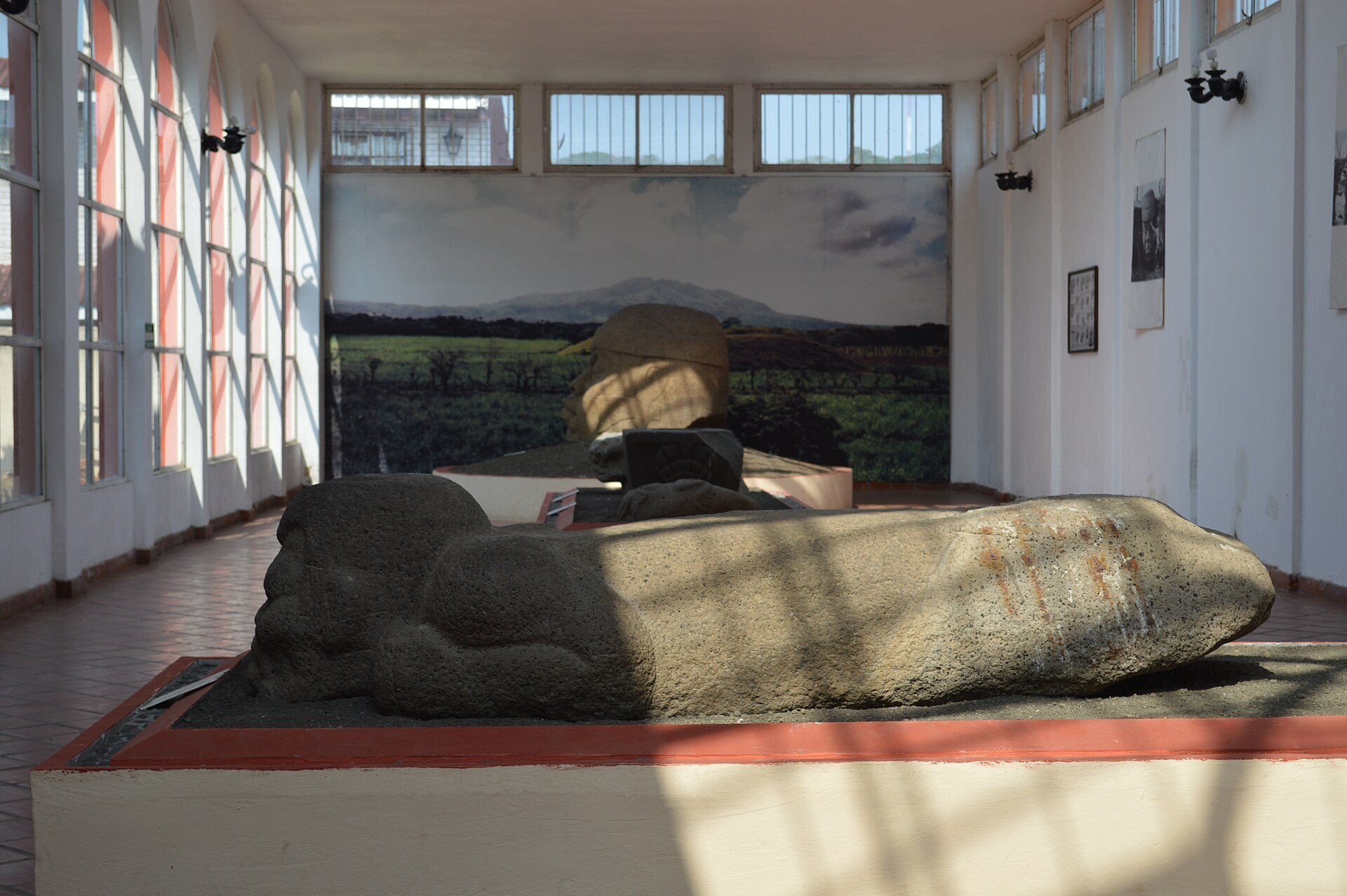
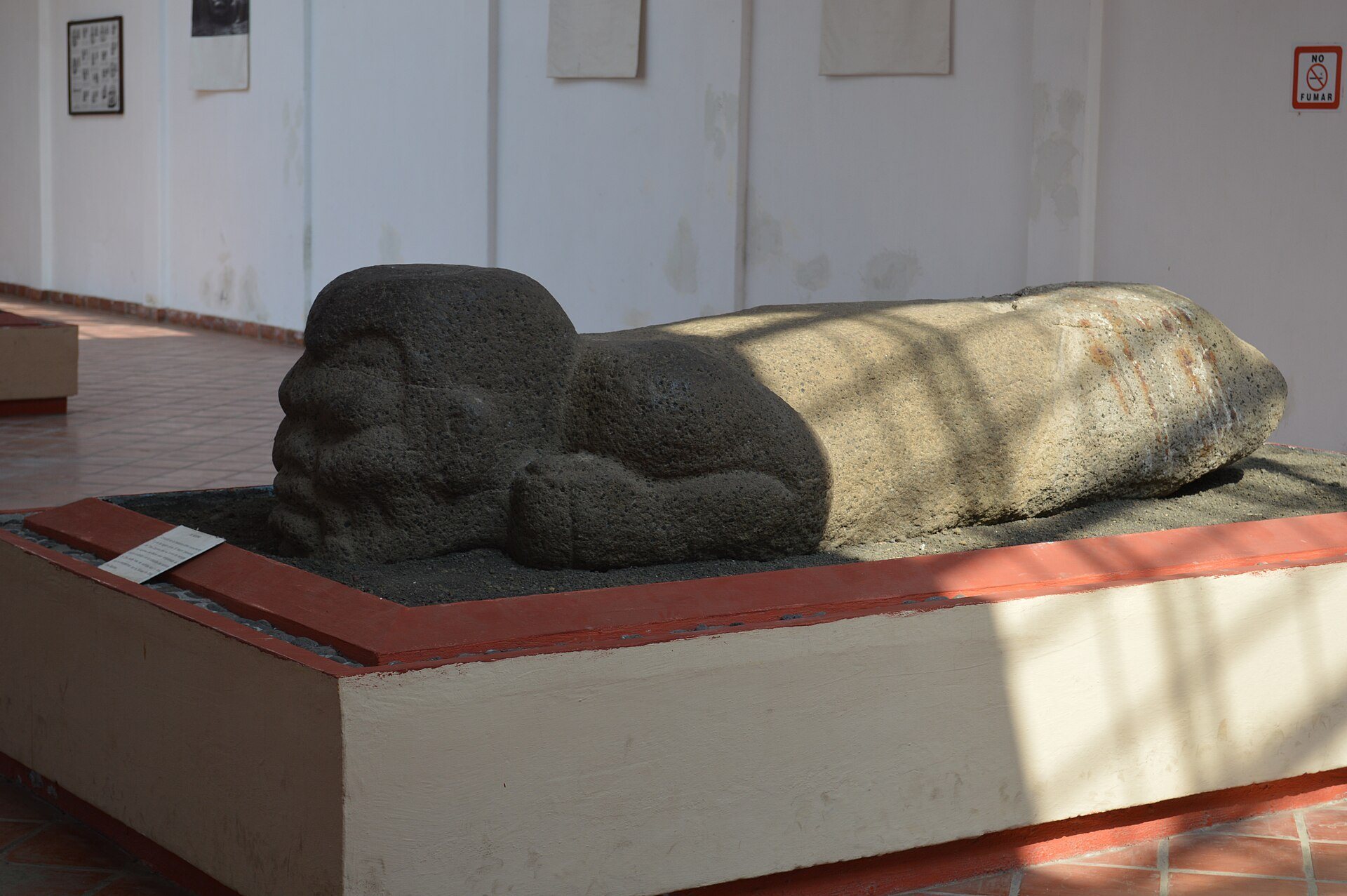
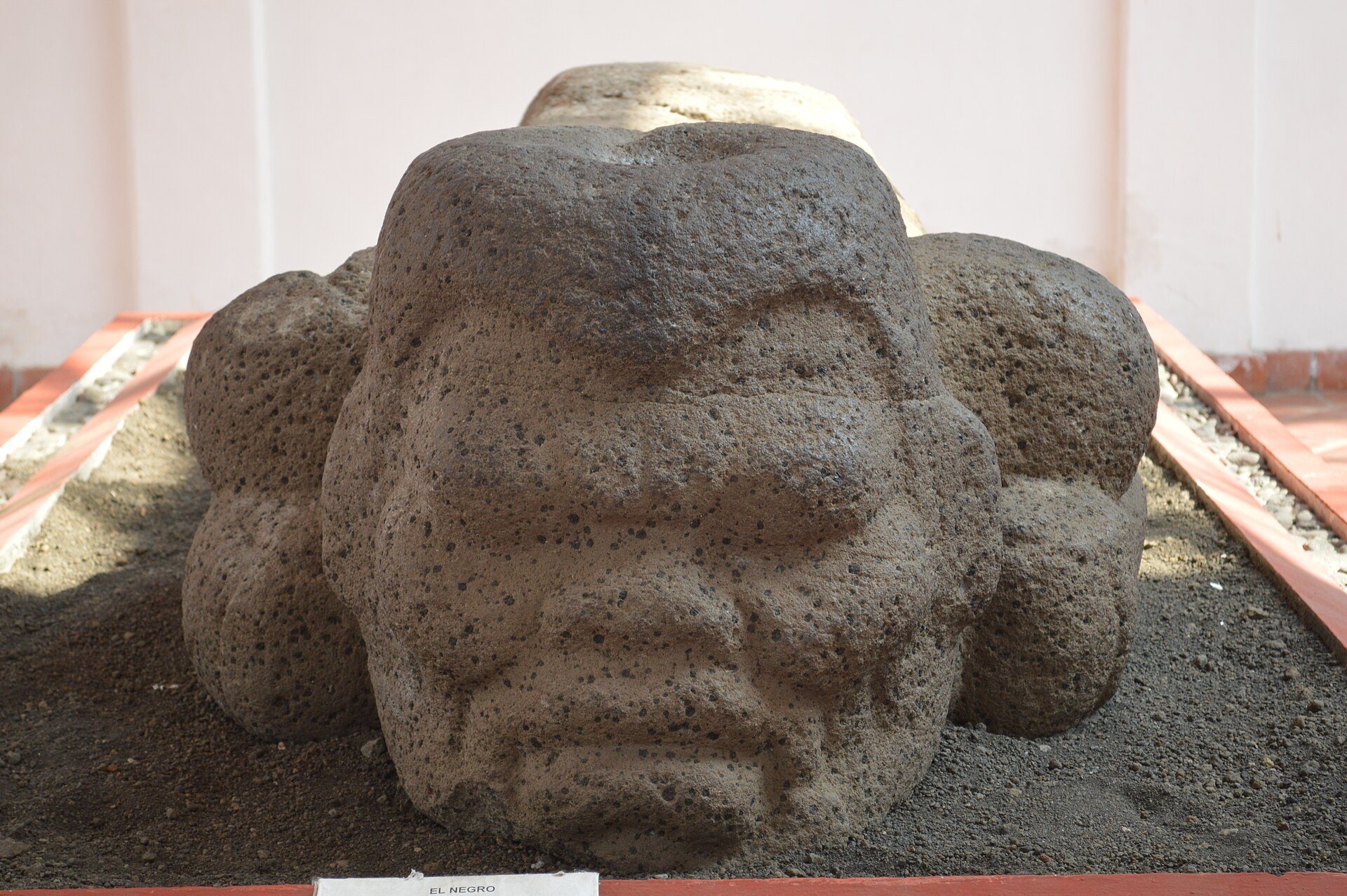
Two colossal heads, monumental human heads carved from stone, were found locally and are generally assigned to the Olmec period. José Melgar discovered the first near Tres Zapotes in 1862. The heads are now identified as Monument A and Monument Q. In 1939, archaeologist Matthew Stirling found the lower half of Stela C. The upper half was recovered in 1969, confirming Marion Stirling’s interpretation that the first digit of its calendar date was 7. The completed date, 7.16.6.16.18, corresponds to September 3, 32 BCE.
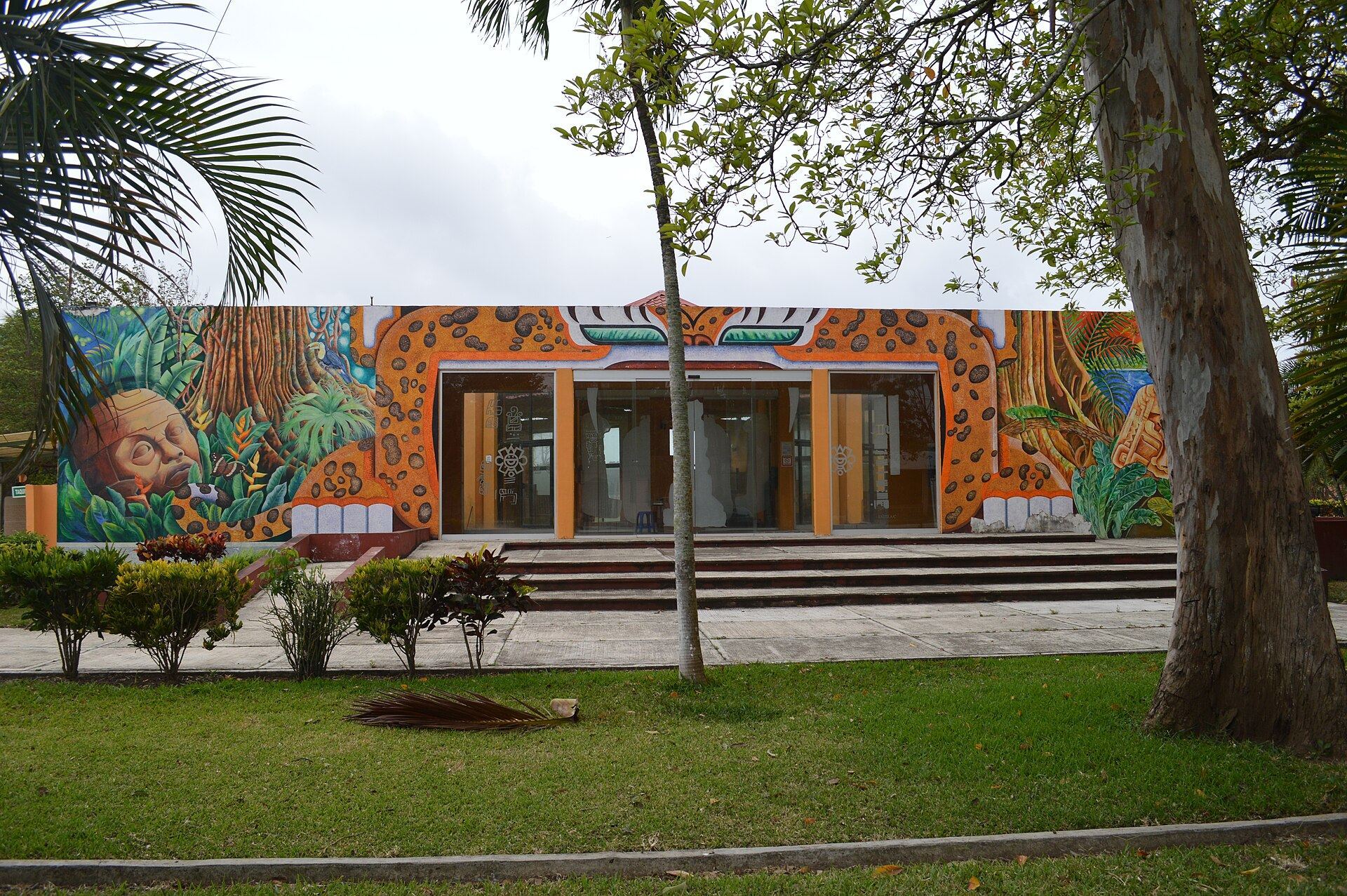
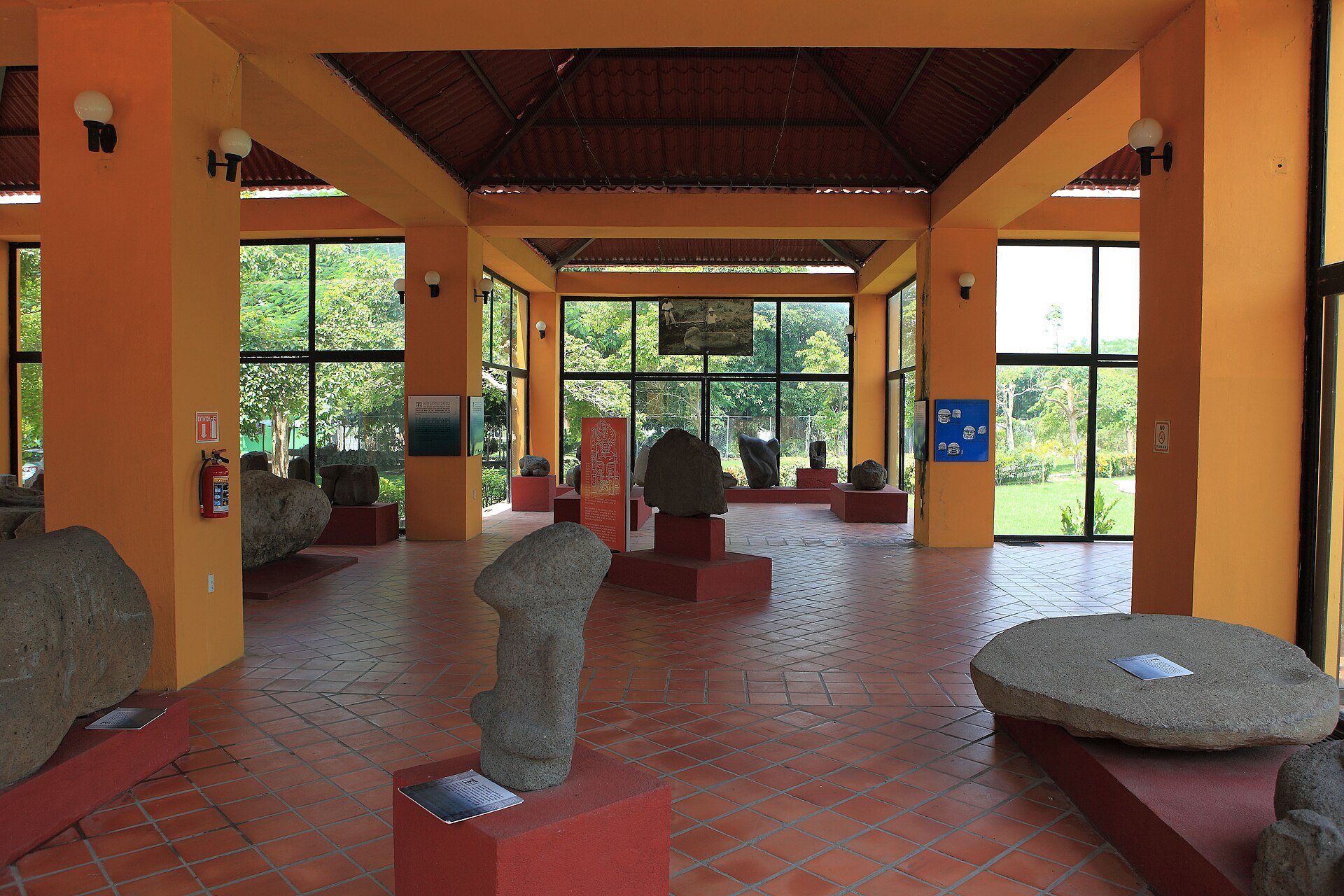
Stela C initially carried the oldest known Mesoamerican Long Count date. Since then, only one earlier date has been identified, on Stela 2 from Chiapa de Corzo. That monument bears the date 7.16.3.2.13, corresponding to 36 BCE. An archaeological museum in the nearby village of Tres Zapotes displays the two colossal heads and half of Stela C. The other half of the stela is held in Mexico City.
Remains
Setting and settlement layout
Tres Zapotes lies just north of the present-day village of the same name, west of Santiago Tuxtla in Veracruz. It occupies the western edge of the Los Tuxtlas Mountains beside the small Rio Hueyapan, at a transition between forested uplands and the swamps and streams of the Papaloapan River delta. More than 160 mounds, platforms, and related structures have been identified. Most are low platforms that supported residential buildings.
The principal Epi-Olmec settlement is arranged in four mound groups: Groups 1, 2, and 3, together with the Nestepe Group, also called Group 4. Each group centers on a large plaza. Group 2 lies near the middle of the residential core, while the other three groups are positioned nearly 1 kilometer from Group 2 and from one another. Their arrangement resembles the mound groups at Cerro de las Mesas. A pyramidal or conical mound generally occupies the western side of each group, with a long mound along the north. The long mounds probably supported administrative buildings or residences for higher-ranking members of society, while smaller mounds probably served as residences for lesser elites and temples.
Group 1
Group 1 forms one of the four principal mound groups and includes a large plaza, a western pyramidal or conical mound, and a northern long mound. Monument A, one of the site’s two colossal heads, stood in this group. The group forms part of a settlement pattern in which several mound centers were distributed across the residential core.
Group 2
Group 2 occupies approximately the center of the residential core. Its mound group includes a large plaza and structures following the wider arrangement of a western pyramidal or conical mound and a northern long mound. Mounds in the group reach up to 12 meters high, and its plaza covers about 4 hectares.
Group 3
Group 3 is another large mound group with a plaza of about 4 hectares and mounds rising as high as 12 meters. Its scale and complexity contrast with those of the Nestepe Group. These differences have been interpreted as reflecting varying access to labor and differences in the length of time that each faction held influence.
Nestepe Group
The Nestepe Group, also known as Group 4, has a simpler arrangement than Groups 2 and 3. Its mounds are less than 3 meters high, and its plaza covers about 1.5 hectares. Monument Q stood here rather than in the central Group 2, placing one of the site’s colossal heads within an outer mound group.
Sculpture and carved monuments
The two Tres Zapotes colossal heads are each slightly less than 1.5 meters high. Along with the cruder and considerably larger head from nearby Rancho la Cobata, they display a local style of dress and sculpture distinct from the styles associated with San Lorenzo and La Venta. Most of the site’s monumental sculpture dates to the Late Formative Epi-Olmec period. It continues earlier Olmec forms but generally has less refinement and detail, a difference partly related to the coarser basalt available locally.
Stela D shows a scene framed by the mouth of a monster. The framing resembles that of La Venta’s much earlier Altar 4, but the Tres Zapotes monument presents a historical subject rather than the mythical event shown on the Olmec altar. A similar framing device also appears on Izapa Stela 2.
Stela C
Stela C was carved from basalt, a dense volcanic stone used for large sculpture and construction. One side carries an Olmec-style image interpreted either as an abstract were-jaguar or as a ruler seated on a throne. The other side bears the Long Count date 7.16.6.16.18, while the back preserves one of the few surviving examples of Epi-Olmec writing. Unlike most other basalt stonework at Tres Zapotes, the stone used for Stela C resembles that of La Venta Stela 3 and the columns around La Venta Complex A. This material has been traced to Punta Roca Partida on the Gulf Coast north of the Los Tuxtlas Mountains.
Stone sources and production
Cerro el Vigía, an extinct volcano about 10 kilometers east of Tres Zapotes, supplied basalt, other volcanic stone, sandstone, and clay. Its summit contains large, smooth-faced, rounded boulders, some more than 3 meters in diameter, from which most of the basalt stonework at Tres Zapotes was made. The small nearby site of Rancho la Cobata, on the volcano’s northern flank, may have served as a workshop for producing monuments.