Pictograph Cave: A Native American Rock Art and Archaeological Site
Site at a Glance
- Rating
- 4.4
- Popularity
- Medium
- Country
- United States
- Primary era
- Classical
- External website
- Open
- Eras represented
- Classical, Medieval, Early Modern, Modern
- Civilizations
- Unclassified
- Site type
- Civic
- Remains
- Rock Art
On this page9 sections
History
Indigenous Use and Rock Art
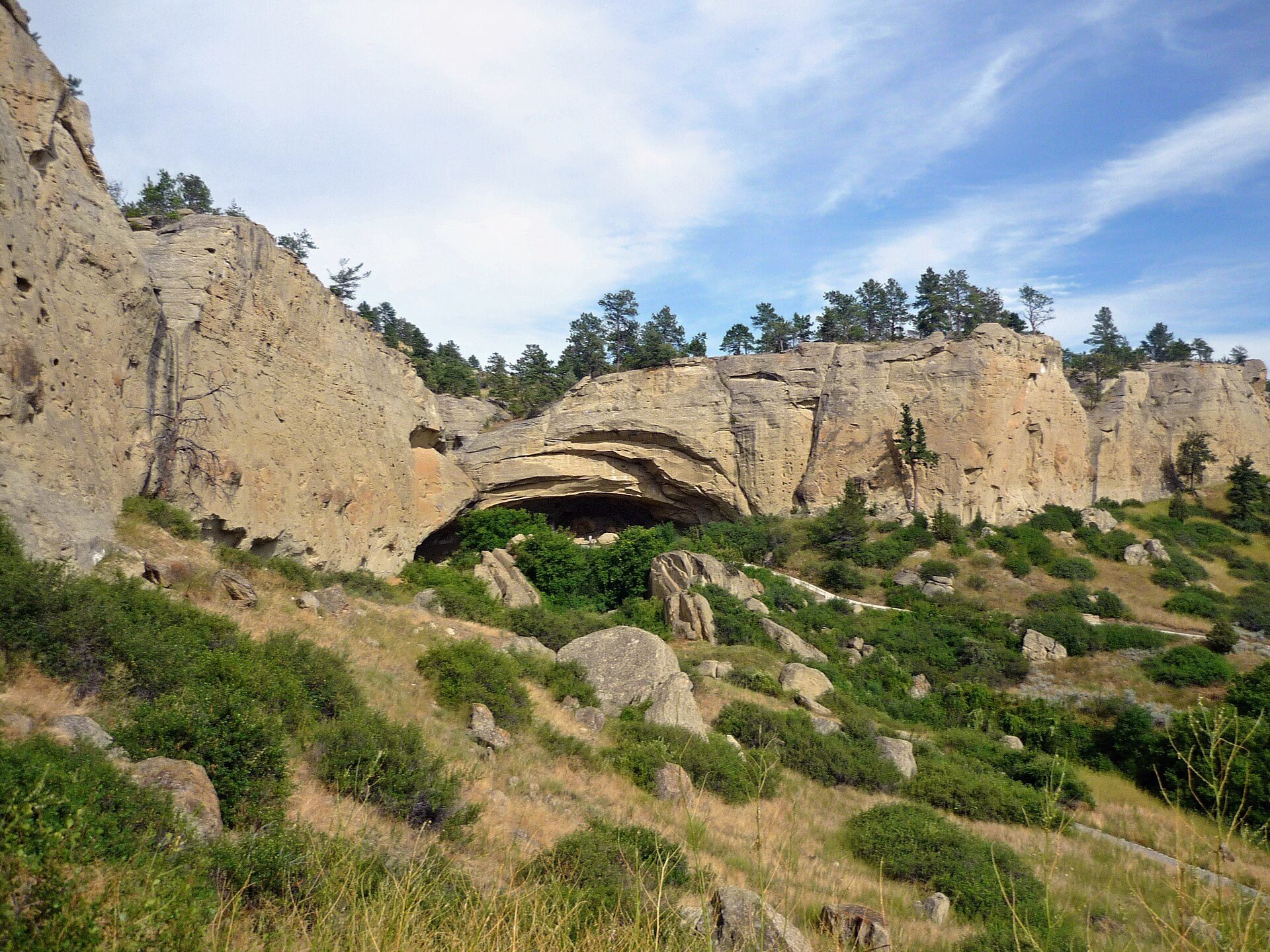
Pictograph Cave is a complex of three natural shelters near Billings, Montana, in the United States. The caves occupy a sandstone bluff and have long served as a culturally important gathering place for American Indians. Traditions also associated the complex with mystical power. Pictograph Cave’s painted images are generally dated to between approximately 200 and 2,100 years ago, although their meanings remain debated. Together, they preserve aspects of Native American lives and experiences in the area across a long period.
Archaeological Investigations
Excavation began in 1937, marking one of Montana’s first professional archaeological investigations. The main campaign continued from 1938 to 1941 under H. Melville Sayre of the Montana School of Mines. Sayre later hired Oscar Lewis, an archaeologist working with a Glendive Works Progress Administration crew. The Works Progress Administration was a New Deal agency that employed people on public projects during the Great Depression. William Mulloy became project director from October 1940 until February 1942.
The excavations yielded more than 30,000 artifacts, at least 20,000 animal remains, and the graves of nine or more individuals. Finds included barbed harpoon points made from caribou horn and associated with Eskimo culture. The work ended with the onset of World War II. Later visitation was poorly controlled, artifact records were inadequately maintained, and many recovered objects could no longer be accounted for. The museum built at the site was repeatedly burglarized and eventually burned by vandals.
Preservation and Public Recognition
Montana purchased a 22-acre property in 1937 and placed it under the jurisdiction of the Montana Highway Commission. Public interest during the excavation period, when more than 10,000 visitors were recorded, led to the construction of a small museum and visitor center. The building also provided space for processing artifacts, and L. B. McMullen, president of Eastern Montana Normal School, played an important role in developing it.
In 1963, Mayor Willard Fraser signed an agreement transferring park administration to the City of Billings, despite opposition from some aldermen. Management moved to the Parks Division of the Montana Department of Fish and Game in 1969, and the property became a state park in 1991. Pictograph Cave was designated a National Historic Landmark on July 19, 1964, and entered the National Register of Historic Places on October 15, 1966. These are separate United States recognitions, with the landmark designation identifying exceptional national historical importance and the register serving as a federal inventory of significant historic places. The caves are now preserved within the 23-acre Pictograph Cave State Park.
Remains
Natural Shelters
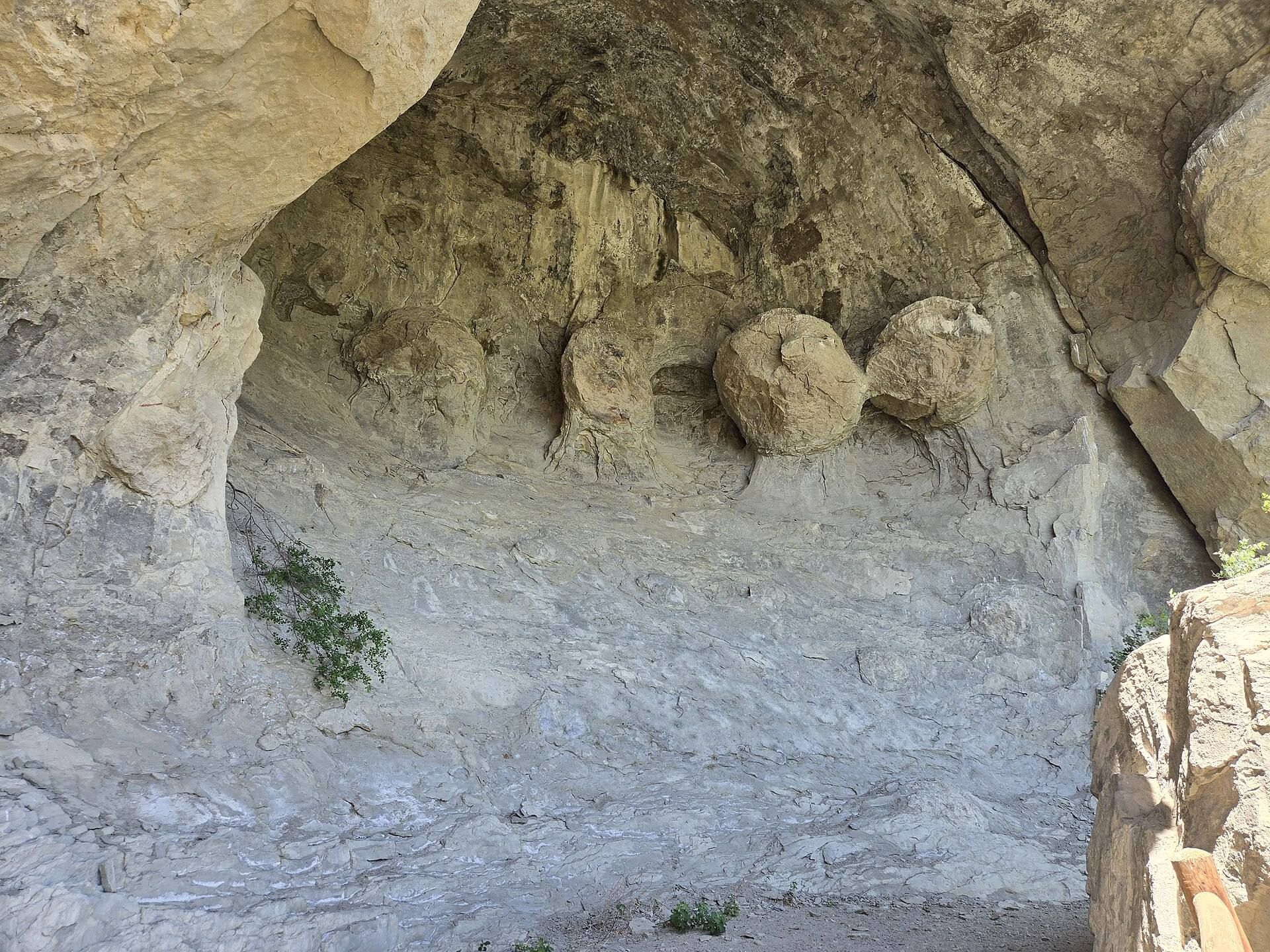
The site comprises Pictograph Cave, Middle Cave, and Ghost Cave, three natural shelters formed in a sandstone bluff south of Billings, near a route extending from the confluence of Bitter Creek and the Yellowstone River. Sandstone is a sedimentary rock formed from cemented sand grains. Pictograph Cave is the largest shelter and the only one identified as containing rock art. Within the state park, paved trails and interpretive signs connect the caves with information about the paintings, local geology, and vegetation.
Painted Wall and Archaeological Materials
Pictographs
Archaeologists identified 106 pictographs on the interior wall of Pictograph Cave. A pictograph is an image painted onto a rock surface. The paintings use red and white, with occasional yellow, over earlier black drawings. Their subjects include animals, warriors, and rifles. The oldest identified image is a turtle dated by radiocarbon analysis to approximately 2,100 years ago. Radiocarbon dating estimates age by measuring the decay of radioactive carbon in once-living material associated with an archaeological object or layer.
Excavated Materials
Archaeological materials from the caves include stone and bone tools, moccasins, arrow shafts, basketry, grinding stones, and fire-starting tools. Jewelry included shell pendants, bracelets, and beads made from shells obtained from Pacific Coast Indians. Animal remains represent large mammals such as bison and elk, along with reptiles, amphibians, and birds. They reflect human hunting, processing, and consumption, predation by carnivores and raptors, and the presence of animals that lived and died in or around the shelters.