Criel Mound: An Adena Burial Mound in South Charleston, West Virginia

Site at a Glance
- Rating
- 4.6
- Popularity
- Low
- Country
- United States
- Primary era
- Classical
- External website
- Open
- Eras represented
- Classical
- Civilizations
- Unclassified
- Site type
- Burial
- Remains
- Burial Mound
On this page7 sections
History
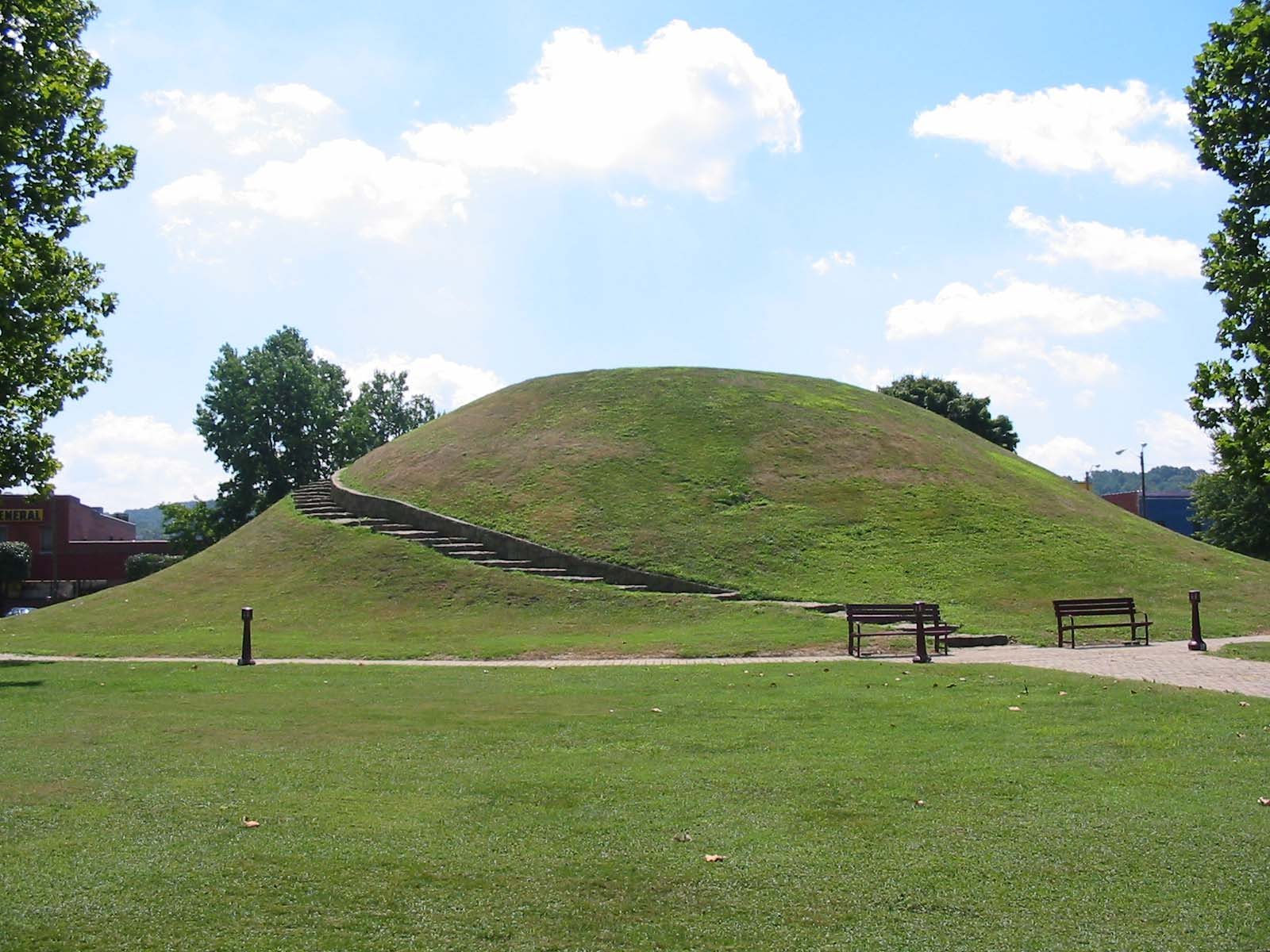
Criel Mound, also known as the South Charleston Mound, is a Native American burial mound in South Charleston, West Virginia, United States, built by the Adena culture around 250–150 BC during the Woodland period. It formed part of the Kanawha Valley Mounds, a group of burial mounds and circular earthwork enclosures constructed in the upper Kanawha River valley, probably after 500 BC.
The Adena earthwork landscape
The mound originally stood midway between two sacred circular earthwork enclosures, each measuring 556 feet (169 m) across. The wider concentration extended for about eight miles (13 km) along the upper terraces of the Kanawha River floodplain near present-day Charleston. In 1894, Cyrus Thomas reported 50 mounds and eight to ten circular earthworks in the area. This was the second-largest known concentration of Adena mounds and circular enclosures.
The Adena culture was a prehistoric society of the eastern North American Woodlands associated with burial mounds and related earthworks. These monuments formed part of the Woodland period, a broad era marked by regional cultures, pottery, mound construction, and increasing use of agriculture.
Alteration and excavation
In 1840, local residents leveled the top of Criel Mound to create a judges’ stand for horse races held around its base. The mound was excavated in 1883–84 under the US Bureau of Ethnology, a federal institution that investigated Indigenous cultures and North American archaeology. Colonel P. W. Norris supervised the work, which was carried out by Cyrus Thomas of the Smithsonian Institution.
The excavation identified thirteen burials. Two lay near the top, while eleven were positioned at the base. The base group included a very large central skeleton surrounded by ten others in a spoke-like arrangement, with their feet pointing toward the central burial.
Later preservation
Many Adena mounds in the Kanawha Valley were destroyed by later development. Criel Mound and Wilson Mound are among those that survive, while a reconstruction of the former Shawnee Reservation Mound stands in Institute, West Virginia. Criel Mound was added to the US National Register of Historic Places on October 15, 1970. The National Register is the federal list of places recognized for their historical or archaeological importance. The mound now forms the centerpiece of Staunton Park, a municipal park maintained by the city of South Charleston.
Remains
Criel Mound stands on the Kanawha Valley floodplain within a listed area of 1.5 acres (0.61 ha). It was originally conical, approximately 33 feet (10 m) high and 173 feet (53 m) in diameter at the base. These dimensions make it the second-largest burial mound in West Virginia, after Grave Creek Mound in Moundsville.
Mound and burial chamber
The eleven burials at the base were wrapped in elm bark and placed on a floor of white ash and bark. Holes around the base suggest that the bodies were enclosed within a wooden vault. The central skeleton had badly decayed, and a recorded measurement of 6 feet 8¾ inches (205 cm) described it as exceptionally large. The extreme height may have been increased by pressure from the overlying earth.
Objects associated with the burials included arrowheads, lanceheads, shell fragments, and pottery fragments. The central burial was accompanied by a fish dart, a lancehead, and a sheet of hammered native copper placed near the head.
Associated earthworks
The surrounding Kanawha Valley complex included circular enclosures ranging from 1 to 30 acres, approximately 120,000 square meters at the largest stated scale. Stone mounds were also reported on the bluffs above the floodplain. Together with the burial mounds, these deliberately constructed earthen boundaries formed the wider landscape in which Criel Mound was built.