Burnum – principum: Roman Military Headquarters in Croatia

Site at a Glance
- Rating
- 4.5
- Popularity
- Low
- Country
- Croatia
- Primary era
- Classical
- External website
- Open
- Eras represented
- Classical, Medieval
- Civilizations
- Ostrogothic, Roman
- Site type
- Military
- Remains
- Camp
On this page12 sections
History
Burnum – principum is the headquarters and administrative-religious centre of the Roman fortress and settlement of Burnum in Croatia, at Ivoševci. Built by the Romans in inland Dalmatia, the complex developed from an uncertain early military foundation into the monumental centre of a legionary camp and later a Roman municipality.
Origins and the legionary fortress
The name Burnum first appears in the writings of Pliny the Elder, who described it as a fortress associated with battles. An earlier site may have been an indigenous hillfort at Puljane on the left bank of the Krka, opposite the later Roman camp. Temporary Roman earth-and-ditch fortifications may have been established after 33 BC, although the precise foundation date of the permanent camp remains uncertain.
Legio XX Valeria Victrix was stationed at Burnum by the Pannonian-Illyrian revolt of AD 6 to 9, an uprising against Roman rule in the western Balkans. After the legion transferred to Germania, Legio XI Claudia replaced it and probably began constructing the permanent camp soon after arriving in AD 9 or 10. The camp probably reached its final form under Emperor Claudius, who ruled from AD 41 to 54. An inscription confirms construction activity in AD 51 and 52, while a military brickworks at nearby Smrdelji supplied at least part of the army’s extensive building material.
Legions, revolt, and urban change
Legio XI Claudia remained at Burnum until AD 69, first departing for Italy and then Germania in AD 70. A short-lived presence by Legio VIII Augusta or one of its detachments was followed in AD 70 by Legio IV Flavia Felix. Bricks stamped with that legion’s mark show that it built or repaired structures at the camp. Legio IV remained until AD 86, when it moved to Singidunum.
Burnum was connected with the rebellion of Lucius Arruntius Camillus Scribonianus against Claudius in AD 42. Scribonianus was a Roman military and political figure whose failed revolt was followed by major changes at the camp and its surrounding settlement. The principia, the headquarters and administrative-religious centre of a Roman military camp, was enlarged during this transformation.
After Legio IV Flavia Felix left, Burnum ceased to be a legionary station and lost its strongly military character. Smaller auxiliary units may have remained as peacekeeping forces, while settlement spread beyond the camp walls. The wider agglomeration included the legionary camp and its territory, an auxiliary fort, the canabae, civilian communities that grew beside military bases, a later civil settlement, and the indigenous Liburnian community centred on the hillfort at Puljane.
Municipal and late Roman phases
Burnum probably became a municipium under Emperor Hadrian, who ruled from AD 117 to 138. A dedication to Hadrian erected by municipal decurions, members of the town council, and dated to AD 118 provides the earliest dated evidence for this status. A second inscription mentioning decurions dates to AD 127.
Following the departure of the legionary garrison, the principia was converted into a civil forum with associated facilities. During the Trajanic-Hadrianic period, the era of Trajan and Hadrian from AD 98 to 138, a basilica was built within the former headquarters. This large public hall served judicial, administrative, and meeting purposes. Dedications to Trajan and Hadrian show that the imperial cult, the formal religious honouring of emperors and their families, was introduced in the complex.
During Antoninus Pius’s restoration of the Metroac cult, associated with the goddess Magna Mater, the Capitolium was reconstructed. Metroac and Venus shrines were added at the edges of its facade. These changes reflect Burnum’s development from a military base into a civic and religious centre.
Decline and archaeological investigation
Burnum was last mentioned by Procopius, a sixth-century Byzantine historian, in his account of the Byzantine-Gothic War of AD 535 to 555. After a Gothic defeat in AD 537, Gothic forces withdrew to Burnum, repaired the old camp walls, and launched another unsuccessful attack on Salona. The settlement is not mentioned thereafter, and its life eventually ended during the decline of late antiquity, probably before or during the Avar devastation of Dalmatia in the first decades of the seventh century.
The first recorded investigation of the principia was reported by Theodor Mommsen in 1859, when he transcribed an account of research carried out by the custodian Đ. Sundečić for the municipality of Kistanje. The Austrian Archaeological Institute in Vienna excavated the area in 1912 and 1913, followed by a review with the Archaeological Museum in Zadar in 1973. Further review excavations were conducted by M. Kandler, and systematic research has continued since 2002 through cooperation among the universities of Zadar and Bologna and the City Museum of Drniš.
Earlier reports and scholarly works identified the headquarters as the praetorium, the separate residence of a commanding officer. It was later recognized as the principia complex, clarifying the building’s role within the Roman camp.
Remains
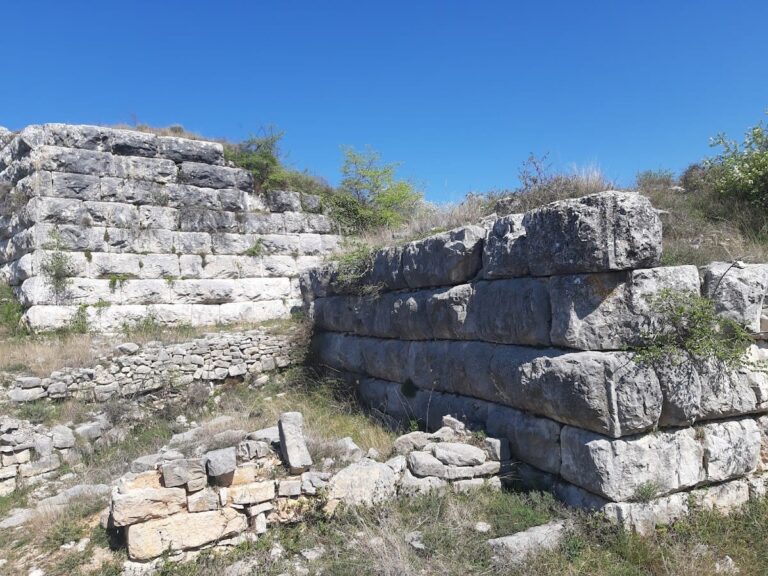
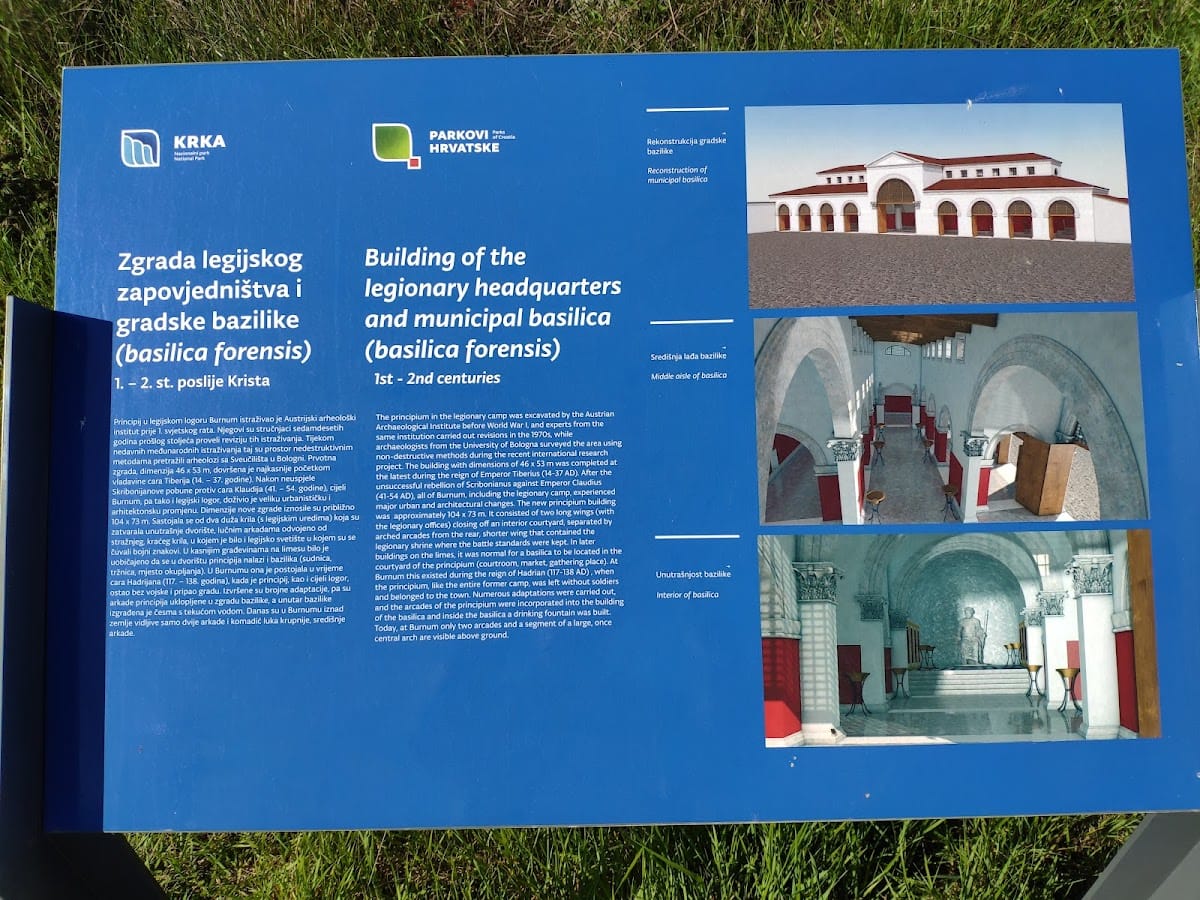
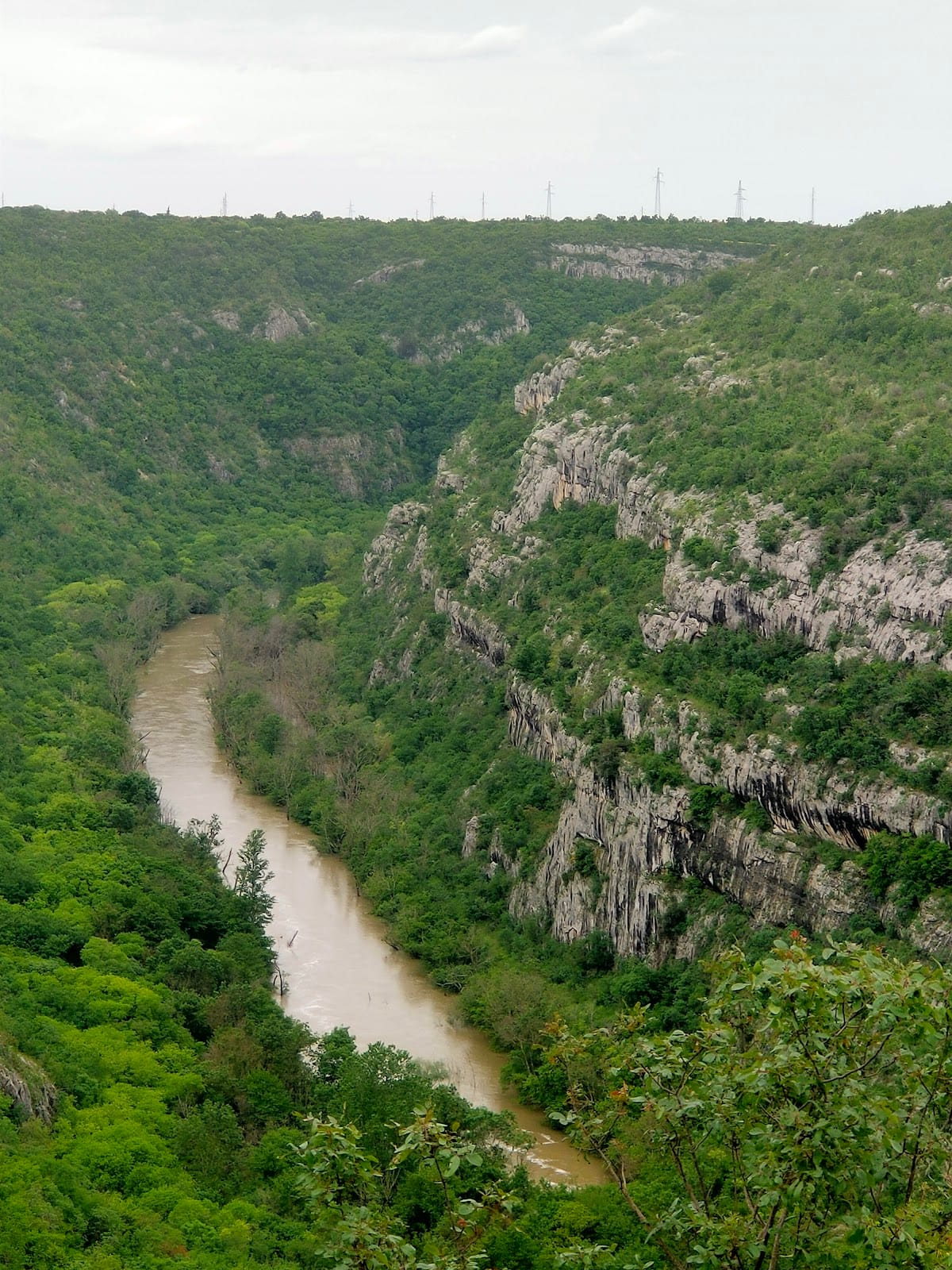
The surviving remains centre on the former principia, positioned where the camp’s two main roads, the via principalis and via praetoria, crossed. The complex formed a monumental central forum, with long administrative wings arranged around an interior courtyard and a shorter rear wing containing the shrine of the military standards. The ruins stand beside the Krka canyon. Nearby, a natural tufa barrier forms a lake upstream, while the Manojlovac waterfall lies downstream.
The headquarters complex
Principia and military shrine
The first principia measured about 46 by 53 metres and was complete no later than the beginning of Emperor Tiberius’s reign. After the revolt associated with Scribonianus, it was enlarged to approximately 104 by 73 metres. The expanded building had two long wings containing legionary offices, an archive, armouries, and meeting rooms. Arched arcades separated these wings from the shorter rear wing.
The forum was arranged around an open courtyard, normally enclosed by a colonnaded walkway. Access from the courtyard or the later basilica led to the shrine, generally an apsidal room for the signa, the unit’s military standards, and the legionary eagle. This space also served the worship of Jupiter and the imperial cult. Its underground section functioned as a treasury where soldiers’ pay was kept.
Basilica
The basilica was built probably during the Trajanic-Hadrianic period, when Burnum had municipal status. It crossed the long axis of the principia and appears to have incorporated the existing arcades as entrances along its long side facing the forum. In the civil phase, it served as a law court, council hall, and meeting place. Its raised tribunal provided a platform from which commanders or senior officers could address troops in the earlier military arrangement.
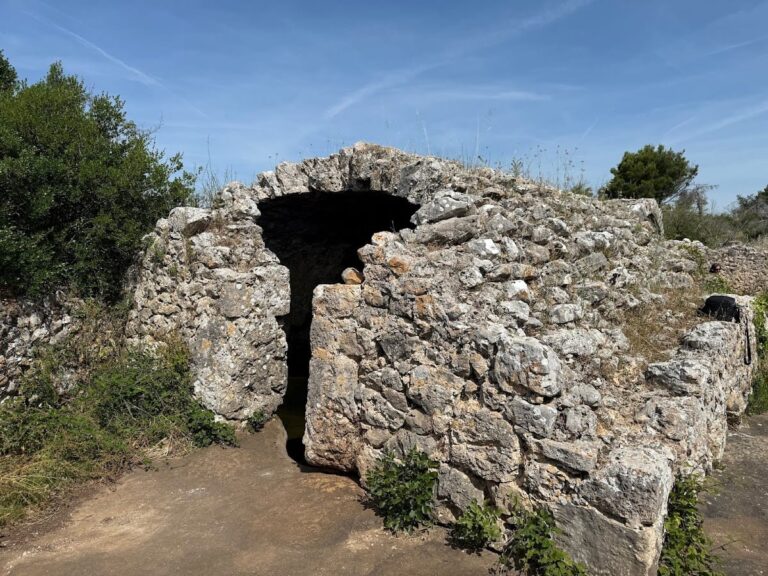
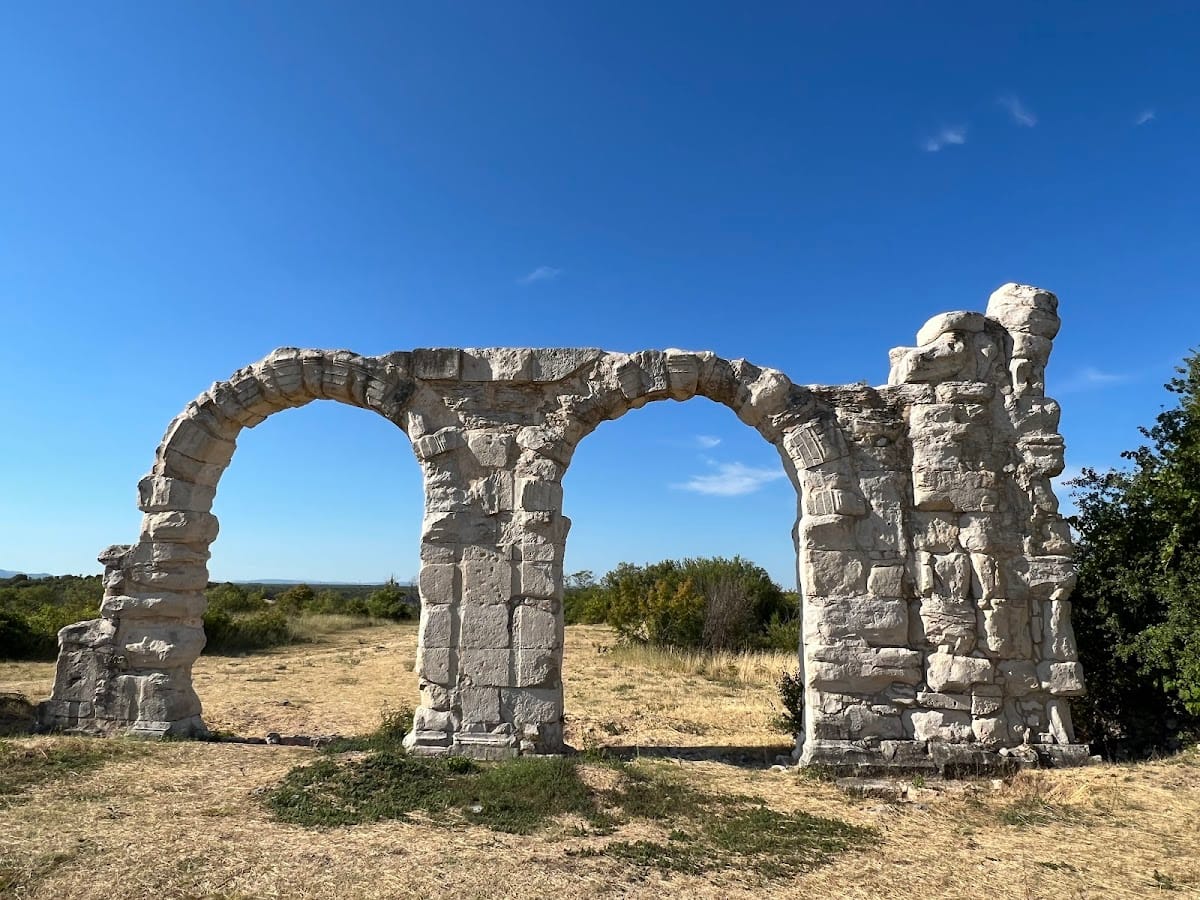
Only two arches and part of the larger former central arch remain visibly above ground. Popularly known as the Hollow Church, these arches are preserved mainly as archaeological ruins. The road from Knin toward Zadar approximately follows the line of the former via principalis.
Amphitheatre and religious evidence
Amphitheatre
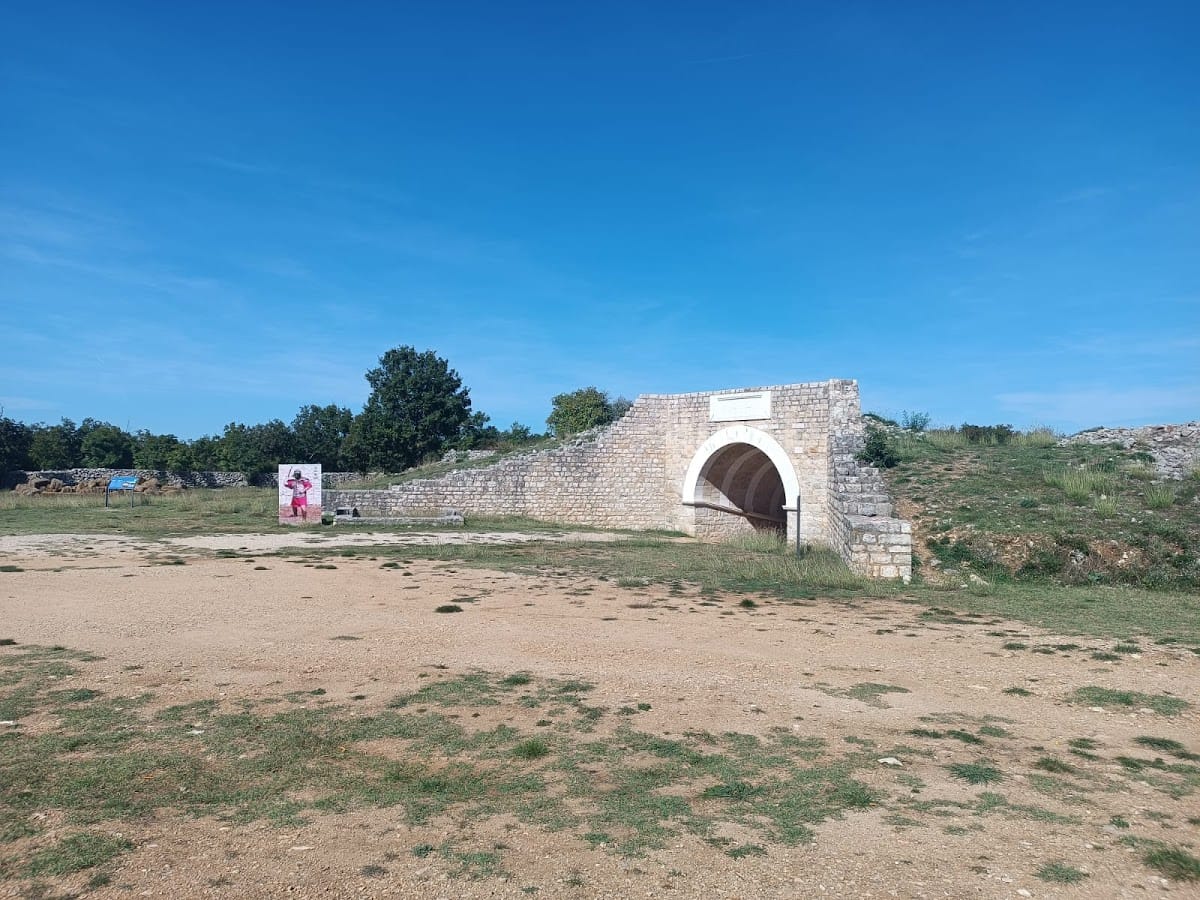
A second archaeological area contains the amphitheatre, about one kilometre southwest of the principia, on the western side of the road. It lies roughly 500 metres west of the presumed western camp wall. Its construction may have preceded the development of the civilian settlement, since Roman troops could have built the structure while Burnum still functioned primarily as a military base.
Altars and civic cults
Four altars found together at Ivoševci and dedicated to Jupiter support the possibility of a nearby temple to the chief Roman god. Dedications to Trajan and Hadrian provide evidence for imperial worship within the former principia area. Together with the reconstructed Capitolium and the added shrines associated with the Metroac cult and Venus, these finds illustrate the religious functions that continued within Burnum’s transformed civic centre.