Gawilghur Fort: A Maratha-Era Mountain Stronghold in India
Site at a Glance
- Rating
- 4.2
- Popularity
- Medium
- Country
- India
- Primary era
- Medieval
- Eras represented
- Medieval
- Civilizations
- Deccan Sultanates
- Site type
- Military
- Remains
- Fort
On this page12 sections
History
Origins and changing rule
Gawilghur Fort is a former mountain stronghold in India, near Chikhaldara in Maharashtra, whose major fortification was probably built around 1425–1426. Its exact construction date and original builder remain uncertain. A smaller fortification made from mud and wood may have existed earlier, while the larger work is attributed either to Gond kings or to Ahmed Shah Wali, a fifteenth-century Muslim ruler associated with the Deccan sultanates.
The fort stands north of the Deccan Plateau in the Amravati region, near the Melghat Tiger Reserve and the Satpura ranges. Its name is associated with the Gawli cattle herders who lived in Berar, a historical region corresponding broadly to parts of present-day Maharashtra. Gawilghur was held at different times by the Gujarat Sultanate, the Bahmani Sultanate, the Berar Sultanate, the Mughal Empire, Rajput forces of the Maratha confederacy, the Maratha Empire, and the British Empire. It remained in use from approximately 1425 until 1803.
The British capture in 1803
During the Second Anglo-Maratha War, the conflict in which the British captured Gawilghur, Arthur Wellesley besieged the fort on 15 December 1803. Two attacks on the main gate by British and sepoy companies, Indian soldiers serving in a European-controlled army, failed. Captain Campbell then led the light company of the 94th Highlanders through the ravine between the outer and inner forts.
The troops entered the inner fort by escalade, an assault in which soldiers climb or scale defensive works. They seized the northern gatehouse and opened the other gates for the remaining British forces. The final assault caused approximately 150 British casualties. After peace was made with the British, the fort was returned to the Marathas and to its killedar, or military governor, Rana Shivsingh Rajput. It was later abandoned, and its strategic military function ended in 1803.
Later associations
Gawilghur is associated with the campaign depicted in Bernard Cornwell’s novel Sharpe’s Fortress, the third book in a series about the British soldier Richard Sharpe in India during the Napoleonic period. The fort is now owned by the Government of India and is described as abandoned.
Remains
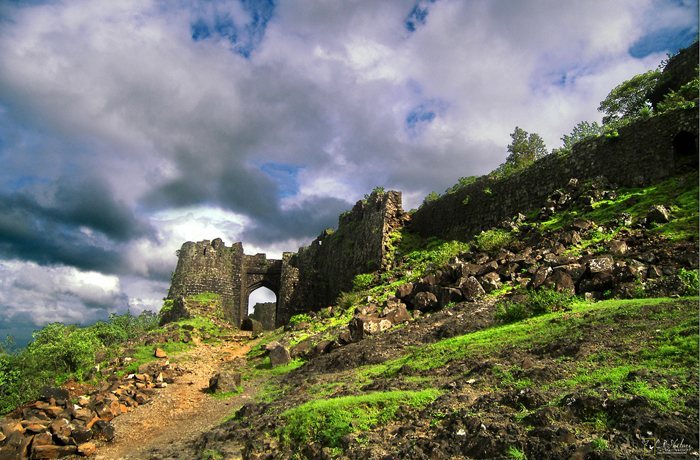
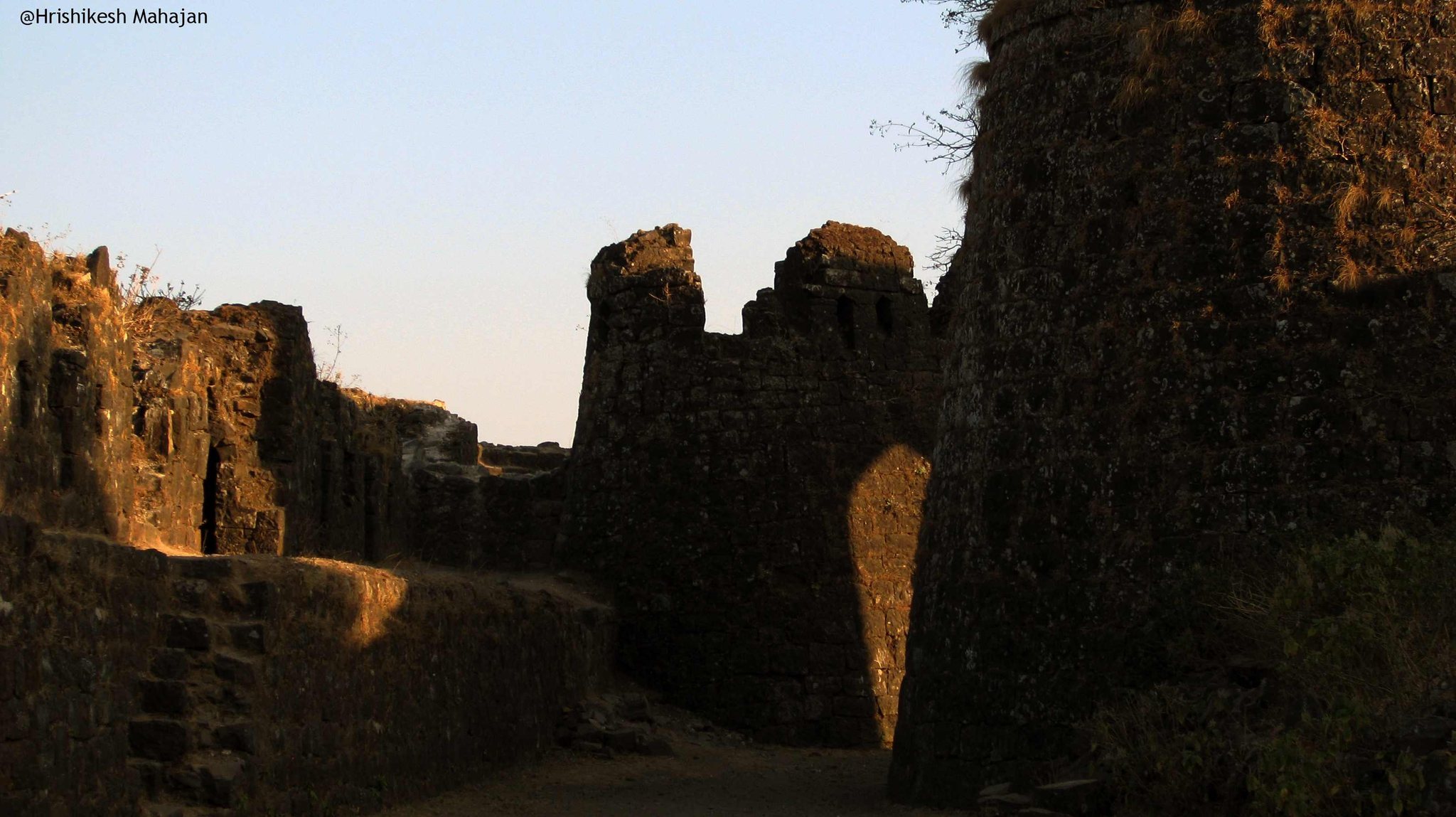
Gawilghur is a stone hill fort standing at approximately 1,103 metres above sea level. Its defenses are arranged in outer and inner fortified areas divided by a ravine, and the approach used during the 1803 assault followed this natural separation into the inner fort. The surviving remains include walls, gates, waterworks, an elevated mosque, an observation tower, and a lake.
Fortifications and water supply
Gates and walls
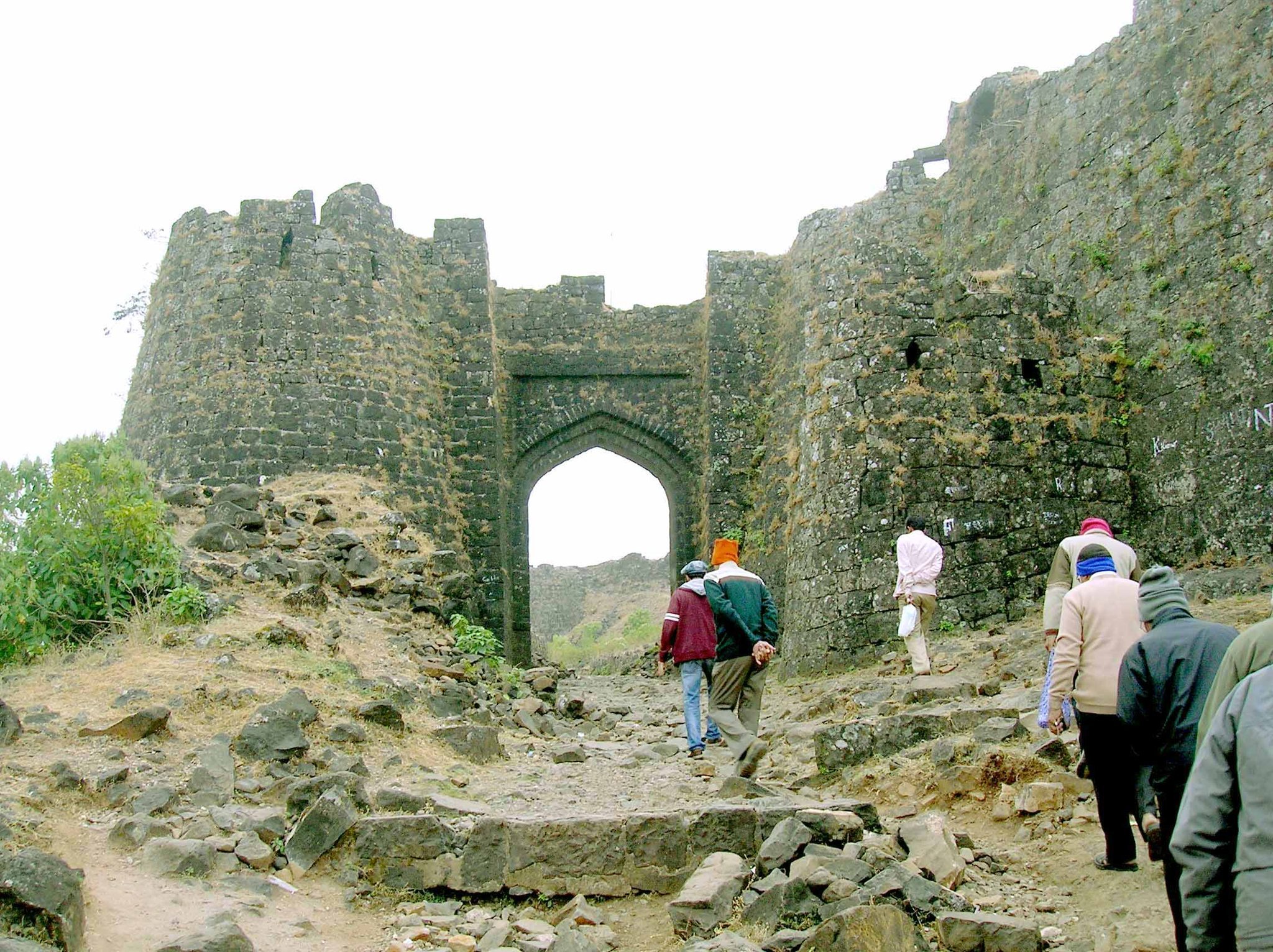
Seven gates are associated with Persian inscriptions, which record the date on which each gate was built. The northern gatehouse was the point seized during the British capture in 1803. Several breaches made by British cannon fire remain in the fort walls, preserving physical evidence of the assault.
Water tanks
The fort’s two water tanks, Devtalav and Khantalav, supplied the stronghold and were intended to provide its main water source during a siege. Their position within the fortified site reflects the importance of maintaining water supplies during military operations.
Religious and internal structures
Inner-fort mosque
The most prominent internal ruin is a mosque at the highest point of the inner fort. Built in the Pathan architectural style, a tradition associated with Muslim ruling groups of Afghan or Afghan-influenced origin in South Asia, it has a square canopy, intricate stone latticework, and a seven-arched facade. The mosque originally had two minarets, of which one remains intact.
Observation tower and cannon
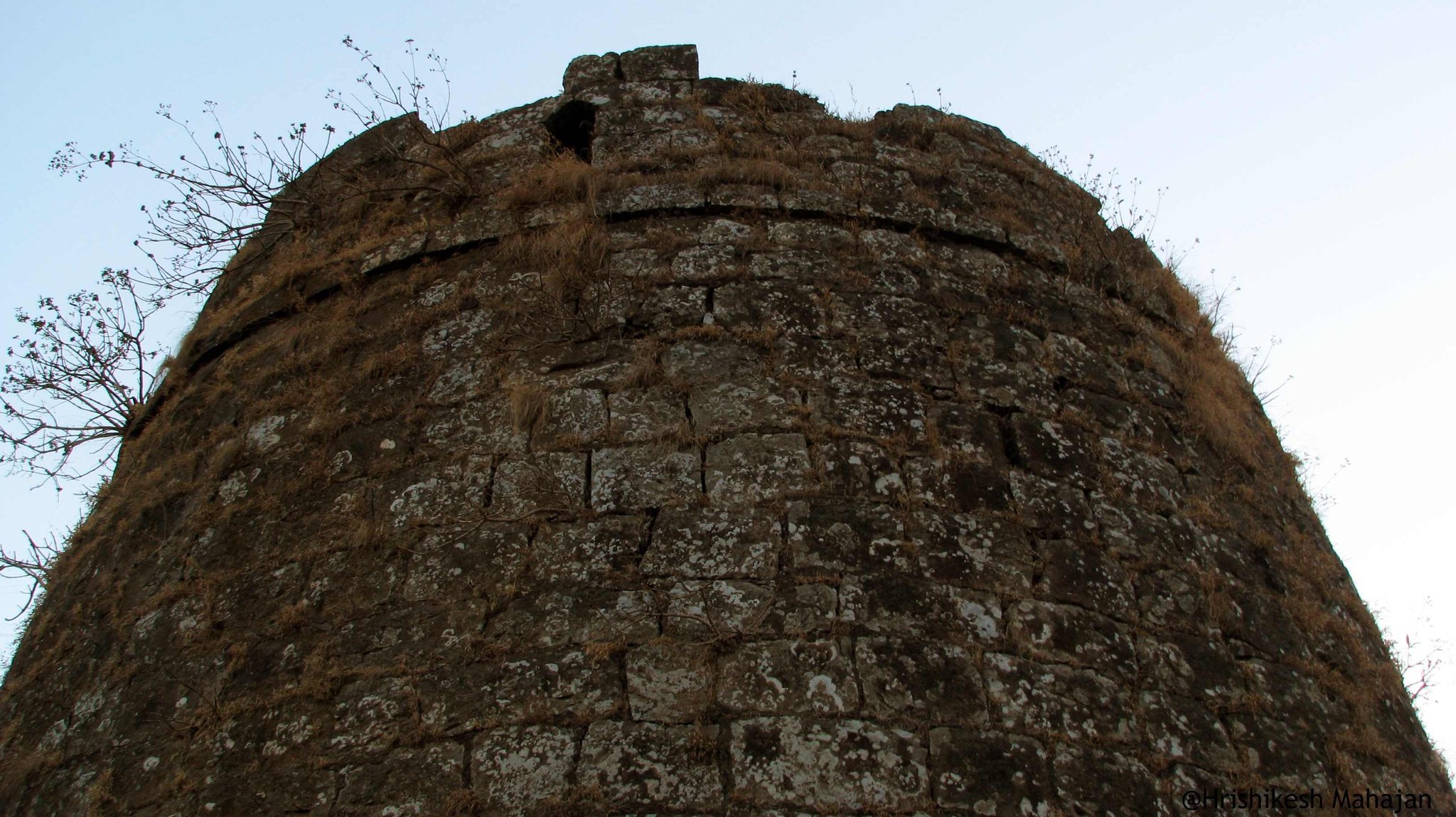
An observation tower known as a Buruj survives among the fort’s internal features. A cannon reputed to have killed five attackers with a single shot also remains at the site, although its barrel is now covered with graffiti.
Lake and alleged underground passage
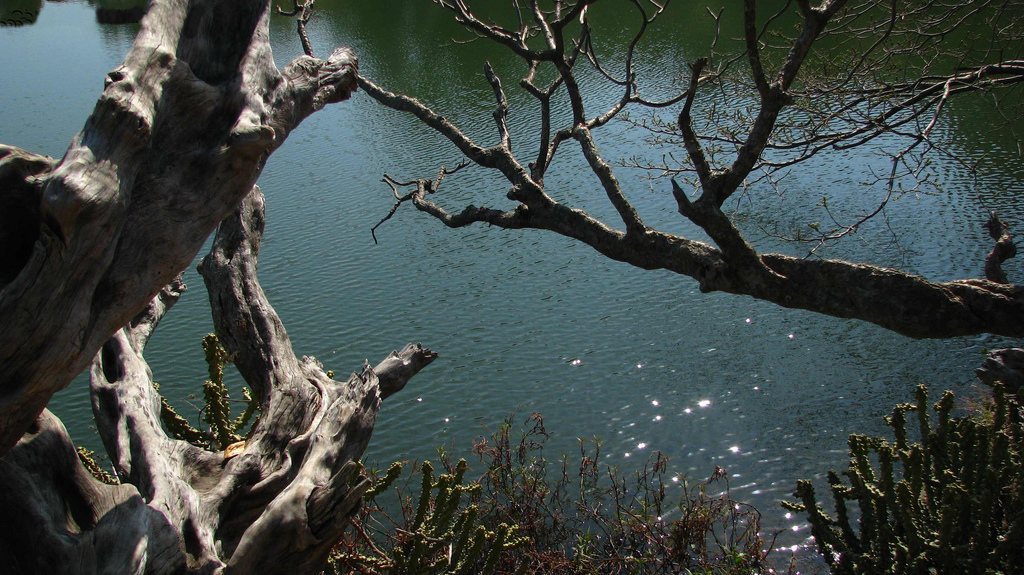
A lake forms another identified feature within the fort. The site is also linked to a story involving Gafur Ahmed, formerly a jaglia of Narnala Fort. He is said to have tested chambers there by placing 20 sheep inside; one reportedly emerged at Gawilghur, more than 30 kilometres away. This story has led to the suggestion of an underground tunnel between Narnala and Gawilghur, but the tunnel’s existence remains uncertain.