Henaio: A Prehistoric and Ancient Hillfort in Spain
Site at a Glance
- Rating
- 4
- Popularity
- Very Low
- Country
- Spain
- Primary era
- Iron Age
- External website
- Open
- Eras represented
- Bronze Age, Iron Age, Classical
- Civilizations
- Celtiberian, Roman
- Site type
- Military
- Remains
- Fortified Town
On this page10 sections
History
Henaio is a fortified settlement in Spain, located within the municipality of Alegría-Dulantzi in Álava. Its occupation extends from the Late Bronze Age through Iron Age phases I and II, with later Roman-period evidence, and the settlement is often described as Celtiberian. A hillfort is a fortified settlement whose defensive position is central to its layout, while Celtiberian communities combined Celtic cultural elements with local traditions of the interior Iberian Peninsula.
Prehistoric and Iron Age settlement
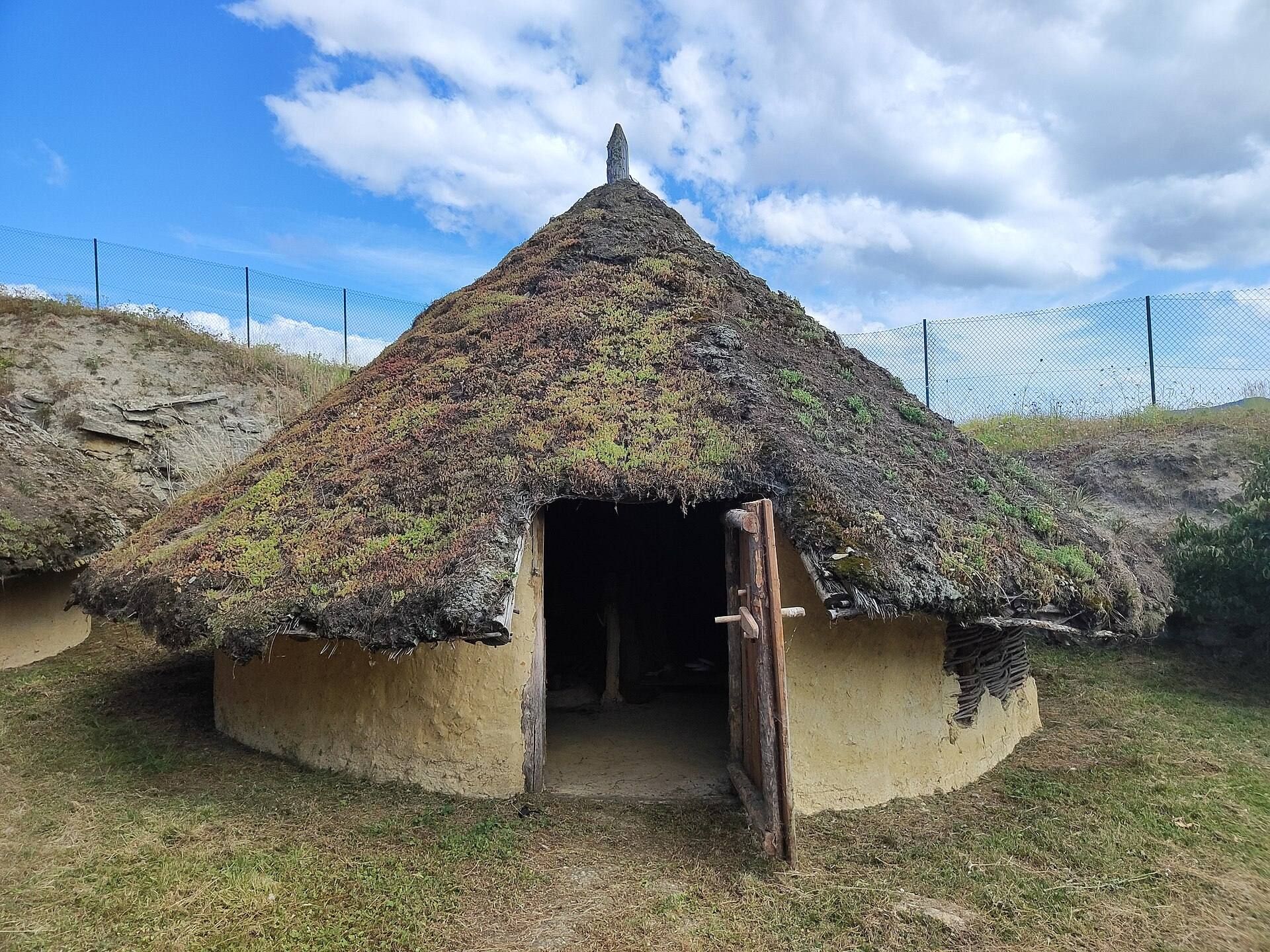
Archaeological evidence places Henaio between the Late Bronze Age and the successive phases of the Iron Age. The fortified settlement is estimated to have been occupied for about 800 years during the Iron Age. Its position on a hill and its defensive walls formed part of a settlement that included circular-plan dwellings and other structures.
Later activity brought Henaio into the Roman period, and an eighteenth-century account by Lorenzo Prestamero interpreted a monument found at the site as Roman. Prestamero was an eighteenth-century historian and antiquarian. The historian Landazuri also wrote about Henaio, preserving the site’s place in the historical study of Álava.
Medieval settlement and archaeological investigation
Henaio is recorded as a populated village in 1257. It was abandoned during the fourteenth century, when its inhabitants moved to Alegría de Álava. Documentary evidence also refers to a small Navarrese castle at Henaio and connects the site with the settlement known as the Henaio hillfort.
A former church dedicated to Saint Michael, the archangel prominent in Christian tradition, was later used as a hermitage. The site’s first archaeological interventions took place in the 1960s. Excavations began in 1968, followed by work in 1969 and 1970 directed by the Alavese archaeologist Armando Llanos. These campaigns uncovered numerous structures and archaeological materials. The fortified settlement is protected as a classified monument ensemble.
Remains
Hilltop settlement
Terraced upper area
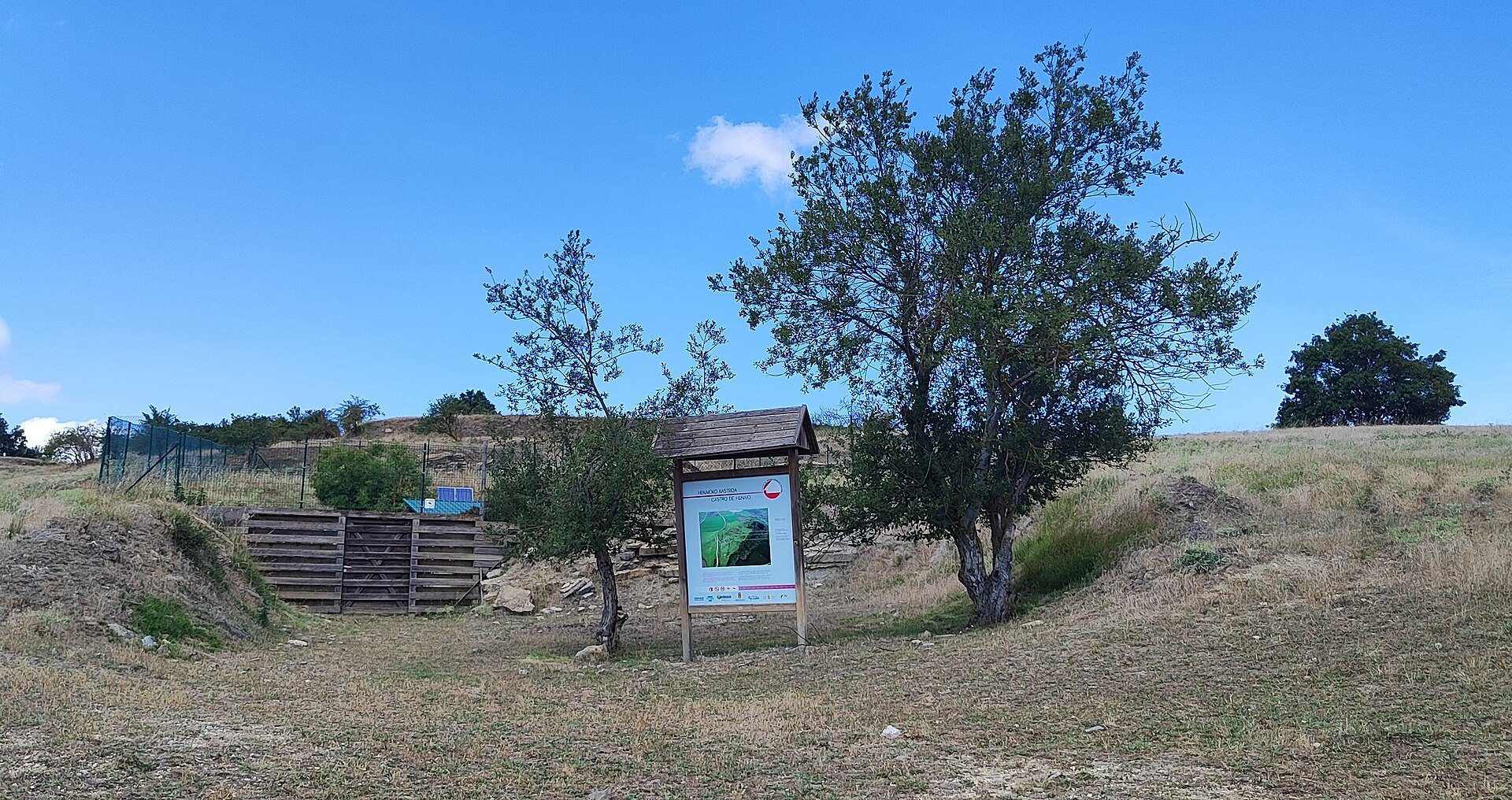
The settlement occupies a spur at about 664 metres above sea level. A rocky escarpment and dense wild vegetation protect its northern and eastern sides, while the southern and western slopes descend more gradually in a series of terraces. The upper settlement follows the north-eastern escarpment and extends for up to approximately 250 metres in length and 80 metres in width. It covers about 20,000 square metres and is arranged across eight terraces that regularize the natural slope.
Defensive walls and dwellings
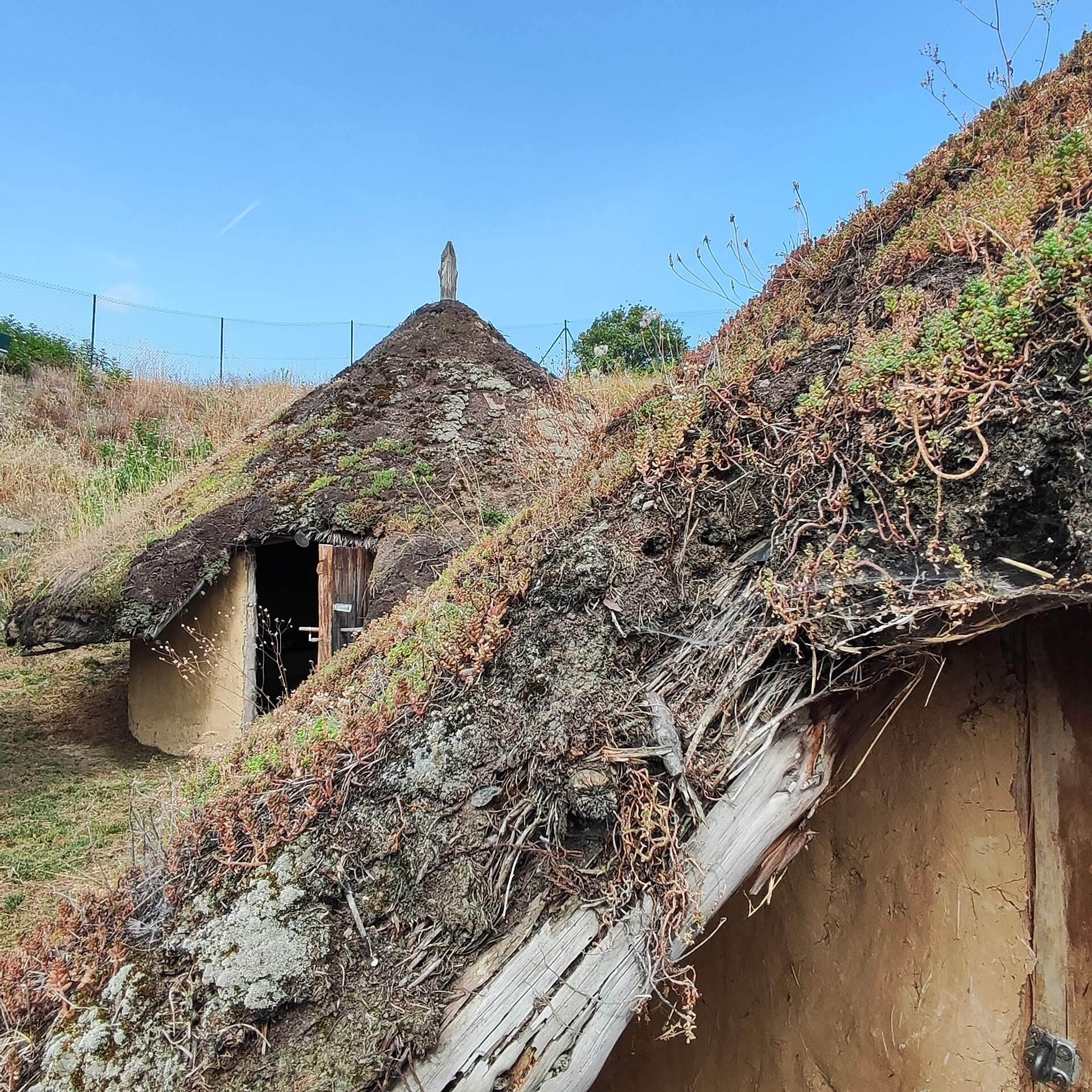
Excavations exposed defensive walls and circular-plan dwellings. Together, these remains show how the settlement combined fortification with domestic structures on the elevated spur. The hill’s natural escarpment provided part of the defensive setting, while the constructed walls and terraced ground organized the inhabited area.
Excavated terrace and associated landscape
Second terrace
Excavation concentrated on the hill’s second terrace, a broadly rectangular area between two properties. It measures approximately 18 metres across and 80 metres in length, with a slope from west to east. The first terrace forms its north-western boundary through a change in level, while the north-eastern side meets the hill’s escarpment. A drop of about 1.30 to 2 metres separates it from the third terrace on the south-eastern side. On the south-west, that level difference fades into an unobstructed passage.
Evidence of later activity
Holes visible in the upper part of the hill are apparently connected with former lime-extraction activities. The name Henaio also applies to a river north of Alegría-Dulantzi, a hill identified with the castle site, and agricultural fields south of the river near the town, linking the archaeological location with a wider local landscape.