Paranda Fort: A Medieval Land Fort in Maharashtra
Site at a Glance
- Rating
- 4.3
- Popularity
- Medium
- Country
- India
- Primary era
- Medieval
- Eras represented
- Medieval, Early Modern
- Civilizations
- Deccan Sultanates
- Site type
- Military
- Remains
- Fort
On this page11 sections
History
Paranda Fort is a medieval land fort at Paranda in Maharashtra, India. Its construction has been attributed variously to Mahmud Gawan, a leading minister and military administrator of the Bahmani Sultanate, to Murtaza Nizam Shah II in the early seventeenth century, and to the Maratha ruler Jadhavrao. The Imperial Gazetteer assigns it to Mahmud Gawan, although contemporary records do not confirm that attribution.
Bahmani and Nizam Shahi rule
The earliest recorded reference to Paranda belongs to the reign of Mahmud Shah Bahmani, a ruler of the Bahmani Sultanate. During this period, command of the fort was assigned to a nobleman known by the title Khan Jahan. Paranda remained under Bahmani authority and later passed to the Ahmadnagar Sultanate, ruled by the Nizam Shahi dynasty.
The fort stood in a frontier zone between the Nizam Shahi, Adil Shahi, and Qutb Shahi sultanates. These successor states emerged in the Deccan after Bahmani power weakened. The Nizam Shahis ruled Ahmadnagar, the Adil Shahis ruled Bijapur, and Paranda’s position between their territories brought repeated skirmishes.
Nizam Shahi capital and Adil Shahi control
After the Mughal conquest of the Ahmadnagar capital, Paranda became the seat of the Nizam Shahi dynasty and retained that role almost until the dynasty ended. Its governor later sold the fort to the Adil Shahi state for 300,000 huns, a monetary unit used in the Deccan.
Mughal sieges and transfer
The Mughal Empire, the major early-modern Islamic empire that expanded across the Deccan, unsuccessfully attacked Paranda twice during the reign of Shah Jahan. Azam Khan led a siege around 1631, followed by another under Mahabat Khan in 1634. The latter engagement is known as the Siege of Parenda.
During the reign of Aurangzeb, a Mughal emperor associated with further expansion in the Deccan, the Adil Shahi governor Ghalib ceded Paranda to the Mughals without a fight. In return, he received money, valuable gifts, and a high position in the Mughal army. Under Mughal rule, Paranda functioned as a mint town, where official coinage was produced.
Written references and protection
Paranda appears in the Honnati inscription dated 1924 and in later copper-plate records associated with the Kalyan Chalukyas. Yadava epigraphs, or inscriptions, use the forms “Pallyanda” and “Pratyandaka.” The fort is protected by the Archaeological Survey of India and is also a state-protected monument under the Maharashtra Ancient Monuments and Archaeological Sites and Remains Act of 1960.
Remains
Fortifications
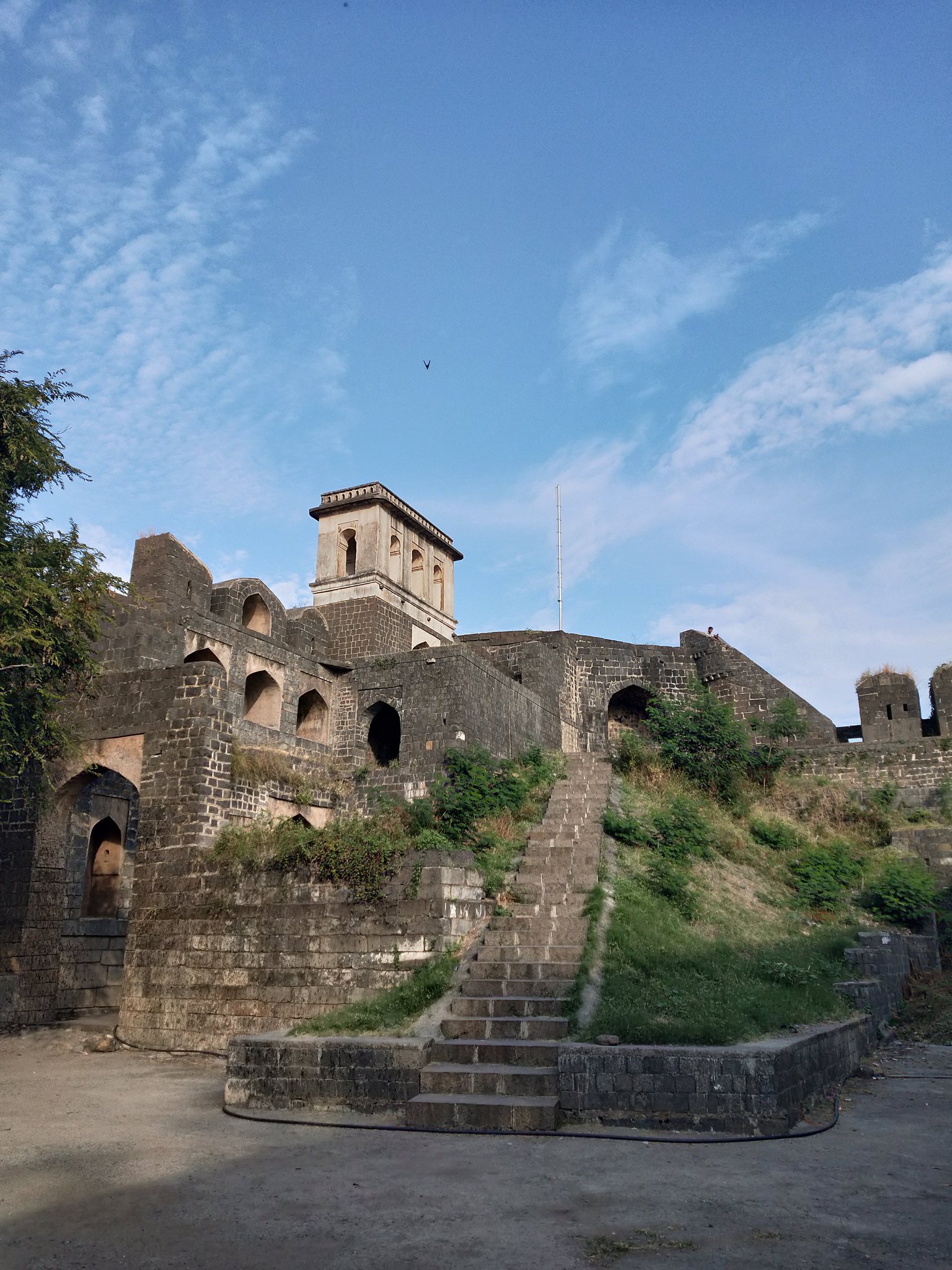
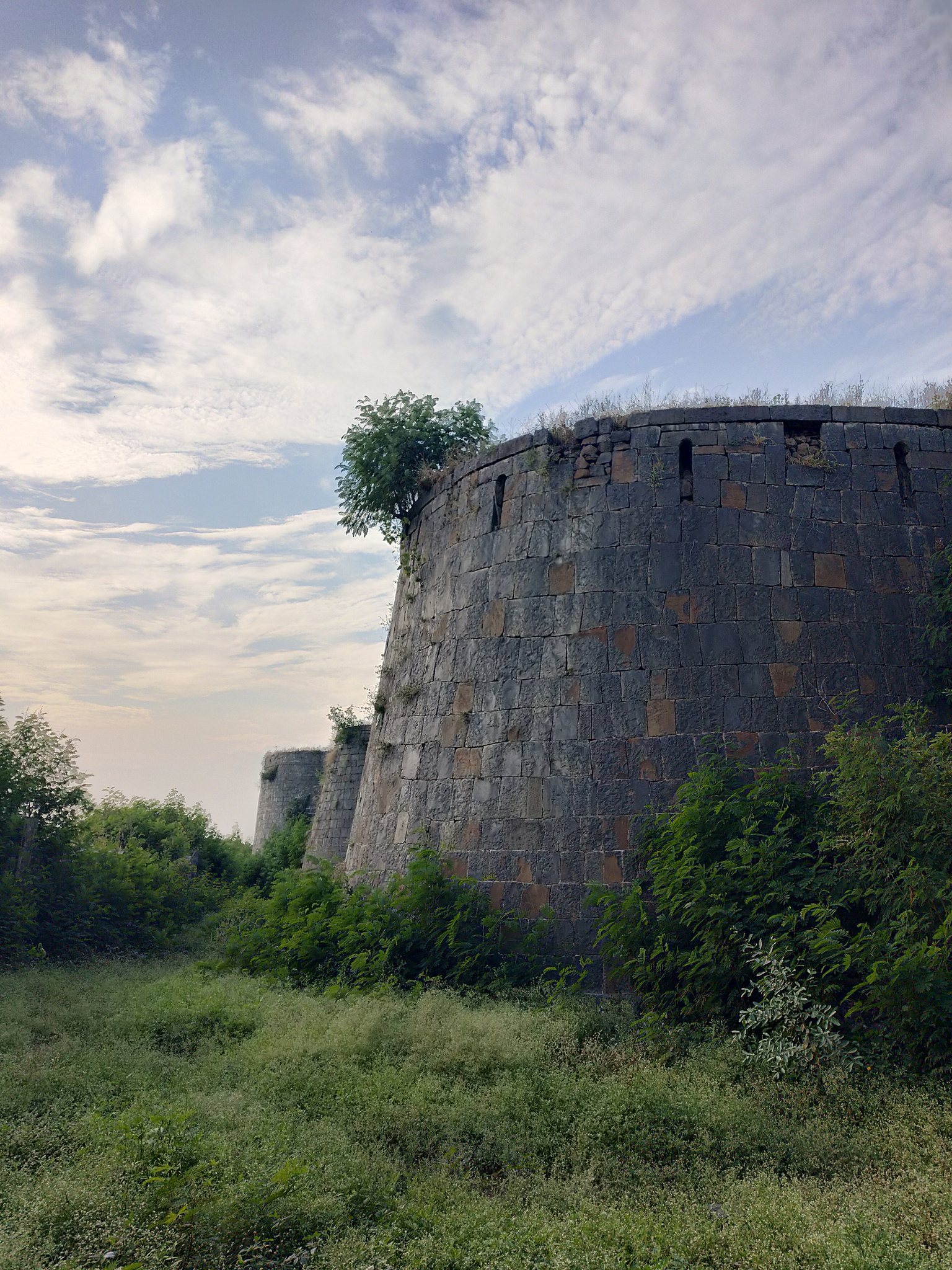
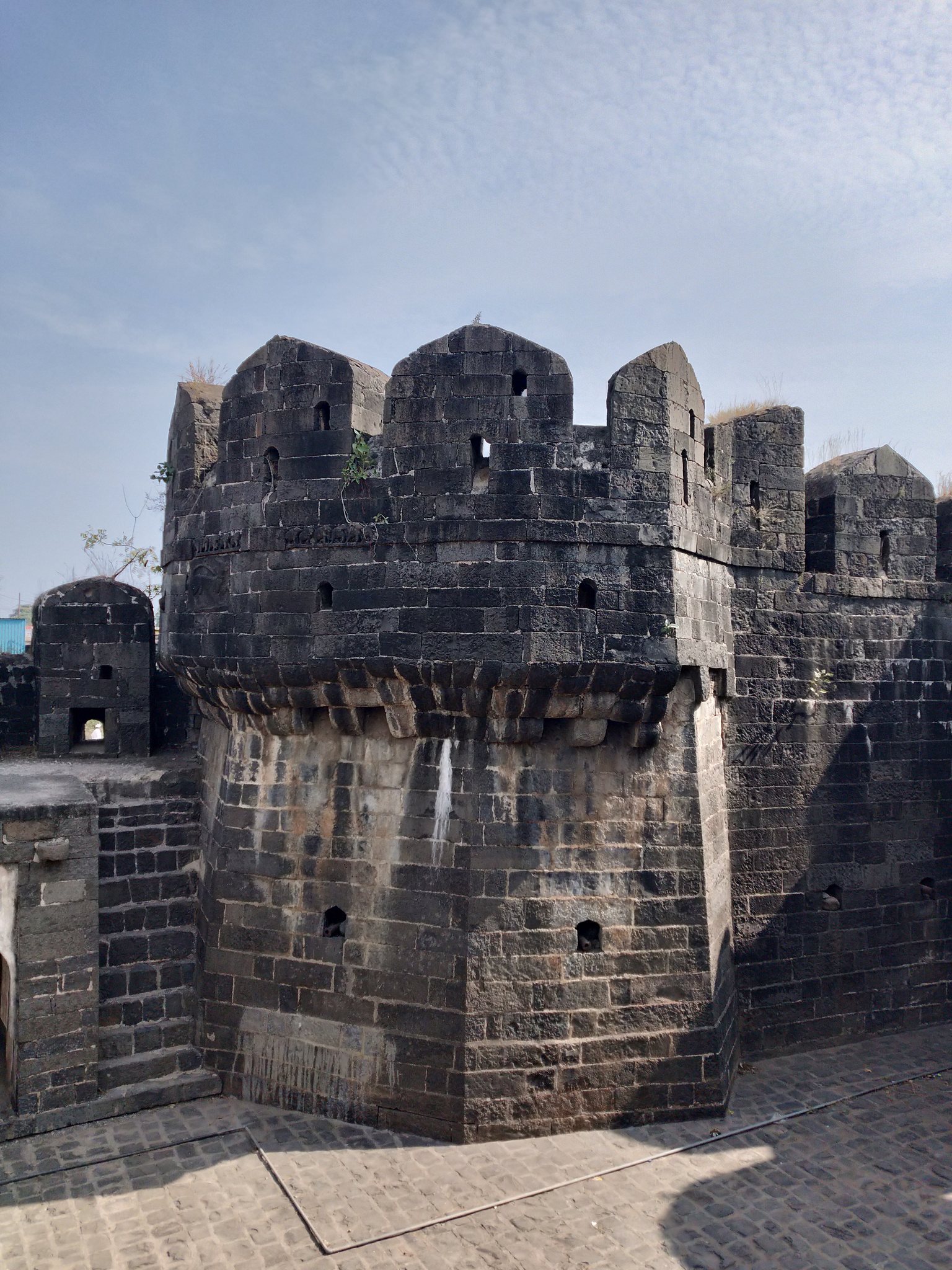
Paranda Fort is built from basalt, granite, and lime mortar. Its plan forms a parallelogram, with the northern and southern walls slightly longer than the other two. A glacis, or sloping defensive embankment intended to expose attackers to fire, surrounds the outer defence. Beyond it stands an outer wall about 13 feet high.
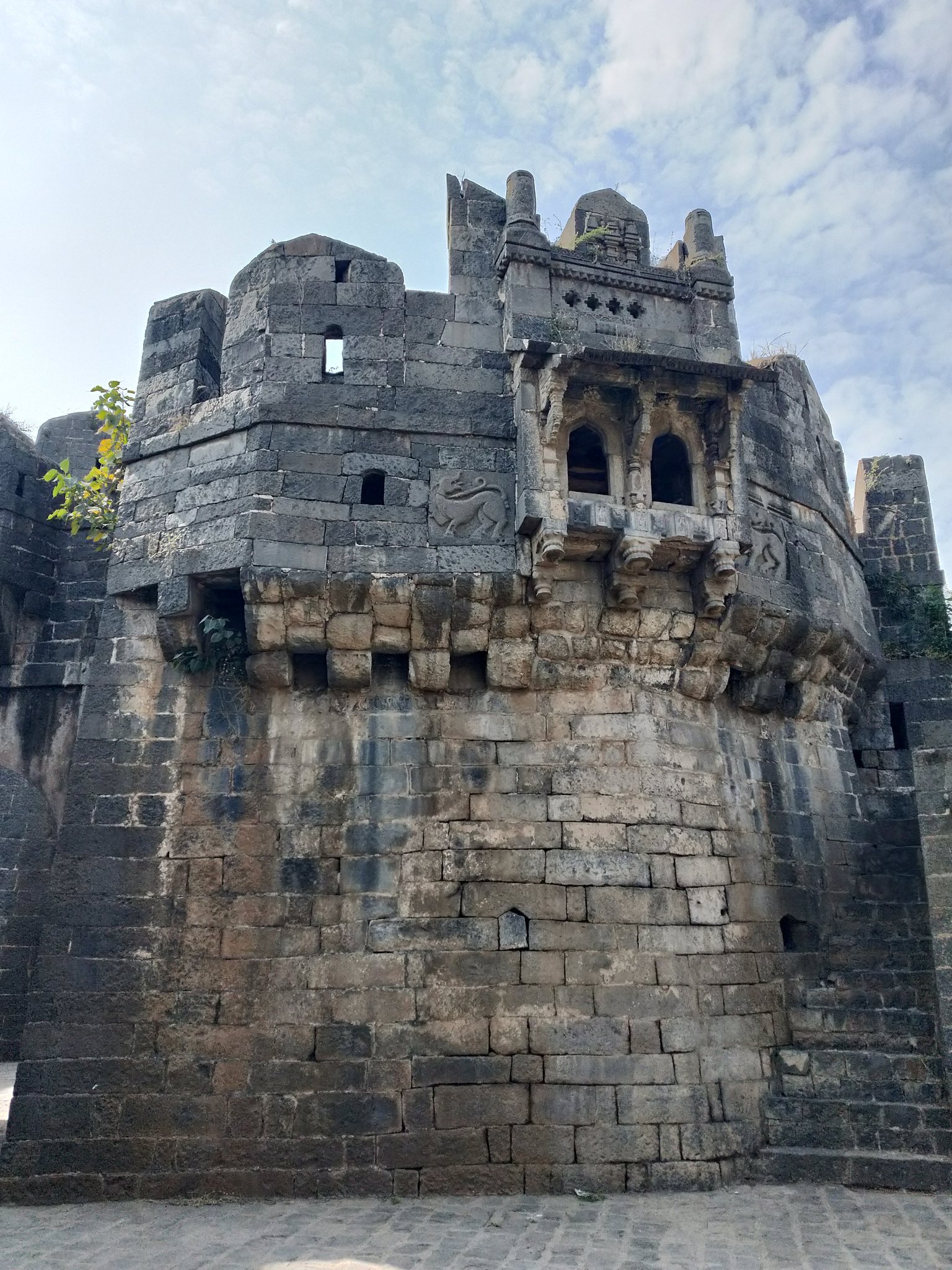
The ramparts have a double-fortified arrangement with 26 strong, rounded bastions. A bastion is a projecting fortification that allows defenders to cover the walls and approaches. One of these bastions incorporates the principal entrance on the northern side. A moat surrounds the fort, and a wooden drawbridge once connected the approach with the defended enclosure.
Artillery and military stores
Named cannons
Several strategically positioned bastions retain large cannons. The fort’s artillery includes Mulukh-e-Maidan, two Kalal Bangdi cannons, a crocodile-faced cannon, and a short mobile cannon. One cannon was made in 1627 by Dutch craftsmen associated with the VOC, the Dutch East India Company, a chartered trading and colonial organization active in the Indian Ocean. Another bears the name Husain Arabs, an Arab engineer who served the Bijapur state.
Stored guns and shot
A very large cannon kept in a storeroom carries an inscription referring to “Sarkar Nabab Mir Nizam All Khan.” The fort also holds a large store of short mobile cannon guns and approximately 300 round shot, or cannon balls. Together, these surviving weapons and stores reflect the site’s continued military importance after its medieval construction.
Jami Masjid
The Jami Masjid, the principal congregational mosque, has entrances on its northern, southern, and eastern sides. Its main entrance is on the east, where a porch leads to a large arched doorway.