Sassi Punnu Fort: An Islamic Fortification and Archaeological Settlement in Pakistan
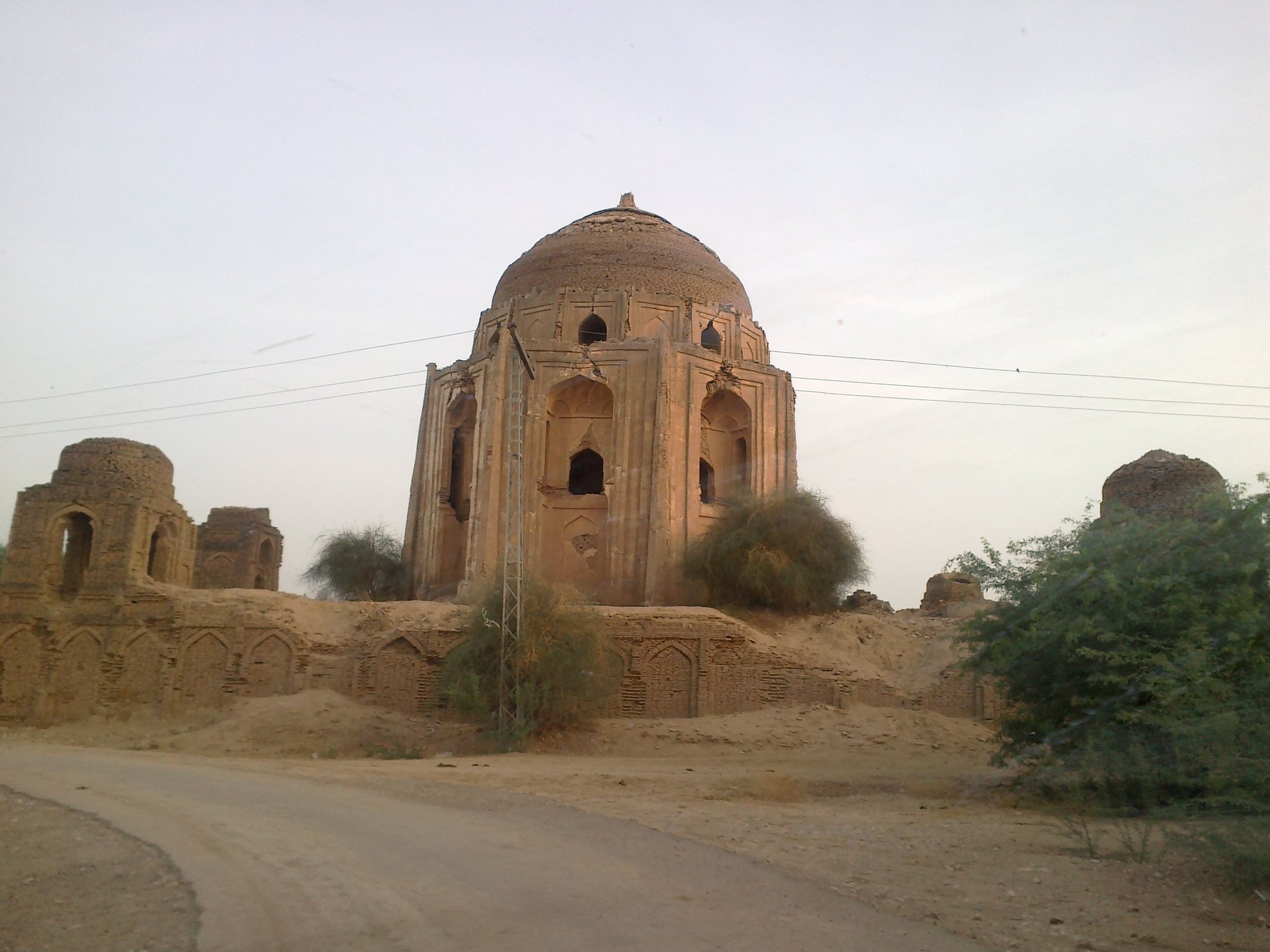
Site at a Glance
- Rating
- 4.6
- Popularity
- Very Low
- Country
- Pakistan
- Primary era
- Early Modern
- Eras represented
- Stone Age, Bronze Age, Early Modern
- Civilizations
- Unclassified
- Site type
- Military
- Remains
- Fort
On this page8 sections
History
Sassi Punnu Fort, also known as Miri Kalat or Miri Qalat, is a sixteenth-century Islamic fortification near Turbat in Pakistan, closely associated with the Sassui-Punnhu love story of Sindhi and Balochi folklore. The fort crowns an archaeological settlement with a much longer history, including occupation from the fifth millennium BCE and later phases linked to the Chalcolithic period, the Early Bronze Age, and the Indus Valley Civilization.
Early settlement and ancient occupation
Excavation at Miri Qalat identified the earliest settlement in the fifth millennium BCE. Later communities occupied the site during the Chalcolithic period, when copper tools existed alongside stone tools, and during the Early Bronze Age, a period associated with bronze technology and increasingly complex societies. Evidence also connects the settlement with the Indus Valley Civilization, one of South Asia’s earliest urban civilizations, which flourished mainly during the third millennium BCE.
Occupation at Miri Qalat was interrupted during the second millennium BCE. The settlement was later reoccupied from the first centuries BCE through the late Islamic period. Its position near the maritime trading centers of Sutkagen-dor and Sotka-Koh connected the site with regional exchange networks and with maritime trade reaching the Oman Peninsula. Finds and environmental studies also provide evidence of links with Iranian culture and with the Uruk civilization of southern Mesopotamia.
The Islamic fort and local traditions
The present fortification is an Islamic structure dated to the sixteenth century. A local tradition places its construction between 6000 and 8000 BCE, but that date does not accord with the archaeological chronology of the fort and settlement. Traditional accounts associate Miri Qalat with a succession of Macedonian, Arab, Mongol, Ghaznavid, and Mughal rulers, although they do not identify particular rulers or securely establish their control of the fort.
The fort’s strongest cultural association comes from the legend of Sassui and Punnhu. In this widely known Sindhi and Balochi narrative, Punnhu is a prince and Sassui is his beloved. Miri Kalat is connected with Punnhu, who is said to have been the son of Jam Aari or Jam Aali. Their ancestors were traditionally regarded as rulers of the area during the twelfth century. This folkloric association gives the fort a place in the cultural history of the Makran region as well as in its archaeological landscape.
Excavation and interpretation
Aurel Stein discovered and explored the Miri Qalat archaeological site in 1927. More extensive excavation and research followed between 1990 and 1997 through the French Archaeological Mission, working with the Department of Archaeology and Museums of the Government of Pakistan. Roland Besenval directed the later excavations and led the French Archaeological Mission in Makran from 1986 to 2012.
The project examined the site’s layers and sought to reconstruct the ancient economy and environment of the region. Its wider work included extensive surveys and 228 excavations across the area. During the seventh excavation season, Besenval’s team opened eleven trenches, while five field campaigns investigated the principal trenches. Surface pottery fragments helped establish the first cultural and chronological sequence for the Kech-Makran region. Excavation at Miri Qalat remains incomplete, while the fort and surrounding archaeological remains continue to deteriorate. The site belongs to the Government of Pakistan and is administered by the Department of Archaeology and Museums.
Remains
Miri Qalat lies about 6 kilometres northwest of present-day Turbat, on the right bank of the Kech River in the Kech Valley. The archaeological complex occupies a narrow valley among rugged east-west mountain ranges and alluvial valleys. The Islamic fortification crowns the earlier settlement, whose excavated buildings included mud-brick and stone structures. The surrounding landscape is hot and arid, with limited vegetation and approximately 100 to 130 millimetres of annual rainfall, mostly between December and April.
Fort and settlement remains
The fort forms the upper and later component of a site that contains several periods of settlement beneath and around it. Excavated architectural remains in Trench IV belong to the ancient occupation sequence, while the fort represents the Islamic phase dated to the sixteenth century. The surviving structures are deteriorated and remain threatened by further loss.
Burials and archaeological finds
An ancient burial area beside the fort contains several open graves with human skeletons. Excavations also exposed a Chalcolithic grave in Trench IX, designated Period IIa. Funerary materials from Period IIIa include pottery and stone vessels dating to the end of the fourth or the beginning of the third millennium BCE.
Finds from Period IV connect the settlement with the Indus Civilization. They include an ivory comb, a polished steatite stamp seal, and painted pottery dating to approximately 2500 to 2300 BCE. The site also produced beveled-rim bowls, a distinctive mass-produced ceramic associated with the Uruk period and with exchange and cultural connections extending from southern Mesopotamia.
Water system and environmental setting
Miri Qalat contains evidence of a karez, an underground water-capture and conveyance system. Its galleries collected groundwater near the foot of the low mountains surrounding the valley and carried it toward areas of settlement and cultivation. The system probably supported agriculture in the Kech Valley, where irrigation enabled both summer and winter cultivation.
The Kech River and related water resources formed part of the settlement’s environmental setting. Long droughts, occasional heavy rainfall, and thunderstorms made controlled water use important in a region receiving limited annual precipitation. Studies of ancient terrain, rivers, coastline, plants, animals, and food resources have helped reconstruct the environmental and subsistence conditions in which the communities of Miri Qalat lived.