Massangano Fort: A Portuguese River Fortification in Angola
Site at a Glance
- Rating
- 3.9
- Popularity
- Very Low
- Country
- Angola
- Primary era
- Early Modern
- Eras represented
- Early Modern
- Civilizations
- Portuguese
- Site type
- Military
- Remains
- Fort
On this page9 sections
History
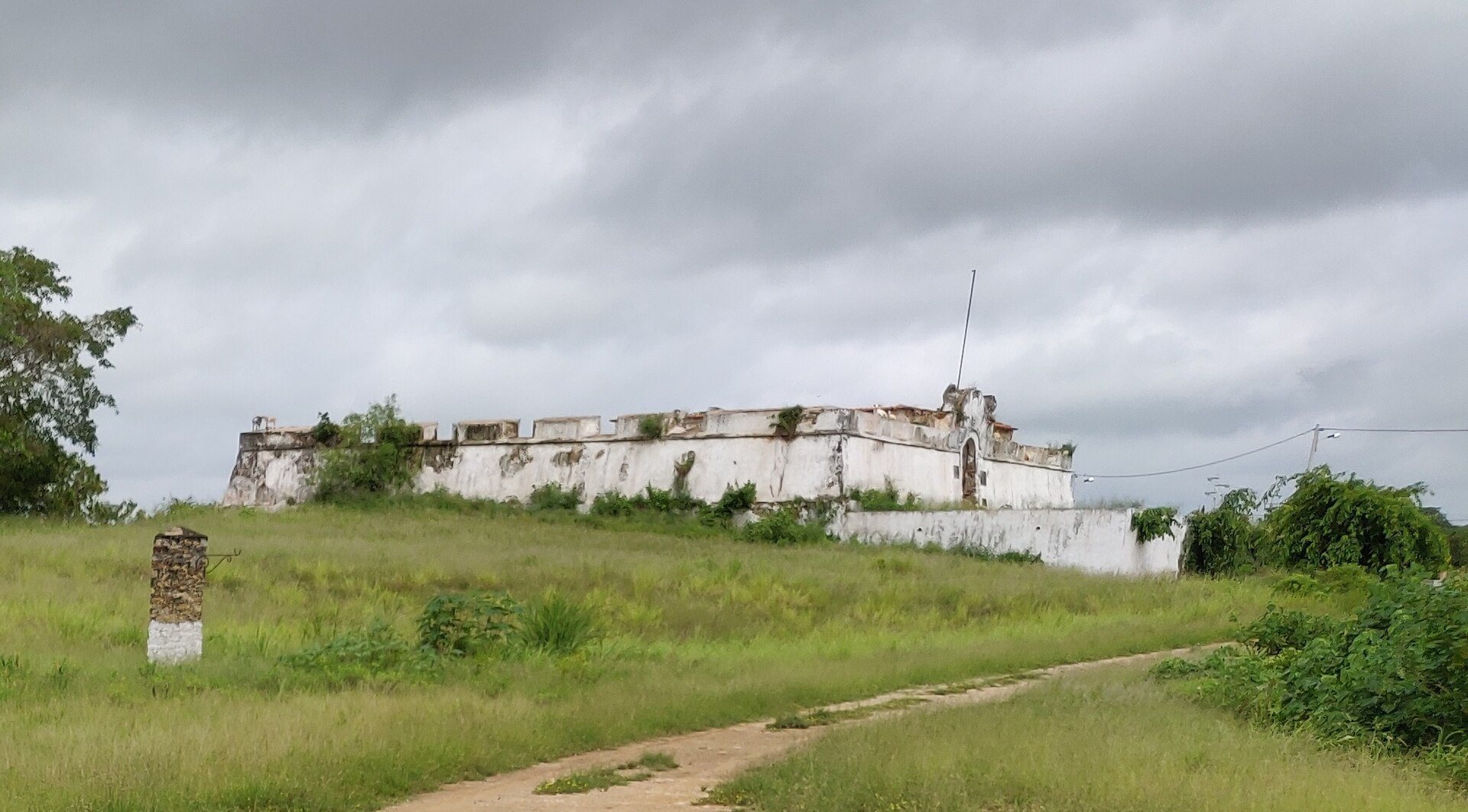
Massangano Fort is a Portuguese fortification in Angola, built on the bank of the Cuanza River in 1583 during the expansion of Portuguese control in the region. Its construction is attributed either to Captain Paulo Dias de Novais, a Portuguese military commander and colonial official, or to Manuel Cerveira Pereira, another Portuguese military and colonial figure. The fort extended and secured the Portuguese occupation, asserted a military presence, and protected commercial networks that included the slave trade to the American continent.
Conflict with the Kingdom of Dongo
The site had already become a battlefield before the fort was built. In 1580, Portuguese forces defeated those of King Quiluange of the Kingdom of Dongo, a central African state that opposed Portuguese expansion. Two years later, forces commanded by Paulo Dias de Novais were repelled by Dongo while attempting to enter the region in search of legendary silver mines.
In 1640, the forces of Queen Ana de Sousa Ginga attacked Massangano Fort. During the episode, her sisters Cambu and Fungi were imprisoned, and Fungi was executed. The attack formed part of the wider struggle between African rulers and Portuguese power in the region.
Portuguese retreat and later use
After the Dutch West India Company occupied Luanda in August 1641, Portuguese forces withdrew to Massangano. They held out there until Salvador Correia de Sá e Benevides, a Portuguese colonial governor and military commander, reconquered Luanda in August 1648.
Massangano also became connected with the career of José Álvares Maciel, who had been involved in the Inconfidência Mineira, an unsuccessful conspiracy against Portuguese rule in colonial Brazil during the 1790s. He was detained at Massangano and released there to fight for his survival.
Garrison, town, and heritage status
Until the middle of the nineteenth century, a captain-major, a senior colonial military and administrative official, governed the prison and garrison. Governor Feo Torres reported 10,910 inhabitants at Vila da Vitória, also called Massangano, in 1825. The reported population had risen to 13,500 by 1885. In 1854, the town contained about 600 houses, while the fortress garrison had 12 guns and a light company of 70 men. Earlier, the garrison had consisted of two militia companies and one company of Indigenous troops.
Some buildings and ruins at Massangano were classified as National Monuments under Provincial Decree No. 81 of 28 April 1923. The state holds the property through the Ministry of Culture. Massangano is also identified as cultural heritage of Portuguese influence and as a UNESCO World Heritage tentative-list property. The fort is abandoned.
Remains
Fortification and access
The fort has a square plan, with ten gun emplacements visible in its walls. The landward entrance leads through a vaulted tunnel, and a ramp provides access to the interior. Beside the ramp, a stone inscription reads, “First fortress / 1604 / National / Monument.” The date in this inscription differs from the stated construction date of 1583.
Service buildings and commemorative features
Command House and Barracks
Buildings on the embankment served the fort’s military operation. They include the Casa do Comando, or Command House, and the Quartel de Tropa, or Barracks.
Gateway plaques
Two bronze plaques flank the gateway. One commemorates the visit of Portuguese head of state General Francisco Higino Craveiro Lopes on 28 June 1954 and pays homage to the heroes of Angola’s resistance and liberation. The other marks a gathering held on 18 August 1948 for the 300th anniversary of the restoration of Angola. It names Governor José Agapito da Silva Carvalho, representatives of the army and navy, descendants of Salvador Correia, and members of the population, while honoring those who resisted the Dutch invasion at the fort.