Velešov Castle: A Short-Lived Fourteenth-Century Castle in Czechia
Site at a Glance
- Rating
- 3.8
- Popularity
- Low
- Country
- Czechia
- Primary era
- Medieval
- External website
- Open
- Eras represented
- Medieval
- Civilizations
- Holy Roman Empire, Kingdom of Bohemia
- Site type
- Military
- Remains
- Castle
On this page10 sections
History
Velešov Castle is a fourteenth-century castle in Czechia, built by the Lords of Potštejn around 1340 on Velešov Hill near Potštejn. It was established after nearby Potštejn Castle was captured and destroyed around 1339 by Margrave Charles, later known as Charles IV, a ruler of Bohemia and the Holy Roman Empire.
Foundation and abandonment
Potštejn had been held by the robber knight Mikuláš of Potštejn, who died during the siege. Charles prohibited the castle’s reconstruction, so the Lords of Potštejn founded Velešov on a neighboring hill. The first written record of Velešov dates from 1356, when King Charles IV restored Potštejn and acquired the estate that included Velešov.
After Potštejn was restored and brought into the king’s possession, Velešov lost its importance. The castle was abandoned during the second half of the fourteenth century. Charles IV and the Vartenberg family are recorded among its later owners.
Damage and later protection
Between 1771 and 1773, Count Jan Antonín Harbuval Chamaré searched the site unsuccessfully for treasure. His work substantially damaged the ruin. Stone taken from the castle walls was carried by cableway to Potštejn and used to build a wall around the chateau park.
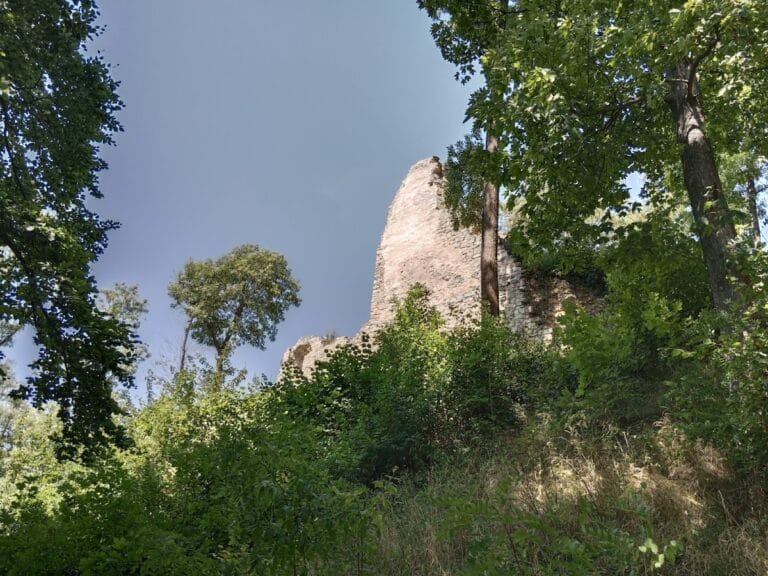
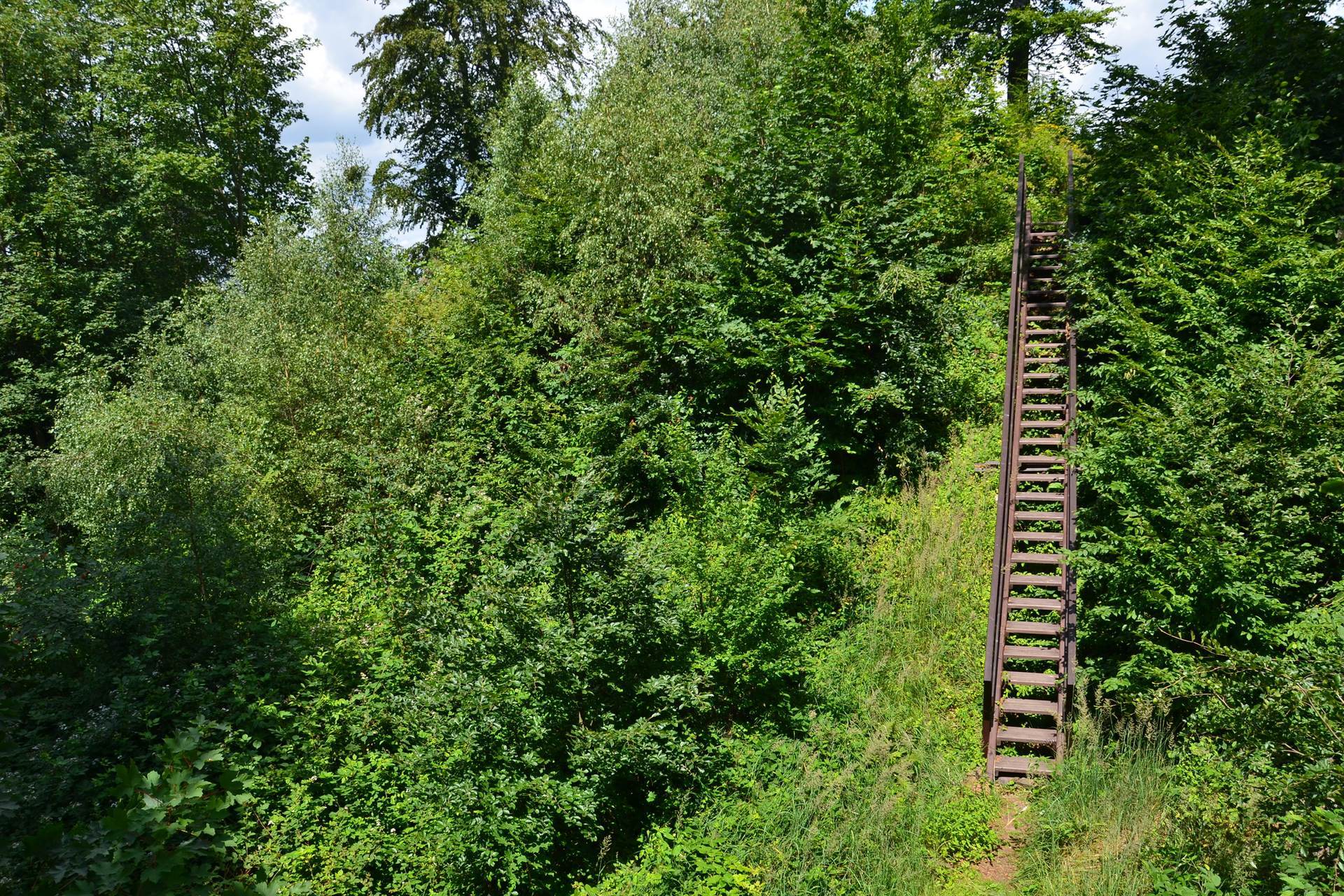
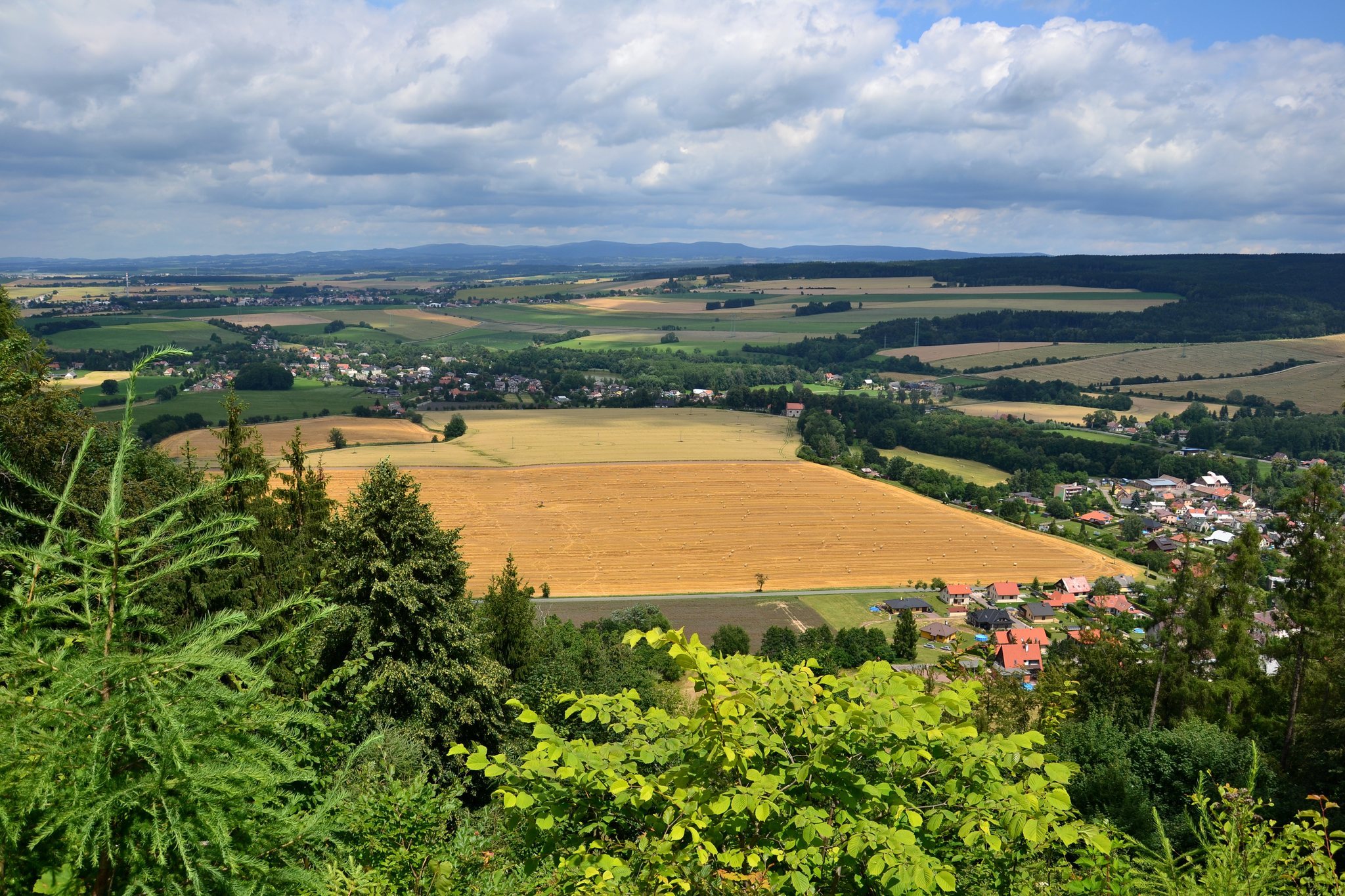
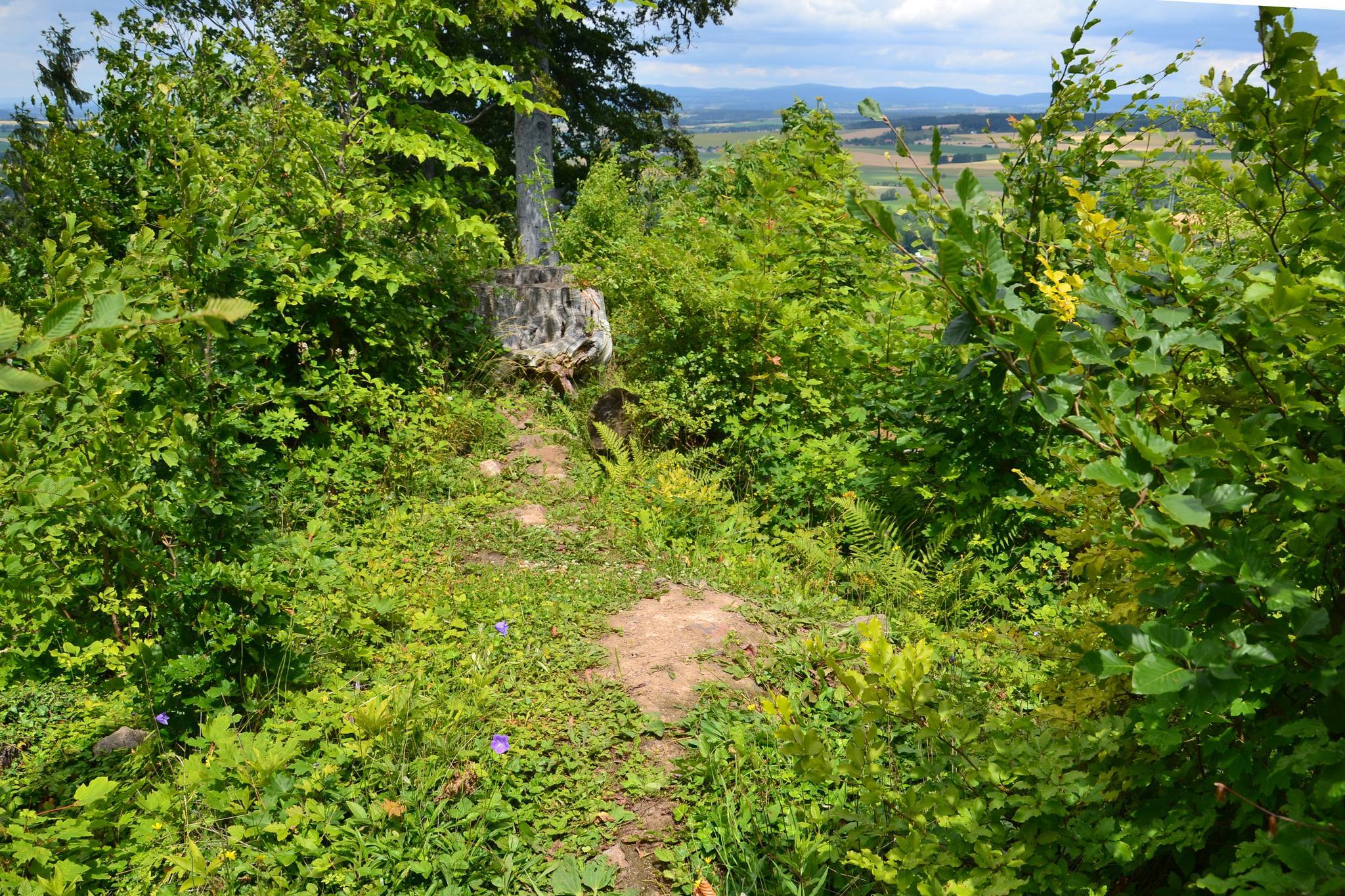
Velešov has been protected as a cultural monument of the Czech Republic since 1964. The summit was cleared of woodland and adapted as a viewpoint in 2008. The castle now survives mainly through terrain remains and small fragments of walls.
Remains
The ruin occupies steep Velešov Hill, about one kilometre northwest of Potštejn Castle, at an elevation of 472 metres. Its layout consisted of a southern bailey, a sequence of ditches, and a rectangular castle core. Small wall fragments and earthworks preserve parts of this arrangement.
Defensive layout
Bailey and neck ditches
The southern part of the site contained a trapezoidal bailey. Access crossed a neck ditch, a defensive ditch cut through the narrow connection between a castle and the surrounding terrain. The ditch also protected the sides of the bailey, and on the northern side it continued into a second neck ditch.
Castle core and zwinger
The rectangular castle core stood behind the second ditch. A zwinger, an enclosed defensive passage between a main fortification and an outer wall, protected the western side and probably the front as well. The castle core was probably entered from this outer defensive area.
Palace arrangement
Northern palace
Velešov most likely belonged to the fashionable group of castles arranged around two palaces. A two-room palace stood at the northern end of the rectangular core.
Southern palace
A similar building probably occupied the opposite, southern side of the courtyard. The arrangement in this part of the castle remains uncertain because the southern courtyard wall has disappeared. The surviving evidence consists of minor wall fragments and terrain features across the site.