Royal Palaces of Abomey: Political Centre of the Kingdom of Dahomey
Site at a Glance
- Rating
- 3.7
- Popularity
- Very Low
- Country
- Benin
- Primary era
- Early Modern
- Eras represented
- Early Modern, Modern
- Civilizations
- Dahomey
- Site type
- Domestic
- Remains
- Palace
On this page14 sections
History
The Royal Palaces of Abomey in Benin formed the political and cultural centre of the Fon kingdom of Dahomey, whose royal complex was used from about 1695 to 1900. Dahomey was founded in 1625 in what is now southern Benin, and twelve kings succeeded one another before the kingdom became part of French colonial territory.
Founding of Abomey and the royal court
Houegbadja, who ruled from 1645 to 1685, is traditionally regarded as the founder of Abomey. He began the construction of the royal palaces and established political rules, succession principles, and other legal arrangements for the kingdom. Under later rulers, the complex became a centre for crafts and a repository for royal treasures, while each king generally added a palace beside or within the established royal enclosure.
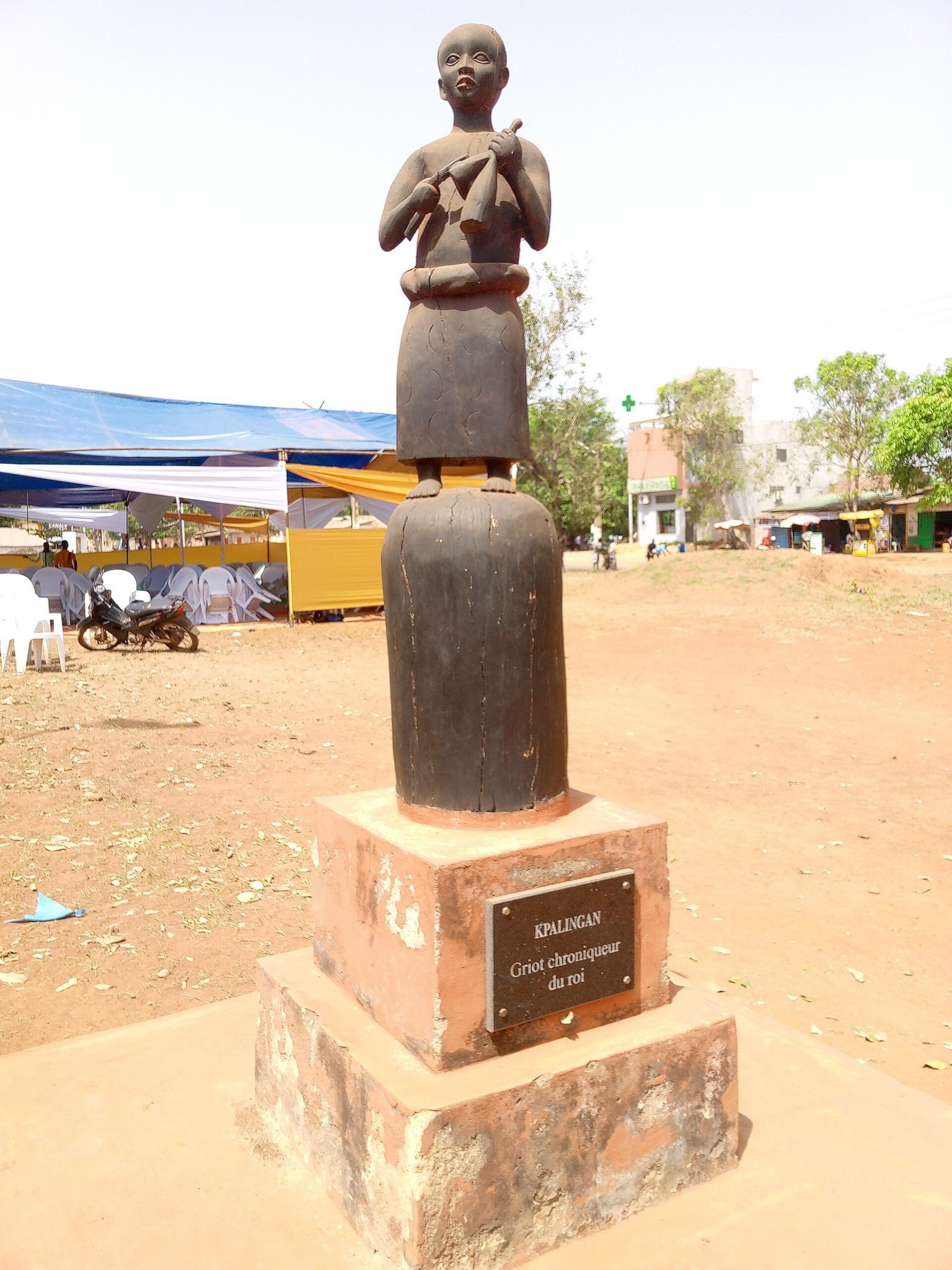
Royal culture centred on deep reverence for the kings and on religious traditions connected with the court. Kings were represented through symbolic motifs on appliquéd royal textiles. Ceremonies before the palace walls included traditional dances and, in some cases, human sacrifice. Sacred spaces within the complex continue to be respected by royal families and local communities, and ritual ceremonies remain part of the site’s religious identity.
Expansion and economic power
Dahomey developed into a powerful military and commercial state. Its rulers gained part of their wealth from the sale of prisoners of war through the port of Whydah. King Agaja’s conquest of Allada in 1724 and Whydah in 1727 expanded Dahomey toward the coast and intensified its involvement in the European slave trade.
During the nineteenth century, King Guézo encouraged agricultural development as the British antislavery movement increased pressure on the Atlantic slave trade. Growing exports of crops such as maize and palm oil contributed to the kingdom’s prosperity.
War with France and the end of the kingdom
Renewed Fon raids in the Ouémé Valley led France to declare war on Dahomey. In 1892, during the conflict, King Béhanzin ordered Abomey and its palaces to be burned. The destruction damaged the royal complex, although many monuments survived. French forces captured the Singboji palace and entered Abomey on 17 November 1894.
Béhanzin, the last independently reigning king, fled north with remnants of his army and was later deported to Martinique. France installed his brother Goutchili, while his successor Agoli Agbo was deported to Gabon in 1900. French seizure of royal objects further altered the character of the palace complex. When present-day Benin became independent in 1960, it initially retained the name Dahomey.
Conservation and continuing cultural life
The Royal Palaces of Abomey were inscribed on the UNESCO World Heritage List in 1985 as exceptional evidence of a cultural tradition and as an architectural ensemble illustrating an important historical period. The property was placed on the List of World Heritage in Danger later that year after a tornado on 15 March 1984 damaged the royal enclosure and museum buildings, including the King Guézo Portico, the Assins Room, the King’s tomb, and the Jewel Room.
Conservation and restoration work had begun by 1992, with support from Beninese authorities and international organisations. Abomey introduced urban-planning regulations in 2006, and Benin adopted legislation protecting cultural and natural heritage in 2007. Internationally supported work enabled the property to leave the List of World Heritage in Danger in July 2007.
A bushfire on 21 January 2009 destroyed or damaged several buildings, including straw roofs and timber frameworks. The tombs of Kings Agonglo and Guézo and their wives were also destroyed, and further fire damage was reported in 2015. Emergency planning and later restoration addressed the drying of structural remains and improved fire protection.
The palaces are no longer inhabited. The palaces of Guézo and Glélé house the Historical Museum of Abomey, established in 1943 by the French colonial administration. The museum presents Dahomean history, royal symbolism, resistance to colonial occupation, the struggle against France, and the kingdom’s culture through about 1,050 exhibits.
Twenty-six cultural objects taken by French troops during the 1892 sack of the royal palaces and later held in French collections were permanently restituted to Benin under French legislation enacted in 2020. They were transferred in 2021 and displayed in Cotonou from early 2022, pending circulation among Beninese museums and planned permanent display in Abomey. France also allocated a €20 million development loan for a new museum.
Remains
The complex consists of a sequence of royal palaces within an enclosed royal area. The World Heritage property has two nearby parts: a northern enclosure containing King Akaba’s palace and a larger southern area containing the palace of Béhanzin, the royal court of the Amazons, and palace areas associated with Houegbadja, Agaja, Tegbesu, Kpengla, Agonglo, Guézo, Glélé, and Agoli Agbo. Descriptions identify ten palaces, while the historical tradition connects the complex with the twelve rulers of Dahomey.
The royal enclosure and palace courts
Walls, gates, and internal spaces
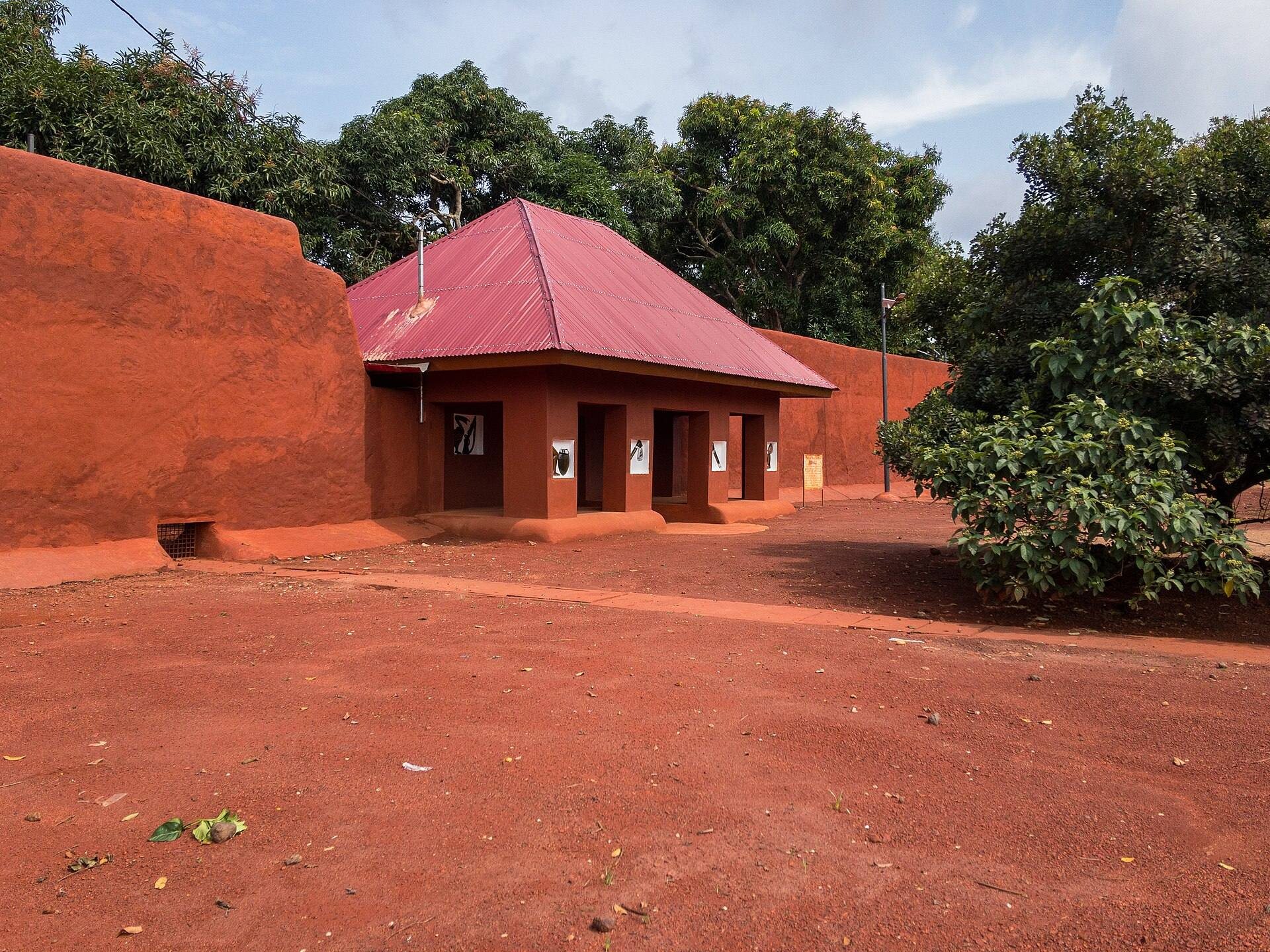
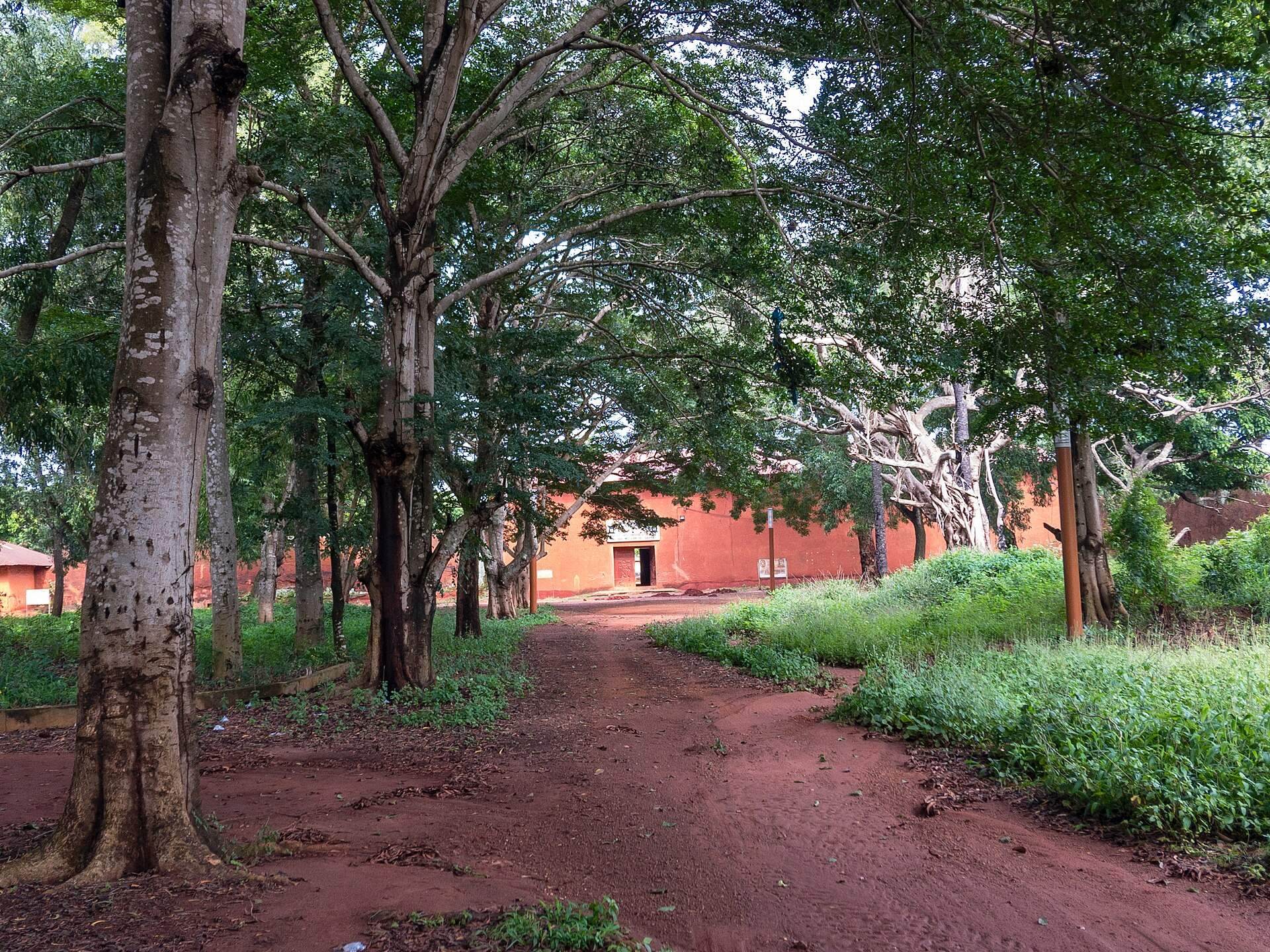
The royal town was enclosed by an estimated 10-kilometre mud wall with six gates. A ditch about 1.5 metres deep, overgrown with dense prickly acacia, strengthened the defences. Villages separated by fields stood within the enclosure, together with several palaces, a market, and a large square beside barracks. The palace complex could accommodate as many as 8,000 people.
Palaces were arranged as successive courtyards of increasing importance, reached through portals in the enclosing walls. Descriptions distinguish outer, inner, and private courts. The Kpododji through Honnouwa formed one interior court, while the Jalalahènnou was a second interior court near the Logodo. The Ajalala, a distinctive building with numerous openings, stood in the second court.
Palace construction
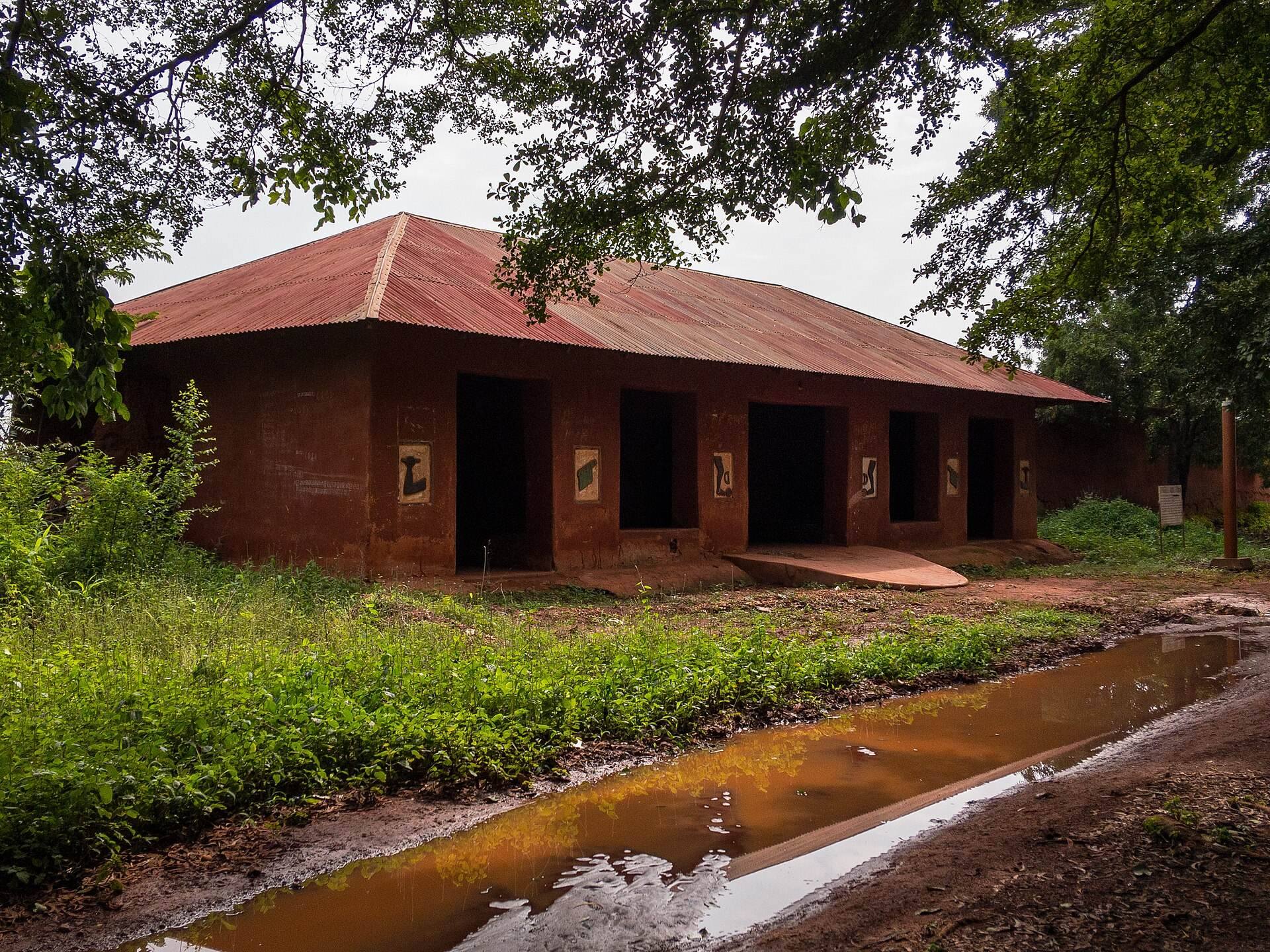
Each palace had an individual design reflecting the preferences of its ruler. Earth formed the foundations, floors, walls, and other raised structures. Palm, bamboo, iroko, and mahogany were used for timberwork, while roofs were made from thatch or sheet metal. Palace walls averaged about 0.5 metres in thickness, helping to keep the interior rooms cool.
Akaba, Guézo, and Glélé palaces
King Akaba’s palace occupied a separate enclosure from the larger southern royal area. The palaces of Guézo and Glélé survived the destruction ordered by Béhanzin during the conflict with France and were later restored. Their buildings and surrounding remains preserve evidence of rebuilding, fire damage, and conservation. They now contain the Historical Museum of Abomey, which occupies a building on an area of about 2 hectares within the wider complex.
Decorative and museum remains
Bas-reliefs and royal imagery
Polychrome bas-reliefs, sculptural images projecting slightly from their supporting surfaces, decorated palace walls and pillars. Made from ant-hill earth mixed with palm oil and coloured with vegetable and mineral pigments, they represented royal military and political victories, Fon myths, customs, rituals, and other events in the kingdom’s history. Copper and brass plaques also adorned the walls.
The reliefs served as a visual historical record in a society without written historical documentation. Many originals are displayed in the museum and have been replaced on the buildings by replicas. Since 1993, fifty of the fifty-six reliefs formerly decorating King Glélé’s palace have been recovered and reattached to the reconstructed building.
Historical Museum collections
The museum displays a royal appliquéd quilt, ceremonial drums, and paintings depicting ceremonies and the wars between Dahomey and France. Objects associated with former royal religious ceremonies continue to be used by members of the Dahomean royal family in religious rites, linking the surviving collections with the complex’s continuing sacred traditions.
Fire-damaged structures and tombs
The 2009 bushfire removed straw roofs and timber frameworks from several structures and destroyed the tombs of Kings Agonglo and Guézo and their wives. Restoration planning included measures to dry the remaining structural material and strengthen fire protection across the affected areas.