Fort Queenscliff: A Coastal Defence Command Centre in Australia
Site at a Glance
- Rating
- 4.4
- Popularity
- Low
- Country
- Australia
- Primary era
- Modern
- External website
- Open
- Eras represented
- Modern
- Civilizations
- British
- Site type
- Military
- Remains
- Fort
On this page20 sections
History
Fort Queenscliff is a coastal-defence fortress in Australia, at Queenscliff on Shortland’s Bluff, built by the colonial military from 1860 to defend the entrance to Port Phillip. It became the command centre of the Port Phillip Heads defences and developed into a major nineteenth-century military complex whose surviving layout reflects the evolution of coastal warfare and military engineering.
Origins and early batteries
Fort Queenscliff began as an open battery established in 1860. Its creation followed growing colonial fears of invasion by foreign powers, concerns intensified by the Crimean War, a conflict between Russia and an alliance including Britain, France, the Ottoman Empire, and Sardinia. In 1859, Captain Peter Scratchley advised Victoria’s colonial government on coastal defence and recommended major batteries at the entrance to Port Phillip, including one at Shortland’s Bluff.
The first work was a sandstone sea wall along the top of the bluff. It strengthened the cliff face and created an elevated position for heavy guns overlooking the approaches to the harbour. A permanent four-gun battery was completed above the wall by 1864. Built from local sandstone in a quatrefoil plan, it held four 68-pounder muzzle-loading cannons, which were loaded through the front of the barrel.
The early fort occupied ground also used by lighthouse installations. The Queenscliff High and Low Lights were built in dressed basalt between 1861 and 1863, while lighthouse keepers’ quarters followed in 1862 and 1863. The upper quarters survived within the later fort. The earlier timber leading light was subsequently re-erected at Point Lonsdale as its first lighthouse.
Creation of the Port Phillip defence system
The fort expanded during a wider reorganization of Victoria’s coastal defences. After the 1875 and 1876 Royal Commission into the Volunteer Forces, Lieutenant General William Jervois, a British military engineer and senior officer, worked with Scratchley to recommend concentrating the colony’s principal coastal fortifications around Port Phillip Heads. Their plans were substantially implemented between 1879 and 1886.
Fort Queenscliff, Fort Nepean, Fort Cheviot, Fort Pearce, Swan Island, South Channel Fort, and other batteries formed an interconnected defensive system. Queenscliff became its command centre, probably because of its strategic position and its established telegraph links with Melbourne. A landward defensive system around the guns began in 1882, and the surrounding fortifications and armaments were completed by 1891.
By 1886, Port Phillip was described as the most heavily fortified port in the Southern Hemisphere. When the wider works were completed, Port Phillip was regarded as one of the most heavily defended harbours in the British Empire. The garrison included volunteer artillery, engineers, infantry, naval militia, permanent coastal gunners, fortress engineers, and part-time militia soldiers. More than two hundred military units were associated with the fort from the 1860s onward.
Military service and twentieth-century change
Fort Queenscliff was continuously manned as a coastal-defence installation from 1883 until 1946 and was fully operational during both World Wars. During the First World War, orders issued from the fort directed Fort Nepean to fire on the German freighter Pfalz as it attempted to leave Port Phillip. This became the first Allied shot of the war. The same weapon, fitted with a different barrel, fired the first Allied shot of the Second World War.
By 1946, advances in warfare had made coastal artillery obsolete, and Fort Queenscliff ceased to operate as a coastal-artillery station. It then became the home of the Army Command and Staff College. After the three service staff colleges were combined in Canberra as the Australian Defence College, the fort became the base of the Army’s Soldier Career Management Agency in 2001.
Preservation and interpretation
A museum was established at Fort Queenscliff in 1982 to interpret the fort’s local, state, and national importance. It also provided a centre for historical research, archival preservation, and the restoration and reinstallation of original guns and equipment. Conservation work begun that year assessed the site’s archaeological, architectural, historical, and environmental value.
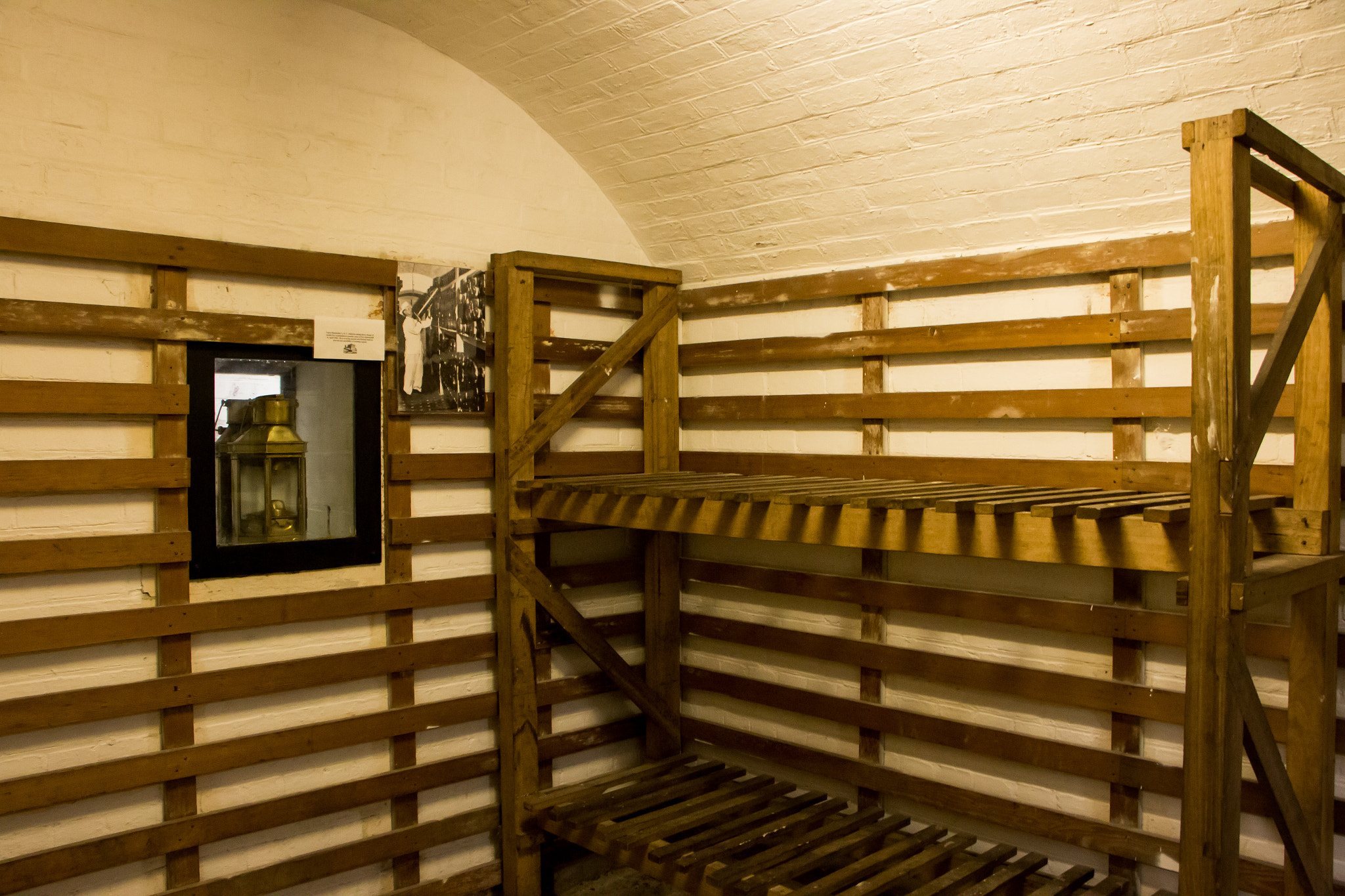
Later work recovered and refurbished original guns, restored historic buildings and defensive positions, and conserved underground magazines. The fort was classified by the National Trust and entered in the Register of the National Estate. Its importance rests on its substantially intact nineteenth-century layout, its command role within the Port Phillip defences, and the evidence it preserves for the development of military engineering and coastal defence in the Australian colonies.
Remains
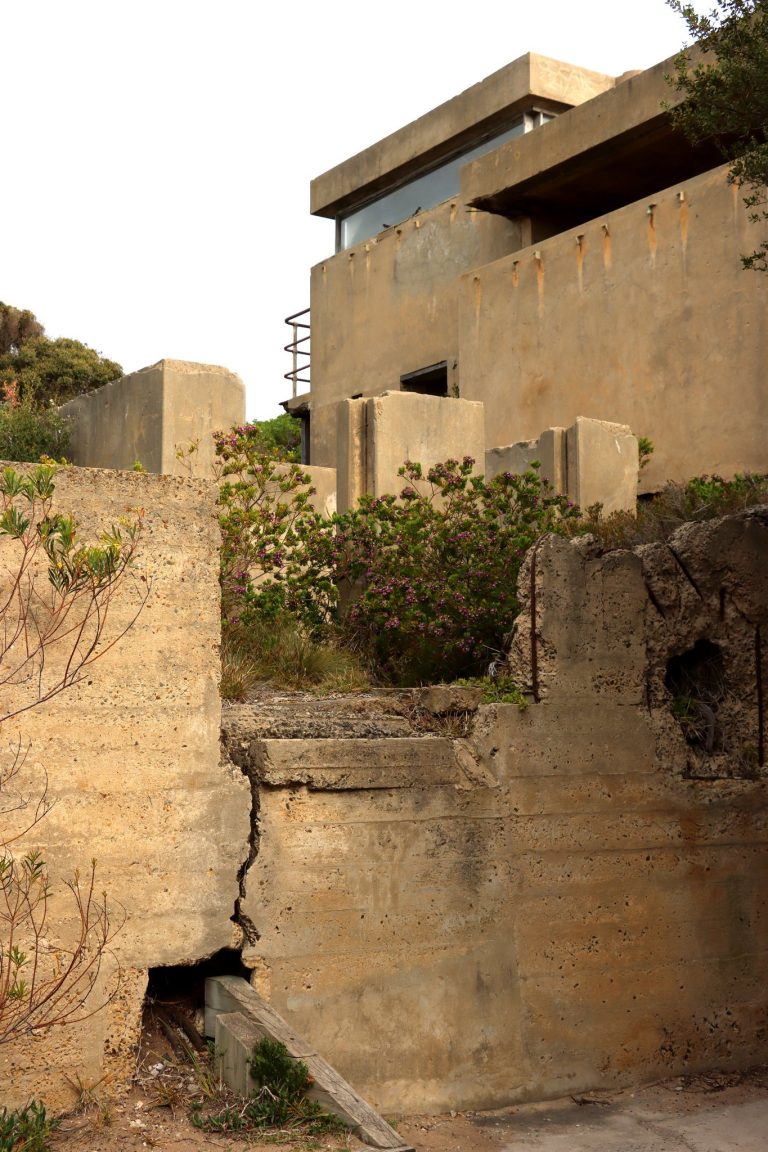
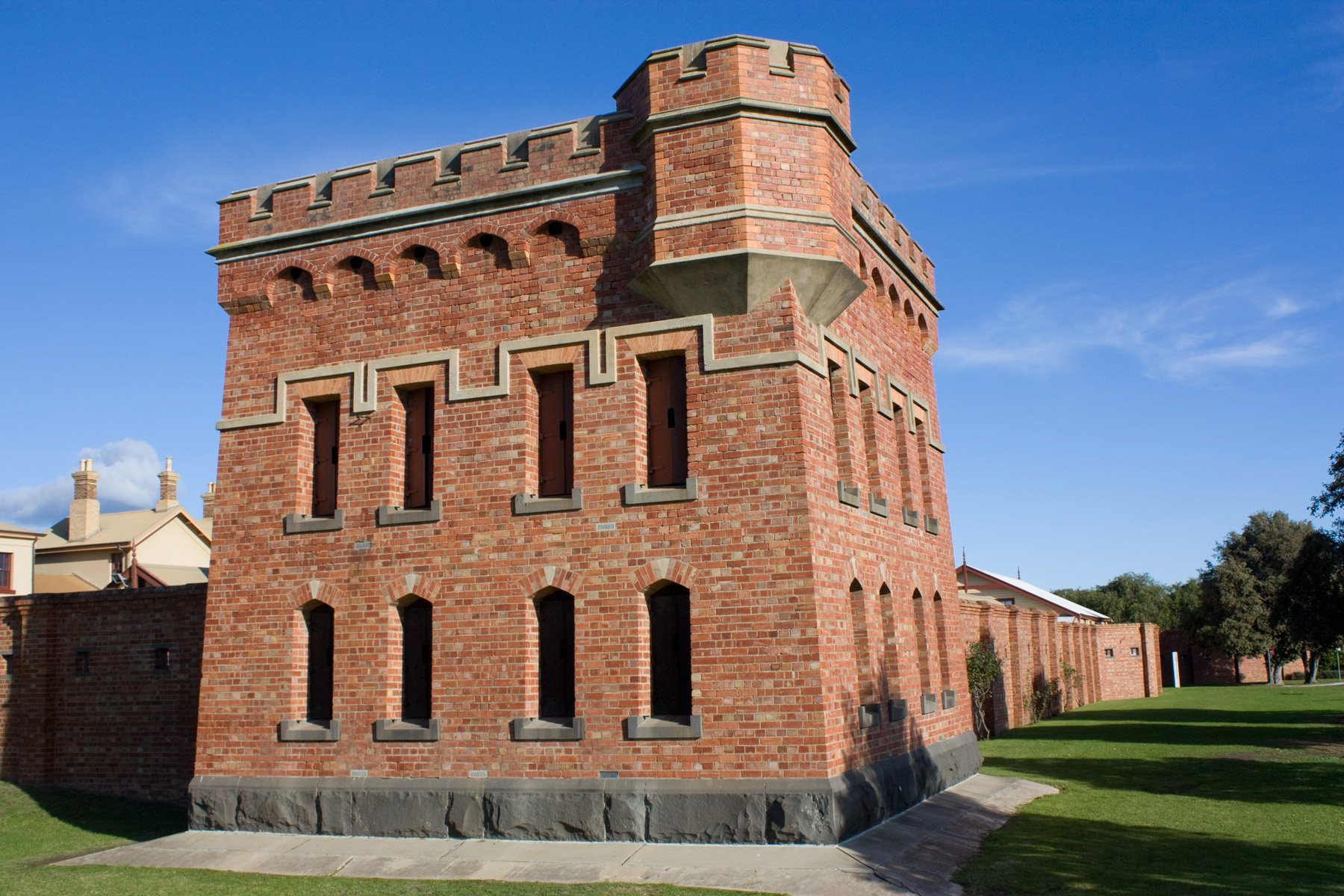
Fort Queenscliff occupies 6.7 hectares on the high ground of Shortland’s Bluff in the Borough of Queenscliffe, on the western side of the entrance to Port Phillip. The site overlooks the shipping lanes leading towards Melbourne and Geelong. Its surviving arrangement combines batteries, enclosing walls, a keep, a dry moat, support buildings, underground magazines, lighthouse-related structures, and later military additions. Despite changes in building style and structures outside the walls, the overall layout remains substantially similar to that established by 1889.
Sea wall, lighthouse works, and first battery
Sandstone sea wall
The first military structure was a sandstone sea wall built along the crest of Shortland’s Bluff in 1860. Stone quarried at Point King strengthened the cliff face and supported an elevated gun position at the edge of the bluff. The wall established the physical foundation for the later fort and linked the site’s defensive purpose to the natural height of the headland.
Quatrefoil battery
Completed directly above the sea wall by 1864, the first permanent battery was built from local sandstone in a quatrefoil plan. Its four gun positions held 68-pounder muzzle-loading cannons. The battery cost £1,425 and formed the earliest permanent artillery position within the developing fortress.
Lighthouse installations and quarters
The Queenscliff High and Low Lights were constructed in dressed basalt between 1861 and 1863 as the early military works replaced earlier lighthouse installations. Lighthouse keepers’ quarters were built on the bluff in 1862 and 1863, and the upper quarters survive within the fort. The earlier timber leading light was later moved to Point Lonsdale, where it became the first lighthouse there.
Late nineteenth-century batteries and defences
Upper and lower batteries
The main phase of construction took place between 1879 and 1889. An upper battery for three 9-inch rifled muzzle-loading guns and a lower battery for four 80-pounder rifled muzzle-loading guns were contracted in 1879. Rifling consisted of grooves inside a gun barrel that improved the stability of a projectile. Both batteries were completed by early 1882 and were initially left without their guns.
Fort walls, keep, and moat
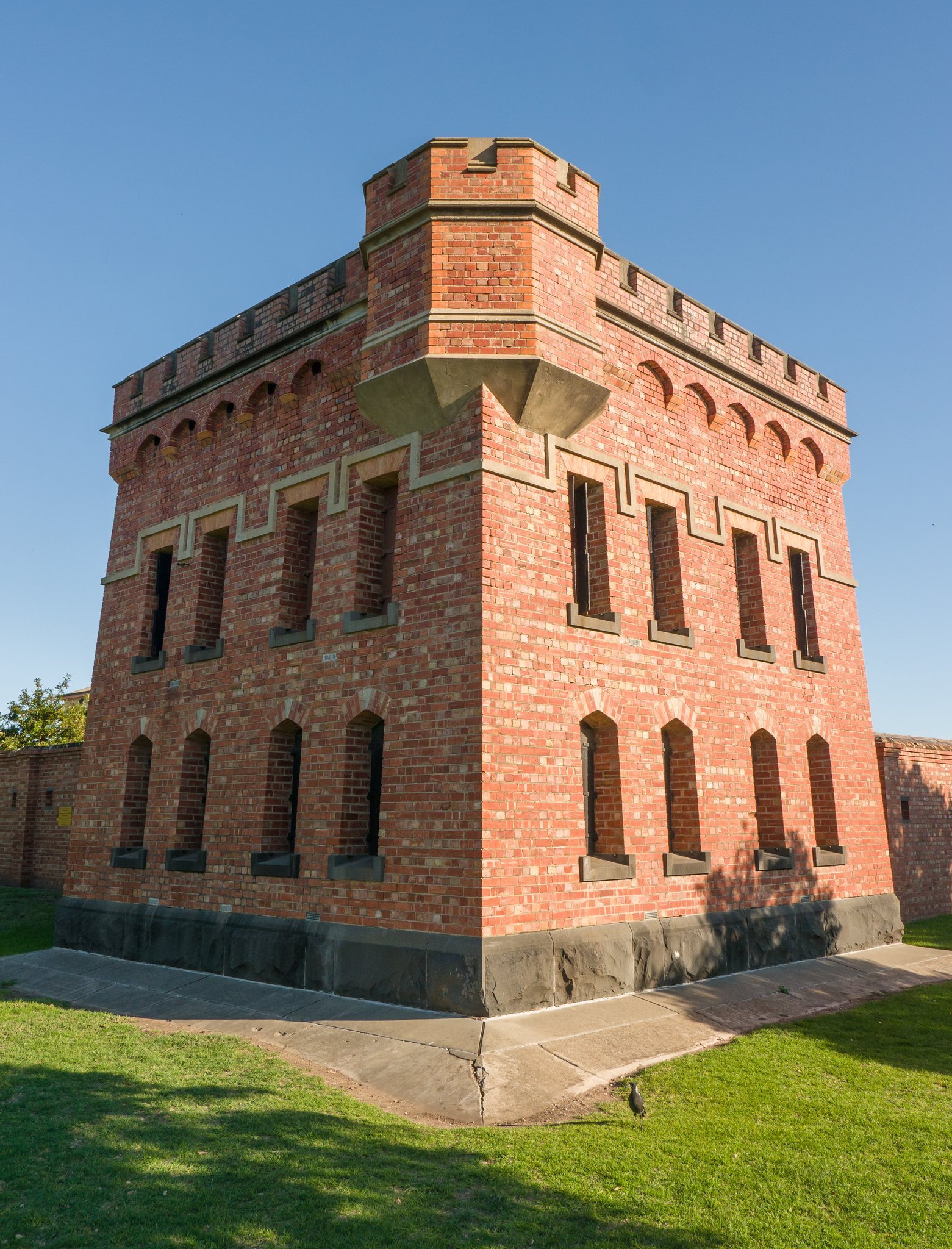
Fort walls and a keep were built from 1882 and completed in 1886. A dry moat was excavated around the walls in 1887, adding another defensive barrier. The enclosing wall also altered the character of the site by bringing the lighthouse keepers’ quarters and the post and telegraph office into military use by 1887, while regular civilian entry became restricted.
Counter-bombardment guns
In 1889, two 9.2-inch, or 234-millimetre, British Armstrong breech-loading counter-bombardment guns were installed. Breech-loading guns were loaded from the rear. One stood on a hydro-pneumatic mounting, which used hydraulic and pneumatic pressure to raise the gun for firing and lower it behind cover afterward. The other stood on a central-pivot barbette, a platform or pivot behind protective parapets that allowed the gun to fire over the surrounding works.
After 1890, the fort’s armaments and gun positions were repeatedly improved. Openings for searchlights were added, and around 1915 the northern side of the parade ground was redeveloped after an old shrapnel mound behind the wall was removed. Timber barracks and mess buildings were erected in this area. The original barrack buildings were demolished in 1936 and replaced by the present red-brick buildings.
Support buildings and restored equipment
Military buildings
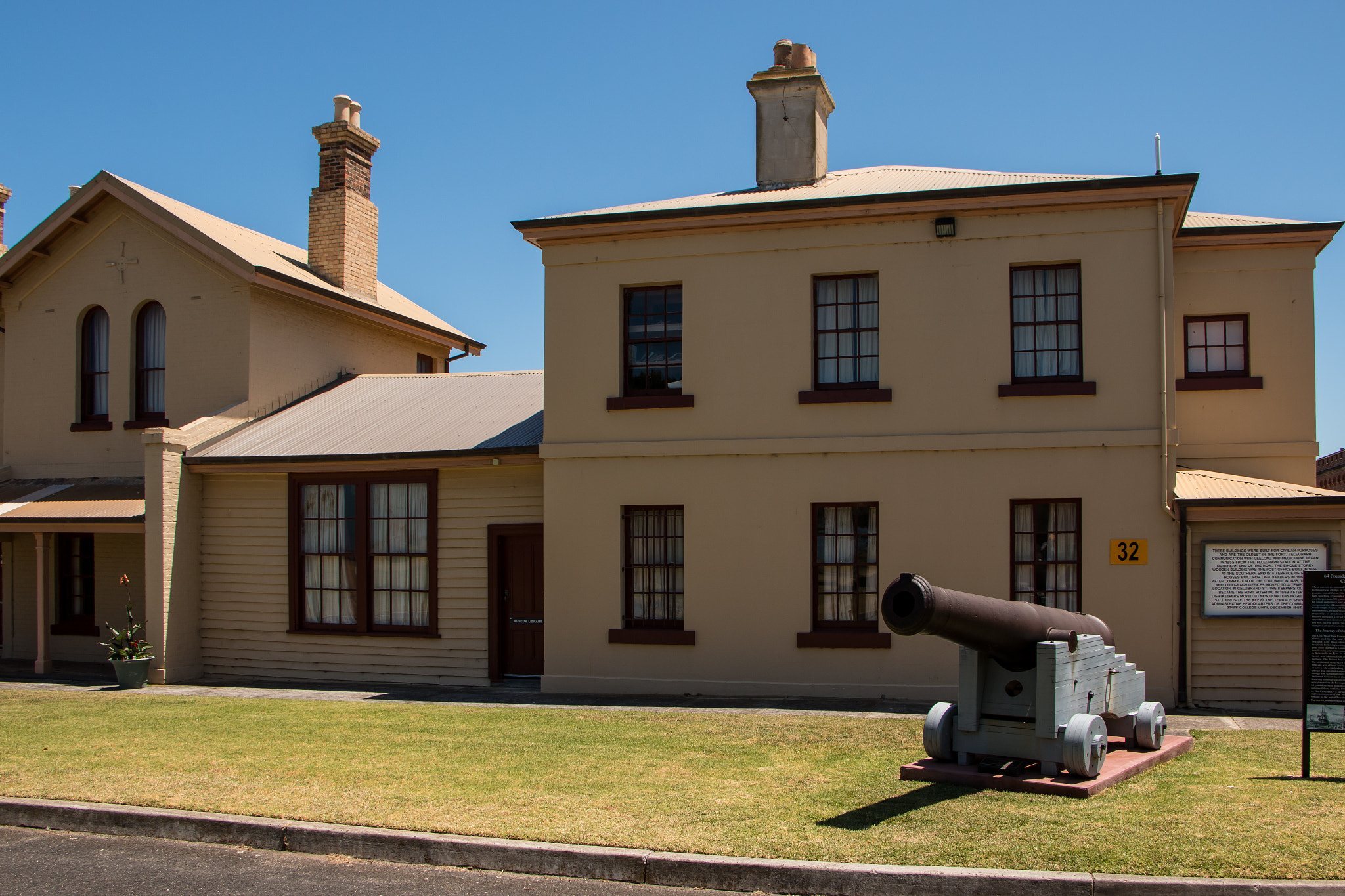
The support buildings included a drill hall from 1882, a guardhouse from 1883, barracks from 1885, sheds and stores, and a separate cell block built in 1887. They were constructed mainly from timber and corrugated iron for practical military use. Many survive as part of the fort’s built fabric and help explain how the artillery positions were supported by accommodation, storage, administration, and security facilities.
Recovered artillery
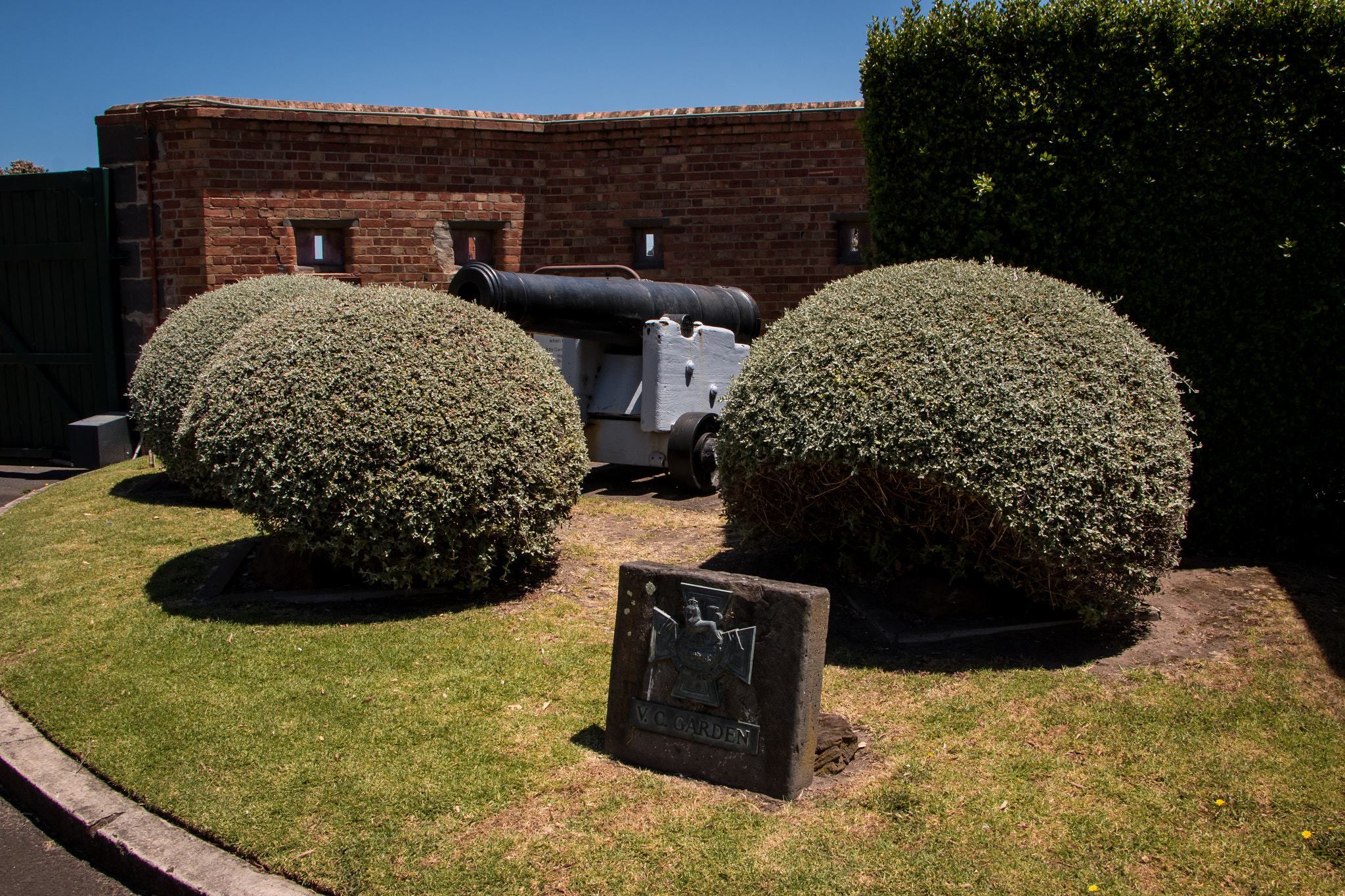
Restoration has recovered and refurbished several original guns. One restored piece is an 8-inch gun weighing 12.5 tonnes. It has a hydro-pneumatic, or disappearing-gun, mounting and was brought from South Channel Island before being re-established at Fort Queenscliff. The restored material also includes defensive positions, underground magazines, historic buildings, and other original equipment.
Museum collections and archives
Military records and objects
The museum’s collections include documents concerning the 1860 occupation of Shortland’s Bluff, the uniform of Lieutenant Colonel James Newland, and an artillery bottle from the fort’s former soft-drink factory. Other material is associated with Sergeant Major Henry Ronald and the Major General W. A. Coxen collection. The Victorian Permanent Artillery roll book for 1882 to 1905 and the rifle issued to a soldier murdered at Crow’s Nest in 1942 are also preserved.
Artillerist’s Manual
A rare Artillerist’s Manual covers military discipline, foot drill, company and battalion drill, sword exercise, gunnery instruction, and cavalry exercise. It may be the second- or third-oldest Australian military publication. Together with the archival collection and indoor display centre, the manual connects the surviving buildings and guns with the training, administration, and daily organization of the forces that operated the fort.