Fort Nepean: A Coastal Defence Fort at Port Phillip Heads
Site at a Glance
- Rating
- 4.7
- Popularity
- Medium
- Country
- Australia
- Primary era
- Modern
- External website
- Open
- Eras represented
- Modern
- Civilizations
- British
- Site type
- Military
- Remains
- Fort
On this page9 sections
History
Fort Nepean is a former coastal defensive facility at Portsea, Australia, built as part of Victoria’s late nineteenth-century fortifications at the entrance to Port Phillip. Construction began in 1873, with gun batteries added from 1886, and the fort became part of a network commanded from Fort Queenscliff to protect the narrow maritime passage between the bay and Bass Strait.
Colonial Defence and Construction
Following the 1875–1876 Royal Commission into the Volunteer Forces, the Victorian Government sought further advice from Lieutenant General Sir William Jervois, the Director of Works and Fortifications in London. His report recommended concentrating Victoria’s principal defences at the Heads, the headlands flanking Port Phillip’s entrance, together with fortifications on the shoals between the main shipping channels.
Fortifications and barracks were built on Point Nepean from 1873. Temporary sandbagged batteries followed between 1878 and 1880, holding four 80-pounder rifled muzzle-loading guns. These guns were later moved into more substantial earth emplacements. Ten gun emplacements were constructed between 1886 and 1890, and by the 1890s the fort was known as “Victoria’s Gibraltar.”
The barracks accommodated a company of the Royal Victoria Volunteer Artillery Regiment. From 1911, the renamed Royal Australian Garrison Artillery, the branch responsible for fixed coastal-defence guns, manned the fort, with support from the Royal Australian Engineers.
Wartime Action
As war in Europe approached, longer-range 6-inch Mk VII guns replaced the 9.2-inch guns from 1911. On 5 August 1914, after war had been declared, the German ship SS Pfalz attempted to leave Port Phillip. Lieutenant-Colonel Sandford at Fort Queenscliff ordered Lieutenant C. Morris, the Fire Commander at Fort Nepean, to stop or sink the vessel. When the ship ignored signals, the fort’s B1 gun fired across its bow, causing the vessel to turn back. Its crew was arrested at Portsea.
At 1:30 a.m. on 4 September 1939, shortly after the declaration of war, the A1 gun fired across the bow of a ship that had failed to identify itself. The vessel then identified itself as the Australian freighter SS Woniora. These were the only occasions when the Port Phillip batteries fired in anger. The shots fired during the two incidents are described as the first Australian shots of the First and Second World Wars, and sometimes as the first Allied shots.
Light anti-aircraft guns were deployed at Fort Nepean in 1939, while the remaining 6-inch breech-loading guns were removed in 1940. Coastal artillery was dismantled after the Second World War, and the guns were sold for scrap. In the 1960s, the barrels of the historic Mk VII guns involved in the wartime incidents were recovered from the Port Wakefield artillery proving ground and a scrap yard at Brooklyn, Victoria, and returned to the fort. The area became part of Point Nepean National Park when it opened to the public in 1988.
Remains
Gun Batteries and Defensive Works
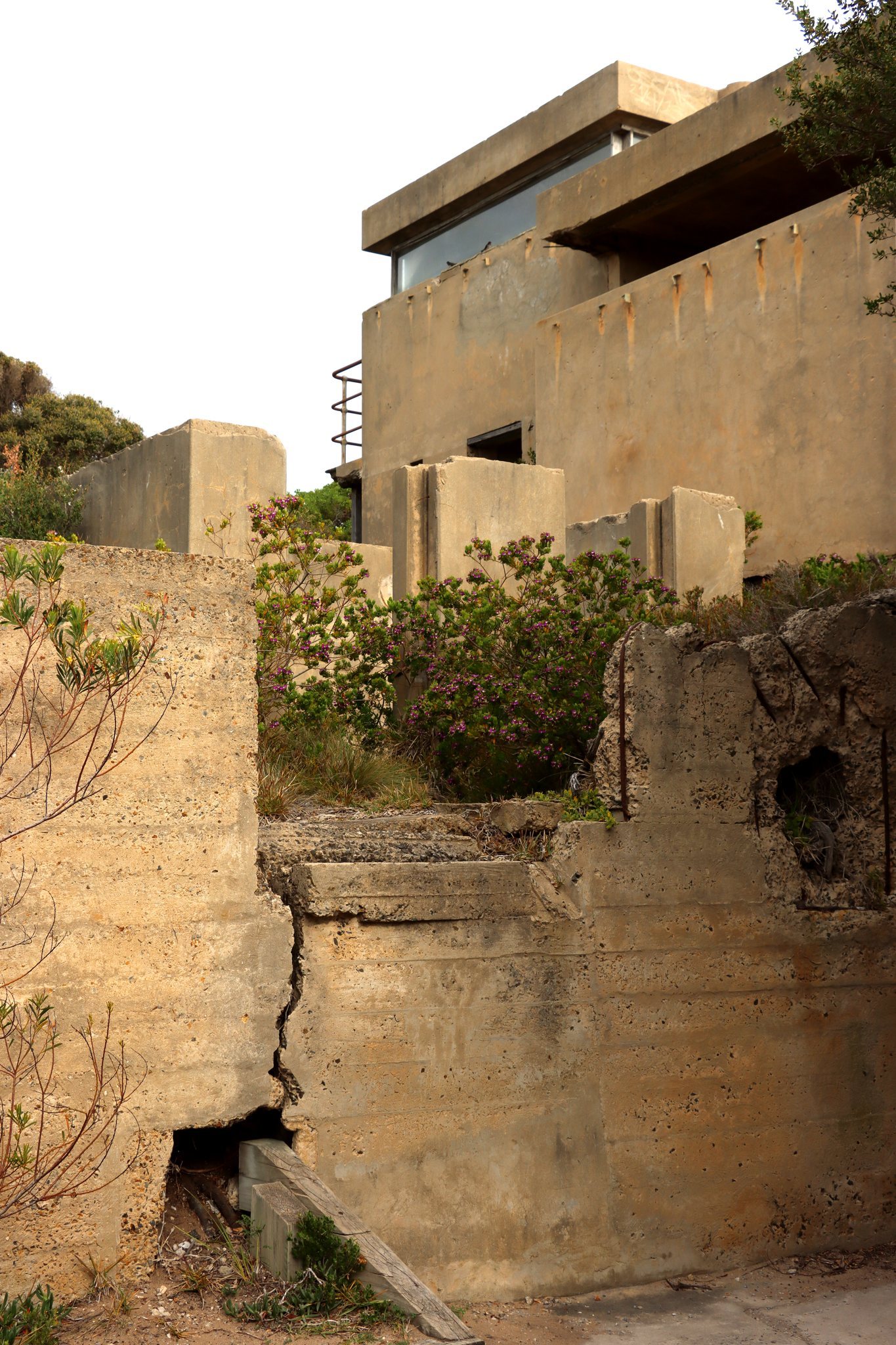
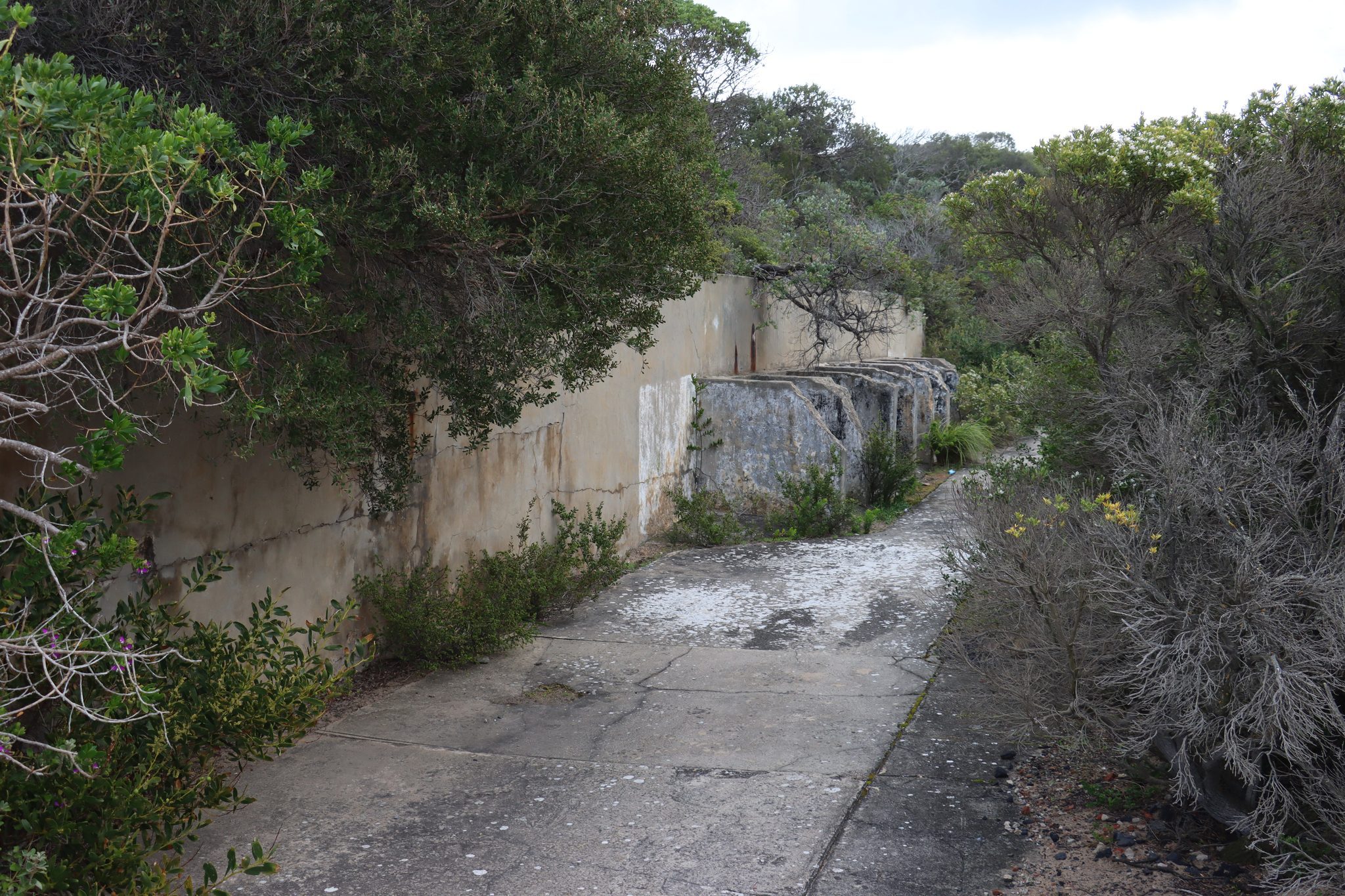
Fort Nepean occupies part of Point Nepean at the entrance to Port Phillip. Its surviving defensive landscape consists of earth emplacements, gun positions, observation and storage spaces, and later concrete modifications arranged as part of the bay’s system of coastal batteries.
Early Battery Positions
The first batteries were temporary sandbagged works established between 1878 and 1880 for four 80-pounder rifled muzzle-loading guns. These guns were loaded through the front of the barrel and used internal rifling to improve accuracy. The weapons were later transferred into more substantial earth emplacements. One former 80-pounder position was converted into an observation post, while a newly built emplacement served as an armourer’s store.
Main Gun Emplacements
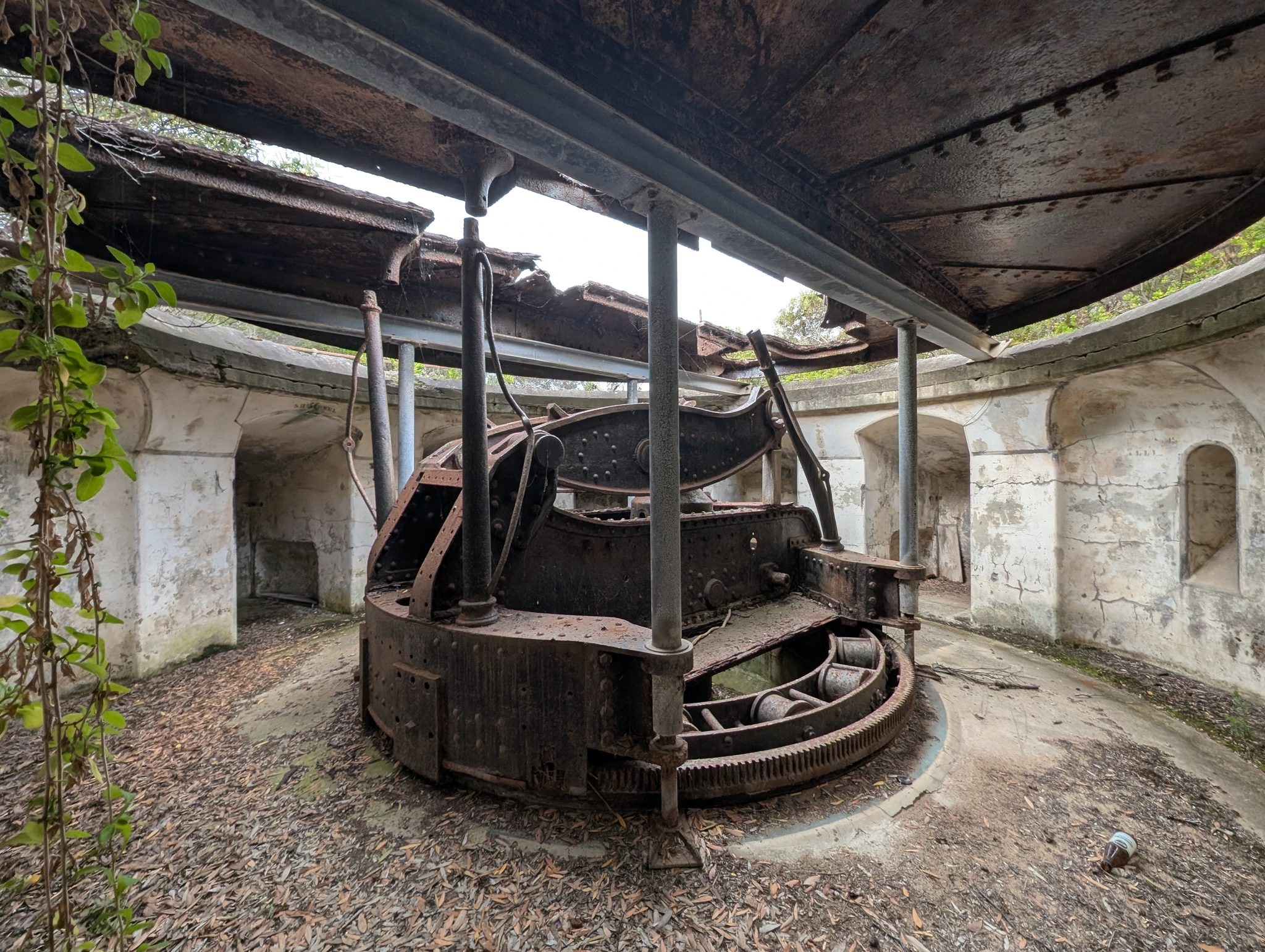
Ten emplacements were built between 1886 and 1890, although not every position received a gun. By 1890, the armament included four 6-inch breech-loading disappearing guns, two 9.2-inch Mk VI breech-loading counter-bombardment guns, one 4.7-inch quick-firing gun, and one quick-firing 14-pounder. Breech-loading guns were loaded from the rear, while disappearing guns lowered behind protective cover after firing. Counter-bombardment guns were intended to engage opposing coastal artillery.
Later Battery Alterations
From 1911, the longer-range 6-inch Mk VII guns were installed in the emplacements designated A1 and B1. The other 6-inch breech-loading positions were designated F1 and H1. The former 4.7-inch emplacement was converted for a searchlight, and an engine house supplied electricity for it. In 1940, A1 and B1 were renumbered F1 and H1 and fitted with concrete hoods.
Returned Mk VII Gun Barrels
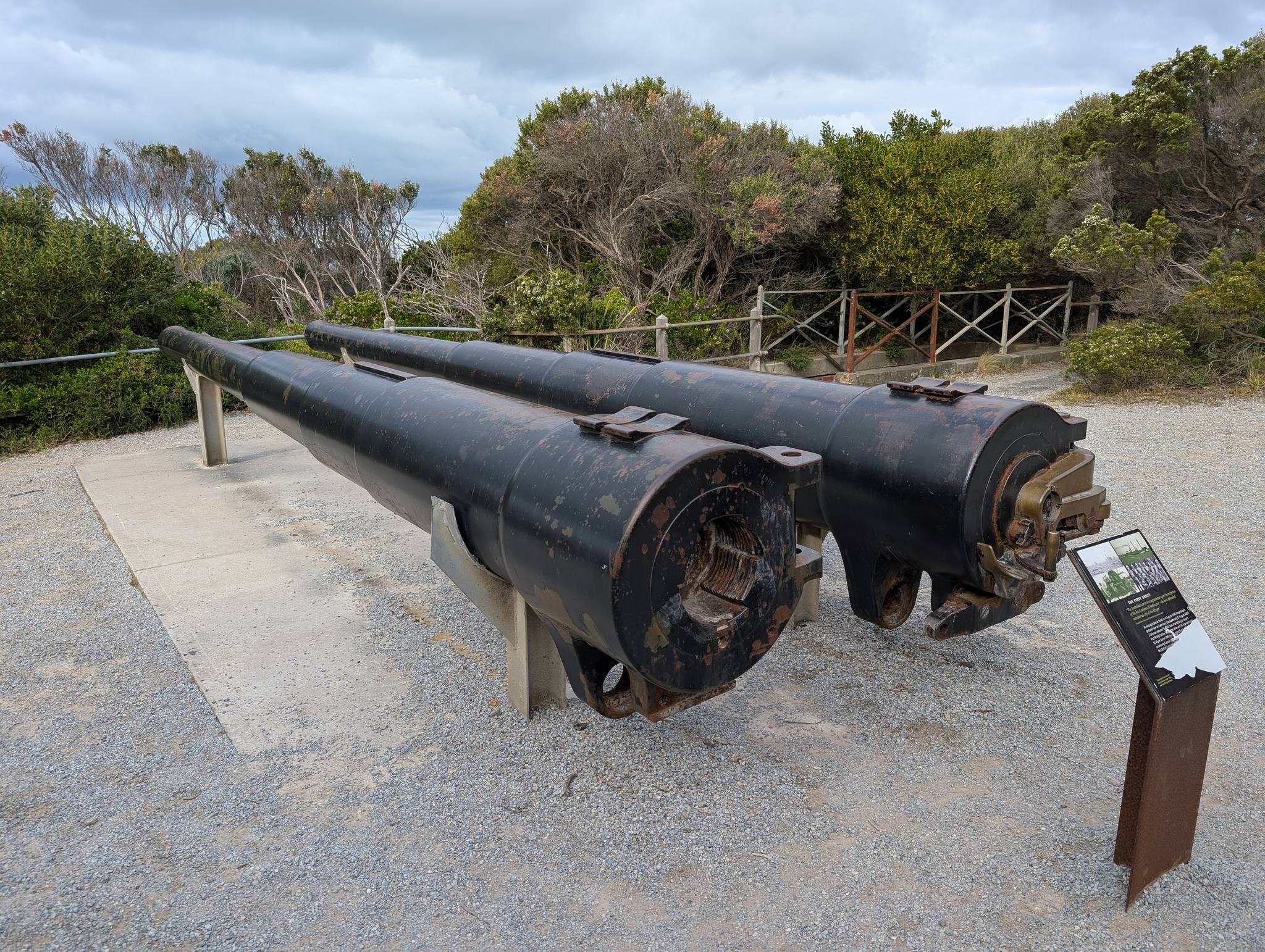
The barrels of the Mk VII guns that fired during the SS Pfalz and SS Woniora incidents were returned to Fort Nepean in the 1960s. They had been recovered from the Port Wakefield artillery proving ground and from a scrap yard at Brooklyn, Victoria, restoring these wartime weapons to the fort’s physical setting.