Fort Kastella: A Portuguese Fortress on Ternate
Site at a Glance
- Rating
- 4.2
- Popularity
- Low
- Country
- Indonesia
- Primary era
- Early Modern
- Eras represented
- Early Modern
- Civilizations
- Portuguese, Spanish
- Site type
- Military
- Remains
- Fort
On this page8 sections
History
Portuguese Foundation
Fort Kastella is a ruined Portuguese fortress in Indonesia, on the southwest coast of Ternate in Ternate City. Built in 1522 and completed on 15 February 1523, it was the first colonial fortification constructed in the Spice Islands. The fort formed part of Portugal’s effort to establish control over the Maluku Islands, an Indonesian archipelago whose cloves and other spices made it a major center of long-distance trade.
Its foundation followed the arrival of a fleet sent from Lisbon by King Manuel I of Portugal in April 1521. Commanded by Jorge de Brito, the expedition was ordered to intercept Ferdinand Magellan’s Spanish fleet and secure Portuguese pre-eminence in the Spice Islands. The first stone was laid on the feast day of Saint John the Baptist, giving the original fortress the name São João Baptista de Ternate. It was also known as Fortaleza de Ternate, Ciudad del Rosario, and Gammalamma. The modern name Kastella derives from the Spanish region of Castile.
Several later visitors regarded the fortress as incomplete. Its defenses were substantially improved during the governorship of António Galvão, which began in 1536. Portuguese commanders continued to administer the fort through the sixteenth century, including António de Brito, Garcia Henriques, Jorge de Menezes, Gonçalo Pereira, Luís de Andrade, Vicente da Fonseca, Tristão de Ataíde, and Galvão. Later commanders included Jorge de Castro, Jordão de Freitas, Bernardim de Sousa, Baltazar Veloso, Cristóvão de Sá, Duarte de Eça, António Pereira Brandão, Manuel de Vasconcelos, Sebastião Machado, Henrique de Sá, Álvaro de Mendonça, Diogo Lopes de Mesquita de Lima, Álvaro de Ataíde, and Nuno Pereira de Lacerda.
Ternatean Conquest
In 1570, the Portuguese killed Sultan Hairun of Ternate. His successor, Sultan Baab, led forces against the fortress and maintained a five-year siege. The Portuguese surrendered Kastella in 1575 and withdrew to Ambon. Baab occupied the stronghold, renamed it Gammalamma, and converted it into his royal palace.
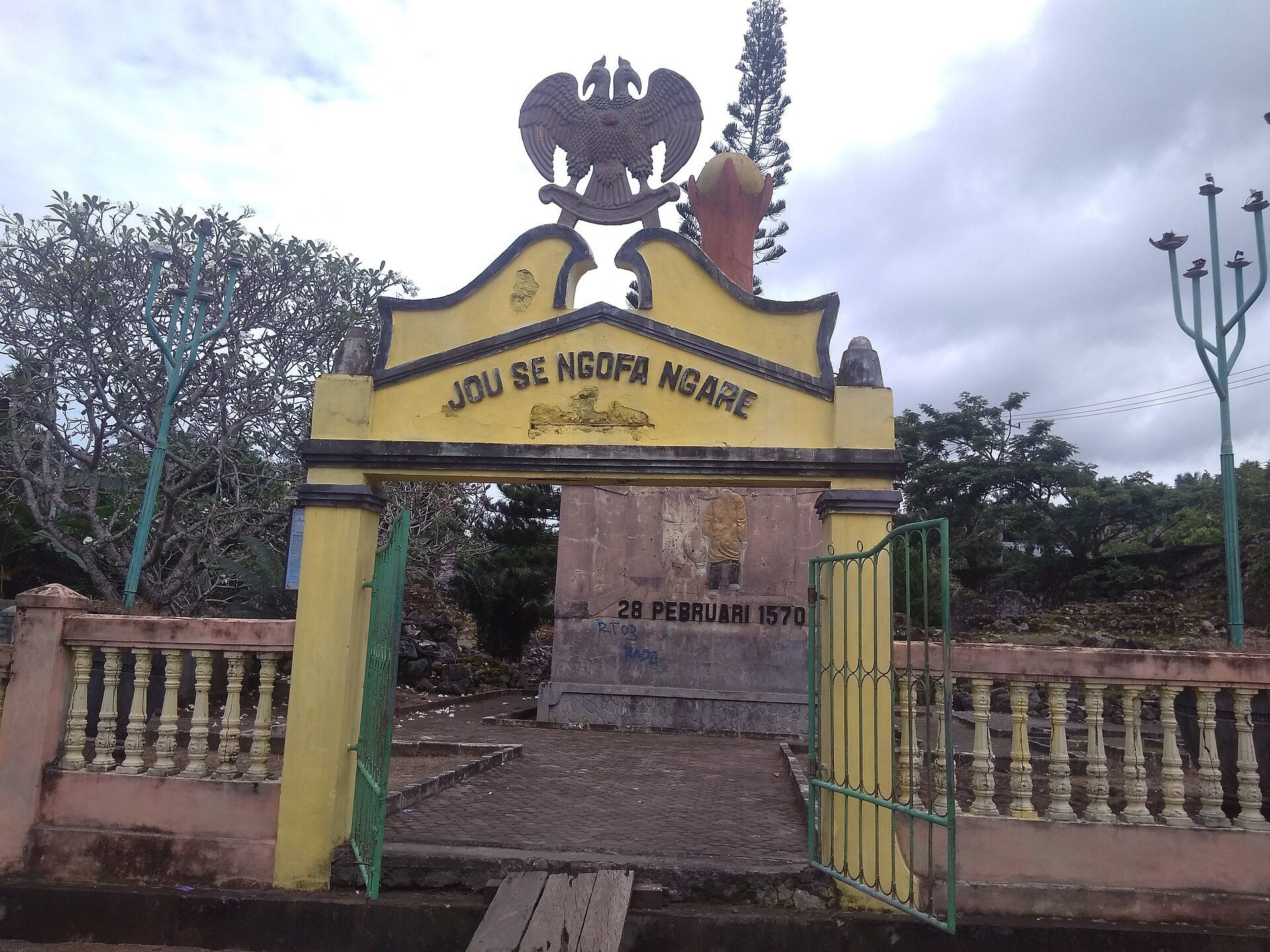
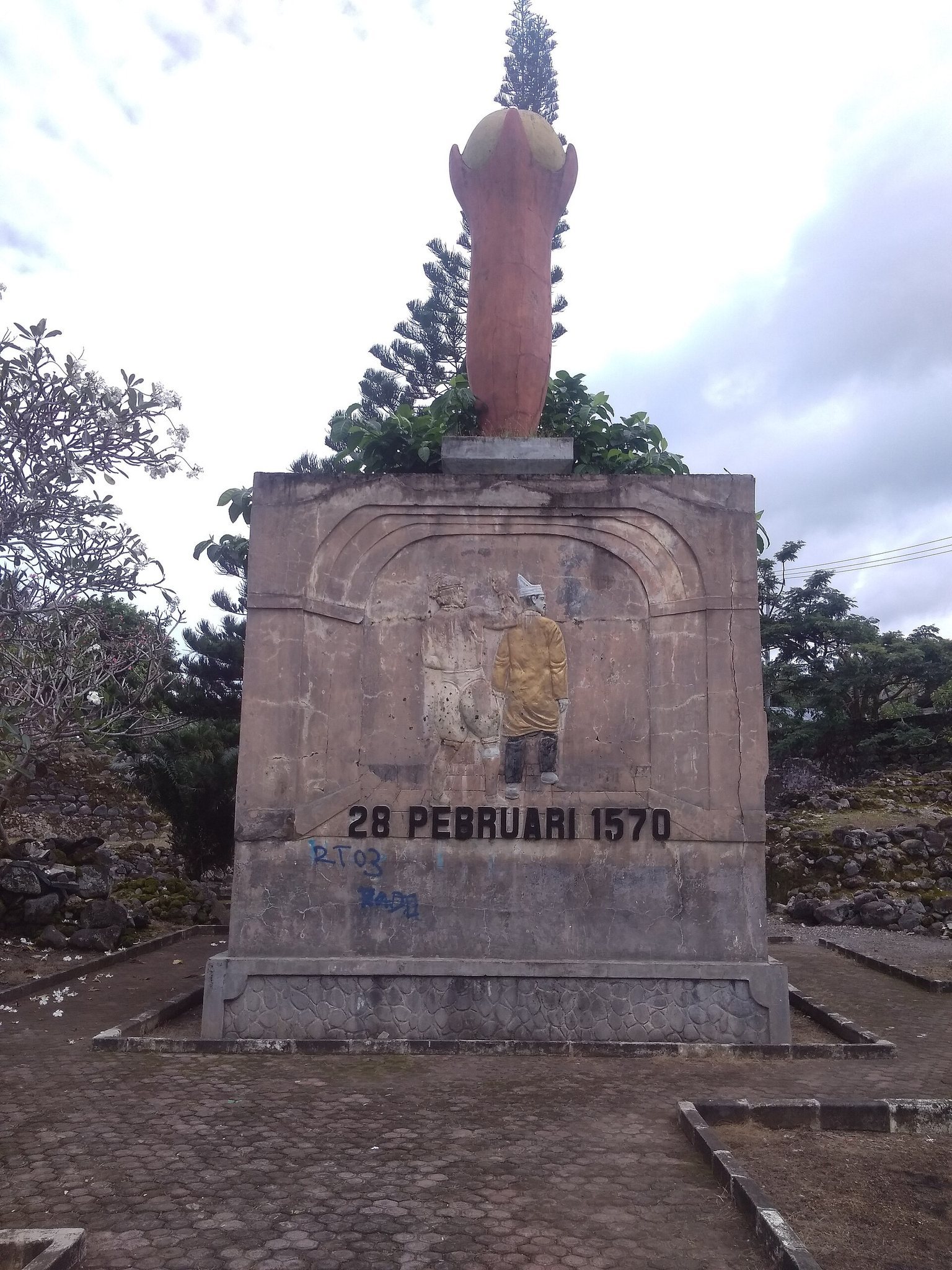
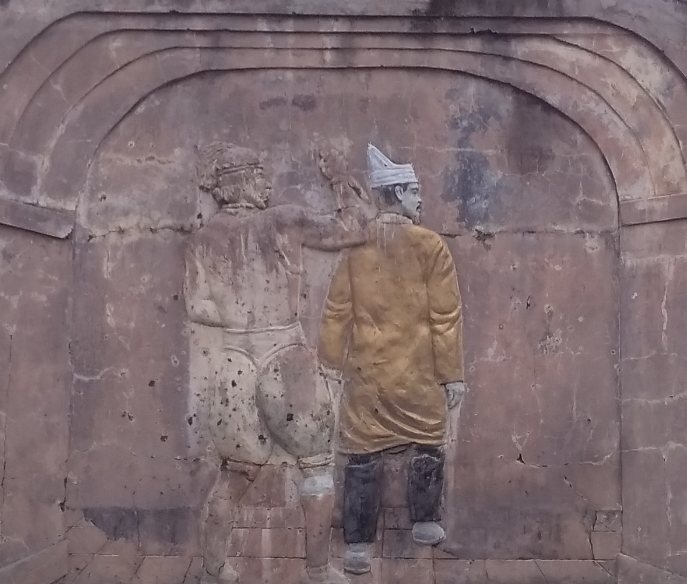
Expecting a possible Portuguese return, Sultan Baab greatly strengthened the defenses and built another fort about 5 kilometers to the east. That second stronghold is now known as Fort Kota Janji. A monument at Kastella commemorates the Ternatean victory over Portugal in 1575.
Spanish and Dutch Occupation
In 1605, the Dutch East India Company, a chartered Dutch trading company that operated armed commercial and colonial bases in Asia, captured Portuguese forts on Ambon and Tidore and established a trading base on Ternate. The following year, a Spanish expedition from the Philippines recaptured Kastella. The Spanish took Sultan Saidi Berkat hostage and exiled him to Manila in March 1606. They strengthened the defenses again and renamed the fortress Ciudad del Rosario.
Ciudad del Rosario served as the Spanish capital in the Moluccas from 1606 to 1663. The settlement developed into a large city with several churches, a Franciscan monastery, and a hospital. Dutch Admiral Paulus van Caerden, who was captured by the Spanish in 1610 and held at Kastella, described the fort as “invulnerable.” When Spain abandoned the Spice Islands in 1663, its forces partially destroyed the defenses. The Dutch later occupied the remaining fortifications.
Remains
Coastal Fortress and Ruins
Fortification Layout
The original Portuguese fortress stood near the Sultan’s court on Ternate’s southwest coast, about 7 kilometers from the island’s main reef-free harbor at Talangame. Its position commanded three narrow passages through the surrounding reefs. Small craft could use these channels to reach the fort and load cloves, while larger vessels could not approach closely enough to bombard it. The original construction followed Portuguese architectural practice, while the defenses were later extensively modified by Sultan Baab and transformed again by the Spanish.
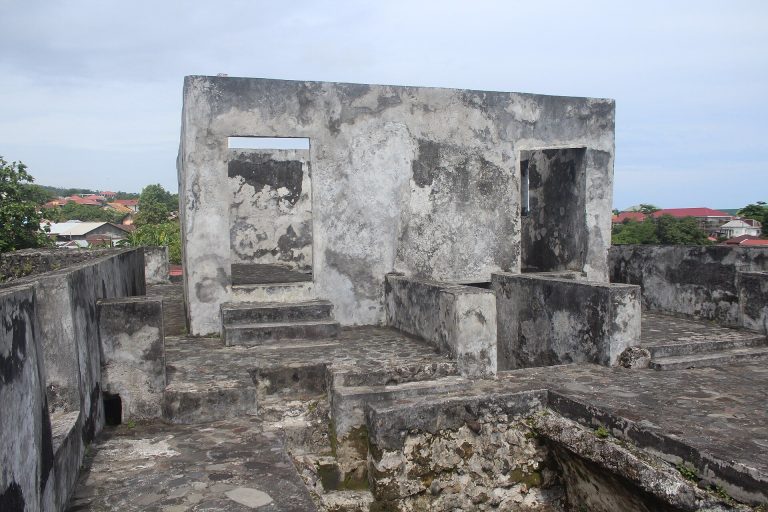
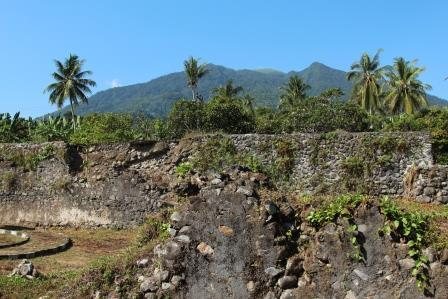
Today, the site consists of ruins spread across a large area. Local houses occupy parts of the former fortress area, and the main island road passes through it. The surviving remains include sections of walls and bastions dating from the Spanish period. The ruins lie in front of Mount Gamalama and the monument dedicated to Sultan Hairun.
Victory Monument
A monument within the remains commemorates Ternate’s victory over Portugal in 1575. It stands among the surviving fortification remains and connects the physical site with the event that ended Portuguese control of Kastella and began its use as Sultan Baab’s royal palace.