Aina Mahal: An Indo-European Palace and Museum in Bhuj, India
Site at a Glance
- Rating
- 4.2
- Popularity
- Medium
- Country
- India
- Primary era
- Early Modern
- Eras represented
- Early Modern, Modern
- Civilizations
- Unclassified
- Site type
- Domestic
- Remains
- Palace
On this page14 sections
History
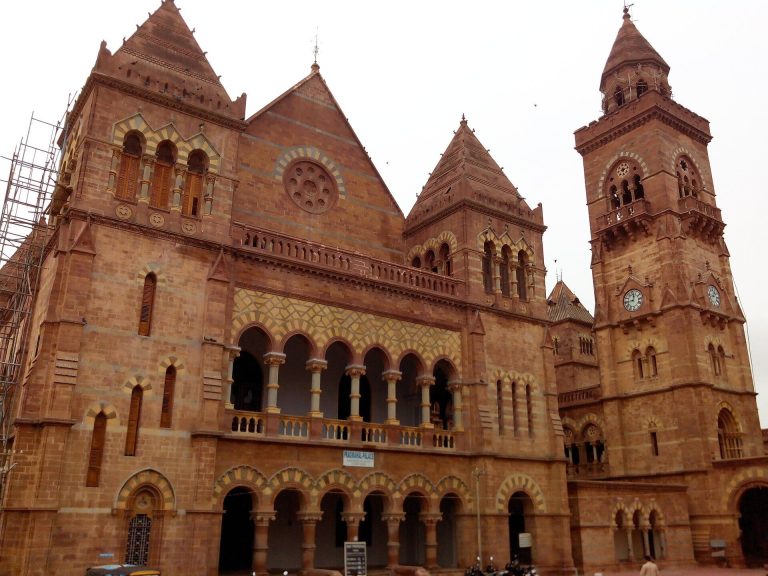
Aina Mahal is an eighteenth-century palace in Bhuj, India, commissioned by Rao Lakhpatji of the Kutch State and completed around 1750 in an Indo-European architectural style. It stands in Darbargadh, the historic palace and fortified administrative quarter of Bhuj, beside Prag Mahal. The building combined local palace design with European materials, decorative ideas, and furnishings introduced by its chief designer, Ram Singh Malam.
Commission and Construction
Rao Lakhpatji ruled the Kutch State from 1741 to 1760 and ordered the palace during his reign. Ram Singh Malam, a Kutch master craftsman and architect, directed its design after spending 18 years in Europe. He applied the technical and decorative knowledge gained there to a building rooted in local forms. Construction cost 80 lakh Kutch koris, approximately 8 million koris or 2 million rupees, equal to about three years of the state’s revenue at the time.
The palace became known as the Palace of Mirrors or Glass Palace because of its extensive mirror decoration and glittering interiors. Its collections also reflect Europeanerie, an eighteenth-century elite fashion in India for collecting and displaying European objects, technologies, and decorative goods.
Later Court History
The palace continued to acquire objects and rooms associated with successive Kutch rulers. A door made in 1708 during the reign of Pragmalji I was preserved in the palace collection. The Marriage Hall was built in 1884 for Maharao Khengarji III, adding a later court space to the older complex.
In 1830, the English visitor Mrs. Postnas described the palace in her memoir Cutch, published in 1839. She recalled a room lit by large candles and filled with six musical clocks, jelly glasses, old vases, and a varied mixture of ornament. A pendulum clock made in Bhuj by Morarji Lakhamshi Soni in 1839 was synchronized with the Hindu calendar, showing how local manufacture and court interests formed part of the palace’s material history.
Earthquake and Museum
Aina Mahal was converted into a museum in 1977. The 2001 Gujarat earthquake severely damaged the building, after which part of it was restored. The restored section now houses the Aina Mahal Trust Museum, and the palace is also listed as renovated in 2003. Its surviving rooms and collections preserve evidence of Kutch court life, its links with the Mughal court, and the adoption of European objects by Indian nobles.
Remains
Building and Interior Layout
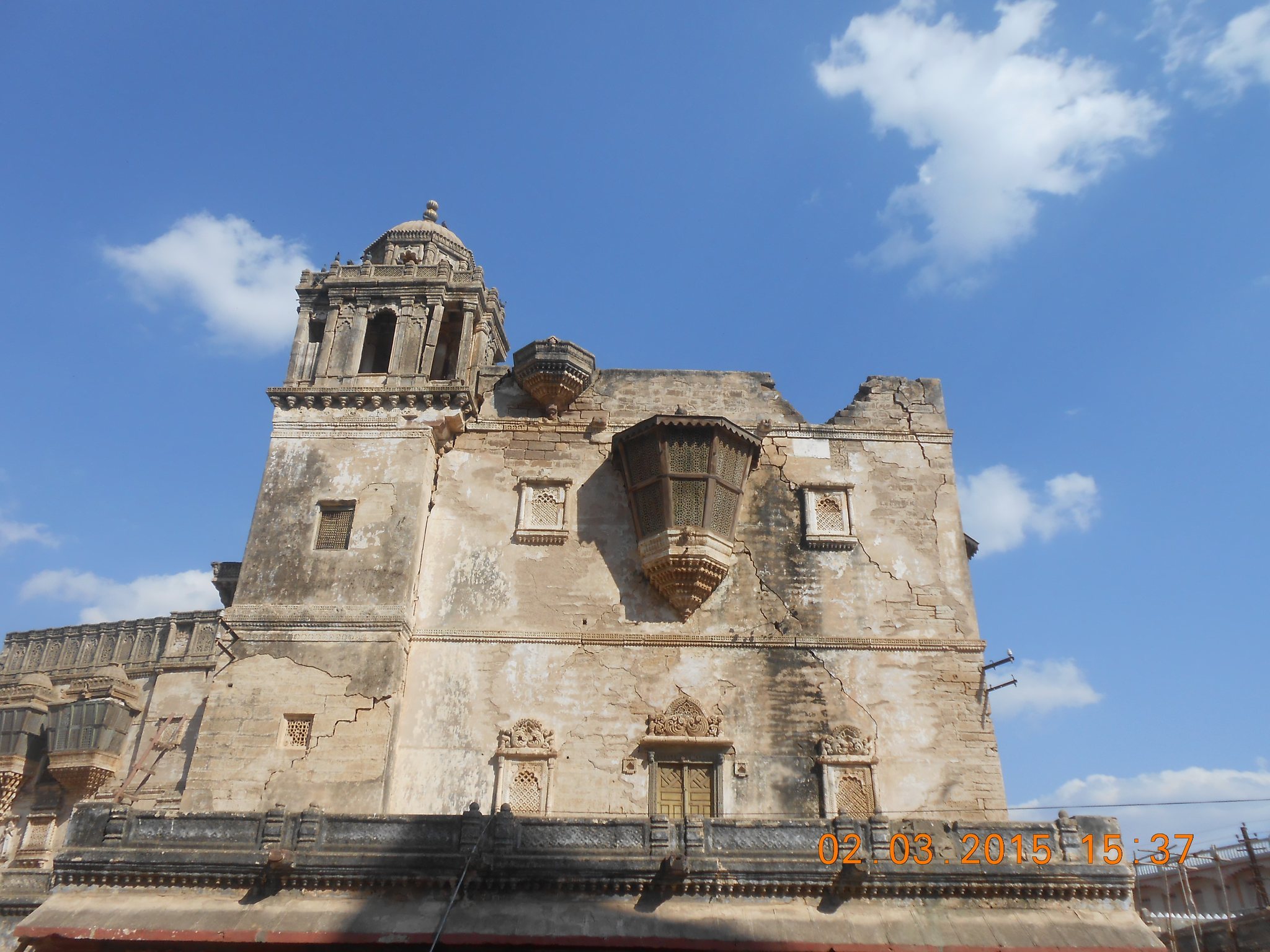
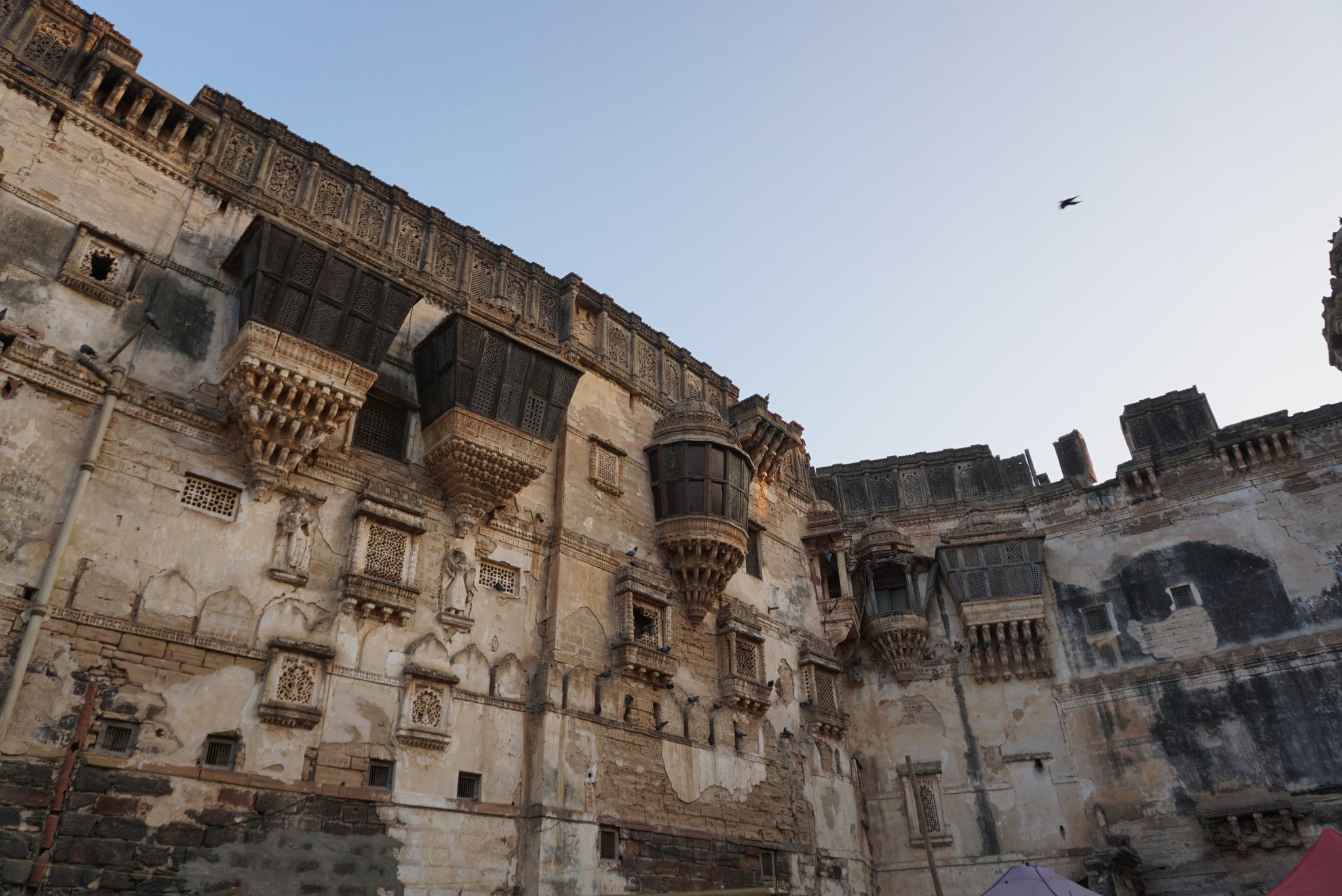
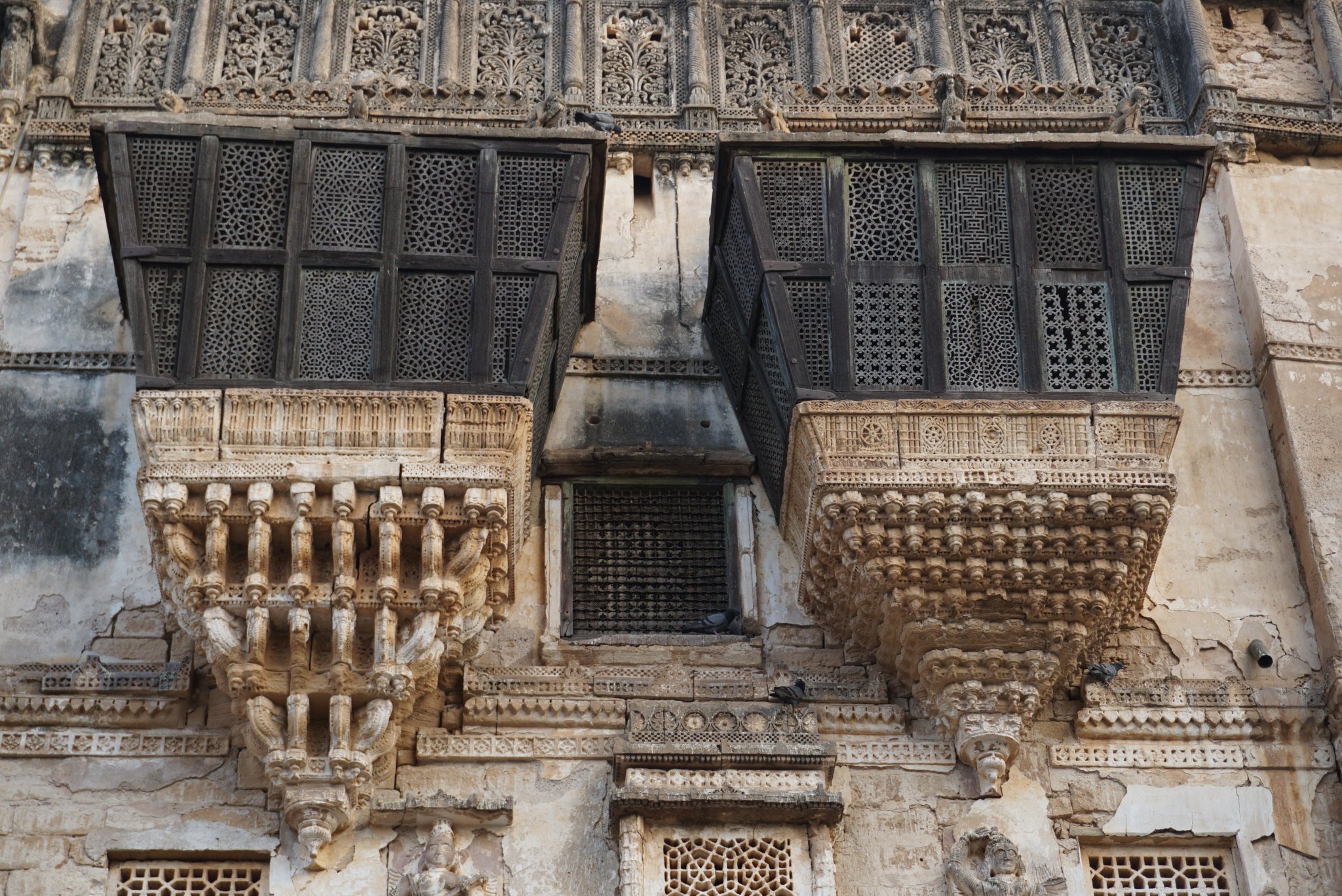
Aina Mahal is a two-story stone mansion with a whitewashed exterior, carved stonework, and wood fretwork. Blue Delftware tiles cover the floors. Inside, marble walls are fitted with mirrors between gilded frames, while shelves hold glassware and ceramics. Candelabra and chandeliers with Venetian-glass shades illuminate rooms whose pillars and roofs carry gilded moldings. Triangular mirror-filled compartments occupy the spaces between pillars and walls.
The first floor contains the Audience Hall, Pleasure Hall, Hall of Mirrors, State Apartments, and Hira Mahal. The second floor contains an antechamber, the Darbar or Court Hall, and the Marriage Hall, reached by an exterior staircase. Together, these rooms preserve the palace’s combination of local construction and European decorative materials.
Royal and Ceremonial Rooms
Hira Mahal
Hira Mahal is centrally placed on the first floor beside the Hall of Mirrors and its reception area. The chamber measures 4.6 by 7.3 metres and contains one of Maharao Lakhpatji’s beds, supported by pure-gold legs. More than 27 large mirrors surround it, decorated with gold flowers and semi-precious stones and framed in gilded Rococo or Baroque-style surrounds.
Kutchi silk panels with aari embroidery cover the surrounding floor and walls. Mirror work and gilded wood carvings decorate the ceilings, pillars, and doors. The room also contains Lakhpatji’s buckler, a small hand shield, and a diamond-studded sword presented to him by the Mughal emperor Alamgir II. A palace tradition says that Lakhpatji used a bed for one year before auctioning it to finance the next year’s entertainments, with the beds purchased from state funds.
Fuvara Mahal
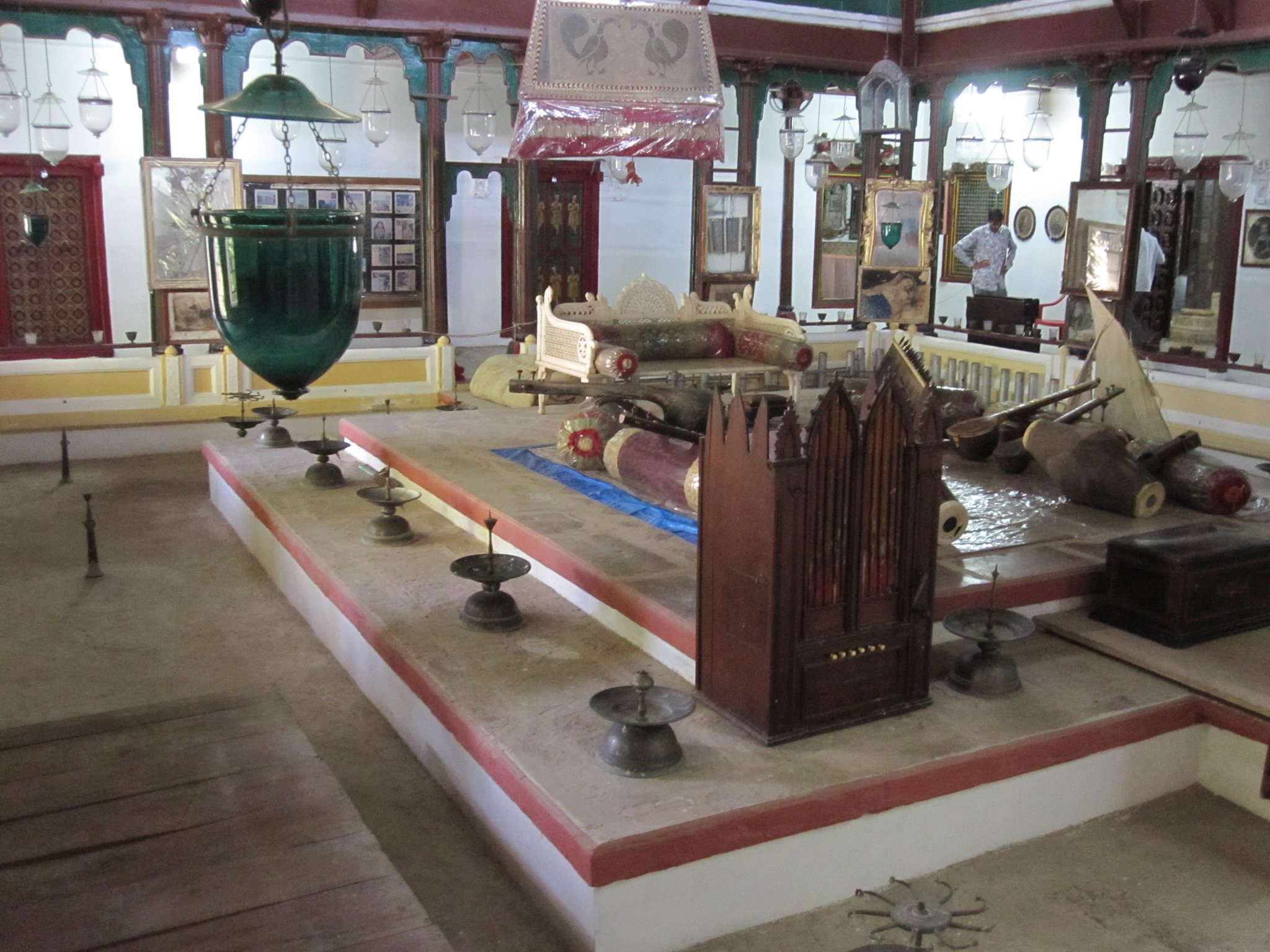
Fuvara Mahal lies beside Hira Mahal and served as a pleasure hall and a setting for court. Most of the room consists of a pleasure pool, with a raised square platform at its centre and narrow aisles approaching from three sides. Siphons and pumps supplied the water, while fountains projected sprays that cooled the air. Pillars around the pool supported a ventilated roof, and their capitals carried Chinese-style carvings.
The central throne was surrounded by water sprays and ventilated from above. Hanging candelabra illuminated the chamber, whose decoration included eighteenth-century glass paintings influenced by Chinese designs.
Darbar Hall and Marriage Hall
The Darbar Hall contains a silver throne and gilt wooden chairs dating from the nineteenth century. Weapons hang on its walls. The Marriage Hall, built in 1884, also displays weapons, while a perfume sprayer occupies the centre of the room.
Collections and Court Records
Paintings and Processional Scroll
The State Apartments contain portraits of British, Flemish, and Italian figures, including Rana Ranjit Singh of Mewar, Raja Bakht Singh of Marwar, and Empress Catherine the Great. Other paintings portray Kutch rulers and their courts, with some works influenced by Mughal painting. The collection also includes paintings acquired by Ram Singh Malam during his European travels and eighteenth-century prints of William Hogarth’s A Rake’s Progress and related moralizing series. Some painted jewelry incorporates real gems into its surfaces.
The first gallery contains a scroll showing the royal procession of Maharao Pragmalji II. It is dated 1876, signed by Vadha Juma Ibrahim, and measures 15 metres in length and 22 centimetres in width.
Clocks, Objects, and Emblems
The museum displays English, French, and Dutch chiming clocks, glassware, ceramics, chinaware, mechanical toys, celestial globes, arms, a palanquin, costumes, furniture, and other court objects. The collection also includes Mahi Maratib, a golden ceremonial fish emblem used as an insignia of authority and associated with the coat of arms of the Kutch State. It was given to Lakhpatji by the Mughal emperor during his visit to Delhi.
Mughal Farmans and Horoscopes
The ante-chamber displays Mughal farmans, formal royal decrees or administrative orders, dating from 1617 to 1658. Issued by Jahangir, Shah Jahan, and the Mughal prince Dara Shikoh, most are addressed to Rao Tamachi. Their subjects include Kutch’s relations with the Mughal court, the conquest of Gujarat, respect for the governor of Surat, a proposed journey to Agra, and the capture of a rebel who had attacked Kutch.
The palace also preserves rulers’ horoscopes painted in the local Kamangari tradition. The horoscope of Rao Pragmalji II, dated 1839, measures 38.7 metres in length and is believed to be the world’s longest horoscope.