Kloster Unterzell: A Former Premonstratensian Monastery in Germany
Site at a Glance
- Rating
- 4.6
- Popularity
- Low
- Country
- Germany
- Primary era
- Early Modern
- External website
- Open
- Eras represented
- Early Modern, Modern
- Civilizations
- Holy Roman Empire
- Site type
- Religious
- Remains
- Monastery
On this page13 sections
History
Kloster Unterzell is a former monastery in Zell am Main, Germany, founded around 1230 by Hermann I of Lobdeburg, bishop of Würzburg. It was established for Premonstratensian canonesses, female members of a Catholic religious order founded in the twelfth century, and dedicated to the Virgin Mary and Saint Cecilia of Rome.
Premonstratensian foundation and secularization
Hermann I transferred the convent from Kloster Oberzell to Unterzell. In 1525, insurgent serf peasants plundered the monastery during the German Peasants’ War, a widespread uprising against social and economic conditions in the German lands. In 1562, under Prince-Bishop Friedrich von Wirsberg, the institution came under the administration of the Prince-Bishopric of Würzburg, an ecclesiastical state governed by bishops who also exercised territorial political authority.
A new community of Premonstratensian canonesses was established in 1642. In 1749, Maria Renata Singer von Mossau, the religious superior, was condemned and executed at Unterzell during the witch persecutions of the Prince-Bishopric of Würzburg. Her execution was the last execution of a presumed witch in Germany.
The monastery was dissolved in 1803 during the secularization of Bavaria, the early nineteenth-century state dissolution and sale of church and monastic property. Private purchasers acquired the complex. The former church was temporarily used as a goat shed, and the buildings later served as a Talmudic school, a Jewish institution for advanced study of the Talmud and related religious texts, as well as a commercial center and apartments.
Jewish community and industrial activity
During the Hep-Hep riots of 1819, anti-Jewish disturbances that spread through several German territories, Jewish students and other Jews fled Würzburg and its surroundings. Rabbi Mendel Rosenbaum acquired the former monastery with others and moved there with his family and Lazarus Bergmann in 1822. They established a Jewish community that included refugees from Würzburg and later founded a Talmudic school.
Rosenbaum operated livestock and goods businesses, a general-goods trade, and a nail forge at Unterzell. From 1825, Lazarus Bergmann directed the forge. After Rosenbaum emigrated with his wife and children to the Land of Israel in 1834, his eldest son Moses Rosenbaum continued the enterprise.
Rosenbaum’s businesses at Unterzell, together with the rapid-printing-press factory at Oberzell owned by Friedrich Koenig and Andreas Bauer, helped bring about the merger of Oberzell and Unterzell as Zell am Main in 1833. These enterprises also contributed to the town’s acquisition of market rights.
Destruction and Lutheran reuse
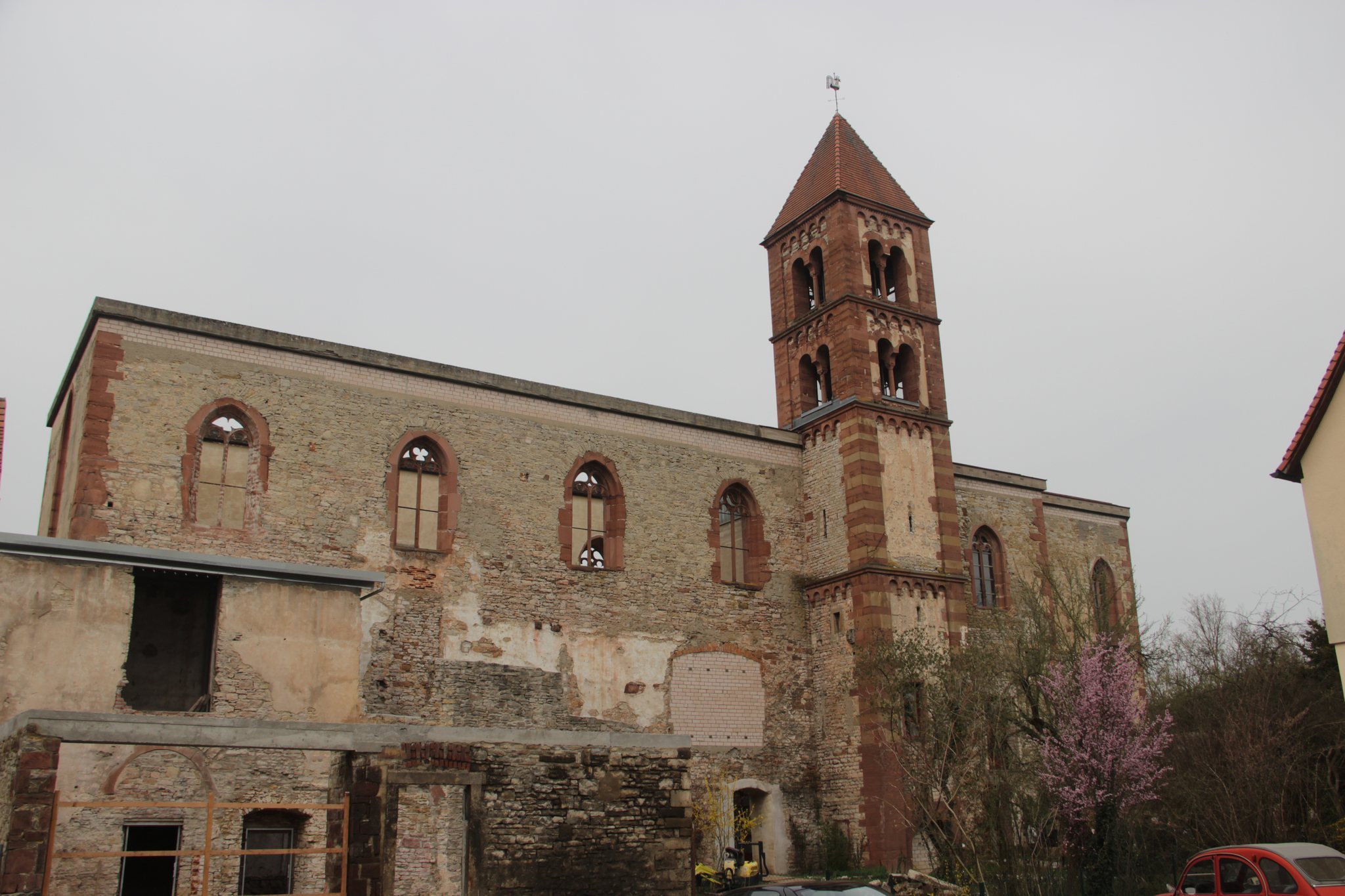
An air raid on 31 March 1945 destroyed the monastery and church, following the bombing of Würzburg on 16 March. After the war, the monastery buildings were converted into apartments, while the church remained a ruin.
In December 1966, the Würzburg district authority ordered the church’s demolition because the nave vault threatened to collapse. Government official Hans-Joachim Wachsmuth promoted its sale to the Lutheran Church, which lacked its own worship building in Zell. The co-owners signed the sale contract in Würzburg on 6 September 1967.
Beginning in 1971, the Lutheran Church secured and adapted the former monastic church as the Evangelical Lutheran Reconciliation Church. The work followed requirements set by the Bavarian State Office for Monument Preservation and received financial support from monument-preservation authorities in Bavaria and Würzburg district. The church is now used by the Würzburg Lutheran community, continuing the complex’s succession of Premonstratensian Catholic, Jewish communal and educational, and Lutheran religious uses.
Remains
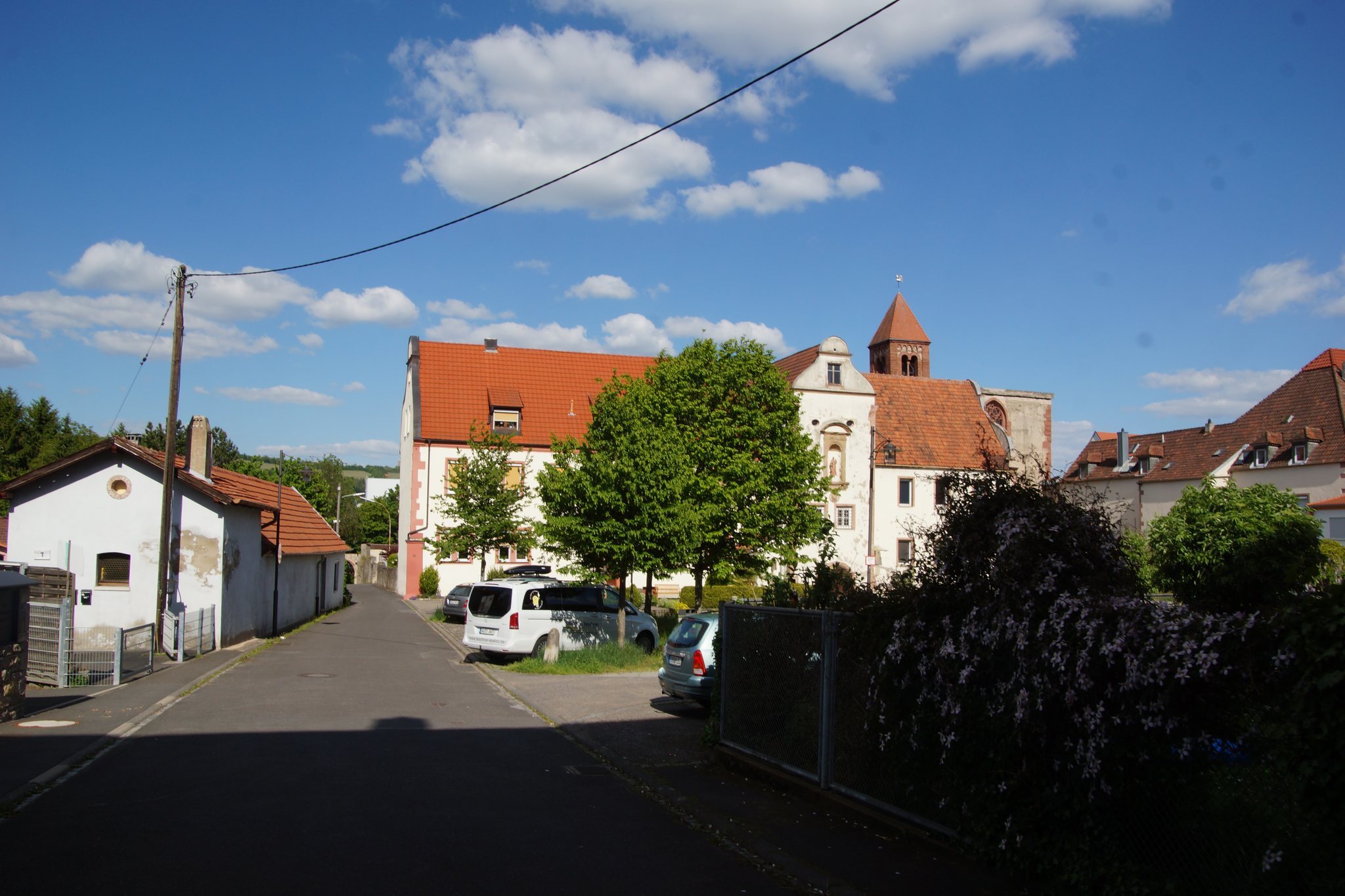
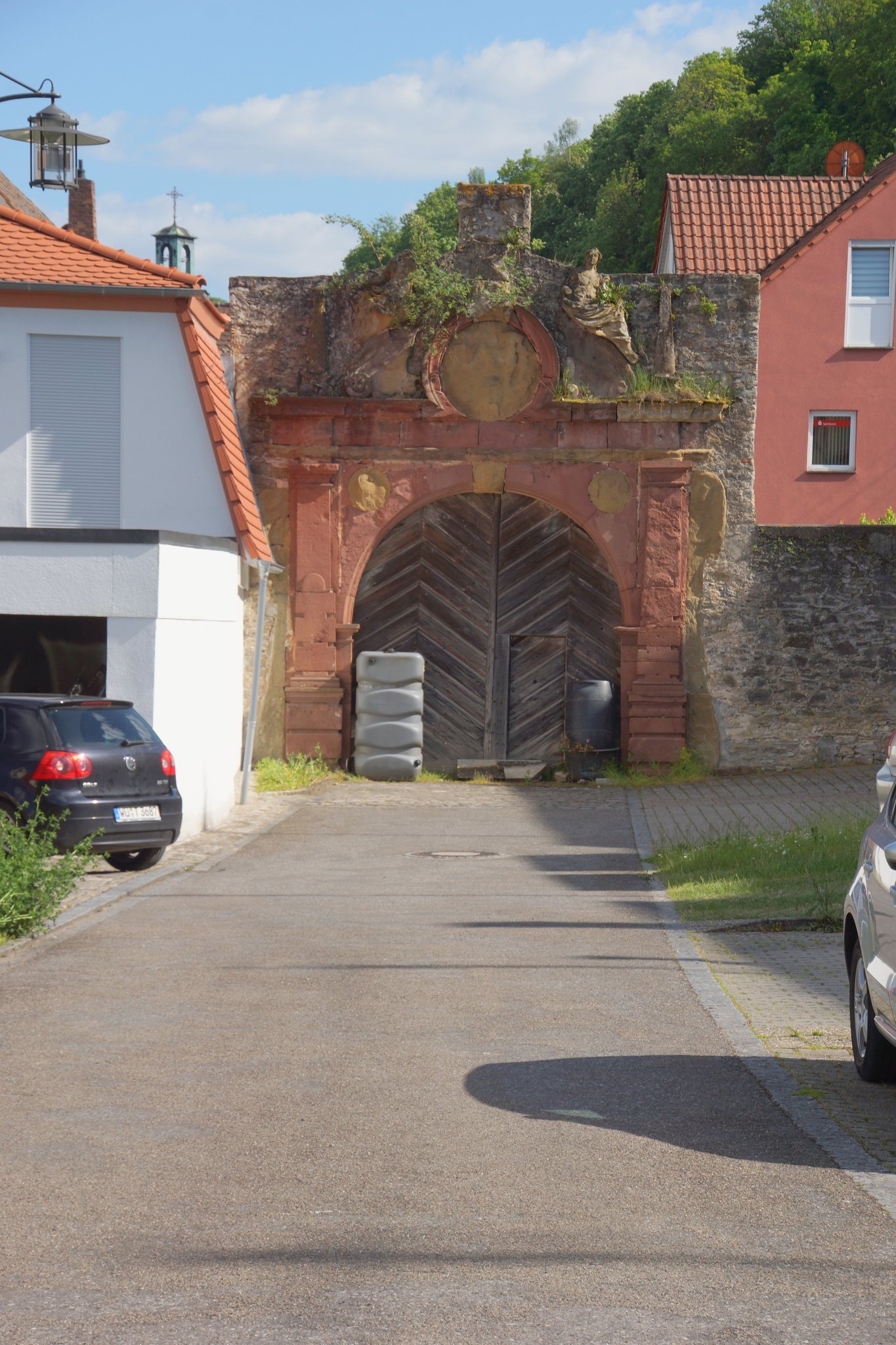
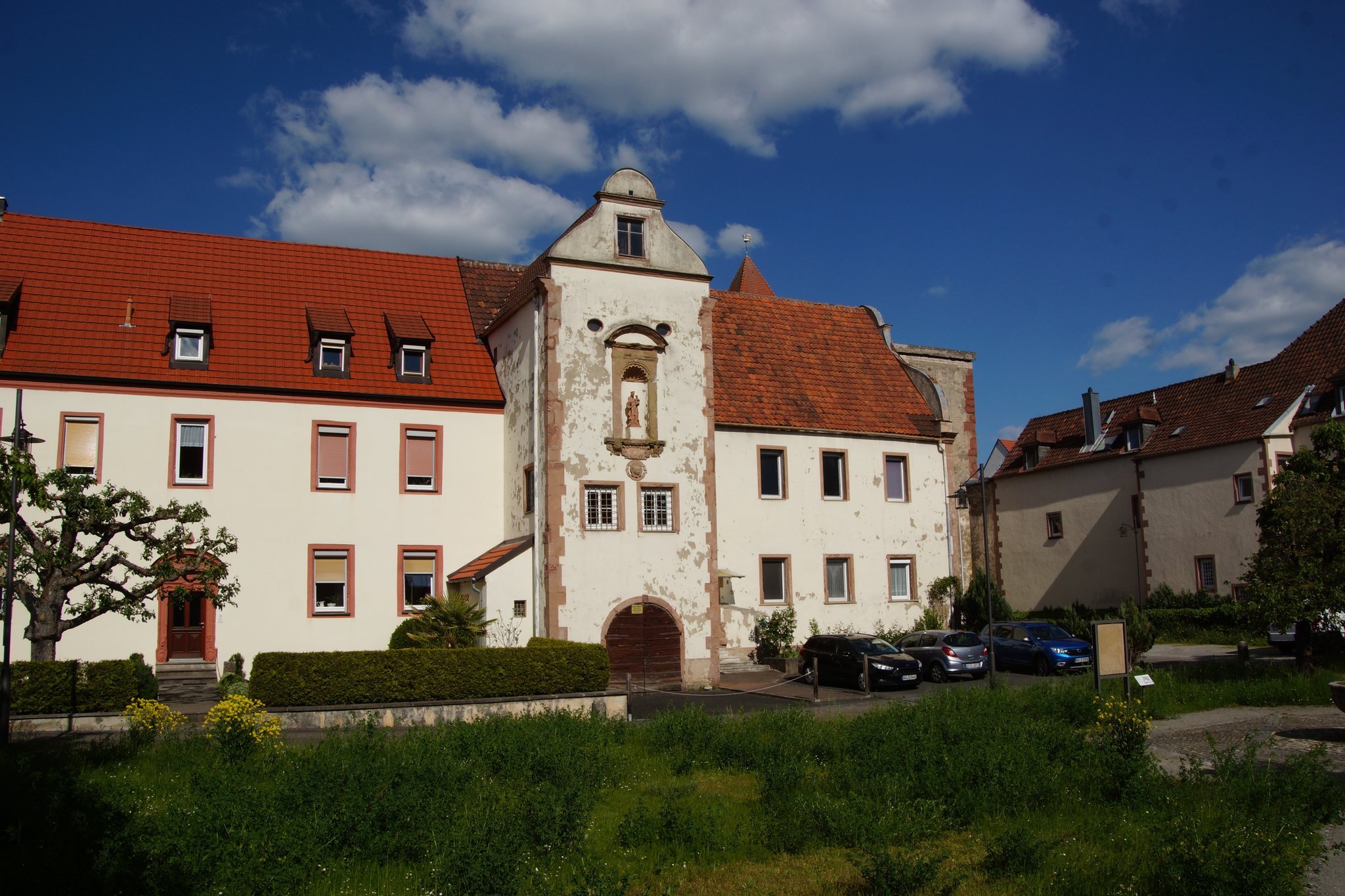
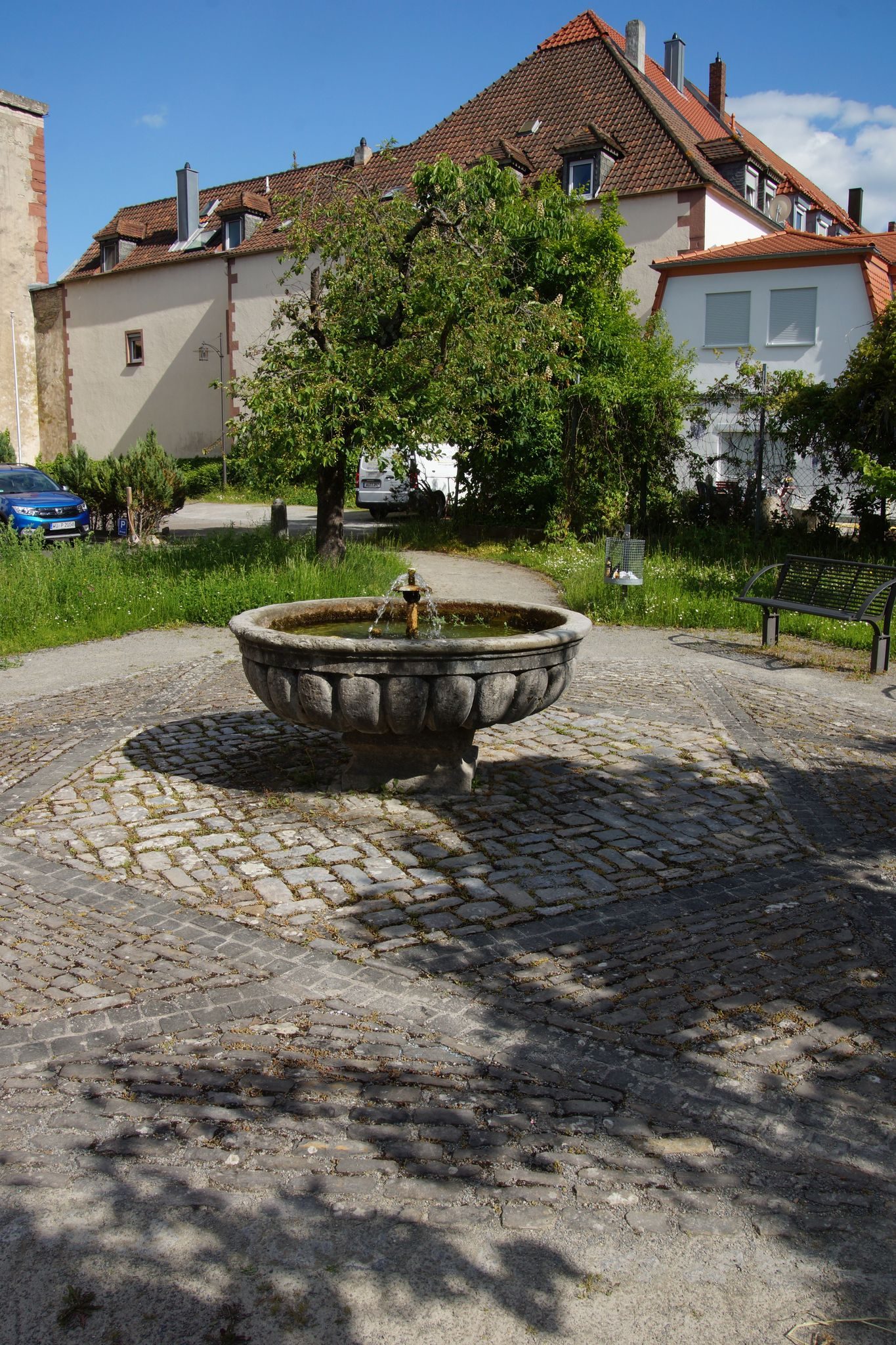
The surviving complex combines secured church ruins with later adapted spaces and remnants of the former monastery. The church’s choir and eastern nave form the worship area, while the surviving nave walls create an open forecourt. Transept walls enclose a small garden, and other remains include the southern tower, a provost’s house, a grave slab, and a seventeenth-century fountain bowl.
Former monastic church
Choir and worship space
The Evangelical Lutheran Reconciliation Church occupies the choir and the eastern part of the former nave. This worship space extends westward to the edge of the pair of towers. The eastern section of the nave has a flat roof, reflecting the secured and adapted form created from 1971 onward.
Nave walls and forecourt
The enclosing walls of the nave survived at their full height. They were secured from the towers to the western gable wall and now form an open courtyard or forecourt for the Reconciliation Church. The remains preserve the outline of the former nave while allowing the Lutheran worship space to function within the surviving structure.
Transept and southern tower
Remains of the transept walls enclose a small garden. The southern tower was incorporated into the securing and design work carried out for the church’s Lutheran adaptation.
Monastic and movable remains
Provost’s house
The complex included a provost’s house dated to 1606–1607. It belongs to the surviving architectural record of the former monastery.
Altars and later locations
The former church had a high altar and two side altars. After the monastery was dissolved, the altars were moved to Alt St. Josef in Oberdürrbach, Würzburg.
Grave slab and fountain bowl
A grave slab remains among the monastery ruins, and the complex also contains a seventeenth-century fountain bowl. Before the Lutheran adaptation, the choir was used as living space. Heinrich Weckesser stated that he had been born there while it served as a residence.