Onega Petroglyphs: Prehistoric Rock Art on Lake Onega
Site at a Glance
- Rating
- 4.3
- Popularity
- Very Low
- Country
- Russia
- Primary era
- Stone Age
- Eras represented
- Stone Age
- Civilizations
- Unclassified
- Site type
- Civic
- Remains
- Rock Art
On this page17 sections
History
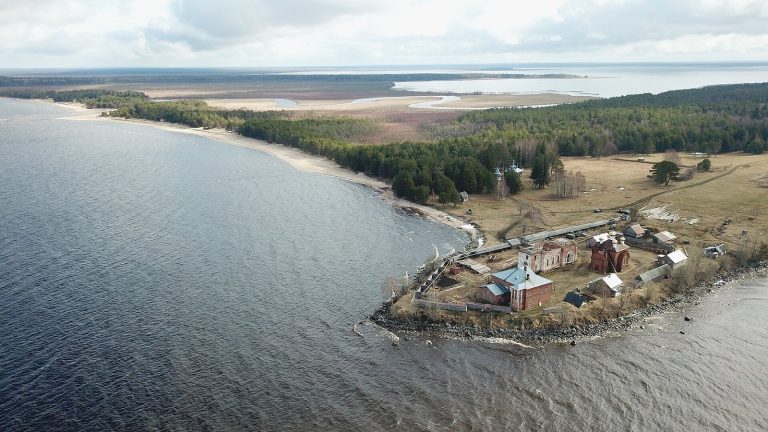
The Onega petroglyphs are prehistoric rock-art monuments on the eastern shore of Lake Onega in Russia, created by prehistoric communities mainly during the fourth and third millennia BC within the Neolithic, or New Stone Age. The groups extend for about 20.5 kilometres from the area south of the Vodla River to the Black River and its surrounding shores. A petroglyph is an image made by carving, pecking, or abrading rock rather than by writing, and the Onega examples form a large body of monumental prehistoric art.
Origins and Chronology
The age of the carvings remains uncertain because the images cannot be dated directly. Archaeologists have compared them with nearby settlement remains and have considered former lake levels, land uplift, and erosion. Occupation around the lake includes Mesolithic, Early Comb Ceramic, Bronze Age, and Iron Age phases, so more than one prehistoric population may have contributed to the rock art.
Earlier research placed the settlements and carvings around 2000–1500 BC, partly because pottery decorated in the pit-and-comb tradition was found nearby. Later reconstructions generally began the carving sequence between the end of the fourth and the middle of the third millennium BC. Abram Stoljar proposed that the earliest images were made at Peri Nos, followed by work at Peri VI, Peri III, and Besov Nos. In his sequence, carving later spread to Karetski Nos, Kladovets Nos, Gaži Nos, and the Gurji islands, continuing until about 2000 BC.
Lake Onega’s changing shoreline complicates this interpretation. The lake was once lower than it is today and was also as much as 3.2 metres higher at some periods. Postglacial land uplift tilted the lake southward, while precipitation altered its water level. These processes make the height of a carving above the present shore an uncertain guide to its age. The wide range of elevations at Karetski Nos, Peri Nos, and Besov Nos nevertheless suggests that those places were used over long periods.
In 1991, Robert G. Bednarik used micro-erosion dating, which estimates age from the weathering of microscopic tool marks, to compare the large Piessa figure with an Orthodox cross carved beside it in the fifteenth century. He proposed a date of about 2000 BC. Stoljar proposed approximately 3500–3000 BC after allowing for a period when Piessa may have been protected from atmospheric erosion beneath the water. The method is indirect, and possible burial or submersion affects the result.
Stoljar also proposed that flooding around the Black River submerged some groups for about 1,000 years. After the water receded, later carving took place near the mouth of the Vodla River. These northern images now lie higher above the water and include especially many water birds and swans. Interpretations linking particular carvings with fertility, ritual specialists, journeys to the underworld, or wider cosmological beliefs remain possibilities rather than established explanations. The concentration near the Vodla may relate to the Black River becoming ice-free in early spring, when water birds gathered in the area.
Early Recognition and Archaeological Investigation
The carvings entered written discussion in 1848, when the geologist Konstantin Grewingk heard at Besov Nos a local tradition that images on the lakeshore had been made by the devil. He sketched about 80 figures and published an interpretation in 1850. The Petrozavodsk gymnasium lecturer Pjotr Schwedt also observed the carvings and wrote about them that year.
J. R. Aspelin examined the subject in a doctoral dissertation in 1875. The Swedish archaeologist Gustaf Hallström visited Lake Onega in 1910 and returned in 1911 with two researchers, including M. C. Burgitt. Before the First World War, they traced and photographed 412 carvings.
In 1927, the geologist Boris Zemljakov identified the carving fields at Kladovets Nos, Gaži Nos, and the larger Gurji island. On his recommendation, a large carved slab was moved to the Karelian local-history museum in Petrozavodsk for protection. Petrozavodsk University, founded in the early 1930s, employed archaeologists who studied the petroglyphs together with nearby settlements. In 1935, Vladislav Ravdonikas organized an expedition that recorded 482 carvings, while Alexander Linevski investigated the art and published a book on Karelian petroglyphs during the same decade.
Extensive fieldwork led by Yuri Savvateev between 1967 and 1977 identified additional fields on Gurji, Golets, and Molužin islands and at the mouth of the Black River. Further carvings, including some below the water surface, were found at known locations, bringing the recorded total to 872 figures. An Estonian prehistoric-art research group continued fieldwork from 1982 to 1994. In 1986, an expedition led by Väino Poikalainen discovered a new field at Kotškovnavolok on Lebediny Nos, where 194 figures were recorded.
In 2004, the artist Loit Jõekalda noticed a loose carved slab at Peri Nos VI. Alexander Zhulnikov’s team investigated the area in 2008 and 2009, finding six additional slabs, including one exposed beneath a fallen tree. The slabs fitted fractures in the adjacent bedrock and appear to have been pushed onto it by water and spring ice. Together, they bear 31 carvings. About 1,300 figures are now recorded in 24 groups, with more than half concentrated at Peri Nos, Besov Nos, and Kladovets Nos.
Heritage Status
Russia proposed the Onega petroglyphs for UNESCO World Heritage inscription in 2018. In July 2021, they were inscribed together with the White Sea petroglyphs as “Petroglyphs of Lake Onega and the White Sea” under cultural criterion iii, which recognizes sites that bear exceptional testimony to a cultural tradition or civilization. The Onega petroglyphs are also a Russian cultural-heritage property of federal significance.
Remains
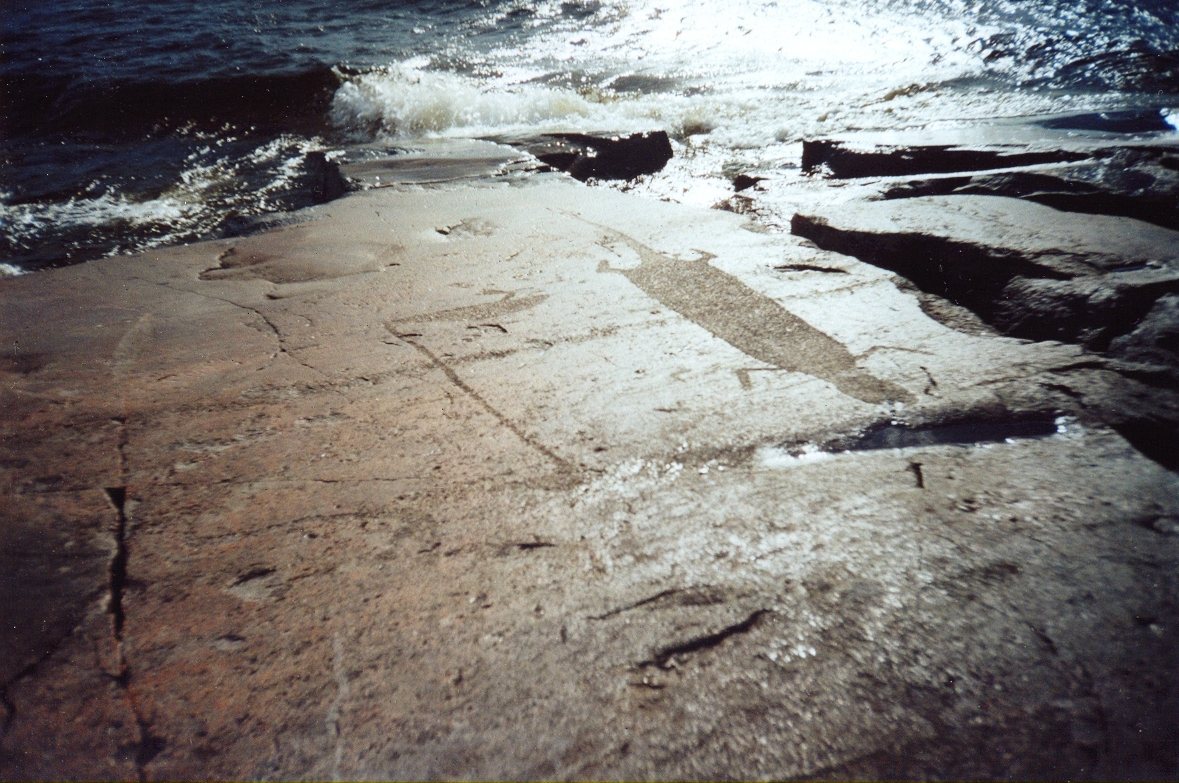
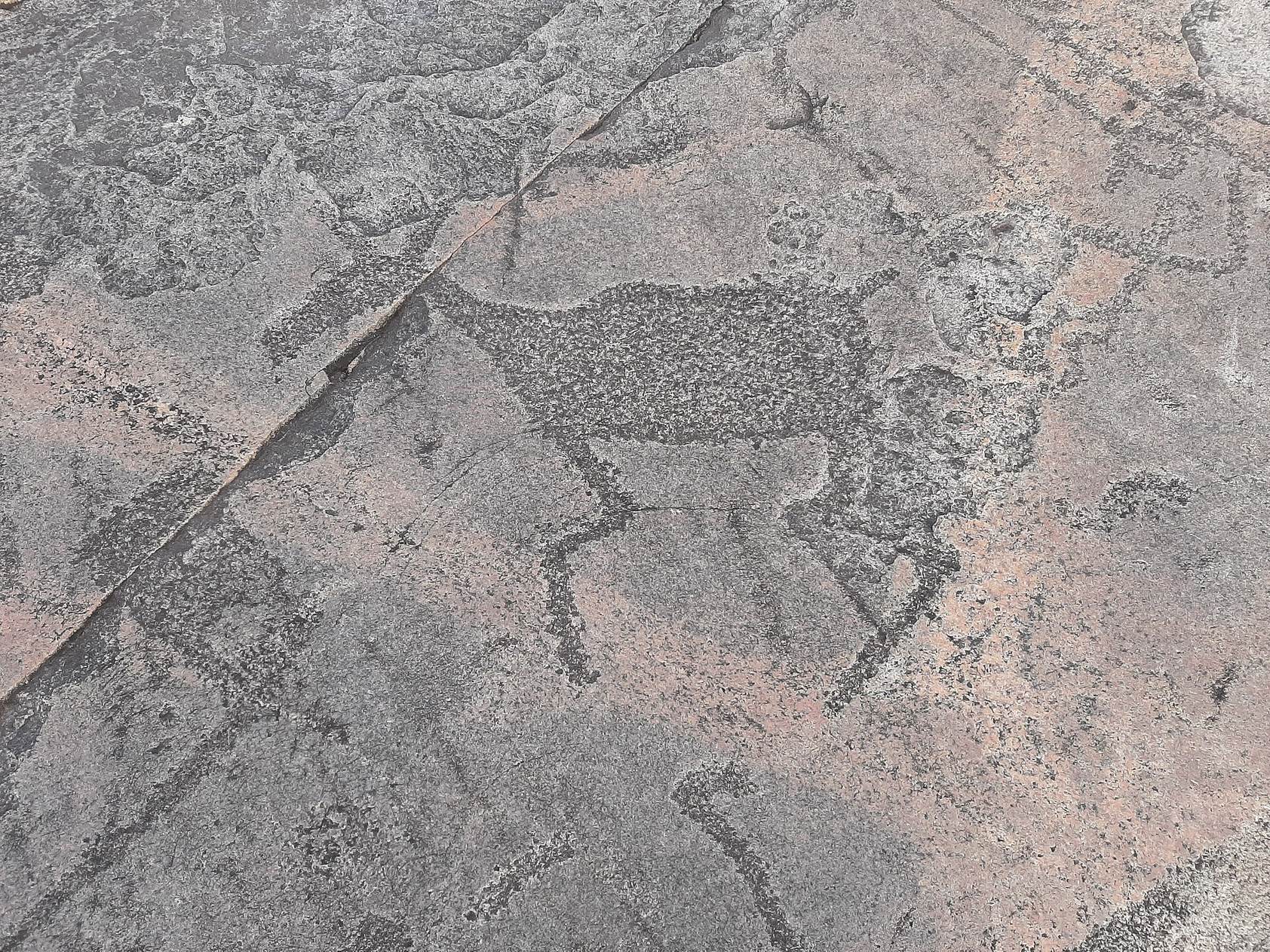
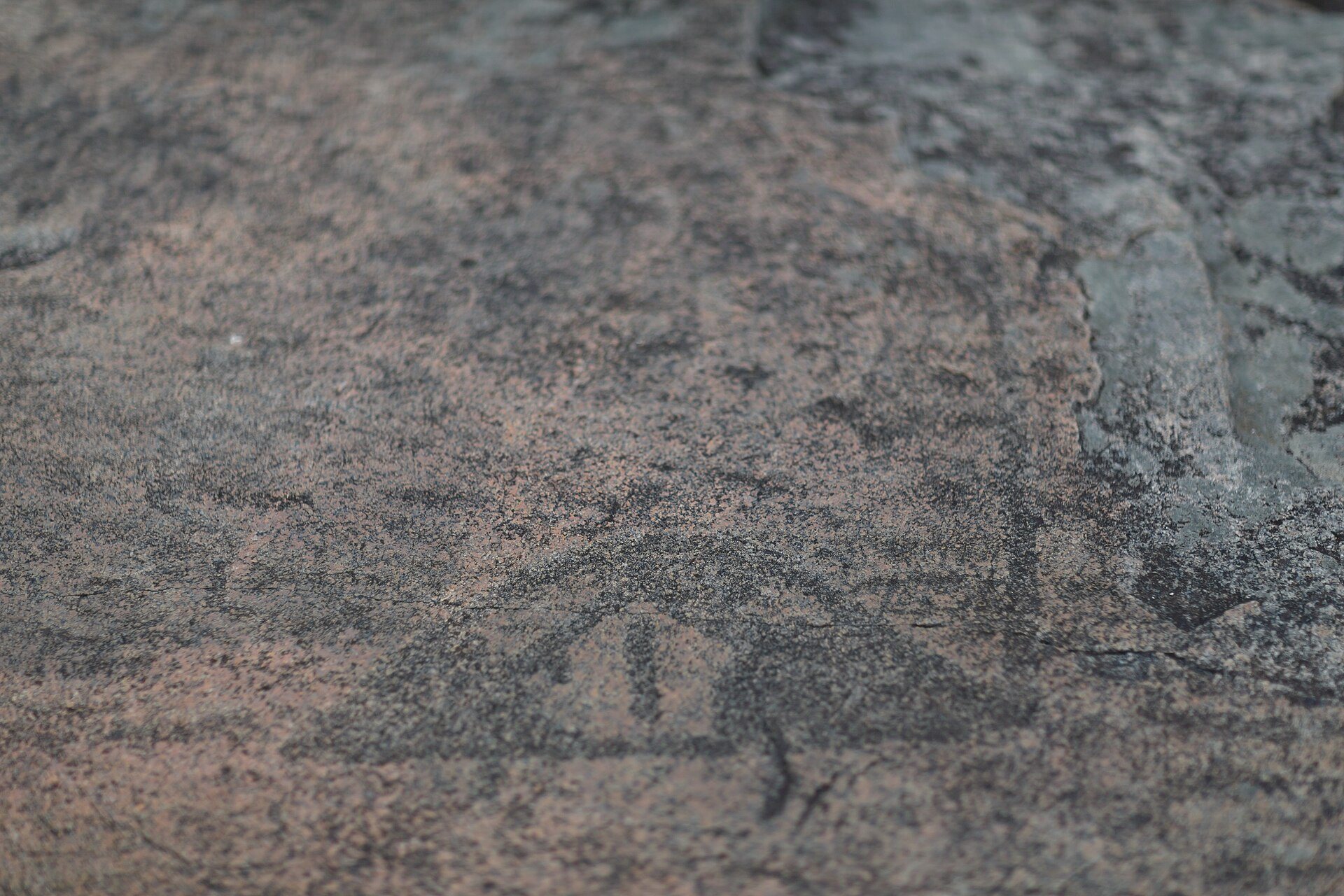
The petroglyphs occur in separated groups on gently sloping, glacially polished coastal rocks exposed to the waves of Lake Onega. Most are positioned on long rocky headlands or islands, and some make deliberate use of cracks, veins, spots, and other natural markings in the stone. The images were pecked or carved about 1–4 millimetres into the surface. They generally lie no more than about 2.5 metres above the waterline and have no single common orientation.
From north to south, the principal locations are Lebediny Nos, Kotškovnavolok, Bolšoi Golets, Karetski Nos, Modužin Island, Peri Nos, Besov Nos, Kladovets Nos, Gaži Nos, Maly Gurji, and Bolšoi Gurji. Water birds, especially swans, geese, and ducks, form nearly half of the recorded figures. Deer and elk, people, boats, bears, fish, geometric signs, and hybrid or unidentified figures make up the rest. Some circular and crescent-shaped forms have rays and are interpreted by many researchers as solar or lunar signs. Individual figures reach about 4 metres in length.
Northern Groups
Lebediny Nos
Lebediny Nos contains three groups of 94, five, and 53 carvings. The northern group includes 59 water birds, 16 deer or elk, and four boats. Its images stand between 1.05 and 2.62 metres above the water, including a swan about 4.1 metres long, the longest recorded Onega carving. The western group contains three water birds and one boat. The southern group includes 28 water birds, one boat, and 36 animal figures positioned between 1.09 and 2.36 metres above the water.
A nearby island contains one circular figure. One carving at Lebediny Nos shows a swan interpreted as a cosmic pillar supporting the sky. This reading gives the bird a role in a cosmological image, but it remains an interpretation of the composition rather than an identified inscription.
Kotškovnavolok and Bolšoi Golets
Kotškovnavolok contains 118 carvings between 1.12 and 2.30 metres above the water. The group includes 73 water birds, seven deer or elk, two other animals, and 35 unidentified figures. Bolšoi Golets is an island about 5 kilometres from the shore between the Vodla and Black rivers. Its five carvings all represent birds.
Central Headlands and Islands
Karetski Nos
At Karetski Nos, small groups of carvings extend for 60 metres along grey rock about 2 kilometres north of the Black River. The 165 figures include every major type known at Lake Onega, from the waterline to about 2.5 metres above it. A northern image shows an upright, long-necked swan beside a circular form interpreted as an egg or sun. Another prominent carving is a boat about half a metre long, equipped with an elk head and 20 crew members represented by vertical lines.
The group also includes a frontal dancing human figure with large circular extensions at its sides, a long-beaked and long-legged bird beside circular signs and rods, and two large elk with a lunar symbol inside one of them. A bell-shaped form called a “flower” has a projecting rod, while similar rods appear above boats and in other groups. Their meaning and any archaeological counterparts remain unknown.
Other images at Karetski Nos show a boat with a possible sail, an elk beside a paddle-like form, solar and lunar signs, deer, elk, swans, people, and beings that combine human and animal traits. About 50 boat images are known in the Onega area. They differ from depictions of northern sea boats and may represent mythical journeys rather than practical vessels. One boat has 21 marked rowers, while boats at other locations have nine, 13, or 14 crew members.
Modužin Island
Modužin Island, a small island beside Peri Nos, contains 13 carvings. Nine represent birds, two represent deer or elk, and another shows an animal or animal-like figure.
Peri Nos
The Peri Nos carving area covers about 200 by 200 metres and contains 411 figures concentrated on six small headlands, Peri I–VI. A smaller group on Peri VII contains four figures. Peri I has 20 carvings, including birds and seven unidentified designs. Peri II has 16 figures, among them six birds, three lunar or solar signs, two people, and two animals. The comparatively awkward execution of these images may reflect an early carving tradition.
Peri III is the largest and richest headland in the Peri Nos area. Its 237 figures occupy 12 fields at elevations from the waterline to 1.5 metres above it. About 33 percent are birds, 13 percent are lunar or solar signs, 12 percent are other animals, and 10 percent are people. A detached slab bearing a celebrated Peri III composition is displayed at the Hermitage in Saint Petersburg, where the meaning of the combined scene remains debated.
Among the Peri III compositions is a human figure holding a huge paddle with a possible elk-head ornament on its handle. The figure also has a long phallus and a possible headdress. Another scene places a man, a beaver, and an elk in contact with one another, apparently linking the figures. A further composition combines lunar signs, elk, birds, boats, and an unusual drilling device with a scene interpreted as a hieros gamos, or sacred marriage. A pregnant woman is approached by a male figure with a phallus and long hair. Their three-fingered hands have been interpreted as signs of otherworldly beings. The title “Adam and Eve” is a modern interpretation, not an original identification.
Peri III’s sixth field is dominated by three long-necked swans surrounded by fantastic figures. It also contains a beaver and two boats with elk heads. One boat has 14 rowers and the other has three. Peri IV contains 30 carvings representing all the main Onega image types, including many swans, a possible dog or fox, and an unusual person holding two circular objects.
Peri V contains a single large lizard carved on red rock. Its isolation has been associated with a possible ritual directed toward a dangerous or undesirable outsider, although that explanation remains uncertain. Peri VI, also known as Hunters’ Rock, contains 86 carvings representing all the major Onega types. It includes many of the roughly 150 symbolic figures known in the Onega area, especially lunar and solar signs arranged in relation to particular directions and possibly connected with a calendar.
Peri VI also has bell rods, fantastic human-animal figures, and a man holding an arrow-like spear beside a hut and a boat. The 31 carvings found between 2004 and 2009 include a boat, a human figure with animal features, celestial bodies, people, a swan, and an elk. Peri VII contains two birds, one lunar or solar sign, and one human figure.
Southern Groups
Besov Nos
Besov Nos contains 153 carvings on a headland about half a kilometre long. Near a sandy beach, a group of 38 figures includes a long-necked swan whose neck touches a circle. This has been interpreted as a swan carrying or supporting the sun.
The largest Besov Nos field occupies a zone 5–8 metres wide and about 70 square metres in area. Its 115 figures include Piessa, a figure 2.46 metres long with a square head, outward-bent arms, spread fingers, eyes, and a mouth. An ancient fissure in the bedrock begins at the mouth and divides the figure. Piessa has been interpreted as a devil-like or underworld being.
Monks from Murom Monastery apparently carved an Orthodox cross, a circle above Piessa’s head, and another cross beside the burbot figure around the fifteenth century. The fissure appears to have been deliberately widened, and its relationship to Piessa may have been intentional. To Piessa’s right is a burbot 2.65 metres long, while a 2.56-metre otter or lizard lies to the left. Swans, sturgeon, bears, deer, elk, and a boat surround this group, together with unidentified or damaged figures.
Other Besov Nos images include a 60-centimetre figure resembling a broken spruce branch, a whale being speared from a boat, and a man spearing a sturgeon. These scenes accompany the larger animal and human compositions on the headland.
Kladovets Nos and Gaži Nos
Kladovets Nos lies near the mouth of the Black River at the southern end of a sandy beach more than 1 kilometre long. Its weak, fractured rock surface has affected the survival of some figures. The site contains 48 carvings in an almost continuous group, mostly carefully executed water birds identifiable as ducks, geese, and swans. During periods of high water, part of the headland becomes an island. The carvings also include swans, deer, lunar signs, and a person on skis.
Gaži Nos, 1–2 kilometres south of the Black River, contains three small groups with a total of 13 schematic carvings.
Gurji Islands
The northern tip of Bolšoi Gurji contains 11 carvings representing deer, swans, solar and lunar signs, a boat with nine crew members, a long-tailed animal, and two geometric figures. Maly Gurji contains one group of 12 carvings, including a quadruped, other animals and birds, three striped swans, and two boats with 13 rowers each. A broad-shouldered human figure extends both arms toward a solar sign.
Preserved and Relocated Slabs
Some carved slabs have been removed from their original settings for protection or display. A large detached slab from Peri III is displayed at the Hermitage in Saint Petersburg, and another carved slab was transferred to the Karelian local-history museum in Petrozavodsk. The loose slabs found at Peri Nos VI came from fractures in the adjacent bedrock, linking the movable pieces to the geological surface on which the surrounding carvings remain.