Khan Caravanserai: A Safavid Caravanserai in Khoy, Iran


Site at a Glance
- Rating
- 4.4
- Popularity
- Very Low
- Country
- Iran
- Primary era
- Early Modern
- External website
- Open
- Eras represented
- Early Modern
- Civilizations
- Safavid
- Site type
- Economic
- Remains
- Caravanserai
History
Khan Caravanserai is a Safavid-period caravanserai in Khoy, Iran, beside the city’s bazaar. Built under the Safavid dynasty, which ruled Iran from 1501 to 1722 and supported both Twelver Shiism and major architectural and commercial projects, it served the movement of merchants and caravans through the central urban fabric of Khoy. A caravanserai was a roadside establishment where travelers, their animals, and commercial caravans could rest, obtain supplies, and trade.
The building’s recorded use also includes the bazaar, reflecting its connection with Khoy’s commercial center. Iran registered Khan Caravanserai as a National Monument on 29 September 2002, under registration number 6233. In 2023, it became part of the UNESCO World Heritage listing of the Iranian Caravanserais, a serial property comprising 54 historic caravanserais across 24 Iranian provinces. The listing applies cultural criteria concerning intercultural exchange and exceptional testimony to a cultural tradition or civilization. Khan Caravanserai and Shah Abbasi Qotur Caravanserai were the two sites from West Azerbaijan Province included in the final listing.
Remains
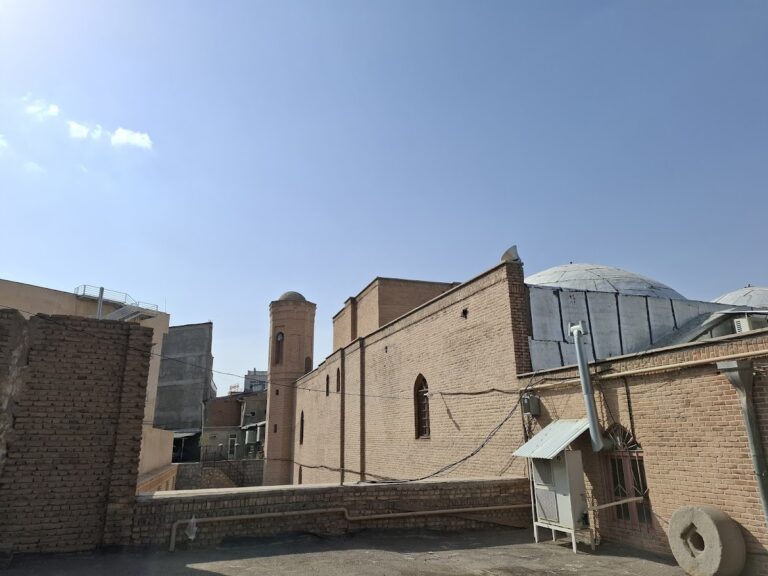
Khan Caravanserai stands within central Khoy, alongside the bazaar area. Its construction is associated with Safavid architecture and uses stone foundations, brick, and mortar. The building is identified as a caravanserai, or serai, and its physical connection with the bazaar reflects the combined resting and commercial functions associated with the site.