Södra Åsums gamla kyrka: A Romanesque Medieval Church in Sweden

Site at a Glance
- Rating
- 3.9
- Popularity
- Very Low
- Country
- Sweden
- Primary era
- Medieval
- External website
- Open
- Eras represented
- Medieval, Early Modern
- Civilizations
- Danish, Swedish
- Site type
- Religious
- Remains
- Church
On this page10 sections
History
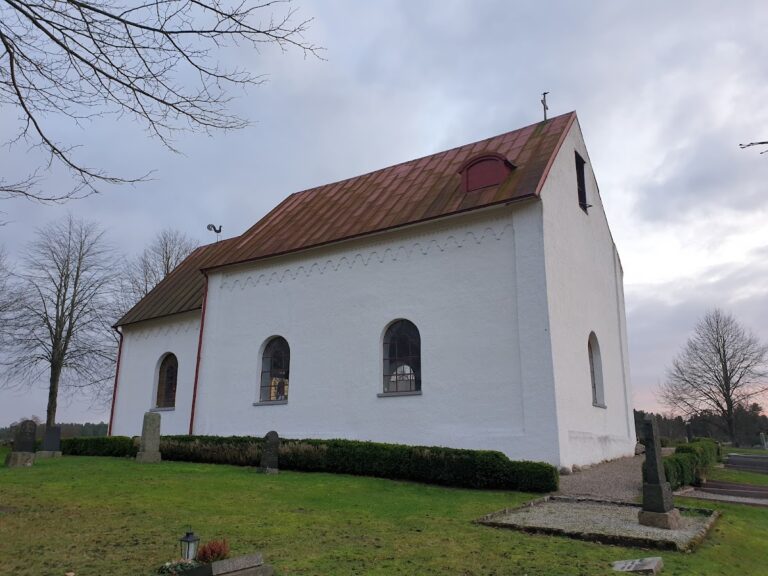
Södra Åsums gamla kyrka is a Lutheran church in Sweden, in Södra Åsum within Sjöbo Municipality. The Romanesque stone church was built in the late twelfth century and belongs to Sjöbo Parish in the Diocese of Lund, part of the Church of Sweden.
Medieval foundation and development
A wooden church may have stood beside the river before construction of the stone building. The original church consisted of an unvaulted nave and a chancel ending in an apse, following the substantial masonry and rounded-arch forms associated with Romanesque architecture.
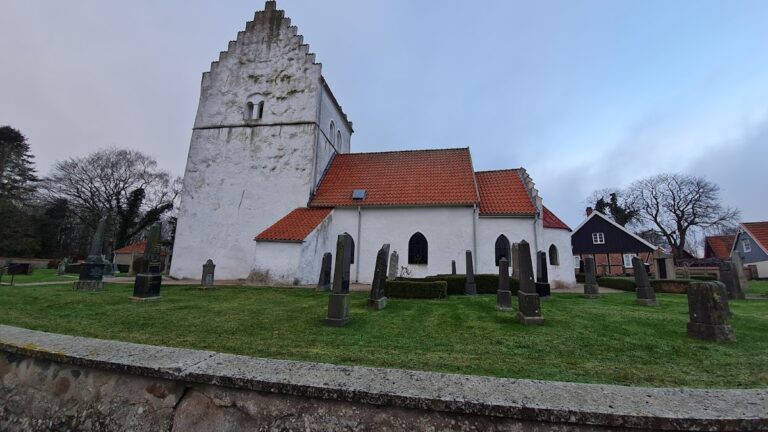
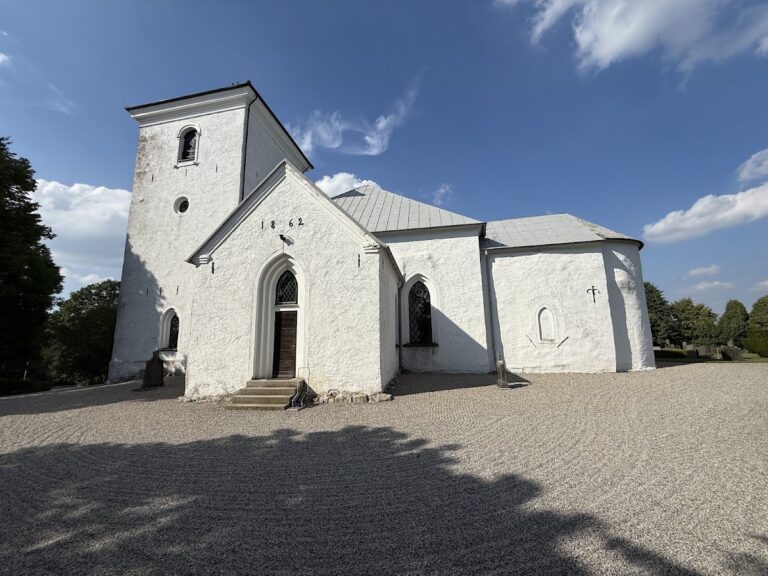
The building was expanded during the fifteenth century. A bell tower was added at the west end and a porch at the south side. The gabled tower was rebuilt in the 1760s. Medieval painting also developed in stages: the chancel arch was decorated in the fourteenth century by the unidentified painter known as the Master of Snårestad, while the choir received frescoes in the fifteenth century from the painter called the Master of Everlöv.
Closure and preservation
By the end of the nineteenth century, the church no longer held the entire congregation and also needed major repairs. It closed in 1902, and worship took place in the new church until 1946. Enthusiasts then helped save the older building from complete ruin, and it reopened for services in 1946. Christmas worship and summer services have continued there. Södra Åsums gamla kyrka is protected as a Swedish cultural monument.
Remains
Medieval structure and decoration
Romanesque church
The church retains the basic arrangement of a nave and chancel with an apse. Its Romanesque character is expressed through the stone construction and the early medieval form of the building. The west tower and south porch belong to the fifteenth-century expansion, although the tower was rebuilt in the 1760s.
Apse and chancel paintings
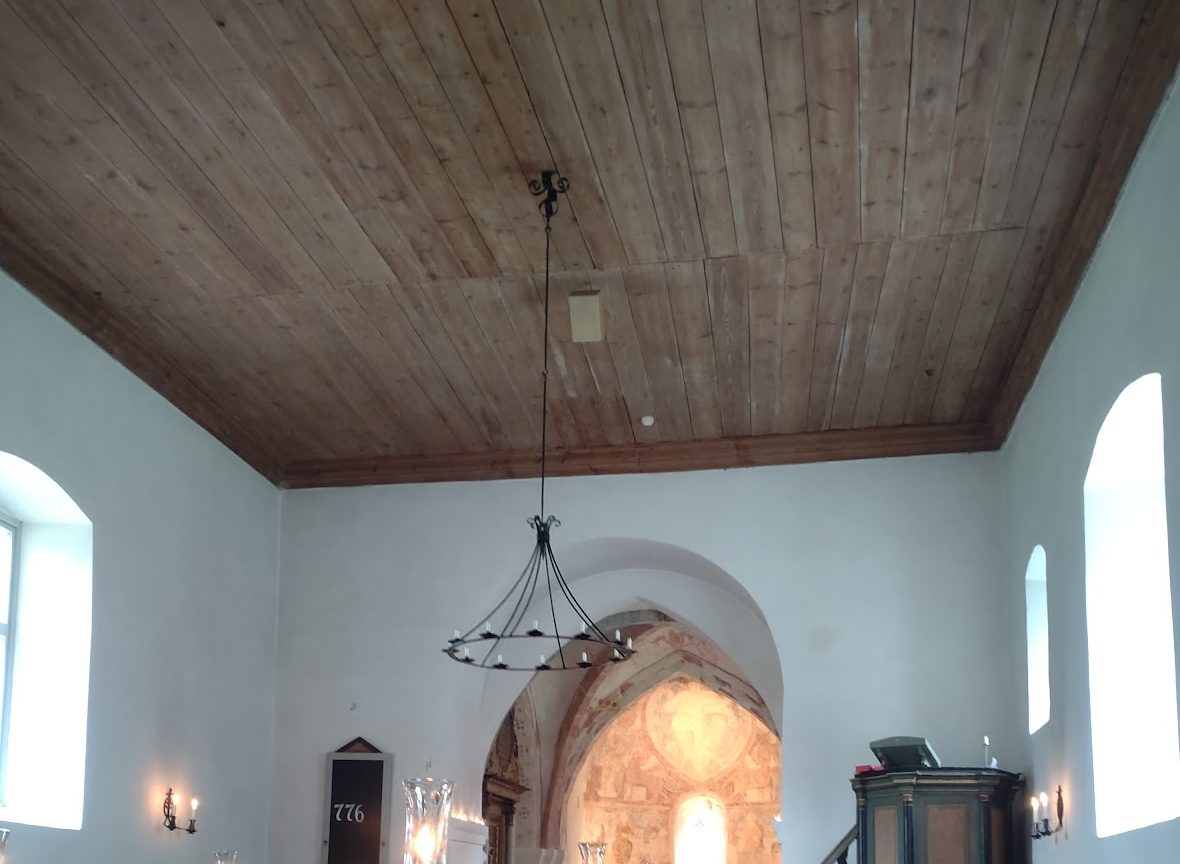
The apse contains frescoes by an unidentified Byzantine painter. Christ in Glory sits on a rainbow within a mandorla, an almond-shaped frame representing divine glory, and is surrounded by Matthew, Mark, Luke, and John, the four Evangelists associated with the canonical Gospels. Paintings by the Master of Snårestad cover the chancel arch, and the choir decoration by the Master of Everlöv dates from the fifteenth century. These designations identify painters associated with Snårestad and Everlöv rather than known personal names.
Furnishings and movable heritage
Baptismal font and bridal bench
The oldest object in the church is a twelfth-century baptismal font decorated with palmette leaves. It was made by the Hyllie group, a medieval workshop identified through its association with Hyllie. A bridal bench from 1723 carries a quotation from the biblical Book of Tobit on its reverse. During worship and Communion, the bride and groom formerly sat on this bench.
Altarpiece, pews, and organ
The altarpiece was probably made in 1731 and was given to the parish in 1825 by Baron Carl Emil Ramel. The eighteenth-century pews were slightly extended during repairs in 1947. The first row incorporates the bell-ringer’s chair, from which singing was led before the church had an organ.
An organ made in Lund in 1854 by Sven Fogelberg was installed during the nineteenth century. In 1970, Nils Hammarberg of Gothenburg fitted a new mechanical organ inside the older case. The former pulpit and the medieval bell were transferred to the new church. Södra Åsums gamla kyrka received a pulpit from Tottarp and a copy of the old bell. Sixteenth-century gravestones are set into the floor.