Old Tingelstad Church: A Medieval Romanesque Church in Norway

Site at a Glance
- Rating
- 4.6
- Popularity
- Very Low
- Country
- Norway
- Primary era
- Medieval
- External website
- Open
- Eras represented
- Medieval, Modern
- Civilizations
- Norwegian
- Site type
- Religious
- Remains
- Church
On this page8 sections
History
Old Tingelstad Church, originally known officially as St. Petri Kirke Tingelstad, is a medieval Romanesque stone church in Tingelstad, Norway, built around 1220. Dendrochronology, the dating of wood through its annual growth rings, places the felling of the roof trees between 1219 and 1220. Dedicated to the apostle Peter, it was probably first established as a private chapel for a local manor farm before becoming the parish church.
Medieval Catholic foundation
The church began as a Catholic institution and later became part of the Church of Norway, Norway’s Lutheran state-established church tradition. It belongs to the Gran and Tingelstad parish, the Hadeland og Land deanery, an administrative grouping of parishes, and the Diocese of Hamar. Its medieval form reflects the Romanesque style, known for heavy masonry, rounded arches, and simple, substantial shapes.
Reconstruction and later use
By 1673, the church was described as dilapidated, indicating that reconstruction was needed. In 1820, the earlier tower was dismantled and replaced by a wooden octagonal tower built over the nave. The church continued to serve a local congregation until the nineteenth century, when its limited size became decisive.
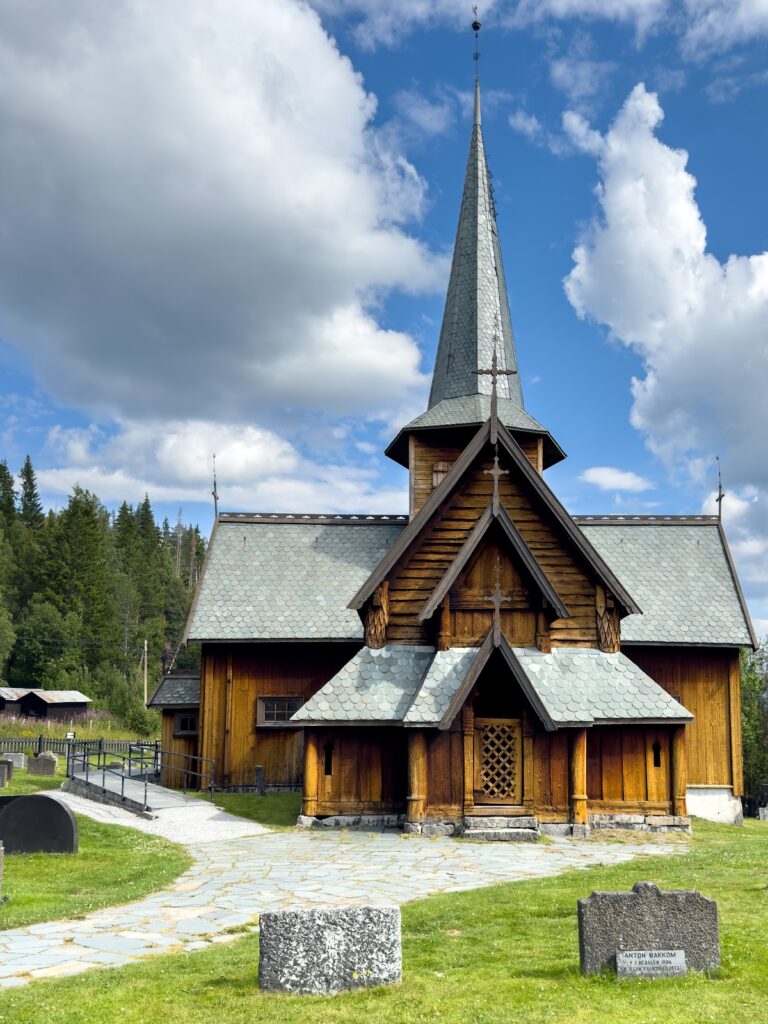
The 1851 church law required parish churches to accommodate a prescribed proportion of the local population. Because Old Tingelstad Church could not meet that requirement, a new church was built about 1.3 kilometres to the west and completed and consecrated in 1866. The older building was then renamed Old Tingelstad Church and withdrawn from regular use. The other Tingelstad church, Grindaker stave church, a medieval timber church built around a framework of upright posts, was demolished around 1866 because it was considered too small.
Preservation and ecclesiastical continuity
By royal decree, Old Tingelstad Church was allowed to hold one or two services each summer. At other times it was reserved for special occasions and preserved for historical purposes. It later returned to ecclesiastical use and is now part of an open-air museum associated with the nearby Hadeland Folkemuseum. Old and New Tingelstad churches also stand along the pilgrimage route to Nidaros Cathedral, the historic cathedral in Trondheim, which opened in 1997 as a connection between Trondheim and Oslo. Old Tingelstad Church is an automatically protected Norwegian cultural-heritage site, registered under identification number 81474.
Remains
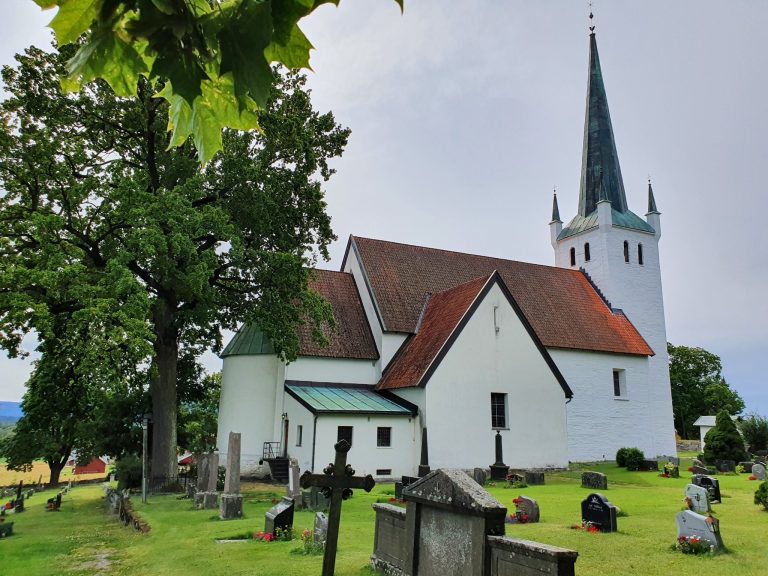
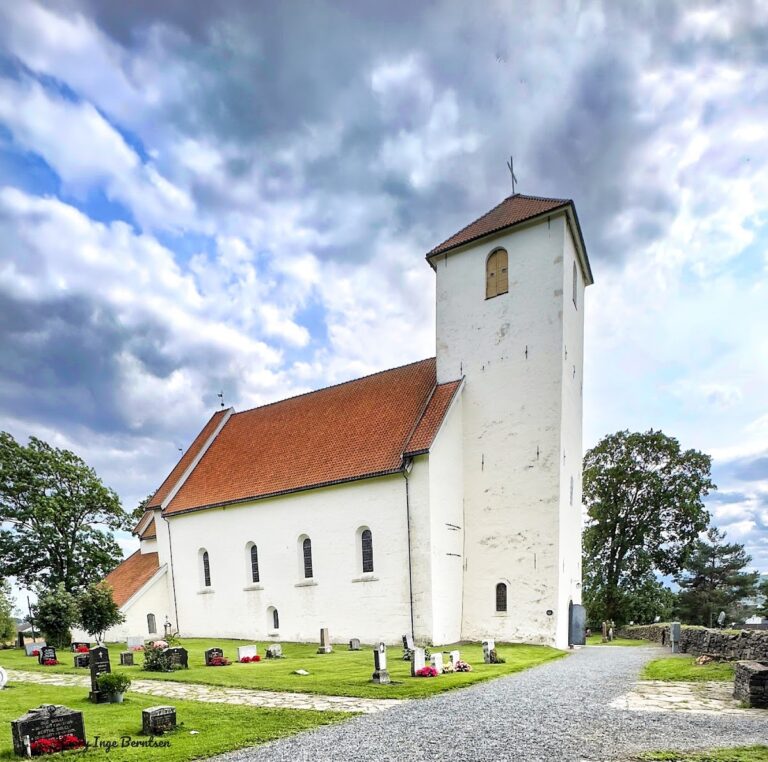
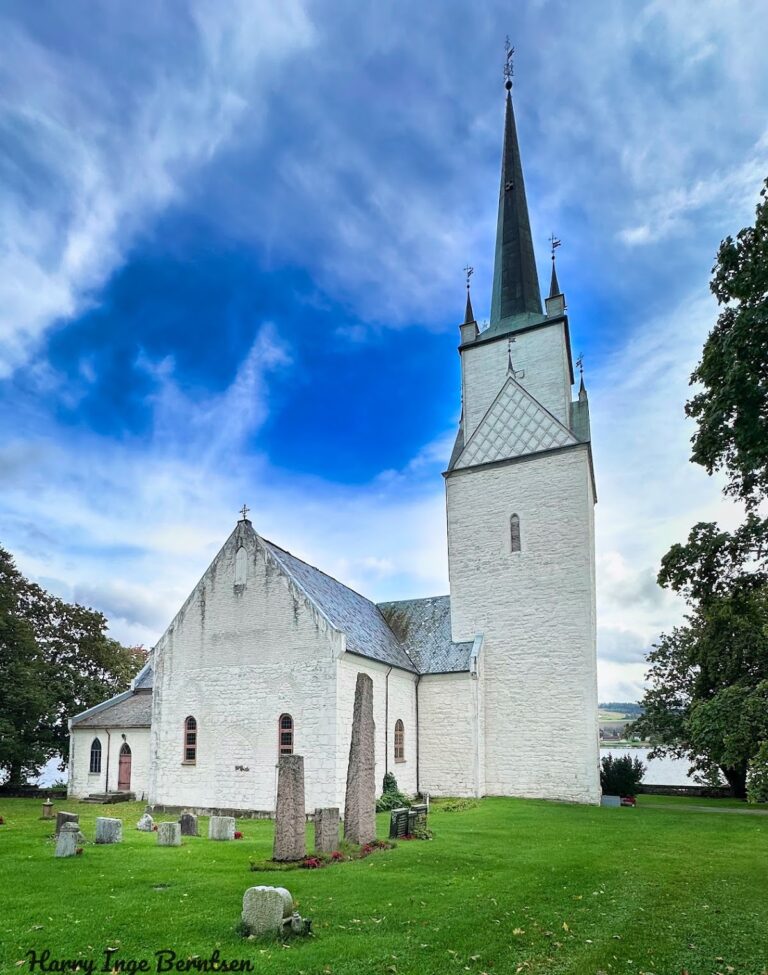
Old Tingelstad Church is a Romanesque rural long church, a church arranged along a lengthwise axis with a nave followed by a narrower chancel. Built mainly of natural stone, it measures approximately 21 metres in length and 11 metres in width, with a nave about 14 metres long and a choir measuring roughly 7 by 8.5 metres. The building accommodates around 100 to 110 people. Its plan has a rectangular nave and a smaller choir without an apse, while the chancel is slightly crooked in relation to the nave. A sacristy, a room for vestments and worship furnishings, is attached to the north side of the choir.
Stone structure and medieval framework
The church stone was quarried in the Buhammeren area, approximately 6 kilometres south of the building. The west gable end is made of wood. Medieval roof framing and nave timbers survive within the structure, preserving parts of the building’s original construction. A wooden belfry rises above the nave, and the present octagonal tower dates from 1820, when it replaced the earlier tower.
Interior furnishings and sacred imagery
Medieval elements remain inside the church, including a wooden crucifix probably made in the thirteenth century and placed in the triumphal arch, the arch separating the nave from the chancel. A medieval stone altar stands in the choir. Much of the other furnishing dates from the fifteenth and sixteenth centuries, including a Renaissance pulpit made in 1579 and regarded as one of Norway’s oldest.
A 1699 altar frontal, the decorated panel placed at the front of an altar, was made by an unknown artist. It shows the Madonna and Child with four scenes from the childhood of Jesus. A thirteenth-century altar frontal that once stood above the altar also depicts the Madonna and Child, together with scenes from the life of Jesus. That earlier frontal is now held in the antiquities collection of the University of Oslo.
Royal emblem and ship vane
A large depiction of the Dano-Norwegian royal arms, the heraldic emblem of the united Danish and Norwegian kingdoms, occupies the interior north wall of the nave. It was made in 1632 and has been only partially revealed. Above the nave, the belfry carries a faithful replica of a twelfth-century metal ship vane. The original, made from gilded copper sheet, was transferred in 1985 to the Museum of Cultural History in Oslo and is displayed in its medieval collection.
The original vane shows David rescuing a lamb from a lion’s mouth and ends in a dragon-shaped finial. It is believed to have first been fitted to the bow of a warship before being adapted for use as a weather vane.