Yumen Pass: A Han-Dynasty Silk Road Frontier Crossing
Site at a Glance
- Country
- China
- Primary era
- Iron Age
- Eras represented
- Iron Age
- Civilizations
- Han
- Site type
- Military
- Remains
- Gate
On this page4 sections
History
Yumen Pass is a Han-dynasty frontier crossing in Gansu Province, China, about 80 km northwest of Dunhuang. It served as a major route between China and Central Asia on the Silk Road, a network of long-distance trade routes connecting China with lands farther west.
Han frontier and western trade
Early in the Han dynasty (202 BC to AD 220), a defensive line was established westward across the Gansu Corridor, from Jiuquan to Yumen Pass. Emperor Wu, also known as Wudi, had the original Jade Gate built shortly after 121 BC. It was first called Square City; the name Jade Gate became associated with jade caravans arriving from Khotan, an oasis state in the Tarim Basin.
The pass linked China with the Western Regions, the historical Chinese term for lands to the west, especially parts of Central Asia. Caravans traveled through it toward India, Parthia, an ancient Iranian empire, and the Roman Empire. Dunhuang remained the last Chinese outpost for these long journeys until the sixth century. Until Yumen Pass and Yangguan fell into disuse by the Tang dynasty, a later Chinese ruling house, caravans passing through Dunhuang had to use one of the two gates.
Changing routes and rediscovery
Disruption in Central Asia during the third and fourth centuries weakened overland trade, while a sea route via India began to take its place. By the sixth century, caravans favored a northern route through Hami, an oasis region in present-day Xinjiang, and Yumen Pass had been abandoned.
In 1907, archaeologist and explorer Sir Aurel Stein found bamboo slips that identified the site as Yumenguan. Chinese archaeologists uncovered remains in 1944 that confirmed the identification. In 2014, Yumen Pass became part of the Silk Roads: the Routes Network of Chang’an-Tianshan Corridor, a UNESCO World Heritage Site recognizing places of cultural or natural importance.
Remains
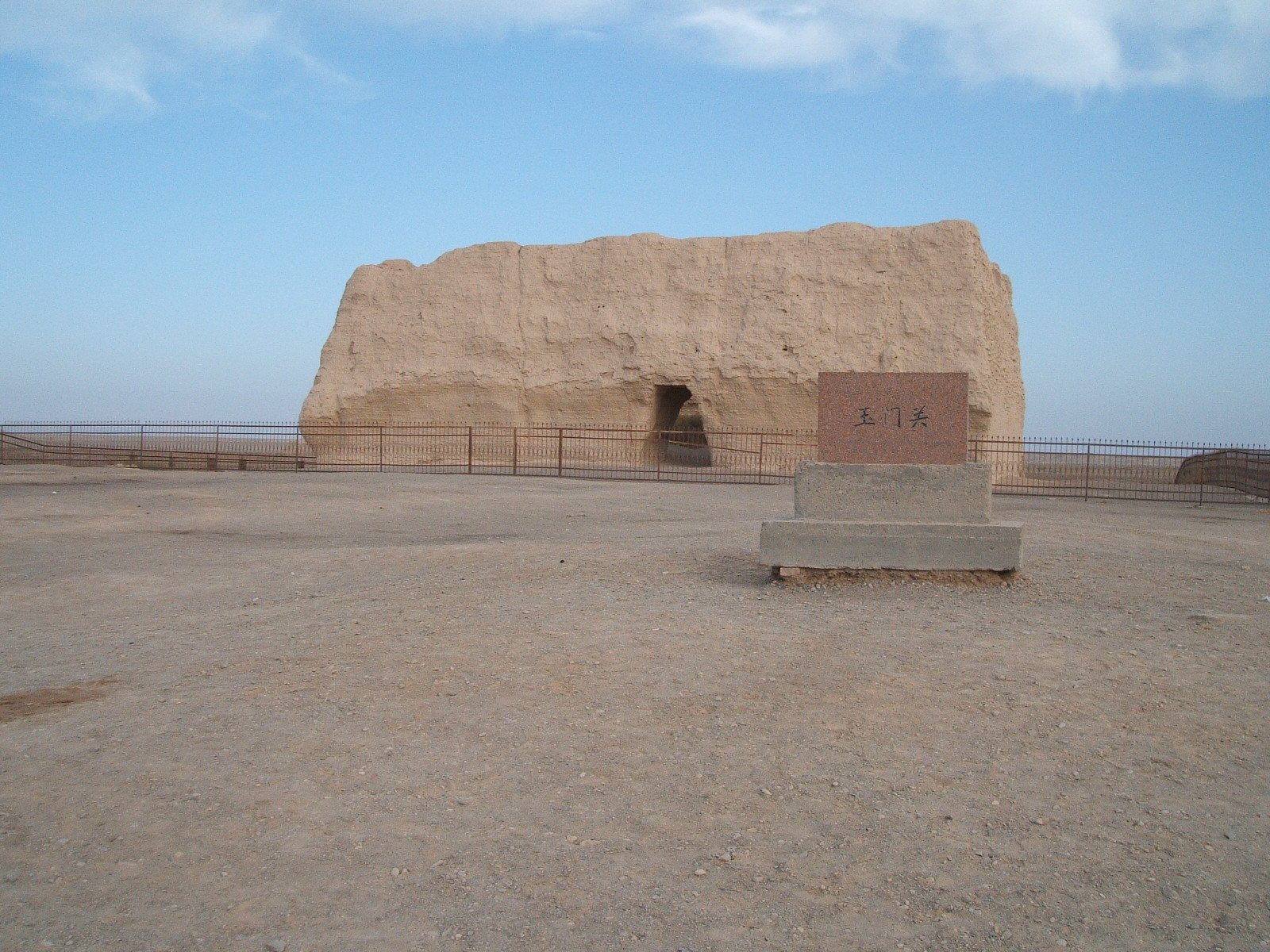
The remains include a square enclosure built with mud walls about 10 m high and pierced by four gateways. The enclosure covered more than 600 m². A ruin at the pass is identified as Small Fangpan Castle, and the site stands at an elevation above 1,000 m.
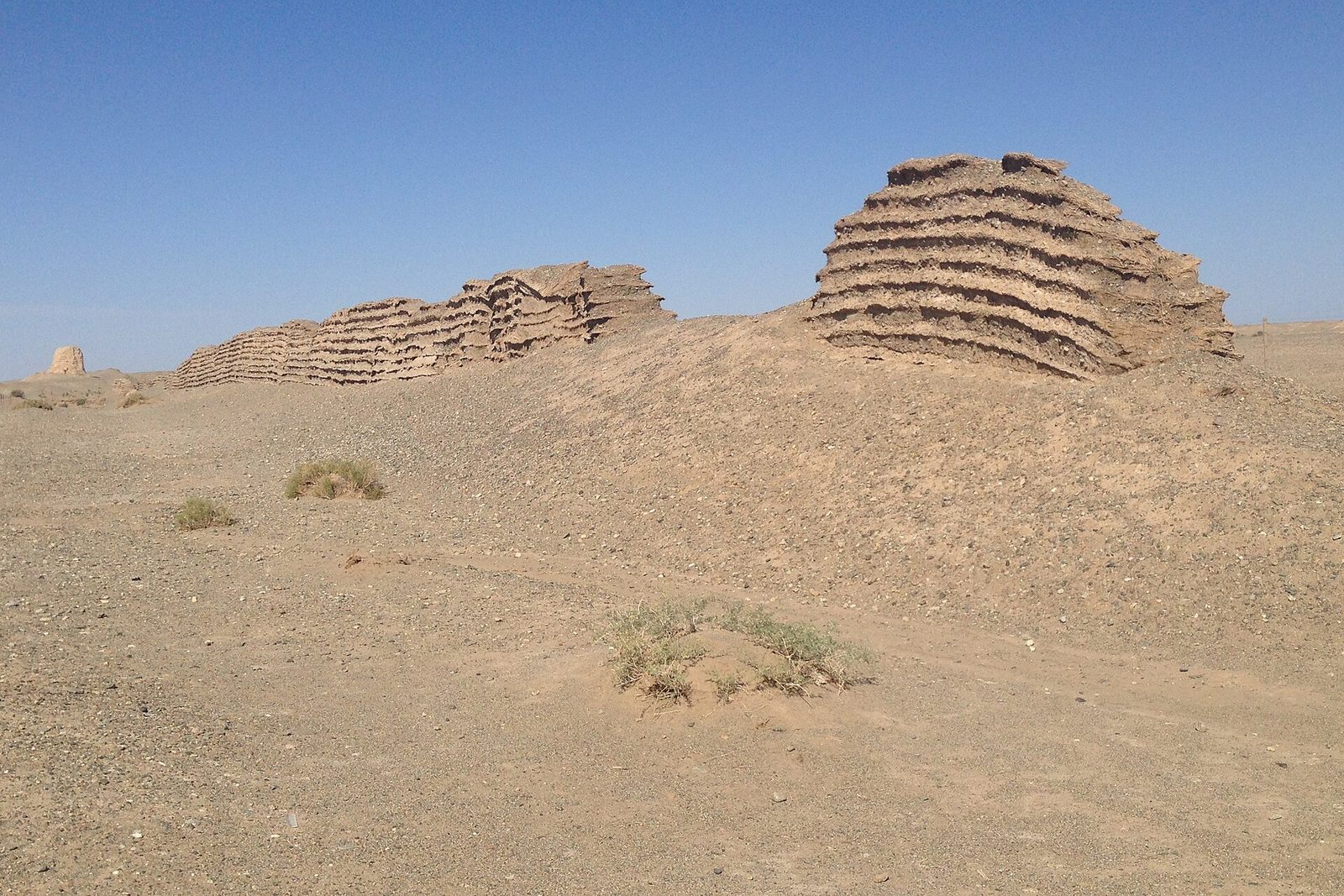
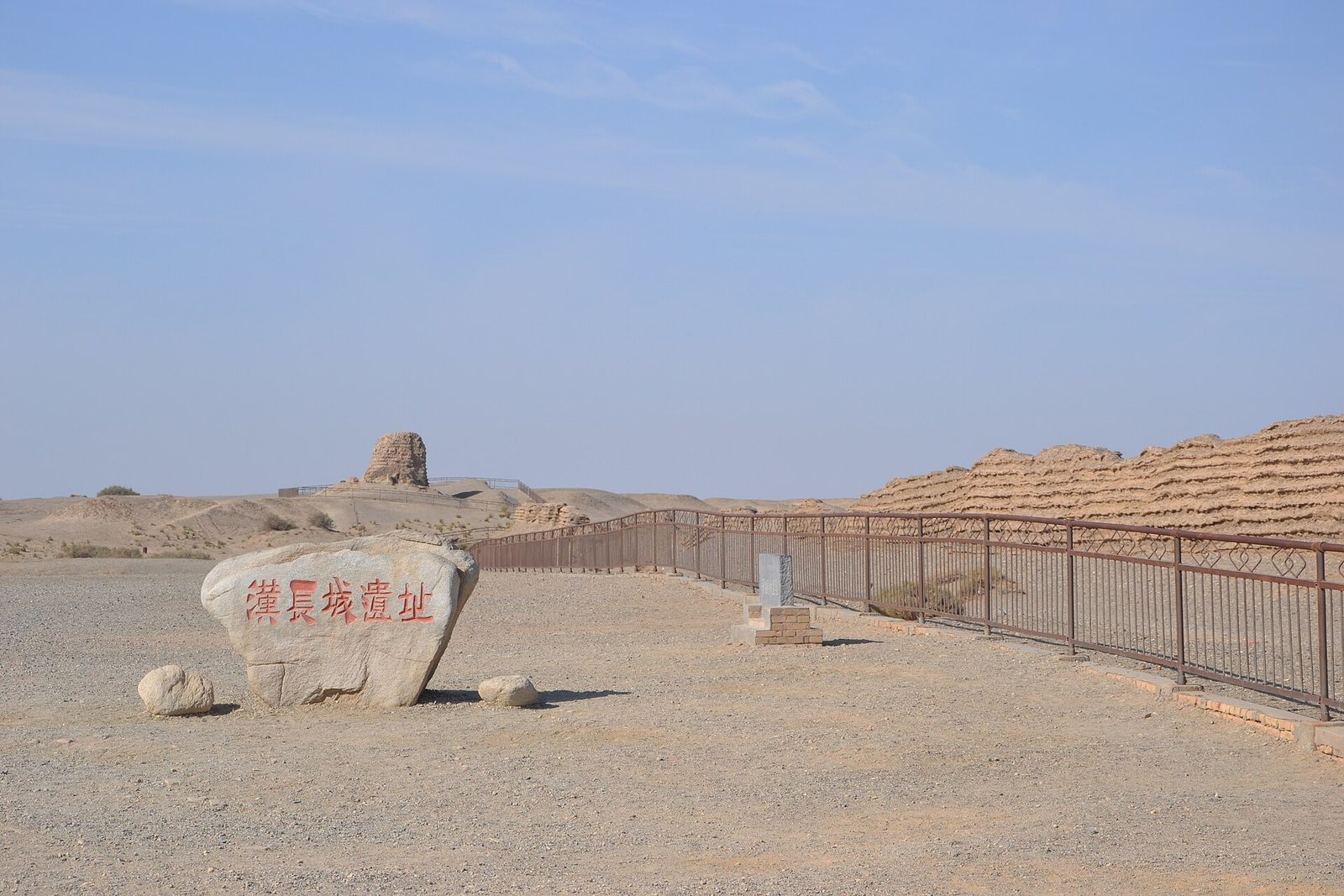
Yumen Pass and Yangguan lay about 68 km apart at opposite ends of the Dunhuang extension of the Great Wall. Yangguan was about 75 km southwest of Dunhuang.