Uegusuku Castle: A Ryukyuan Fortification on Kumejima
Site at a Glance
- Rating
- 4.3
- Popularity
- Low
- Country
- Japan
- Primary era
- Medieval
- External website
- Open
- Eras represented
- Medieval
- Civilizations
- Unclassified
- Site type
- Military
- Remains
- Castle
On this page6 sections
History
Before the Ryukyu Kingdom’s Unification
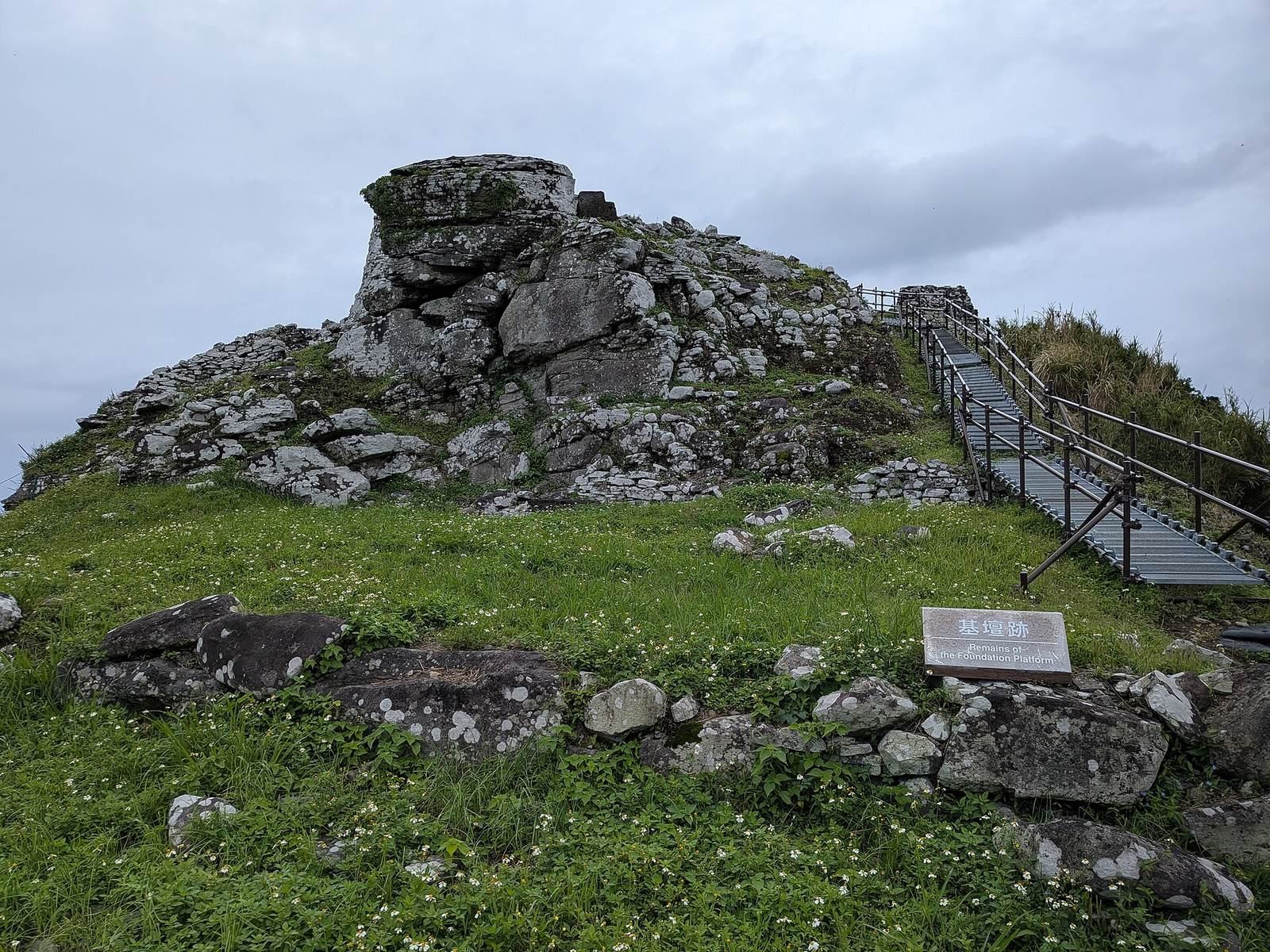
Uegusuku Castle is a Ryukyuan fortified site on Mount Uegusuku in Uegusuku, on Kumejima, Japan, thought to date to roughly the late 14th to mid-15th century, before the Ryukyu Kingdom, the historical kingdom of the Ryukyu Islands, was unified. Before the 16th century, it was the residence of the aji, a local ruler, of the Kume Magiri administrative district.
Postwar Destruction and Protection
After World War II, much of the castle’s walls were destroyed. The ruins have been protected as a National Historic Site of Japan since 2009.
Remains
Summit Fortification
The castle occupies the summit of Mount Uegusuku, about 310 metres above sea level, the highest elevation among Okinawa’s gusuku, the local term for fortified sites or castles. Its walls were built from slab-shaped andesite quarried nearby. Wall sections remain north and east of the first enclosed court.
Excavated Objects
Finds include Chinese ceramics, more than 40 tenmoku tea bowls, a type of tea bowl, and taikai tea caddies, containers for holding tea, as well as tea mortars used to grind it into powder. These objects suggest that matcha, powdered green tea, was consumed within the castle grounds. The Chinese ceramics also indicate that trade with China likely took place before the Ryukyu Kingdom was unified.