Tenampúa: A Lenca Ceremonial, Political, and Defensive Center in Honduras
Site at a Glance
- Popularity
- Medium
- Country
- Honduras
- Primary era
- Classical
- Eras represented
- Classical
- Civilizations
- Unclassified
- Site type
- Military
- Remains
- Fort
On this page11 sections
History
Lenca center and regional role
Tenampúa is an archaeological center in the Comayagua Valley of Honduras, built by the Lenca during the Mesoamerican Late or Terminal Classic, also called the Epiclassic, and occupied from AD 750 to 1050. The Lenca are an Indigenous people of Honduras. Tenampúa served as a regional ceremonial, political, and administrative center, as well as a defensive stronghold and refuge. Its elevated position is understood to have helped support both territorial control and ritual activity.
In the ninth and tenth centuries, regional tensions and social reorganization unfolded as Copán, a major ancient Maya center and earlier source of political, cultural, and economic influence, declined. Its decline left a power vacuum in the region. Tenampúa may have drawn people from the Comayagua Valley during unstable periods, but its intense, relatively brief occupation does not necessarily indicate that it was a permanently settled urban center.
Abandonment
The reasons for Tenampúa’s abandonment remain uncertain. One explanation is that expanded military use changed the site’s earlier ritual role. This interpretation also points to the difficulties of sustaining temporary occupation on a plateau with little fertile soil and a reliance on water systems. Another explanation connects its abandonment to wider changes at the end of the Terminal Classic, when populations dispersed and reorganized and political influence shifted toward more accessible settlements in the valley. Las Vegas gained importance during the Early Postclassic.
Exploration and later history
American explorer and archaeologist Ephraim George Squier visited the ruins in 1853 and brought them to the attention of historians in New York. The Honduran civil war of 1924 damaged some structures. Archaeologist Dorothy Popenoe mapped the site and described its use as a refuge by nearby villagers during conflict. Federico Lunardi, an archaeologist and archbishop, visited in the 1940s, and archaeologist Doris Stone studied the site in 1957.
Repeated looting over several decades damaged parts of Tenampúa’s infrastructure. The site was registered as cultural heritage in 1997 and is now guarded.
Remains
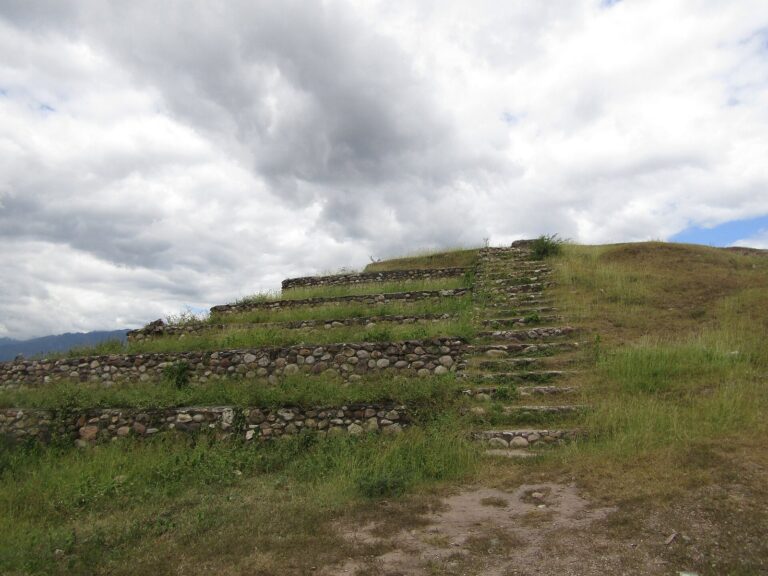
The archaeological area covers 21 hectares on a steep-sided plateau at 866 metres above sea level, south of San Antonio in the Comayagua Valley. Set among pine forest, the site overlooks parts of the Comayagua Valley and La Paz, as well as mountainous country bordering Francisco Morazán. About 250 structures have been recorded, including mounds, platforms, terraces, stairways, and defensive walls. Vegetation now covers most of them.
Mounds and defensive enclosure
Mounds rise about 6 to 15 metres, while stepped pyramid-shaped structures within the fortress reach 6 to 12 metres. The fortress walls stand 2 to 4 metres high, with bases 3 to 7 metres wide. The principal defensive wall is described as extending more than 200 metres in radius, and some sections have been damaged by destructive activity.
Plazas and elite terrace
Stairways linked the plazas, though vegetation now obscures much of this network. Popenoe and her team rebuilt Staircase No. 1, which remains visible, and reconstructed the wall along the upper terrace beside the Great Avenue. The terrace has been identified as a residential area for the Lenca elite.
Principal mound
The principal mound had a floor made from lime-based material, probably stucco, a plaster-like building finish. A long, carefully constructed rectangular wall enclosed the mound, with a single entrance on its western side. Stucco is uncommon in the Comayagua area; the other local example noted is at Yarumela, in a Preclassic setting.
Ballcourt
The site includes a ballcourt, a purpose-built venue for a Mesoamerican ball game. Squier described it as having open ends. Stones at its southern end were once taken to indicate a different arrangement, but they have been interpreted as the remains of a retaining wall for the large terrace that levelled the ground beneath the court.
Water systems, rock art, and other structures
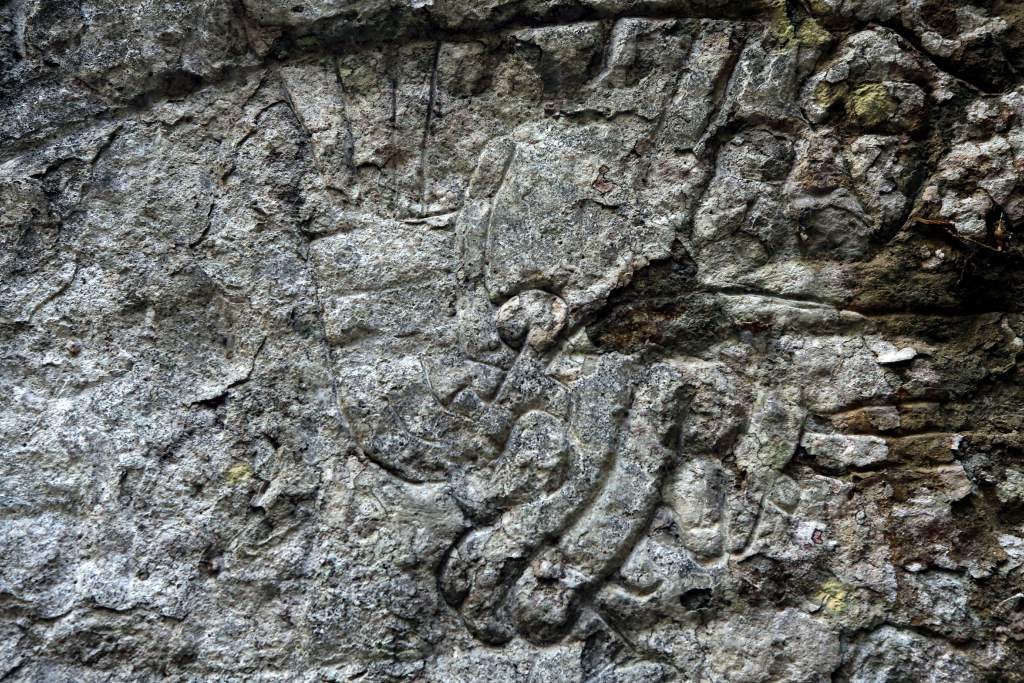
Remains of lagoons and aqueducts, along with wells, point to water management within the enclosure. The wells have filled with soil and are now about half a metre deep. These features have been interpreted as parts of a system that used rainwater and nearby streams for washing, storage, and distribution. Rock engravings occur in parts of the site, while nearby caves within the same area contain rock art. Some structures thought to have been temples have collapsed or survive as rubble beneath vegetation.
Finds
Finds from the area include decorated and engraved ceramics, polychrome pottery, obsidian arrowheads, jade carvings, and statuettes interpreted as images of Lenca deities, including Itanipuca, Ilanguipuca, and Icelaca. The polychrome pottery is described as among the finest produced in Lenca territory during the Classic period. Some objects are exhibited in museums in Comayagua and Tegucigalpa. Casings and bone fragments associated with soldiers from the 1924 civil war have also been found in parts of the site.