Svete gore: An Archaeological Site and Marian Pilgrimage Centre in Slovenia
Site at a Glance
- Popularity
- Medium
- Country
- Slovenia
- Primary era
- Early Modern
- Eras represented
- Classical, Medieval, Early Modern
- Civilizations
- Duchy of Styria, Habsburg, Habsburg Austria, Holy Roman Empire, Roman
- Site type
- Religious
- Remains
- Sanctuary
On this page15 sections
History
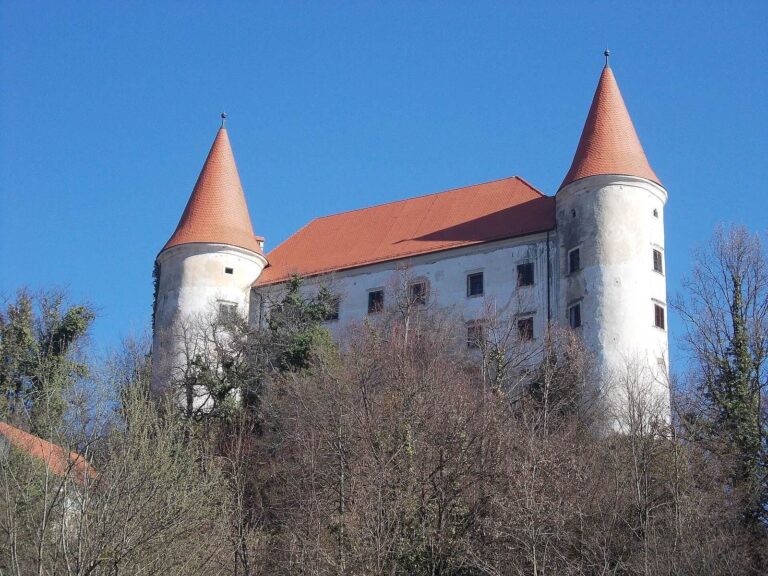
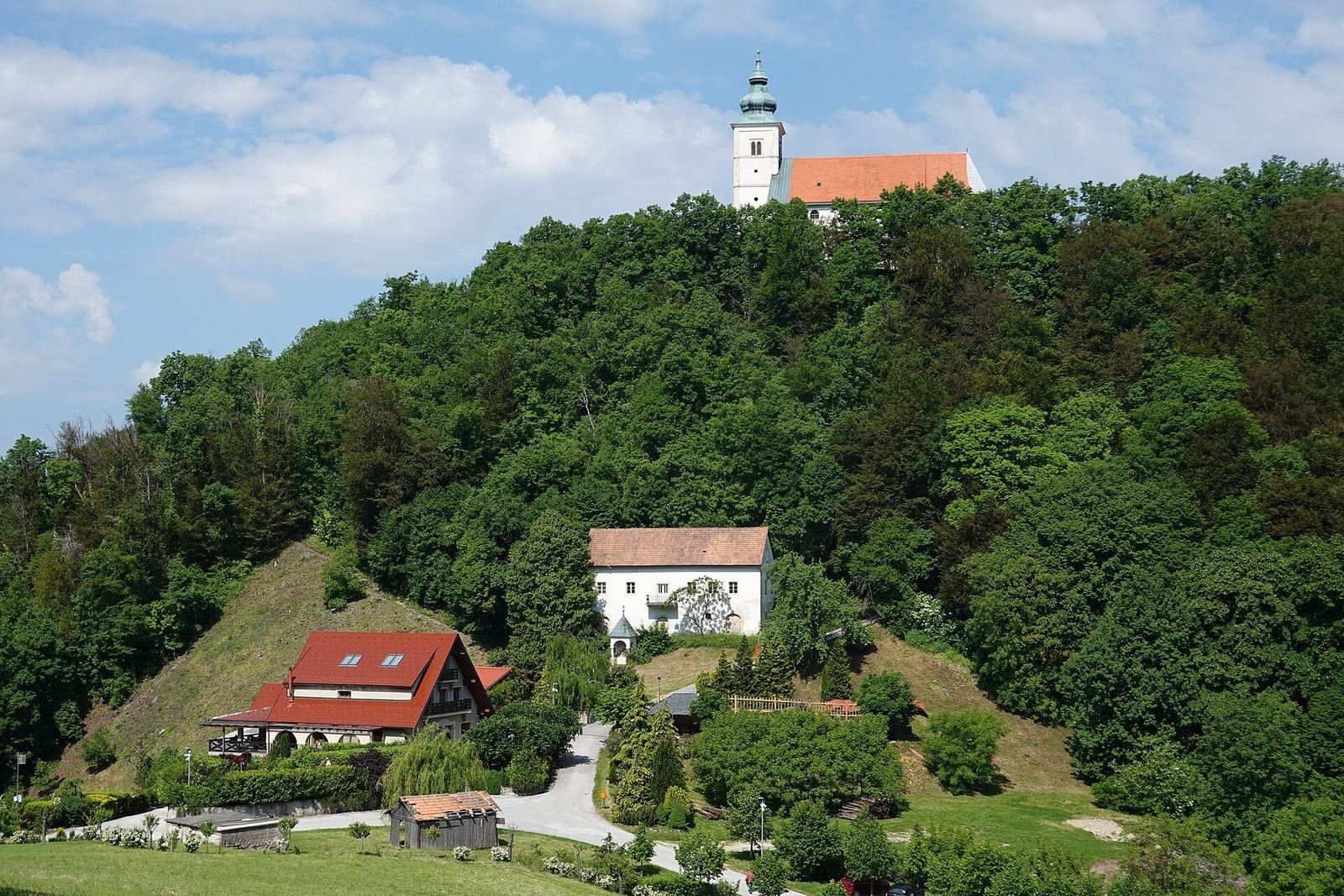
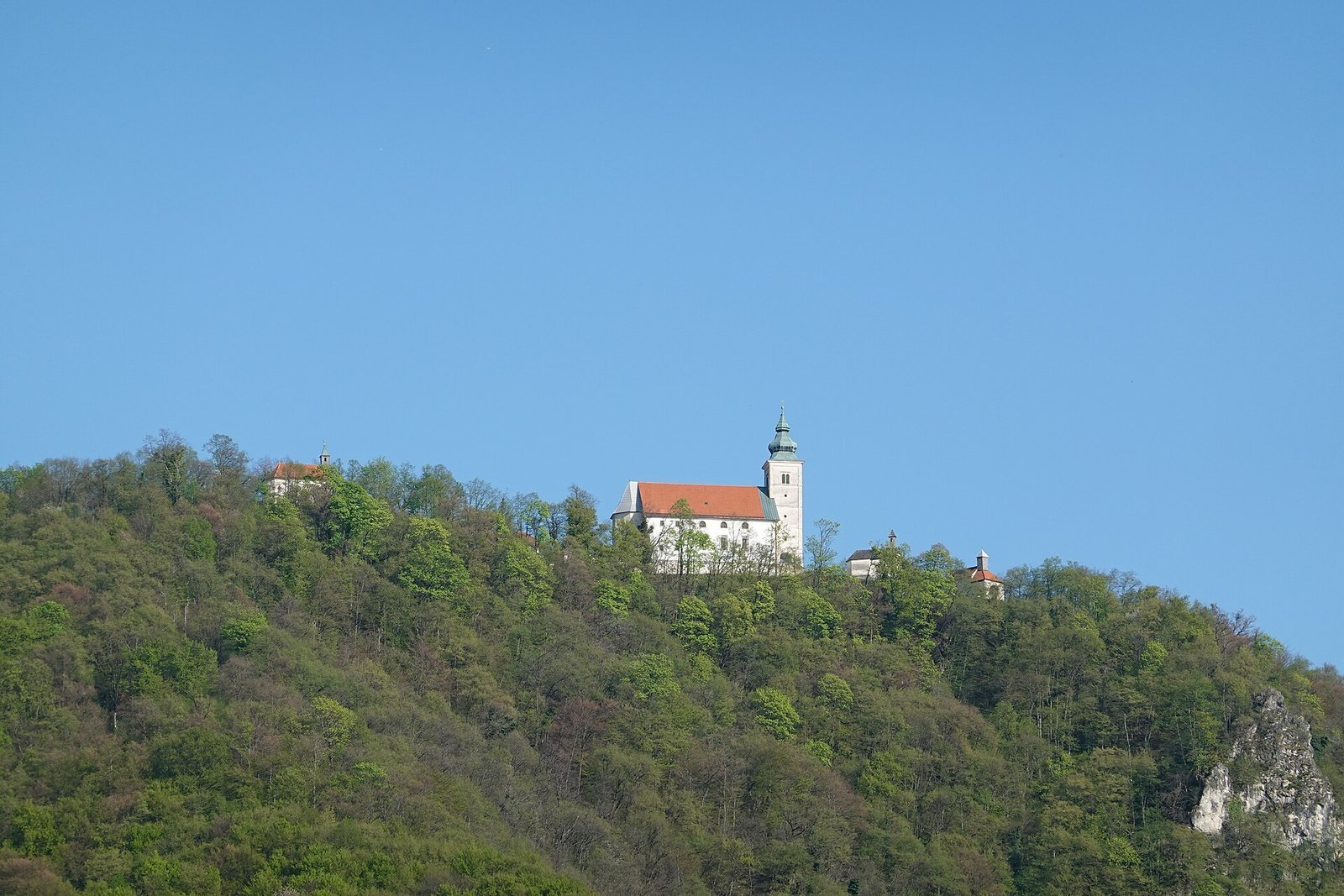
Svete gore is an archaeological site and Marian, or Virgin Mary, pilgrimage centre on a hill above Bistrica ob Sotli, in Zagaj, Slovenia. It is regarded as the most important cultural landmark of the municipality. Finds point to worship here in changing forms for more than 2,000 years, from pre-Christian sanctuaries to Christian places of worship.
Roman and late antique periods
Roman-period settlements stood in the vicinity. A military outpost probably operated near the hill in the 4th and 5th centuries, while a fortified refuge occupied the summit. A Roman-period burial ground may have lain beneath the northwestern part of the area, but extensive building work in the 17th century destroyed it.
After the Western Roman Empire fell, the Sotla region became part of the Ostrogothic kingdom, ruled by the Ostrogoths, a Germanic people. A destroyed grave associated with the Migration Period, an era of population movements across Europe in late antiquity and the early Middle Ages, belonged to a Germanic soldier.
Slavic settlement and Christianization
Settlement reappears in the archaeological sequence after an interval of about 400 years. Slavic communities later established themselves on upland sites and began burying their dead on the hill. Their presence continued into the Late Slavic period, an archaeological term for Slavic communities and their material culture.
As Slavs settled permanently, they gradually adopted Christianity and built early sanctuaries. Hungarian incursions in the 10th century temporarily disrupted this process. Frankish victory and the restoration of the Frankish Empire, a polity ruled by the Franks, strengthened feudal rule, frontier arrangements, and Christianity in the region.
The pilgrimage centre
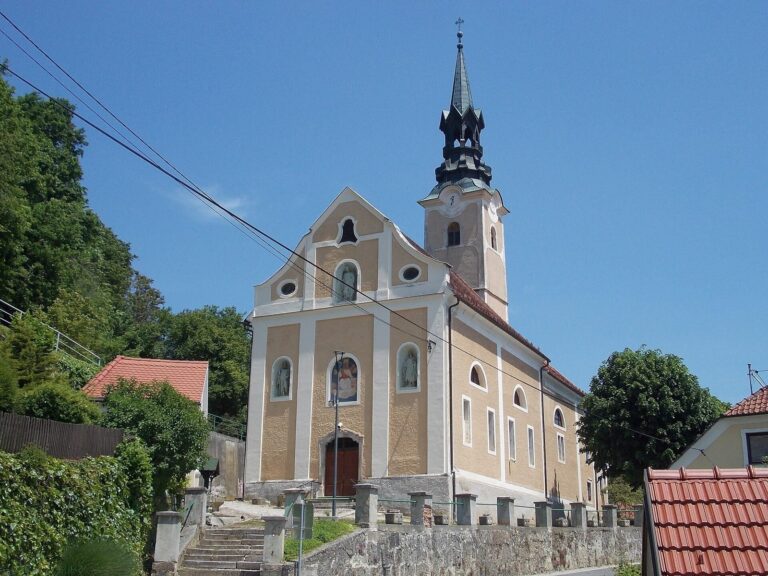
Svete gore first appears in written records in 1264 as the Mount of the Virgin Mary near Kunšperk. It was later called the Mountain of Our Beloved Lady, while the name Svete gore is recorded from 1642. The main shrine, the Church of the Nativity of Mary, was built on the site of a smaller Church of Our Dear Lady that existed by at least the 13th century. The enlarged church was consecrated in 1611 by Tomaž Hren, the Catholic bishop of Ljubljana.
Over the centuries, Svete gore developed into an international pilgrimage centre, attracting many worshippers from Croatia, especially nearby Croatian Zagorje. The centre belongs to the Parish of St Peter under Svete gore; its church and four chapels are branch churches. The Church of the Nativity of Mary is the parish’s largest church, larger than the parish church of St Peter in Bistrica ob Sotli. Archaeological excavations took place in 1967–1968 and 1971–1976.
Remains
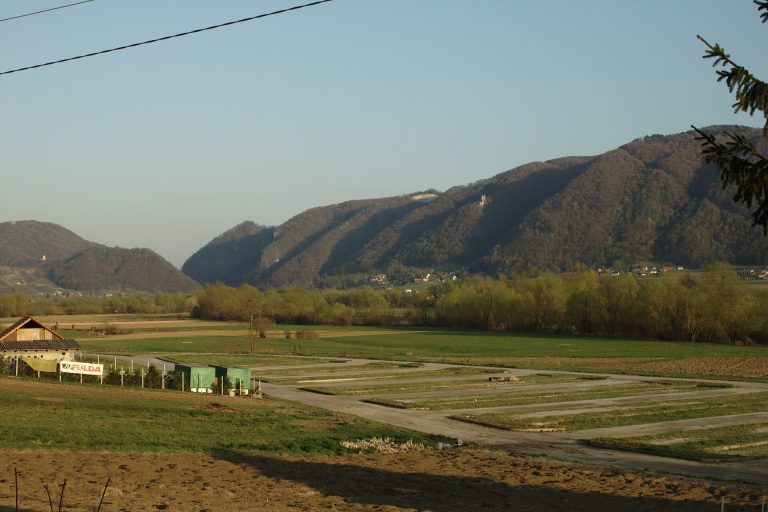
The pilgrimage complex occupies a single summit 527 metres high in the Orliško mountain range, on the southern edge of the Kozjansko hills. Despite its plural name, Svete gore is one hill; the name refers to its several sanctuaries. The Church of the Nativity of Mary and four chapels stand close together at the summit, while paths and a wayside shrine extend the sacred landscape below.
Summit churches and chapels
Church of the Nativity of Mary
A 1651 visitation record describes the church’s lower nave, the main body of the building, as having a flat ceiling. It also had a smaller presbytery, the area around the altar, and a ground-floor sacristy, a room for church vestments and sacred objects. The bell tower was added during the enlargement or somewhat later, but still in the first half of the 17th century.
Chapels
The chapels of St George and St Martin are attributed by art historian Ivan Stopar to the 9th or 10th century. He considered them the oldest surviving buildings in Slovenia. The pilgrimage complex includes four chapels in total.
Archaeological remains
Roman-period settlement and roads
Small Roman settlements lay near the hill, and roads ran along the area’s northern and northwestern edges. Ceramics indicate settlement from the 1st century, with most Roman pottery dating from the 1st to the 4th centuries. Finds also include coins from the reigns of the Roman emperors Valentinian I and Valens.
Early medieval cemetery
A large cemetery lies beneath the Lourdes Chapel and extends toward St George’s Chapel. Its graves belonged to adults and children of the Late Slavic period. Women’s burials contained bronze ornaments, mainly from the late 9th and early 10th centuries. The latest object from the upper burial ground is an earring dating to the first half of the 11th century.
Other graves and building remains
A destroyed grave belonging to a Germanic soldier contained weapons and vessels. Another grave, excavated in 1937 along the route of a new road, was surrounded by large and small unworked stones. Excavated building remains include one wall above the beginning of the steps and another wall below the hill.
Paths and the lower shrine
The saddle and summit path
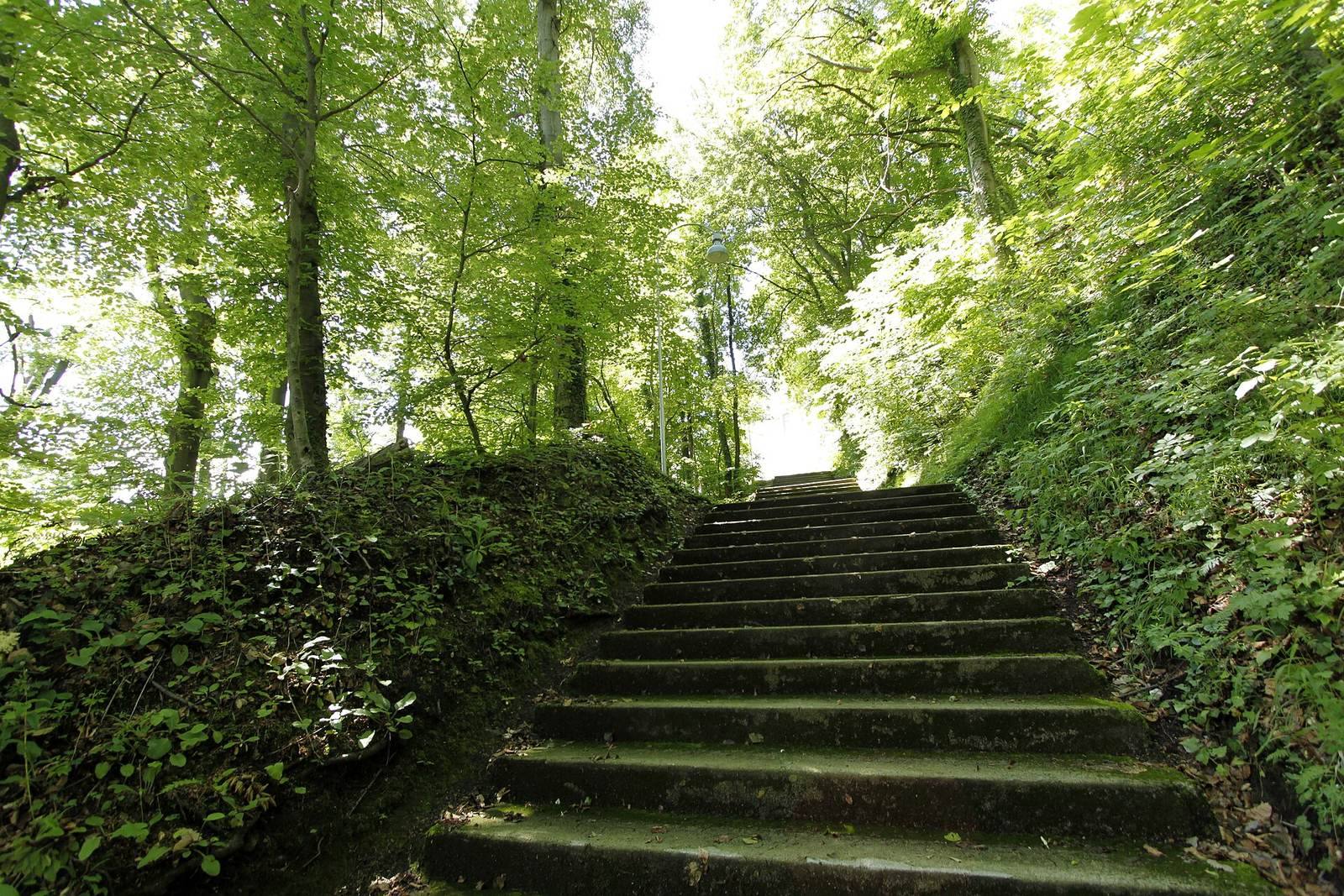
At the hill saddle stand a sacristan’s house, for the person responsible for church furnishings and sacred objects, and a small chapel in front of it. From the saddle, a paved path climbs toward the summit. Stations of the Cross, devotional markers representing stages of Jesus’s Passion, accompany the path.
God’s Foot shrine
In the forest, about 400 metres below the saddle, a masonry wayside shrine dedicated to the Holy Cross is known as God’s Foot. A spring lies beside it.