Sanctuary of the Madonna dell’Arco: A Marian Pilgrimage Shrine in Italy
Site at a Glance
- Popularity
- High
- Country
- Italy
- Primary era
- Early Modern
- Eras represented
- Medieval, Early Modern, Modern
- Civilizations
- Kingdom of Naples, Spanish
- Site type
- Religious
- Remains
- Sanctuary
On this page15 sections
History
The Sanctuary of the Madonna dell’Arco is a Roman Catholic shrine in Sant’Anastasia, Italy, within the Diocese of Nola. Its Marian devotion draws pilgrims from across Campania and is associated with traditions reaching back to the fifteenth century.
The early shrine and Marian traditions
A small devotional shrine containing an image of the Virgin Mary and the infant Jesus stood at the site by the 1400s. The name Madonna dell’Arco refers to the shrine’s position near an arch belonging to an ancient Roman aqueduct. Tradition places a miracle there on Easter Monday in 1450. After losing a game of mail, a mallet-and-ball sport, a young man struck the image with the ball. It was said to bleed from its left cheek. Raimondo Orsini, Count of Sarno and a senior judicial official of the Kingdom of Naples, tried the man, who was hanged beside the shrine. In the same story, a nearby linden tree withered within a day.
Another traditional account concerns Easter Monday in 1589. Aurelia Del Prete of Sant’Anastasia came to the feast with her husband, Marco Cennamo, who wished to present a votive offering, or ex-voto, in gratitude for recovering from a serious eye illness. When their piglet escaped in the crowd, Aurelia became angry and trampled the offering, which showed the Madonna. The following year, an illness was said to have caused her feet to detach. She died on 28 July 1590.
Devotion to the image spread beyond the Kingdom of Naples, becoming widespread in Naples and elsewhere in Campania. Neighborhood associations organized processions, especially in spring. The shrine’s main pilgrimage remains on Easter Monday, when white-clad penitents known as fujenti or battenti come from across the region. As they walk, they sing a traditional vocal melody dating to the fifteenth century, which was set to music centuries later. Other customary observances include a September feast of the Coronation of the Virgin Mary, held on that month’s second Sunday, when a symbolic fire is lit on the bell tower. The penitents also visit on a day that local tradition regards as the Virgin Mary’s name day.
Foundation and Dominican administration
In 1592, Pope Clement VIII sent the priest Giovanni Leonardi from Rome to work with the Bishop of Nola in managing the shrine’s charitable alms and property. A foundation stone for the sanctuary was laid the following year. The Dominican order took charge in 1595 and began enlarging the church and convent. The order has administered the shrine since then.
Tradition also tells of an event in the mid-1670s, when the image of Mary was said to appear surrounded by stars. Witnesses reportedly included Antonio Alvarez, the viceroy of Naples, and Cardinal Pier Francesco Orsini, who later became Pope Benedict XIII. Collapses and disputes with the Royal Hospice for the Poor, which retained part of the convent, prolonged the complex’s development. It reached its present form in 1973.
Remains
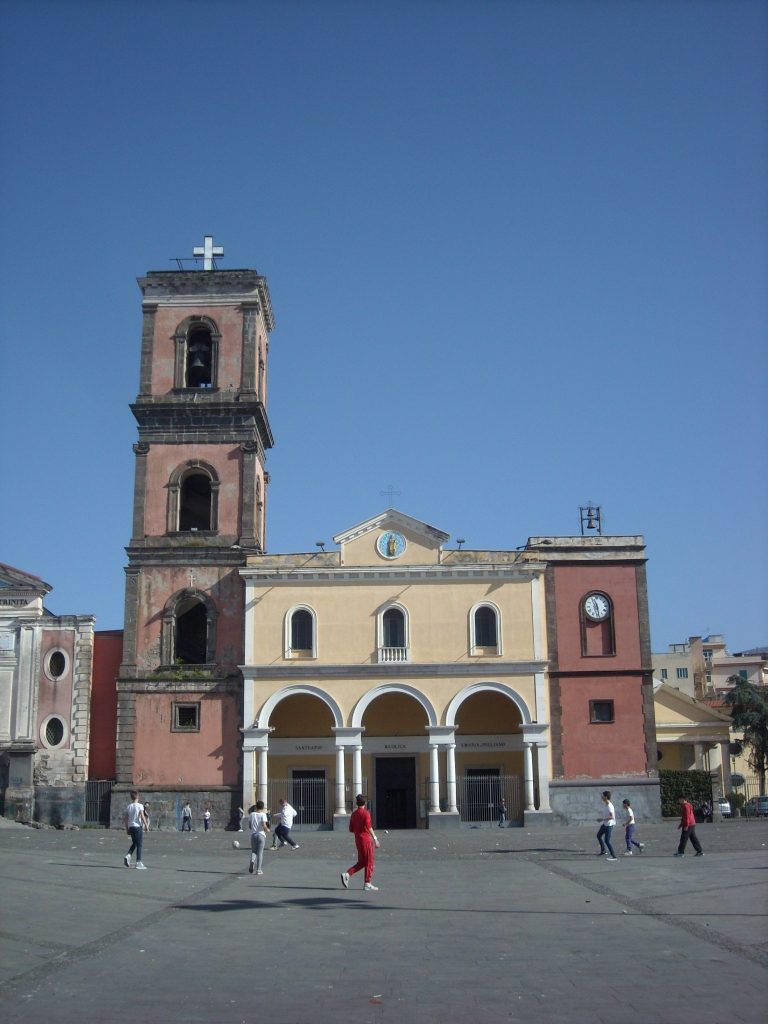
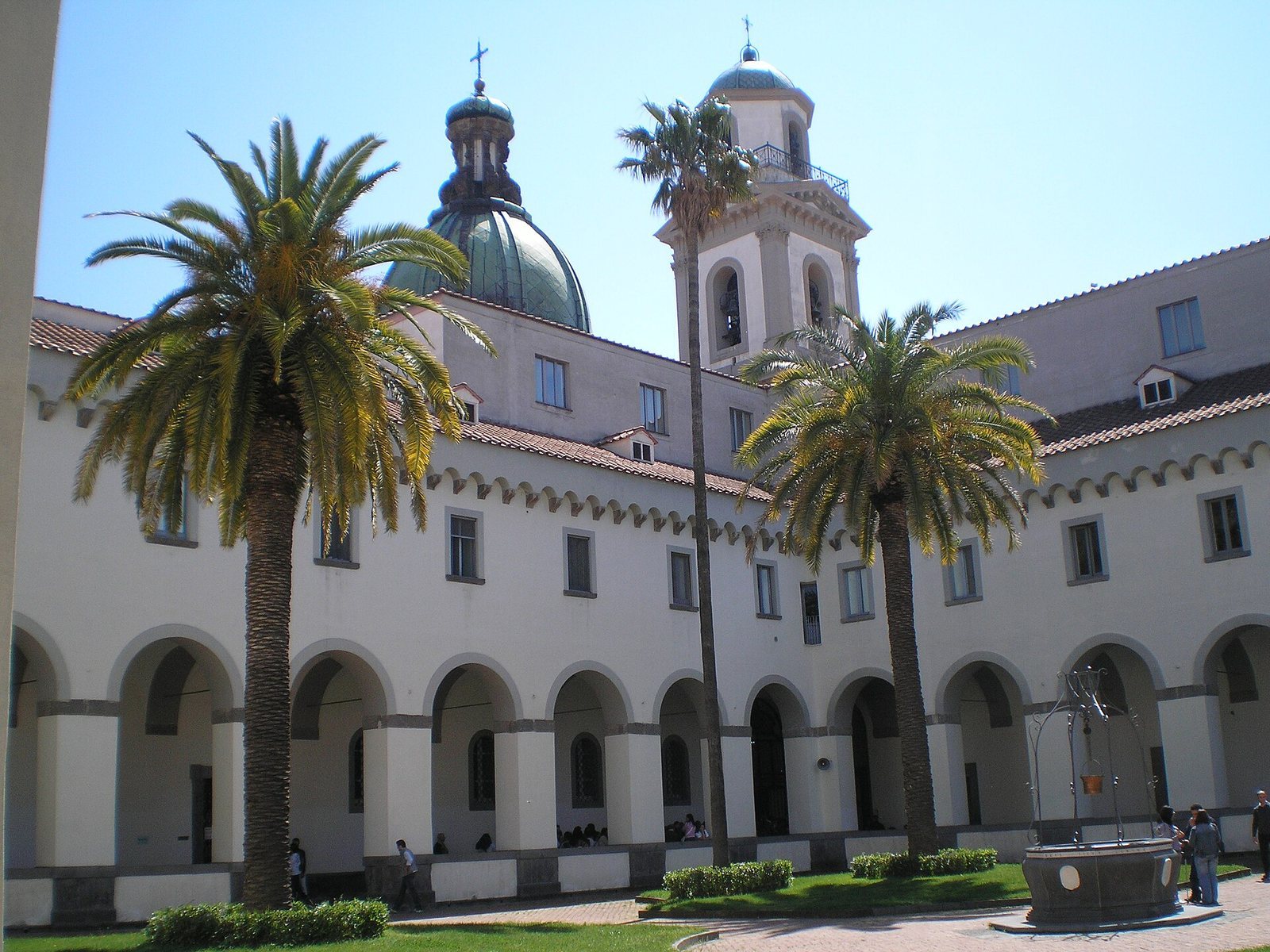
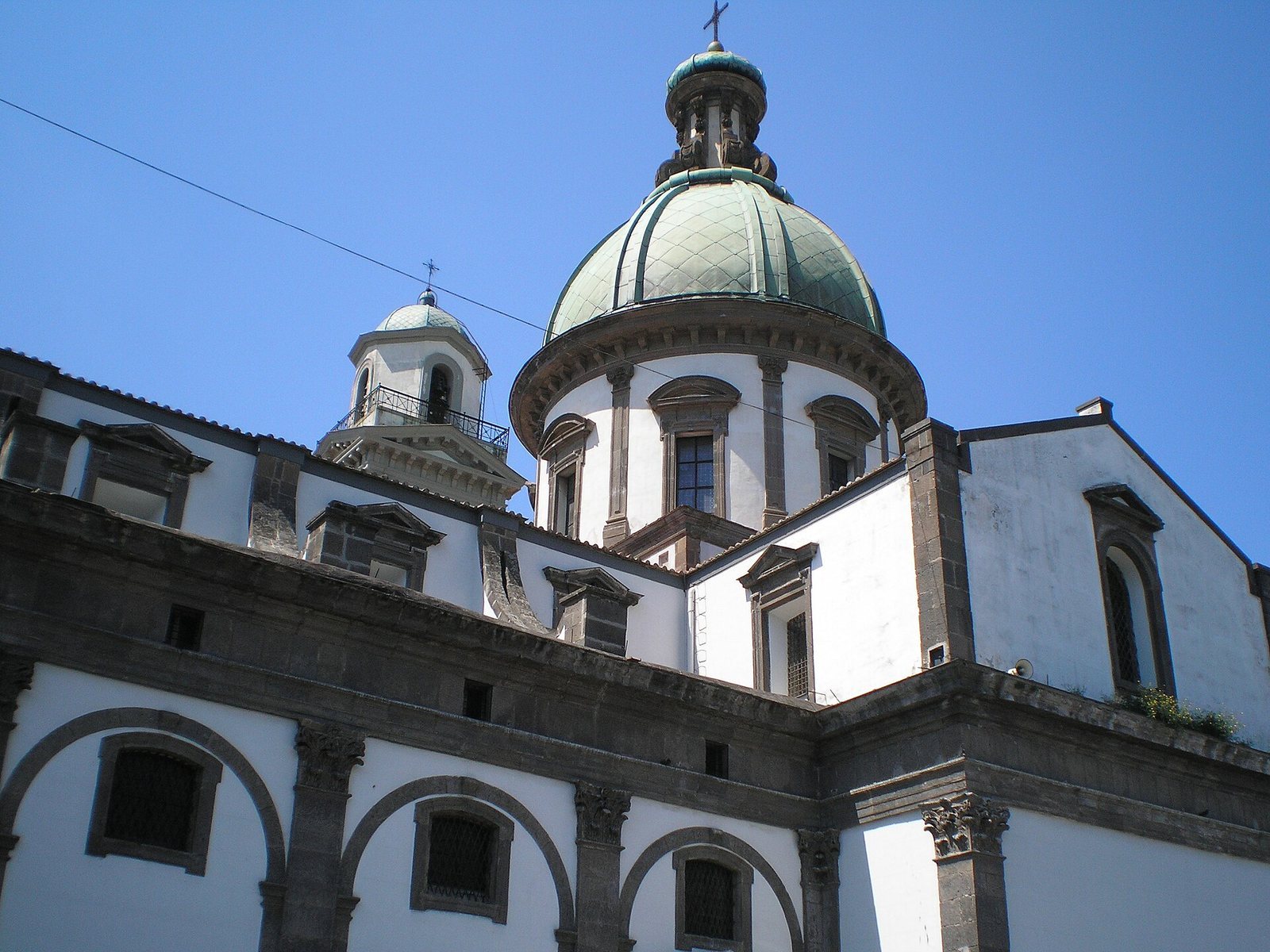
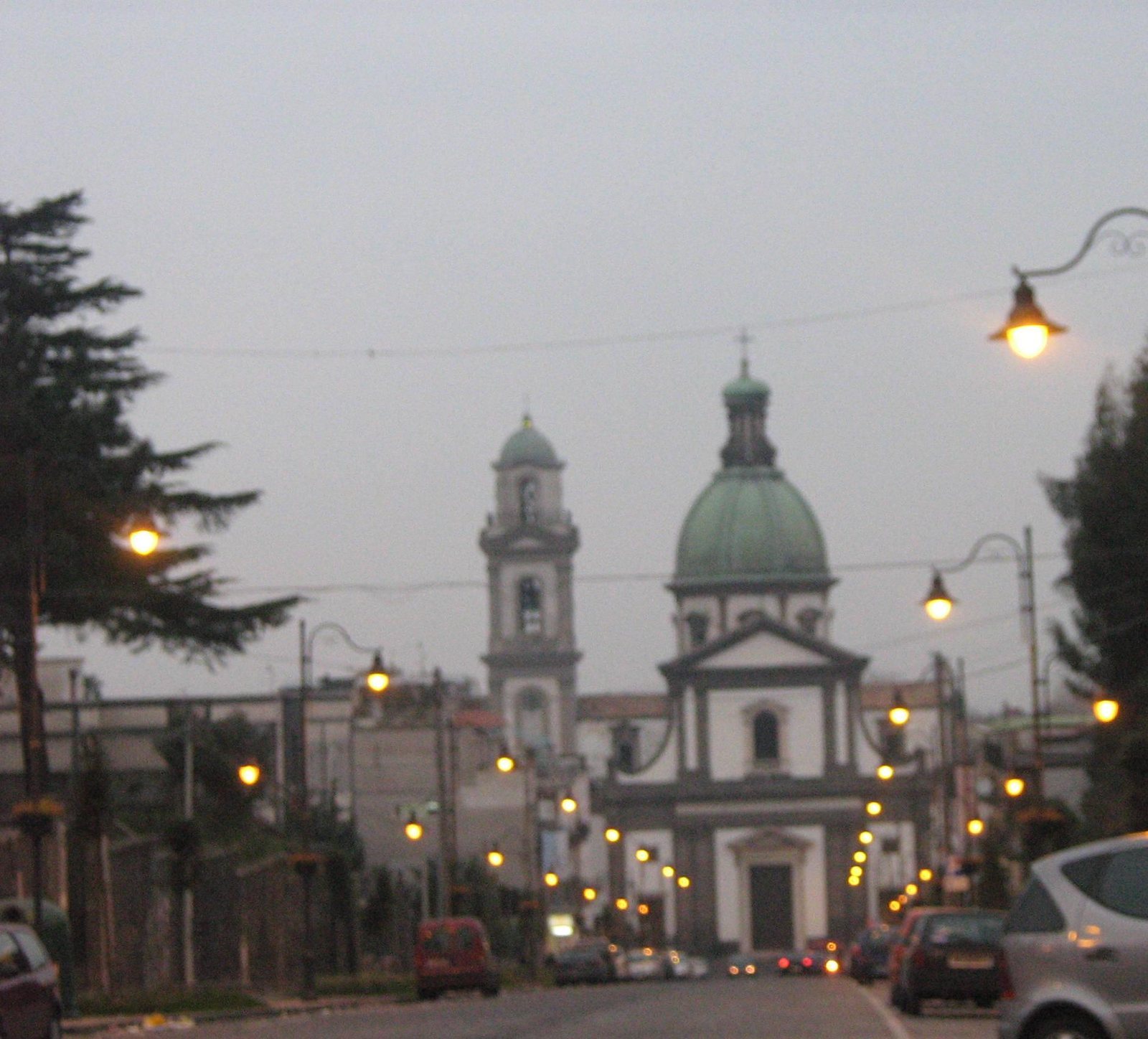
The sanctuary complex includes a church and convent, a cloister, a bell tower, and a modern multipurpose hall. It stands at the foot of Mount Somma, identified as the oldest crater of Mount Vesuvius.
Church and chapels
Plan and devotional spaces
The church has a Latin-cross plan, shaped like a cross, with one main nave beneath a barrel vault, a continuous arched ceiling. Lunettes, shallow recessed forms, interrupt the vault. Four chapels open on each side of the nave, and a dome rises above the crossing, where the church’s main arms meet. The shrine that housed the Marian image stands at the crossing’s centre. At the far end, a semicircular apse, the curved end of the church, contains a wooden choir. The Rosary chapel adjoins the church; it provides access to a further chapel dedicated to Saint Giovanni Leonardi.
Offerings and paintings
Some of the columns supporting the ceiling are partly covered with tablets dedicated to the Madonna. Offerings made over five centuries, from the fifteenth century onward, depict everyday life and the hardships experienced by people in Campania. A large canvas on the interior wall opposite the entrance shows the Adoration of the Magi. Gennaro Abbate, a pupil of Giuseppe Simonelli, painted it in 1735. Other works in the church are attributed to Giovanni Bernardino Azzolino, Giacinto Diano, Antonio Sarnelli, and Francesco Giordano.
Organ
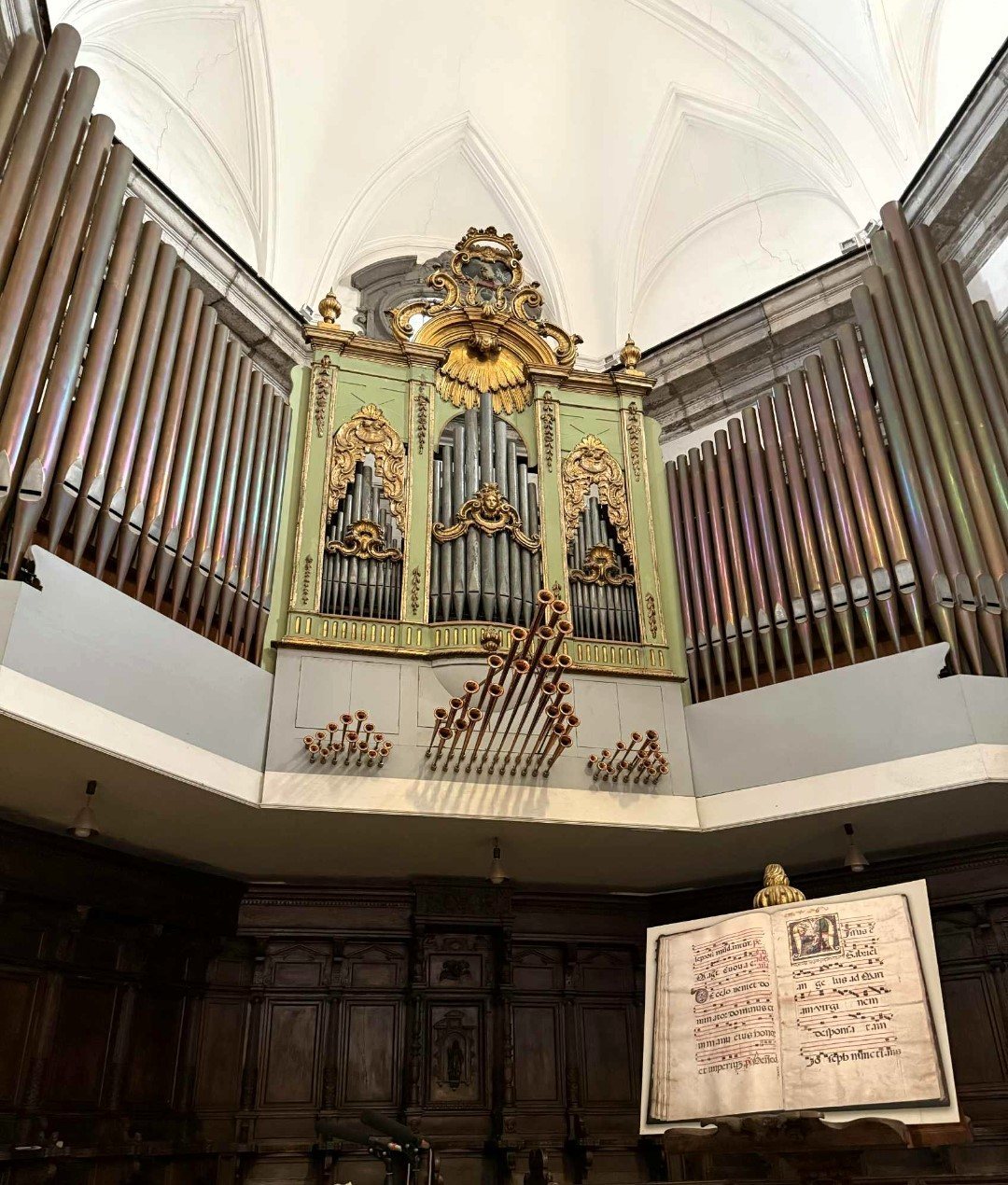
The choir loft in the apse holds the Tamburini organ, opus 562, built in 1968. Its case and some of its pipework came from an earlier organ of the eighteenth century. The instrument has electric action, 49 stops controlling sets of pipes, three 61-note hand keyboards, and a curved 32-note pedalboard played with the feet.
Cloister and adjoining buildings
Cloister
A corridor opposite the church entrance leads first to the confession room and then to the cloister, which has a well at its centre. Rooms around the cloister once served as classrooms for a classical high school.
Building facing the cloister entrance
A separate building faces the cloister’s main entrance. Part of it serves as a hostel, while another part houses a museum of votive offerings.
Bell tower and room of offerings
Bell tower
The bell tower stands beside the church on the western side of the complex and faces a small garden.
Room of offerings
Aurelia Del Prete’s feet are preserved in a small iron cage in the sanctuary’s room of offerings.
Multipurpose hall
Built to accommodate large numbers of worshippers, the hall dedicated to Saint Giovanni Leonardi occupies the complex’s northern side, behind the church and cloister. It covers about 1,500 square metres and is constructed with concrete and reinforced wood.