San Carlos Fortress: A Military Stronghold and Prison in Mexico

Site at a Glance
- Rating
- 4.5
- Popularity
- Medium
- Country
- Mexico
- Primary era
- Early Modern
- Eras represented
- Early Modern
- Civilizations
- Spanish
- Site type
- Military
- Remains
- Fort
On this page10 sections
History
San Carlos Fortress is an eighteenth-century military fortification in Perote, Mexico, built in the Italian-trace style between 1770 and 1776. Its angular defenses were designed to protect the interior of New Spain, the Spanish colony that included Mexico, after the British capture of Havana in 1762. The fortress guarded the route from Veracruz toward Mexico City through Orizaba and Xalapa and was intended to prevent an advance toward Puebla and the capital.
Construction and Colonial Service
Viceroy Joaquín de Montserrat ordered the project, and Manuel de Santisteban, a military engineer and brigadier, selected the site on the plain north of Cofre de Perote. Construction began in 1770 and continued until 1776. The work took place during the administration of Montserrat’s successor, Carlos Francisco de Croix, while completion is attributed to the later viceroy Antonio María de Bucareli y Ursúa.
The fortress served as a guard post and as a repository for treasure awaiting shipment to Spain. Its position also protected communications between Veracruz, Mexico’s principal Atlantic port, and Mexico City.
Independence and the Military College
During the Mexican War of Independence, the struggle that ended Spanish colonial rule in Mexico, San Carlos Fortress sheltered Spanish regiments. It passed to the First Mexican Empire, the short-lived monarchy established after independence, on 9 October 1821.
On 11 October 1823, General Guadalupe Victoria established the first military college of independent Mexico at the fortress. The institution became known as the Perote Military College after the remaining Spanish colonial troops were stationed at nearby San Juan de Ulúa. Victoria, a leader of Mexican independence and Mexico’s first president, died in the fortress complex on 21 March 1843 while receiving treatment for epilepsy.
Prison, War, and Political Conflict
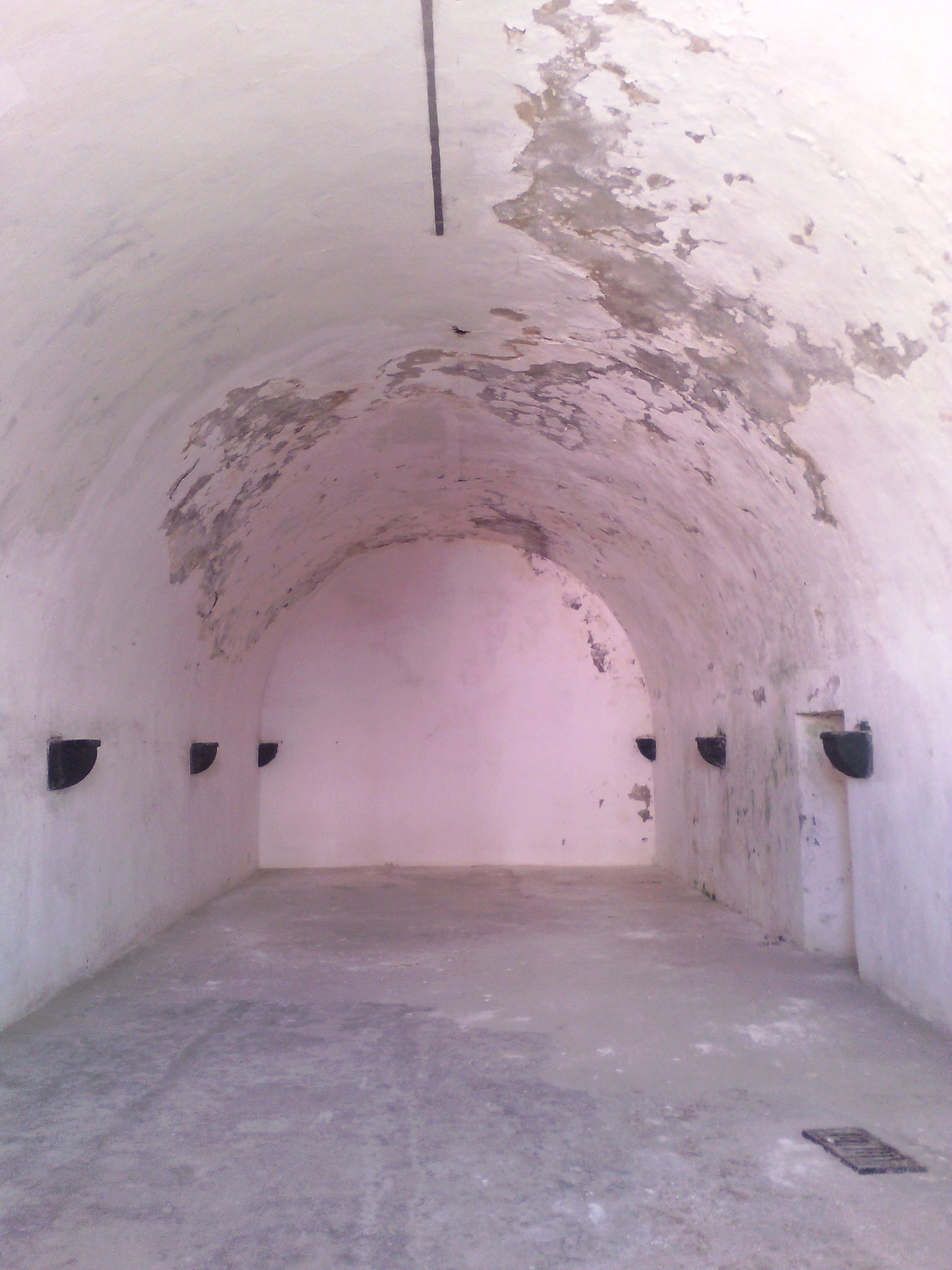
The fortress later became a prison. Fray Servando Teresa de Mier was held there after his capture at Soto la Marina with Xavier Mina. It also confined participants in military expeditions connected with the Republic of Texas and its conflict with Mexico. Around 300 survivors of the Santa Fe Expedition were imprisoned during the winter of 1841–42. About 50 men captured at San Antonio in December 1842 followed, and approximately 160 survivors of the Mier Expedition arrived in September 1843 after being used as road laborers near Mexico City. By September 1844, the remaining Texan prisoners numbered about 105. Others had died from wounds, disease, or starvation, escaped, or secured earlier release through diplomatic intervention by the United States.
United States forces captured San Carlos Fortress on 22 April 1847 during the Mexican-American War. They used it as a garrison to protect communications between Veracruz and Mexico City from guerrilla attacks. During the conflict between Mexico’s Liberals and Conservatives, General Miguel María de Echegaray ordered a massacre of Liberals at the fortress on 16 November 1858.
An order to destroy the fortress was issued in the 1850s, but the attempt failed. In 1863, during the French Intervention in Mexico, another effort used large quantities of gunpowder to prevent the invading forces from occupying the site. The explosion left the fortress intact but caused several houses in Perote to collapse. In May 1868, the garrison rebelled against President Benito Juárez in opposition to his intended reelection. Commander Mendoza led the revolt, which troops sent by Juárez suppressed; Mendoza was executed.
Later Detention and Preservation
After the failed destruction attempts, the fortress remained abandoned until the post-Revolutionary period, when it returned to use as a prison. At the end of the Second World War, after Mexico declared war on the Axis alliance of Germany, Italy, and Japan, the complex held German and Italian civilians as well as some German and Italian prisoners of war.
San Carlos Fortress functioned as a state prison until March 2007. Adaptation of the complex as a museum began in 2008, and it was subsequently opened to the public. The fortress is designated as a historical monument under the designation I-0013000557. It is described as being in good condition, although government maintenance is currently lacking.
Remains
Fortress Layout and Construction
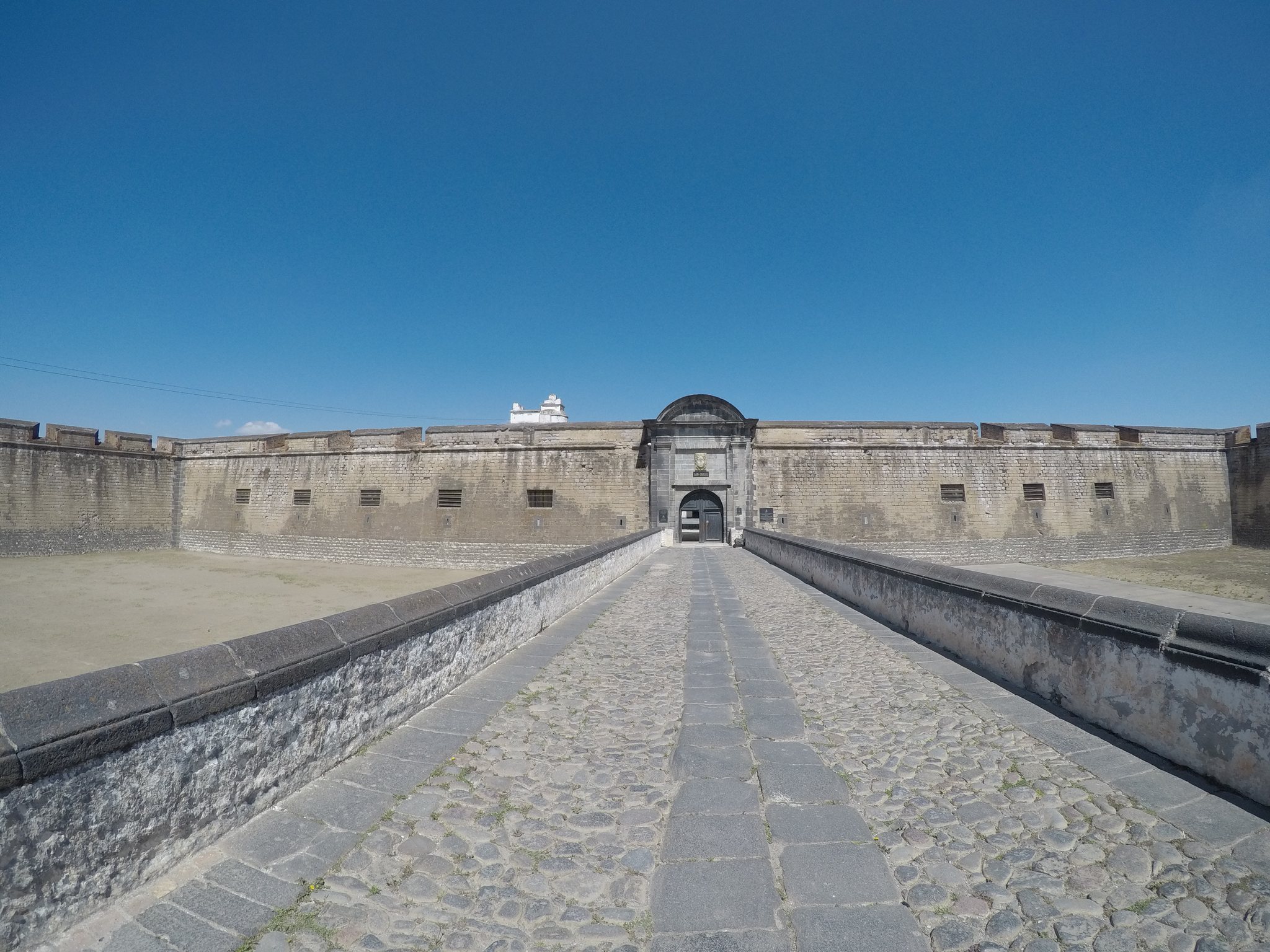
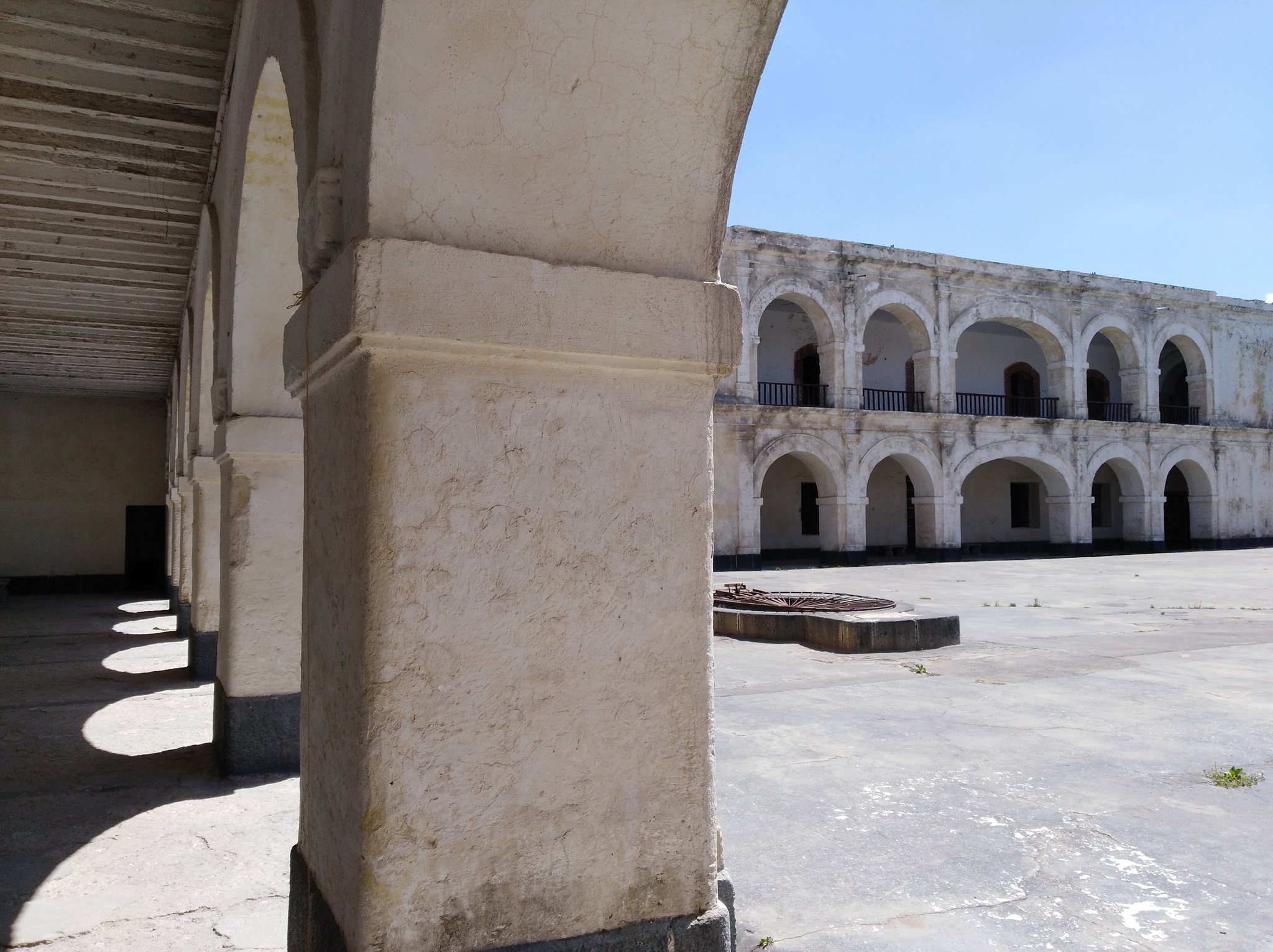
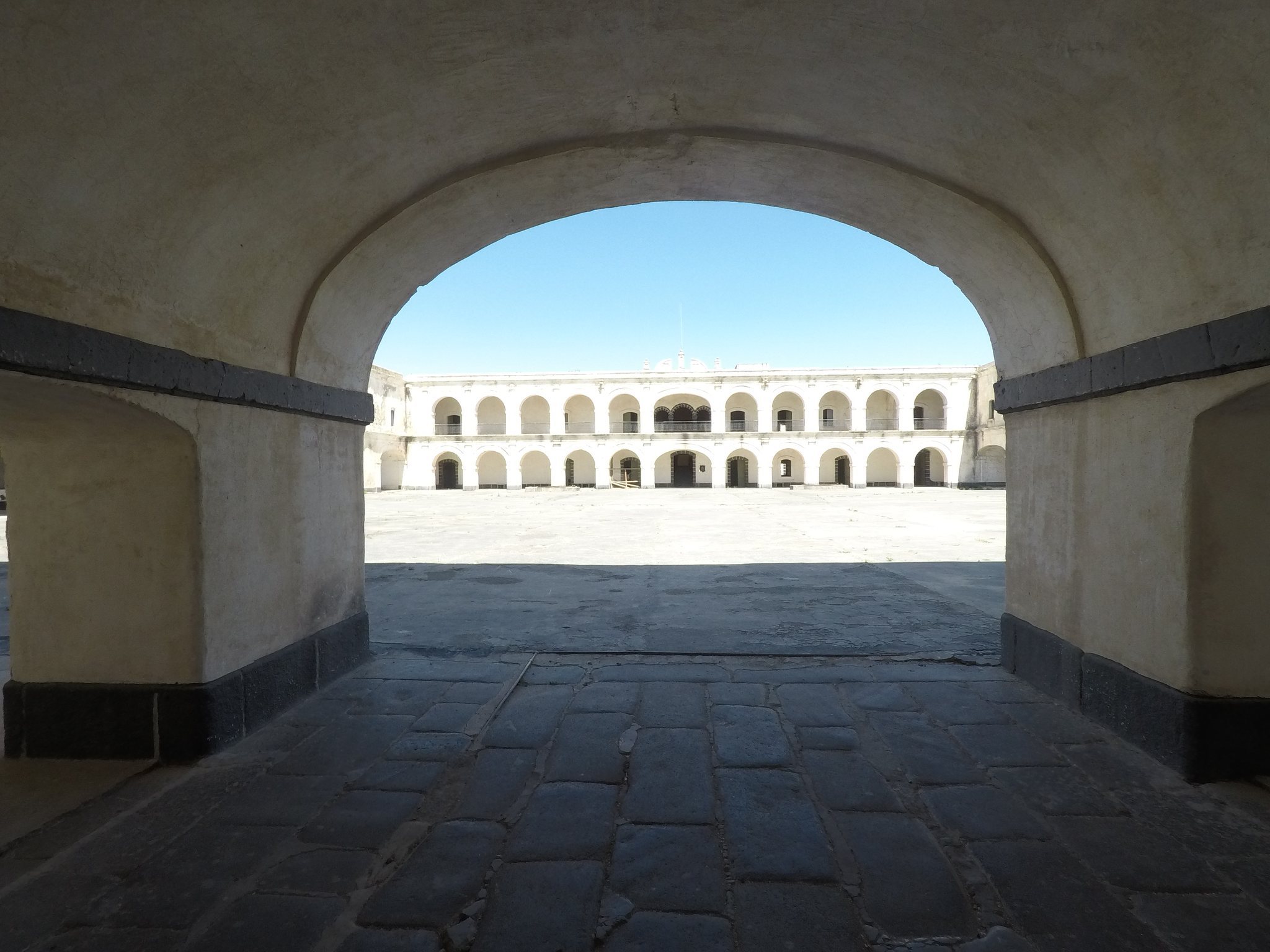
San Carlos Fortress occupies approximately 14 hectares, including the masonry fortification and its surrounding level terrain. It stands on the foothills of Cofre de Perote in the Sierra Madre Oriental, on a plain north of the mountain near the historic route between Veracruz and Mexico City. The complex follows the Italian-trace system, a geometric design of angular defenses and planned lines of fire rather than medieval high walls alone.
Entrance Statues
Two stone statues stand at the entrance. They represent Spanish infantrymen in uniforms of the second half of the eighteenth century, with their firearms held at rest. An oral tradition identifies them as Francisco Ferrer and Jaime Castells, two Catalan soldiers who allegedly killed one another with bayonets while on guard duty in April 1793. The same tradition says that King Carlos IV ordered figures of the soldiers to be placed permanently at a fortress in the New World as a warning to other troops, and that the statues reached Veracruz during the final years of the eighteenth century.
Cistern
The fortress contains a cistern reached by a spiral staircase. This water-storage feature forms part of the surviving internal infrastructure of the masonry complex.
Survival After the 1863 Explosion
The fortress remained intact after the attempted powder explosion of 1863, although the blast damaged the town of Perote. Its surviving fabric is described as being in good state of conservation, while current government maintenance is lacking.