Lajedo de Soledade: A Prehistoric Archaeological and Paleontological Site in Brazil
Site at a Glance
- Rating
- 4.7
- Popularity
- Low
- Country
- Brazil
- Primary era
- Stone Age
- External website
- Open
- Eras represented
- Stone Age
- Civilizations
- Unclassified
- Site type
- Civic
- Remains
- Rock Art
On this page12 sections
History
Lajedo de Soledade is a prehistoric archaeological site in the Chapada do Apodi, in Apodi, Rio Grande do Norte, Brazil. It preserves evidence of human activity in the form of rock paintings, engravings, ceramics, polished-stone artifacts, and Pleistocene animal remains. The age of the rock art remains uncertain. It has been placed approximately 10,000 to 20,000 years ago, while polished-stone artifacts associated with agricultural groups provide a provisional indication that some human activity may be no older than about 5,000 years.
Prehistoric use
People used the site seasonally rather than as a permanent settlement. During the rainy season, water flooded the ravines, limiting access to particular times of year. This pattern has led to the proposal that the ravines had ceremonial uses. Their natural labyrinths may also have helped hunters organize ambushes.
The relationship between the rock art and the later material remains is not secure. Rainwater may have carried ceramic fragments and polished-stone artifacts into the ravines, so these objects cannot be firmly linked in date to the people who produced the paintings and engravings. The ceramics were made by coiling and have fingernail-impressed, brushed, corrugated, or incised decoration.
Threats and preservation
From 1987 to 1990, geologists from Petrobrás identified the area as an important example of a carbonate reservoir. At the same time, expanding artisanal limestone quarrying threatened its geological, archaeological, and paleontological remains. Visitors also damaged paintings by scratching or burning them.
Maria Auxiliadora da Silva Maia first saw the rock art as a schoolchild in the 1960s during an excursion led by Father Pedro Nerds. From 1974, she worked as a state teacher to promote preservation, and in 1978 sold her car to finance 30,000 postcards calling attention to the site. After more than twelve years of individual activism, she was commemorated in the name of Ravina Dodora.
In February 1991, environmentalists from Natal organized a rescue campaign to raise local awareness and redirect quarrying away from areas of archaeological, paleontological, and geological importance. The group included geologists Bagnoli and Gusso, environmentalist David Hasset, speleologist Francisco William Junior, and Maria Auxiliadora da Silva Maia. With local assistance, they identified three areas containing archaeological, paleontological, or notable geological features, covering nine hectares in total.
A second field campaign during Carnival in 1991 mapped the three protected areas, marked a trail, trained ten local child guides from an initial group of twenty-three, and cleared rubbish from the Araras area. It also established a small museum and library containing donated archaeological and paleontological material. The Association of Friends of Lajedo de Soledade was founded during the campaign, with residents of Soledade and Apodi forming its main membership and a scientific council chaired by geologist Bagnoli. In March 1992, it became the Friends of Soledade Foundation, or FALS, allowing it to manage preservation and research activities through a contract with the Communications Service.
FALS enclosed the three protected areas with 2,500 metres of fencing and constructed a 95-square-metre museum and visitor center, completed in March 1993. In January of that year, a paleontological research team led by Leon Diniz Dantas de Oliveira of the Federal University of Rio Grande do Norte excavated the site and recovered abundant Pleistocene megafaunal material. The three areas containing the principal ravines are protected as environmental areas and maintained by FALS.
Remains
Limestone landscape
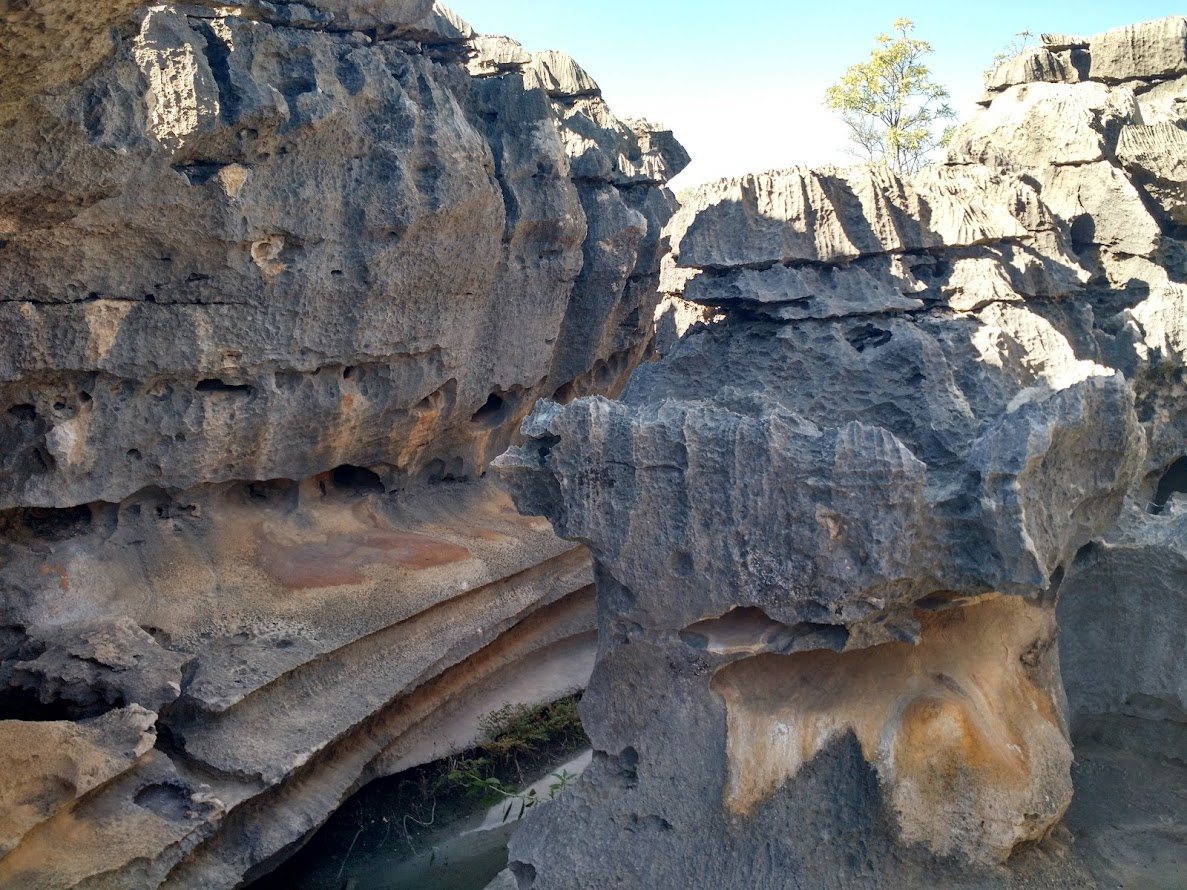
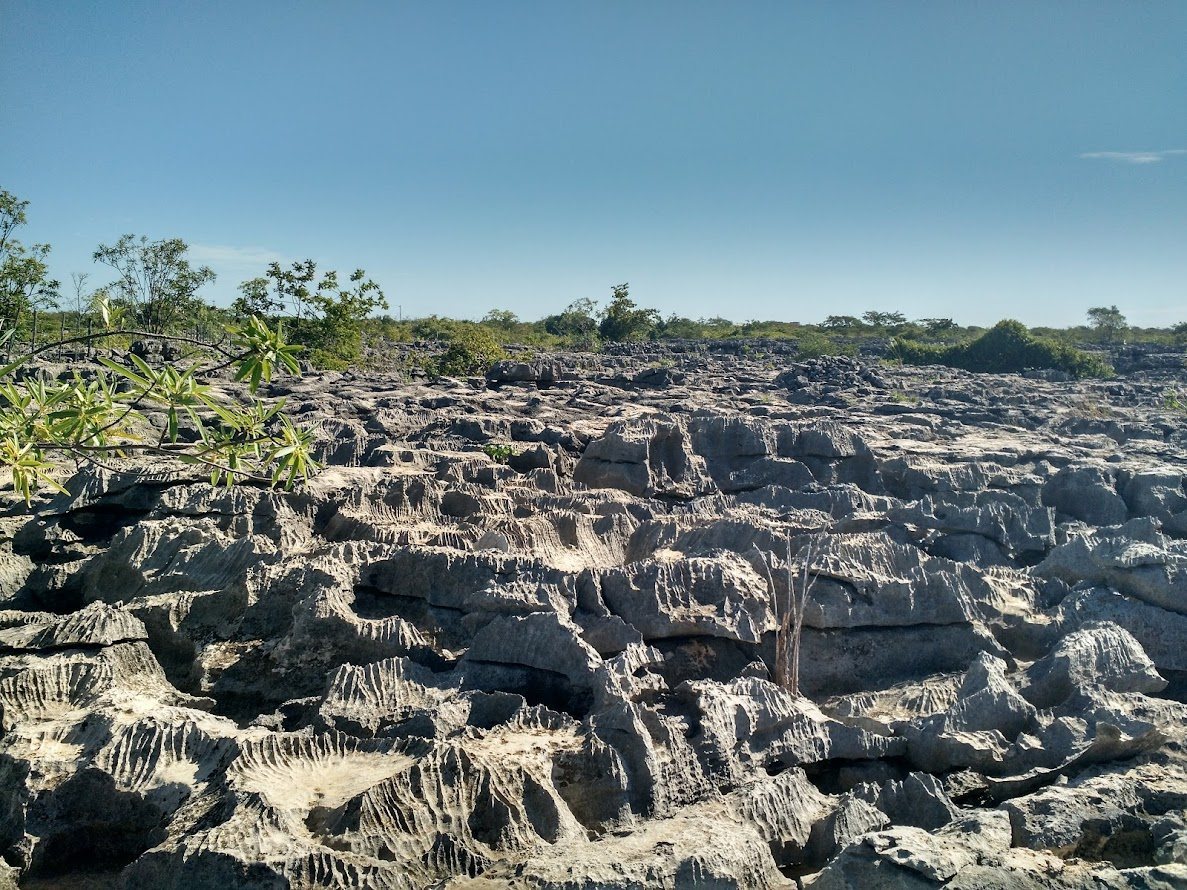
Lajedo de Soledade covers approximately 3 square kilometres at about 114 metres above sea level in predominantly flat terrain. It is the largest exposed limestone area in the Potiguar Basin. The rock belongs to the Upper Cretaceous Jandaíra Formation, a limestone formation deposited in a shallow sea approximately 90 million years ago. Later uplift, the retreat of the sea, rainfall, and running water shaped it into ravines, caves, fissures, and shelters.
The ravines and cavities retain substantial quantities of water during the rainy season. Important ravines include Ravina do Urubu, Ravina Dodora, Ravina do Peninha, and Ravina do Leon. Ravina do Leon was the principal area for collecting paleontological material. The three principal ravine areas form the protected parts of the site.
Archaeological remains
Rock art
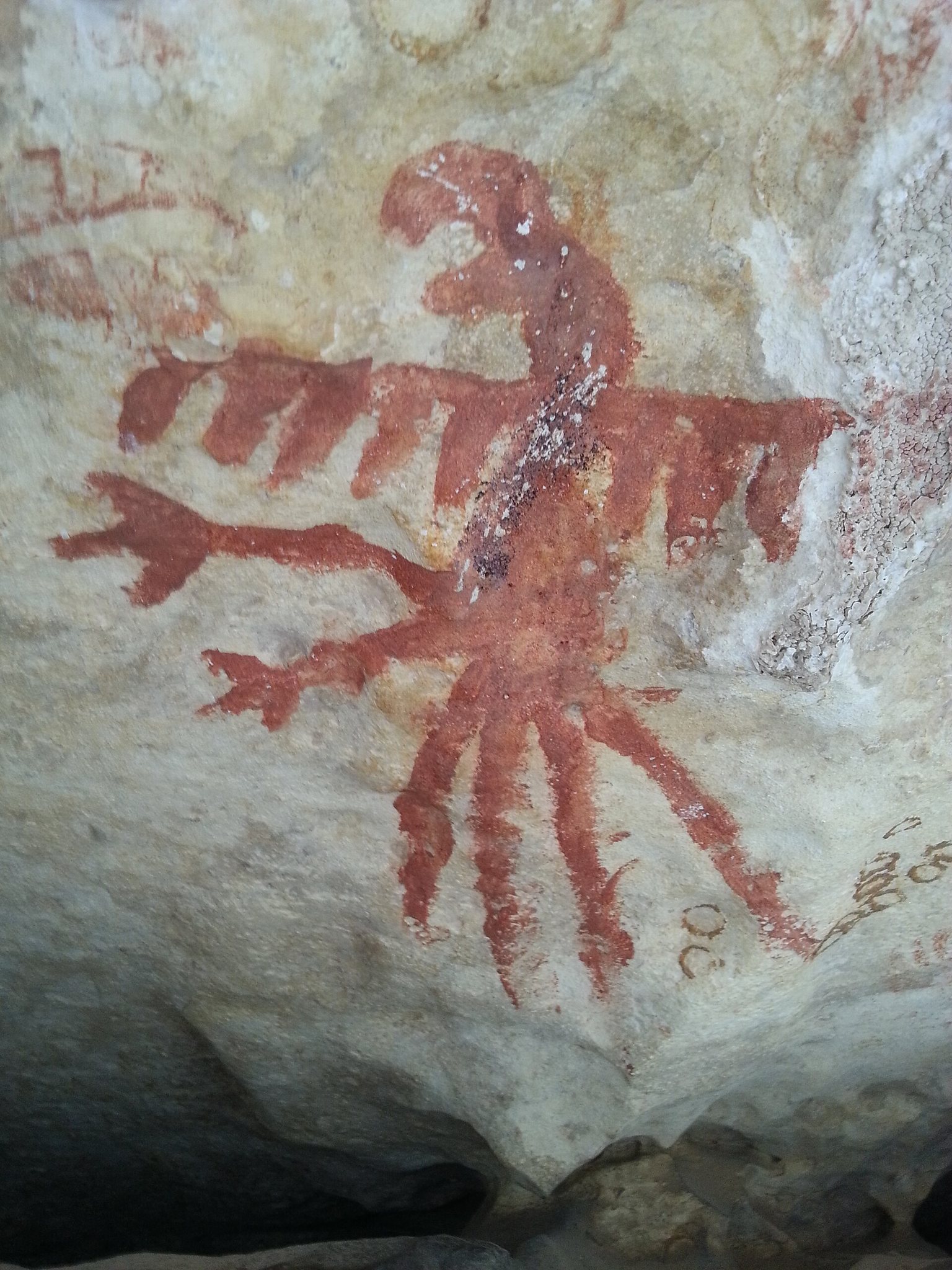
Rock art is the most abundant archaeological material at Lajedo de Soledade. Paintings occur in 30 areas and engravings in 26. The paintings are chiefly red, with fewer yellow and black examples. They were made with fingertips, small plant branches, primitive brushes, ochre or charcoal sticks, and handprints.
Most of the paintings consist of abstract or otherwise uninterpretable graphic designs, while zoomorphic representations are rare. They occur in particular ravines, where the edges of the rock appear to have been deliberately broken or prepared before the paintings were applied.
Ceramics and stone artifacts
Ceramic fragments have four forms of surface decoration: fingernail impressions, brushing, corrugation, and incision. The vessels were formed by coiling. Excavations also recovered a small number of polished-stone artifacts associated with prehistoric agricultural groups. Rainwater may have transported these objects through the ravines, leaving their chronological relationship to the rock art uncertain.
Fossils and museum remains
Marine fossils
Marine paleontological remains occur on the walls and floors of some ravines and across the limestone surface. They include the trace fossil Thalassinoides, a fossilized branching burrow system, as well as gastropods, echinoderms, and fish teeth. Together, these remains reflect the marine fauna present when the Jandaíra Formation was deposited during the Cretaceous Period, the geological interval from approximately 145 to 66 million years ago.
Pleistocene fauna
Quaternary vertebrate remains occur mainly in clastic sediments that fill the ravines. Excavated material includes giant ground sloths, giant armadillos, mastodons, toxodonts, jaguars, dogs, horses, and reptiles. The prehistoric fauna has also been described as including saber-toothed cats. These animals belonged to the Pleistocene Epoch, a much later period associated with repeated ice ages and large mammals.
Preservation facilities
The preservation work created a small museum and library in 1991, followed by the 95-square-metre museum and visitor center completed in 1993. The protected areas are enclosed by fencing, and a cleared, marked trail was established during the 1991 campaign.