Kirti Toran, Vadnagar: Twelfth-Century Ornamental Gateways
Site at a Glance
- Rating
- 4.5
- Popularity
- High
- Country
- India
- Primary era
- Medieval
- Eras represented
- Medieval
- Civilizations
- Unclassified
- Site type
- Civic
- Remains
- Arch
On this page8 sections
History
Origins and later tradition
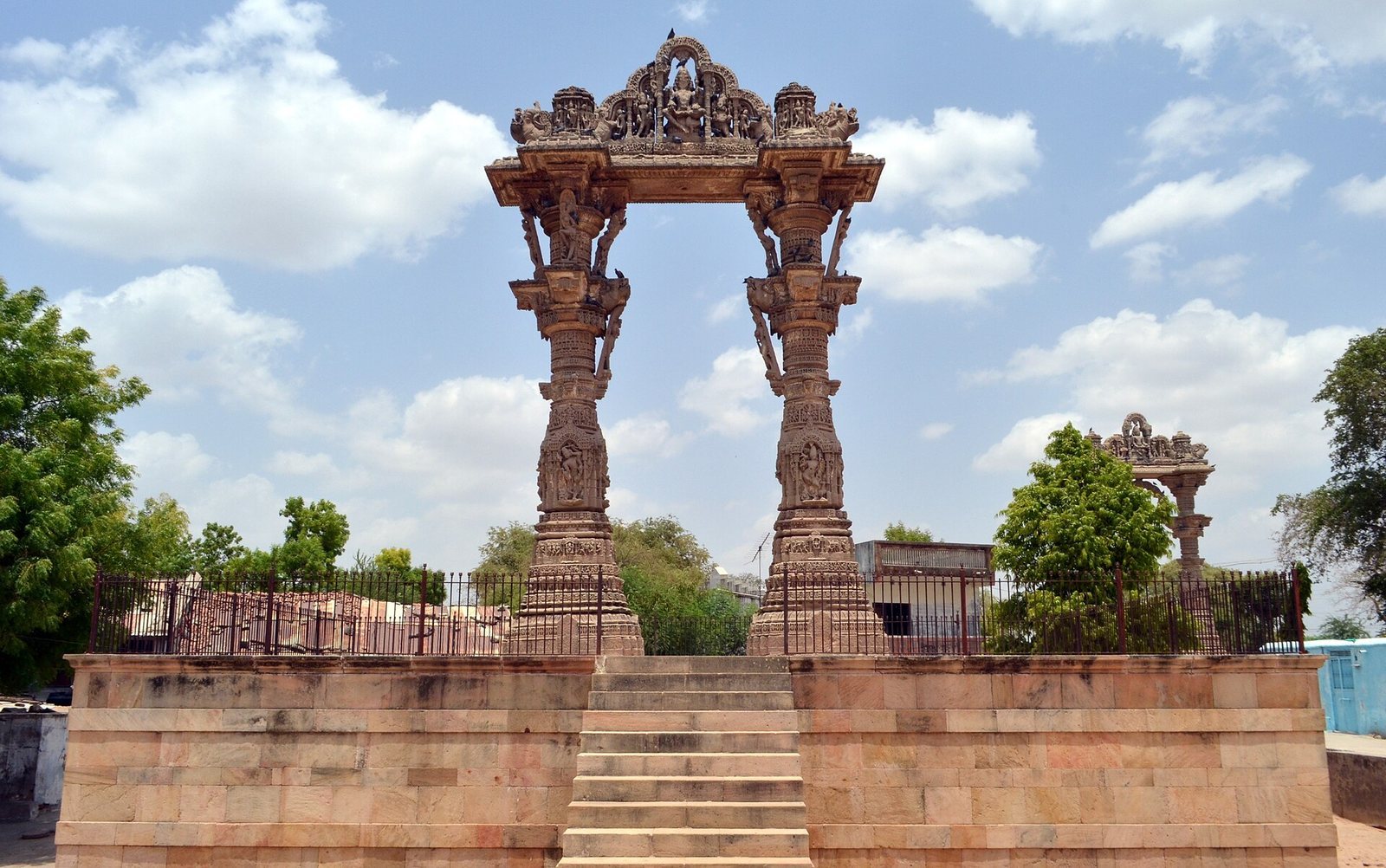
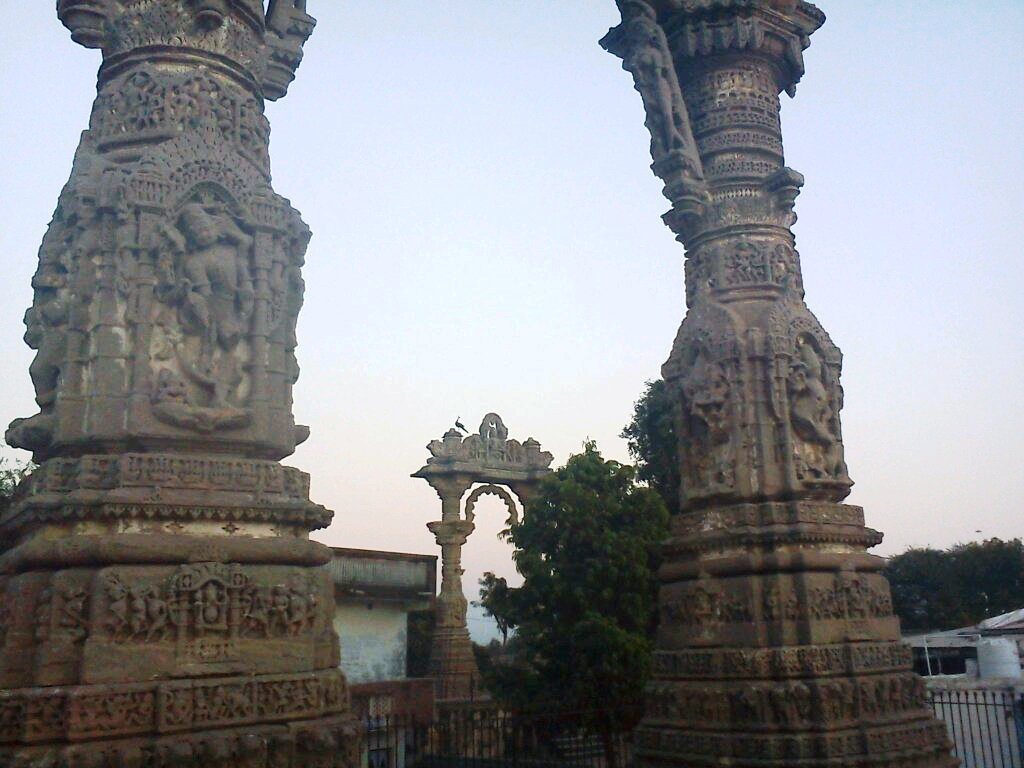
The Kirti Toran are a pair of 12th-century ornamental gateways in Vadnagar, India, built in the Maru-Gurjara style, a western Indian architectural tradition associated with Gujarat. They are among the few surviving examples of entrance gateways once common in Solanki-period Gujarat, when the Chaulukyas of Gujarat were the ruling dynasty.
The gateways may have served as entrances to a large temple complex, and their construction may have followed a military victory. A later tradition called them Narsinh Mehta’s Chauri and associated them with Narsinh Mehta, a major 15th-century Gujarati poet of devotional literature. This attribution is legendary.
Modern conservation and status
Initially, one gateway remained intact while the other was ruined. In 2007, the Archaeological Survey of India, the national agency responsible for archaeological research and monument protection, re-erected the ruined gateway. The pair are protected as a Monument of National Importance.
In recent times, the eastern gateway has been used as a symbol of Gujarat.
Remains
Structure and setting
The two gateways stand north of Vadnagar’s walled town beside Sharmishtha Lake, facing east, with a few houses between them today. Each is about 40 feet (12 metres) high and consists of two columns supporting an arch, built of red and yellow sandstone. The eastern gateway is in better condition than its partner.
Carved decoration
Columns and arch surfaces
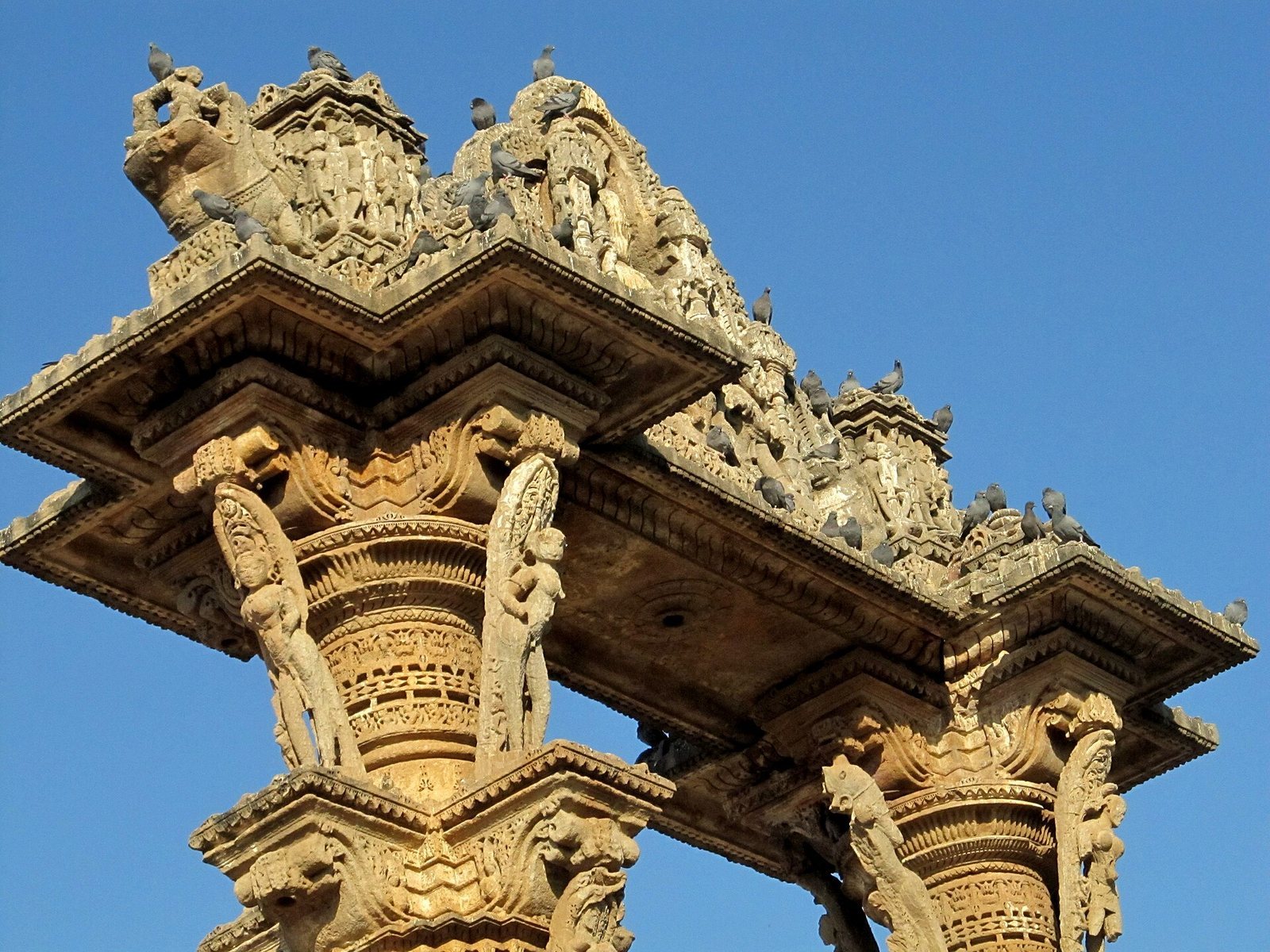
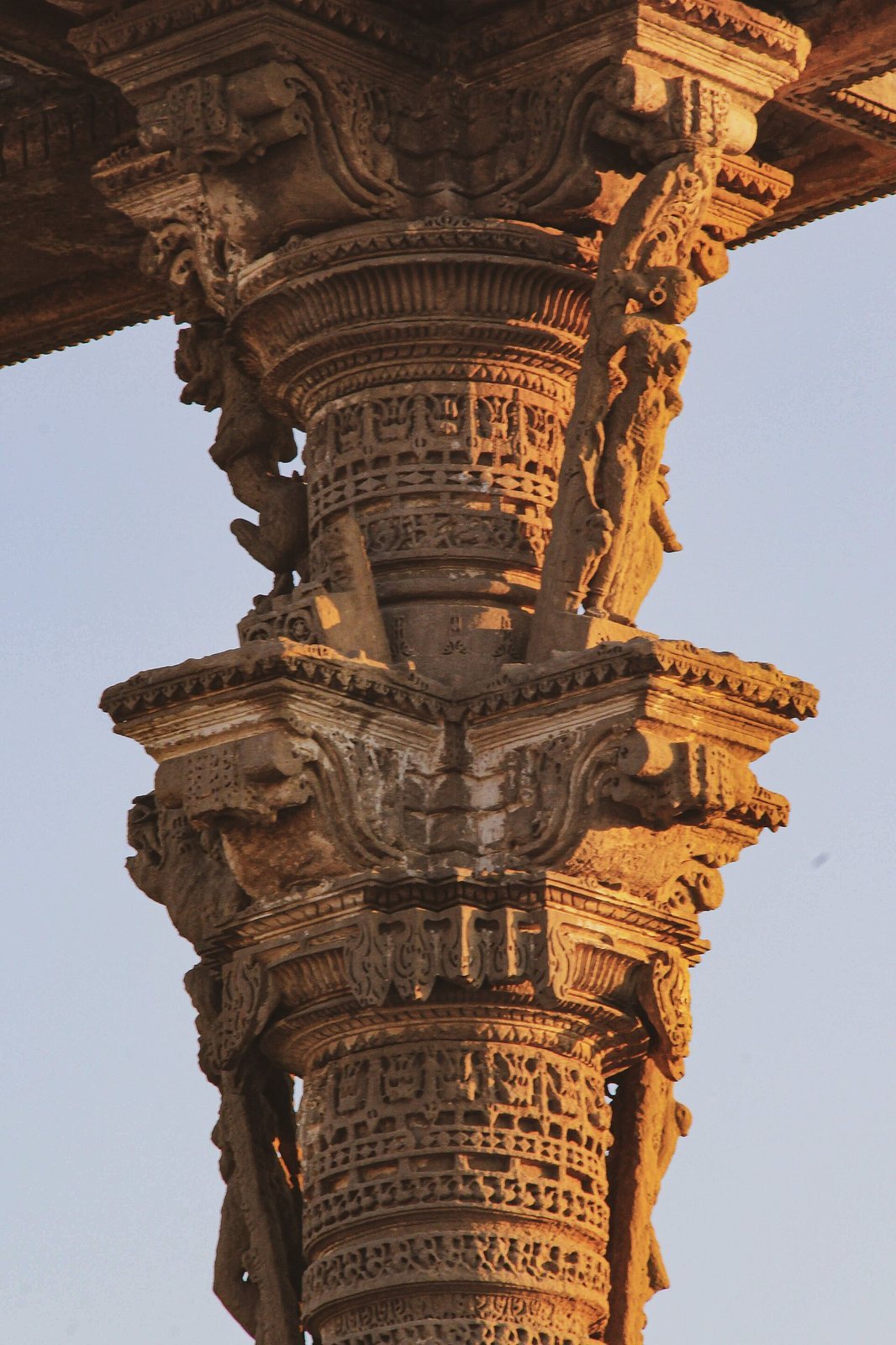
Lozenge-shaped forms appear at the bases of the columns and arches, alongside geometric designs and plant carvings of leaves, creepers, and lotuses. Other reliefs depict animals, people engaged in varied activities, deities in different poses, and scenes of battle and hunting. The pillars also incorporate decorative mouldings, stylized face motifs, panels with elephants and human figures, and pot-shaped carved elements. Their carving resembles that on pillars of the Rudra Mahalaya Temple at Siddhpur and the Modhera Sun Temple, suggesting a similar date.
Upper figures and capitals
Pointed capitals decorated with carved leaves support griffins, mythical creatures with lion bodies and eagle heads and wings, and semicircular arches. At the top, a seated image of Kartikeya, a Hindu deity, is flanked by Ganesh, another Hindu deity, and a makara, a mythological creature in South Asian art. Arches rise above this sculptural group, while standing female figures ornament the upper part.