Gümüşler Monastery: A Byzantine Rock-Cut Monastic Complex in Cappadocia
Site at a Glance
- Rating
- 4.8
- Popularity
- Very High
- Country
- Turkey
- Primary era
- Medieval
- Eras represented
- Medieval
- Civilizations
- Byzantine
- Site type
- Religious
- Remains
- Monastery
On this page11 sections
History
Byzantine foundation
Gümüşler Monastery is a Byzantine rock-cut monastic complex in Gümüşler, about 10 km northeast of Niğde in central Turkey. The monastery and an underground settlement were established in the 10th century, during the Byzantine period, the history and culture of the Eastern Roman Empire after the western half fell. The settlement was then known as Trakias and lay away from major population centers.
Ottoman use and abandonment
In the Ottoman period, the locality was called Eski Gümüşler, meaning “Old Silver,” a name linked to silver deposits in the area. The monastery served as a place of worship for the non-Muslim population. In 1924, after the population exchange associated with the Treaty of Lausanne, non-Muslim residents of the Niğde region moved to Greece. The monastery lost its religious function and was abandoned, remaining unused for about 40 years.
Rediscovery and interpretation
The monastery was rediscovered in 1962, and restoration of the complex and its paintings began the following year under British archaeologist Michael Gough and an archaeological team. The monastery and its surroundings received protected archaeological-site status in 1973. Byzantine scholar Robert Ousterhout has proposed that the complex may have been a nobleman’s residence with a private chapel rather than a monastery. He regarded the apparent scenes from Aesop’s Fables as more consistent with that interpretation.
Remains
Rock-cut setting and layout
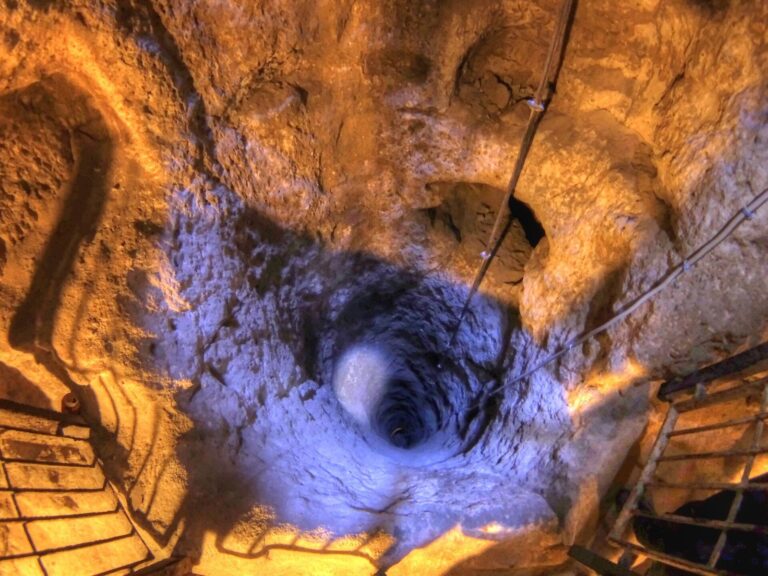
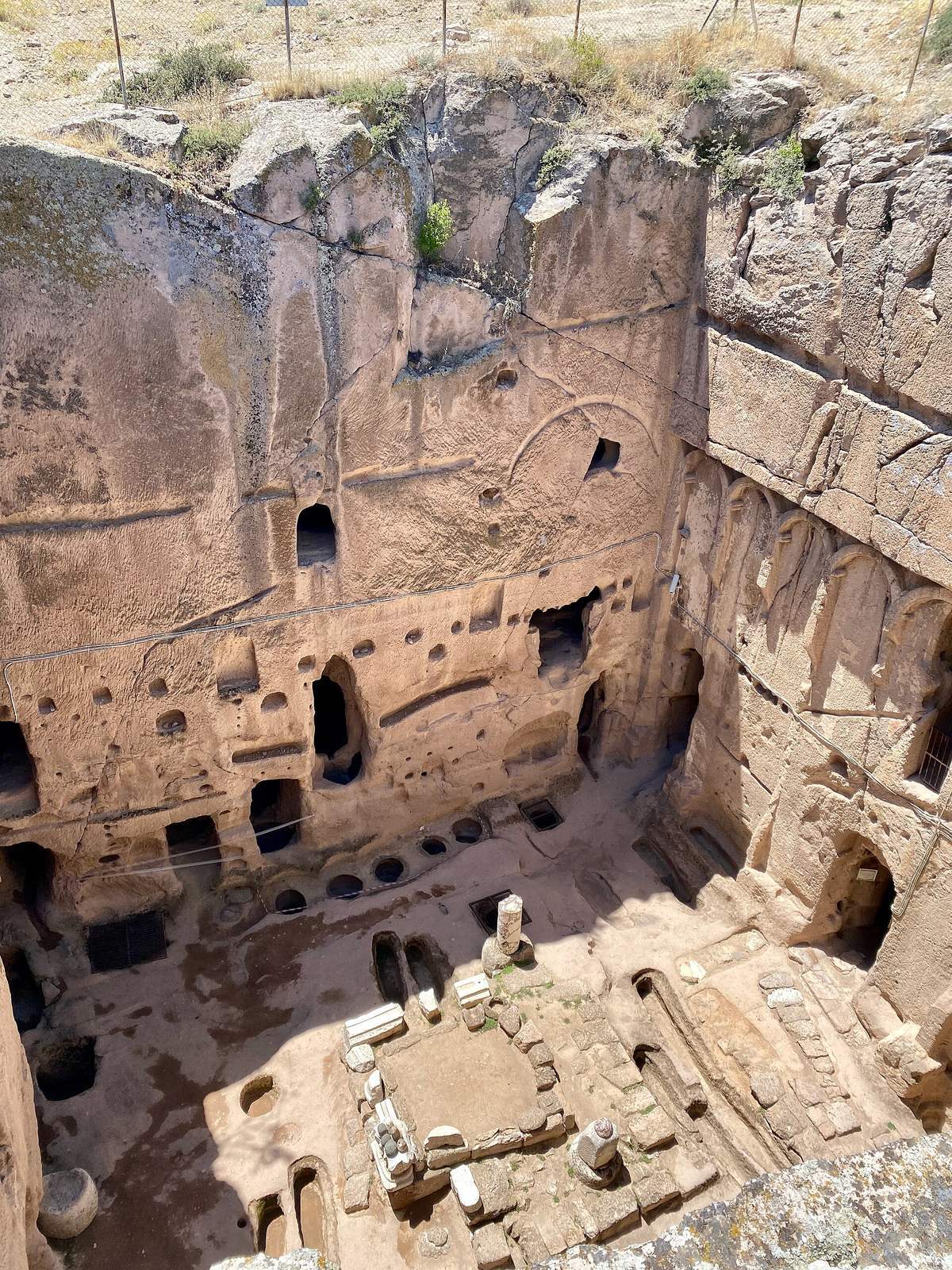
The complex is carved into a large mass of tuff, rock formed from compacted volcanic ash, in the center of Gümüşler. The rock mass measures 1,500 m across. The site lies in southeastern Central Anatolia, in the historic region of Cappadocia, and is among the region’s largest and best-preserved rock-cut monasteries. A square central courtyard connects the church with underground spaces that include a chapel, a communal dining room, and a monks’ cell.
Church and painted decoration
Plan and tombs
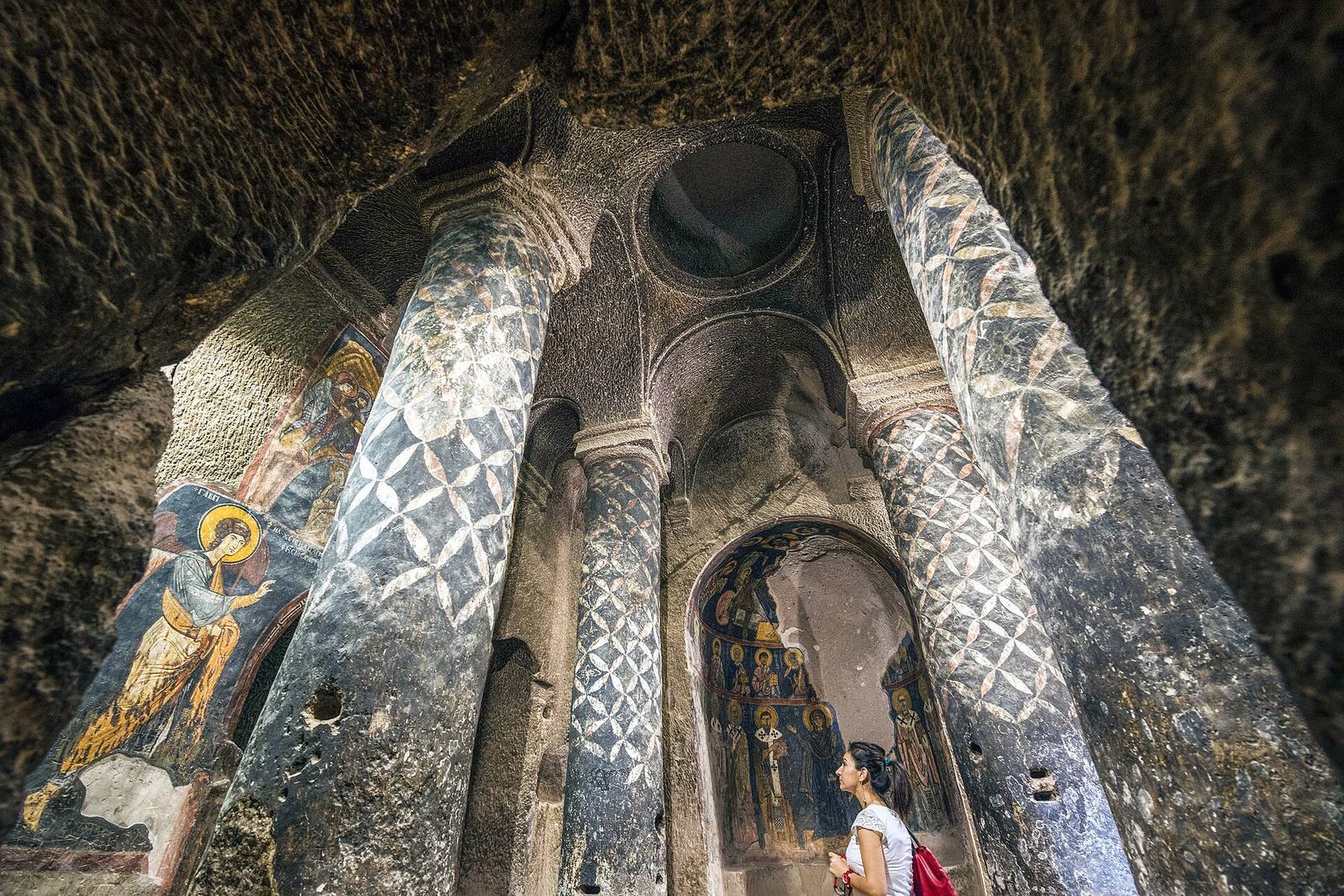
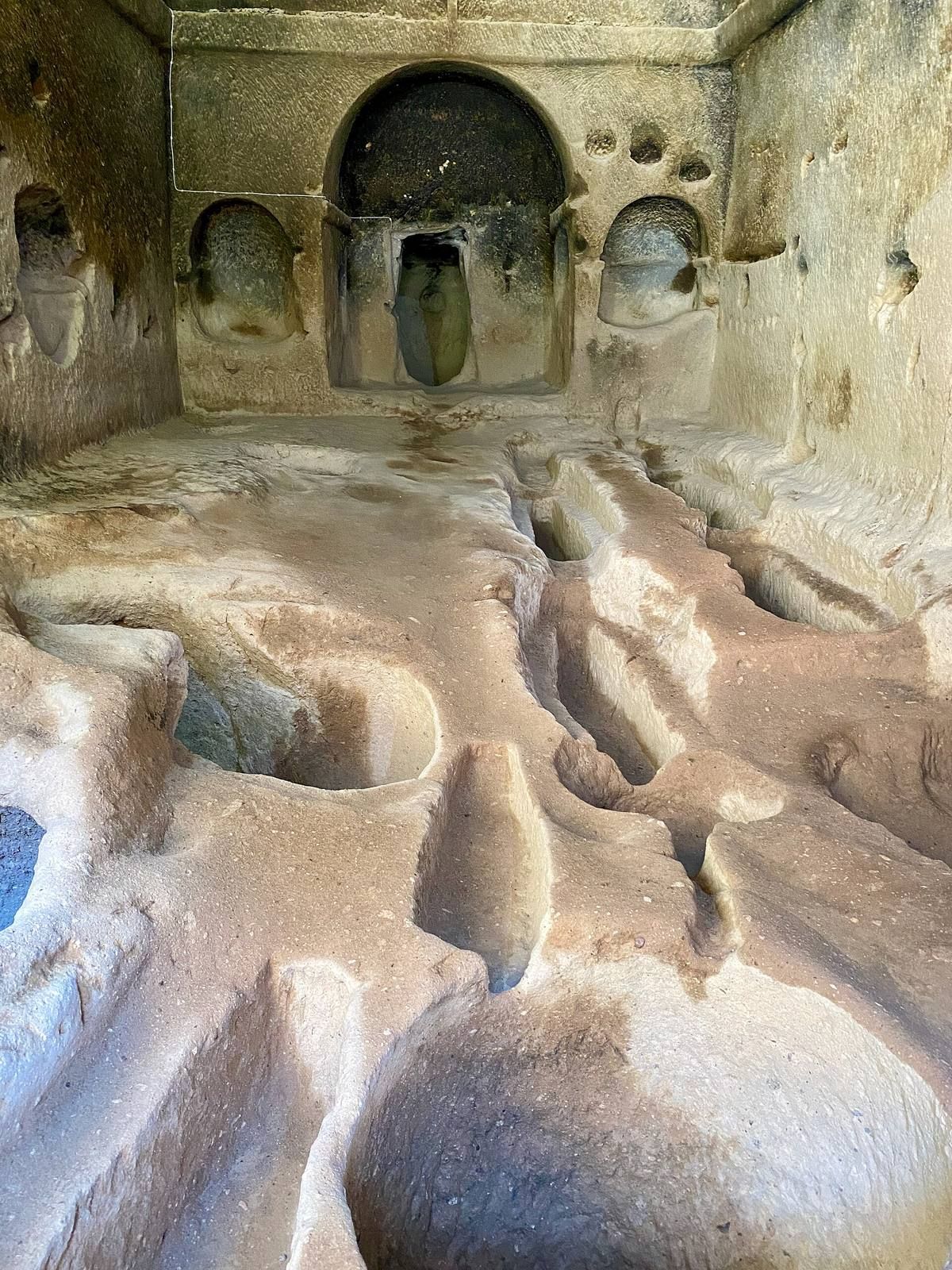
The church stands north of the courtyard, with its sections opening onto the central space. Four enclosed, freestanding arms are arranged around a central crossing in a Greek-cross plan. A niche in the northern arm contains two tombs. On the west side, two entrances are covered by cradle vaults, continuous tunnel-shaped ceilings.
Main apse paintings
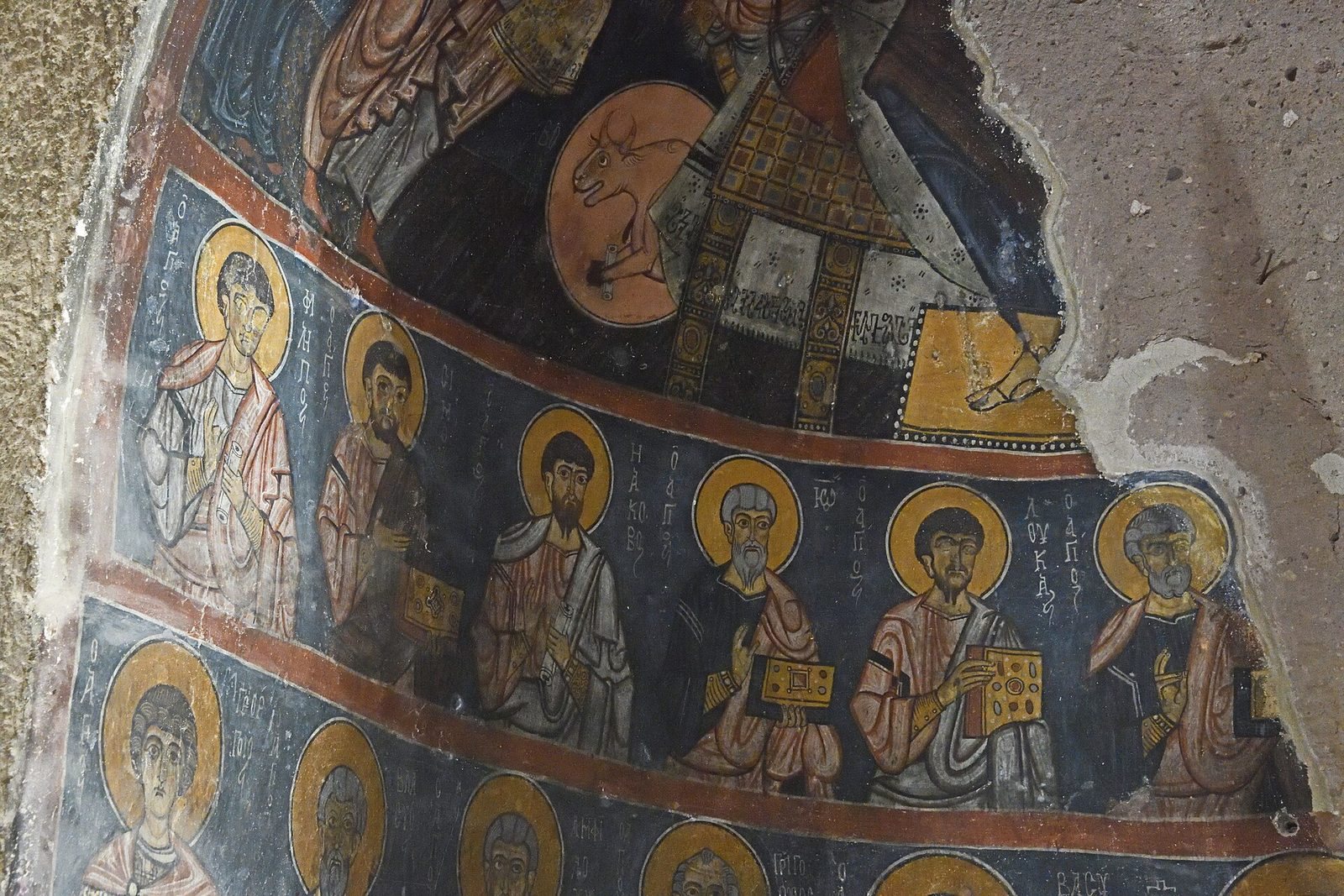
The church’s frescoes, paintings made on wet plaster, retain their colors and detail. Their style and imagery resemble those in other Cappadocian churches, and they are thought to date from the 7th to 11th centuries. At least three artists may have contributed. The main apse has three painted registers, or horizontal bands. Its images include Christ enthroned with two angels to his right, symbols of the Evangelists, and a Deesis, a Christian scene centered on Christ with figures who intercede beside him. The lowest band shows Basil the Great of Kayseri, Gregory of Nyssa, and Gregory of Nazianzus, known together as the Cappadocian Fathers, influential Christian bishops and theologians.
North arm and entrance area
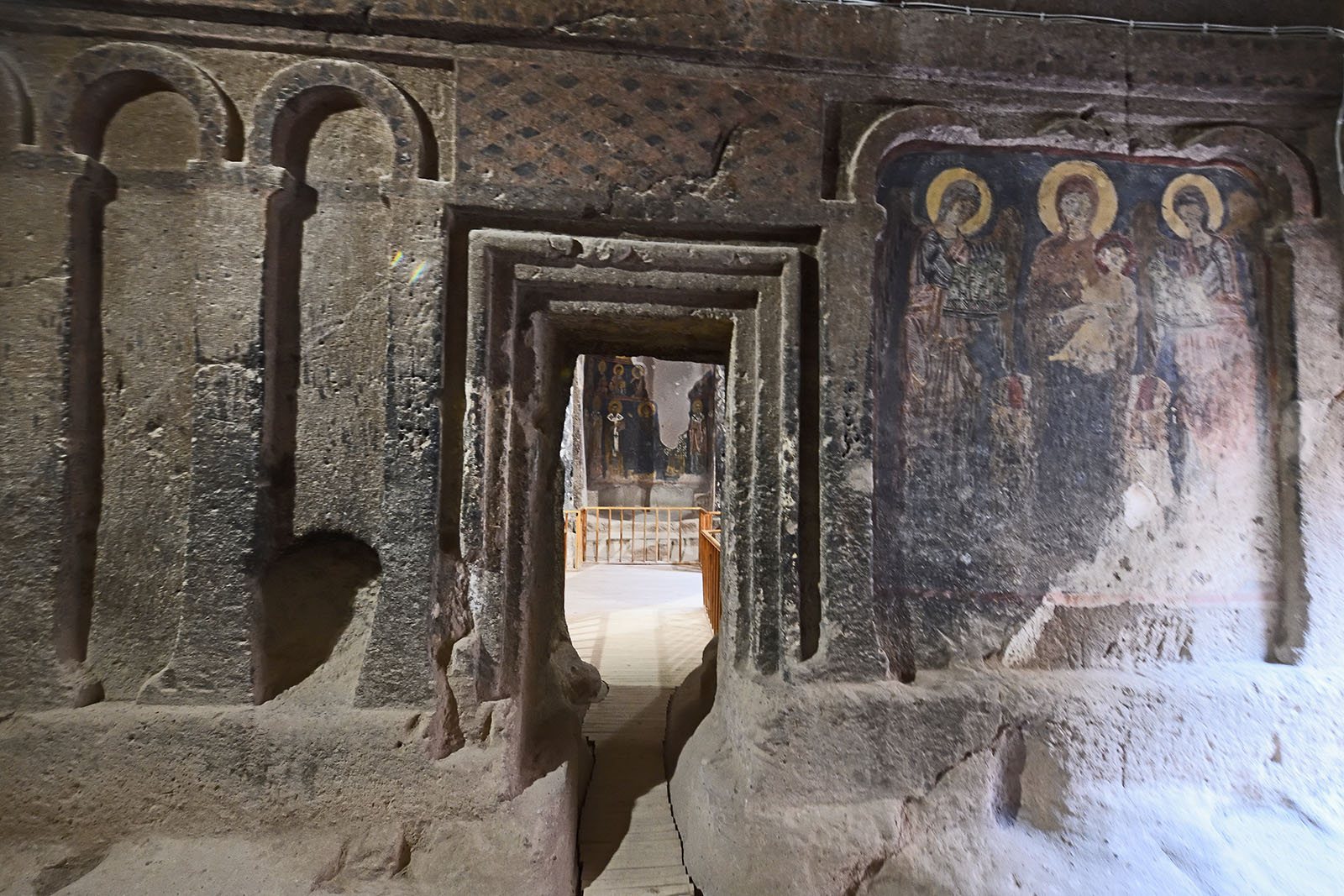
Paintings in the north arm show the Annunciation, the Nativity, and the Presentation in the Temple, along with John the Baptist and Saint Stephen. These works are tentatively attributed to a second artist. In the narthex, the church’s entrance area, paintings south of the doorway depict Mary with the infant Jesus and the archangels Gabriel and Michael. They are thought to be the work of a third artist. A fresco of Mary appears to show her smiling, but the expression almost certainly results from careless restoration. It is the only known example of a smiling Virgin Mary fresco in Anatolia.
Paintings in the upper chamber
The walls of the room above the narthex bear images that appear to represent Aesop’s Fables, the traditional collection of moral tales associated with Aesop. This subject is unique in Cappadocia.