Great Mosque, Budaun: A Thirteenth-Century Friday Mosque
Site at a Glance
- Rating
- 4.5
- Popularity
- Low
- Country
- India
- Primary era
- Medieval
- Eras represented
- Medieval
- Civilizations
- Delhi Sultanate
- Site type
- Religious
- Remains
- Mosque
On this page9 sections
History
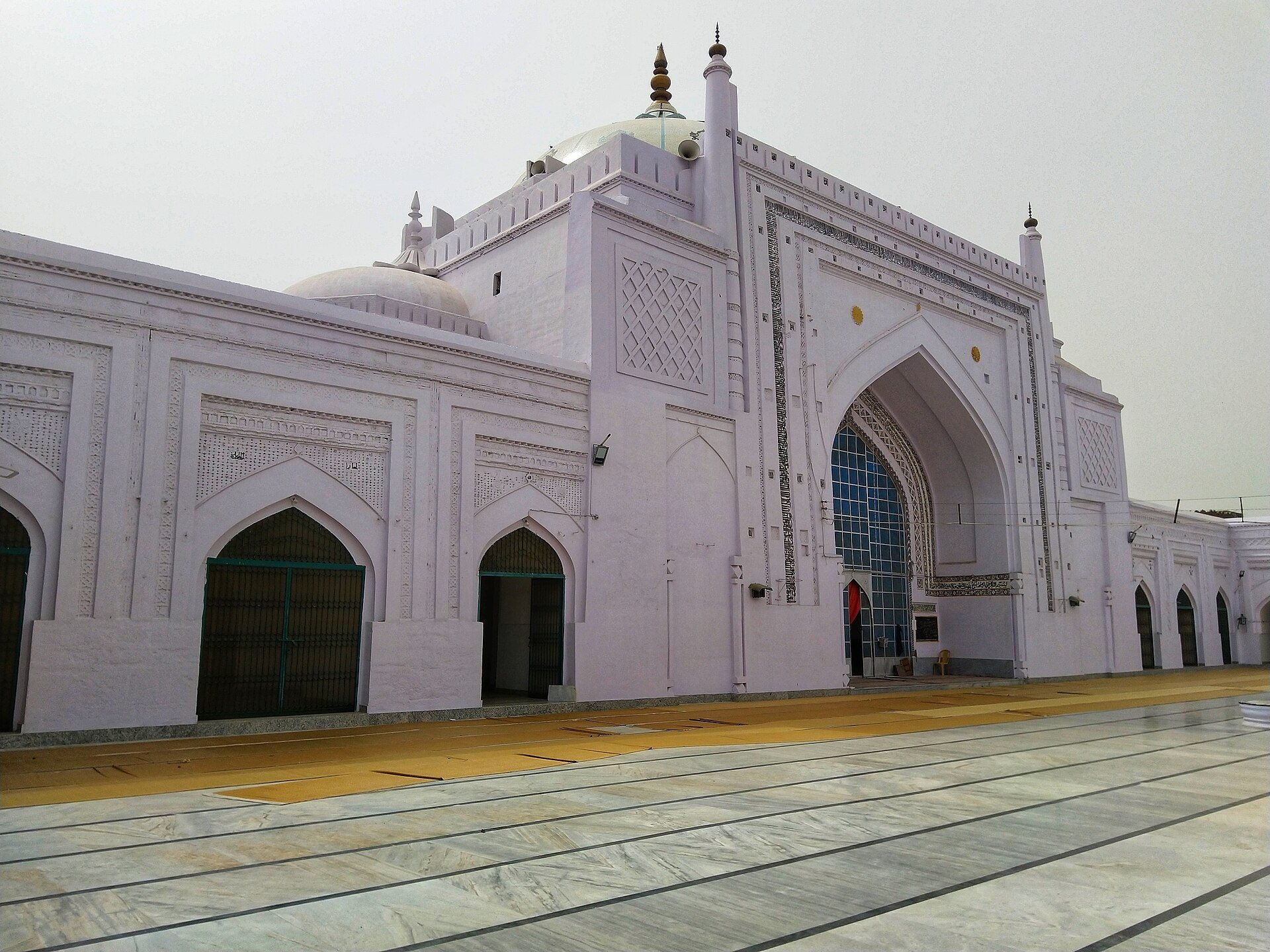
Great Mosque, Budaun is an Islamic Friday mosque in Budaun, Uttar Pradesh, India, founded under Shams al-Din Iltutmish during the early period of the Delhi Sultanate. Its foundation dates to 1223, while its construction belongs to the early thirteenth century and reflects Persian and Afghan architectural influences. A Friday mosque is a principal mosque intended for communal Friday prayer. The building remains an active place of Islamic worship.
Foundation under the Delhi Sultanate
Iltutmish, a sultan of the Delhi Sultanate and an important consolidator of its early rule, established the mosque during the sultanate’s expansion across northern India. The Delhi Sultanate was a medieval Islamic state centred on Delhi that ruled large parts of northern India from the thirteenth to the sixteenth century. The mosque is also known as Jama Masjid Shamsi and Jama Shamsi Shahi.
Historical status and present administration
The mosque is identified as the country’s third-oldest surviving mosque and seventh-largest mosque, with capacity for 23,500 worshippers. Before the expansion of Delhi’s Jama Masjid, the historic Mughal-era congregational mosque in Old Delhi, it was described as India’s largest and most famous mosque.
The Archaeological Survey of India, the government agency responsible for archaeological research and the protection of officially designated monuments, administers the building. It is designated a Monument of National Importance and a national heritage site. In October 2022, right-wing Hindu nationalist organisations asserted that the mosque had been built over the foundations of a Hindu temple and demanded its demolition to reclaim the site as a Hindu temple. These remain contemporary political assertions concerning the building.
Remains
Setting, materials, and layout
The mosque stands on the elevated area called Sotha Mohalla and is described as the highest structure in Budaun. Its built-up area is described as larger than that of any other mosque in the country. Red sandstone and white marble are among its principal materials, and the floor is made of white marble, also called sangemarmar. Residential blocks known as the Jama Masjid Quarters occupy two sides of the mosque.
Entrances and domes
Gates
Three gates provide access to the mosque complex. The main gate faces Shakeel Road, rises approximately 30 metres (100 feet), and is made of red sandstone. A second gate stands in Farshori Tola, while the third is located in Sotha.
Domes
The mosque has eight domes. A central dome is surrounded by two additional domes, with five others completing the group. The central dome has an external diameter of approximately 11 metres (36 feet) and an internal diameter of approximately 10 metres (34 feet). It is described as the largest mosque dome in the country. The mosque reaches a maximum height of approximately 47 metres (155 feet).
Water facilities
The premises contain a hauz, a mosque-associated water tank or pond, together with three wuzukhana, facilities used for ritual ablution before Islamic prayer.