Fort Wilkins Historic State Park: A Restored U.S. Army Outpost
Site at a Glance
- Country
- United States
- Primary era
- Modern
- Eras represented
- Modern
- Civilizations
- Unclassified
- Site type
- Military
- Remains
- Fort
On this page7 sections
History
Fort Wilkins Historic State Park preserves a U.S. Army outpost established in 1844 at Copper Harbor on the Keweenaw Peninsula in the United States. Copper discoveries in the region during the 1830s brought growing attention to the harbor, and the early-1840s copper rush raised federal concerns about disorder. Secretary of War William Wilkins, who led the War Department, directed the fort’s establishment. Lake-shipping interests also wanted a navigational aid to help supplies reach the region and copper leave it.
Founding amid the copper rush
The Army intended the post to support local law enforcement and preserve peace between miners and Ojibwa communities. The Ojibwa, also known as Chippewa, are an Indigenous people of the Great Lakes region. Some Chippewa opposed the Treaty of La Pointe, a U.S.–Ojibwa land agreement that ceded the area to the United States in 1842–1843. Most accepted the miners’ arrival, however, and the newcomers were generally law-abiding. The fort therefore proved unnecessary for the purpose for which it had been established.
In 1844, Companies A and B of the 5th Infantry formed the garrison. When the Mexican-American War, fought between the United States and Mexico from 1846 to 1848, began, both companies were sent to Texas and Company K took their place. Company K was also dispatched to the front in 1846, leaving Sergeant William Wright as the fort’s only caretaker.
Caretaking and final military service
After Wright died in 1855, the fort was leased to Dr. John S. Livermore, who hoped to establish a summer health resort. The project did not go ahead after Livermore died in 1861. A separate federal initiative in 1863 granted land to Michigan and Wisconsin for a military road between Fort Wilkins and Fort Howard, near Green Bay. The road was completed in 1872.
Following the Civil War of 1861–1865, the Army returned soldiers to the post so they could complete their enlistments. Company E of the 43rd Infantry served there from 1867 until May 1869, when Company K of the 1st Infantry replaced it. The Army abandoned Fort Wilkins permanently at the end of August 1870.
Preservation
The fort and adjacent lighthouse became a Michigan state park in 1923. The 987-acre park is operated by the Michigan Department of Natural Resources. Fort Wilkins is listed on the National Register of Historic Places, a federal register of historically recognized properties, and is a Michigan State Historic Site. It also cooperates with Keweenaw National Historical Park, which interprets the region’s copper-mining history. Archaeological excavations preceded the rebuilding of some fort structures.
Remains
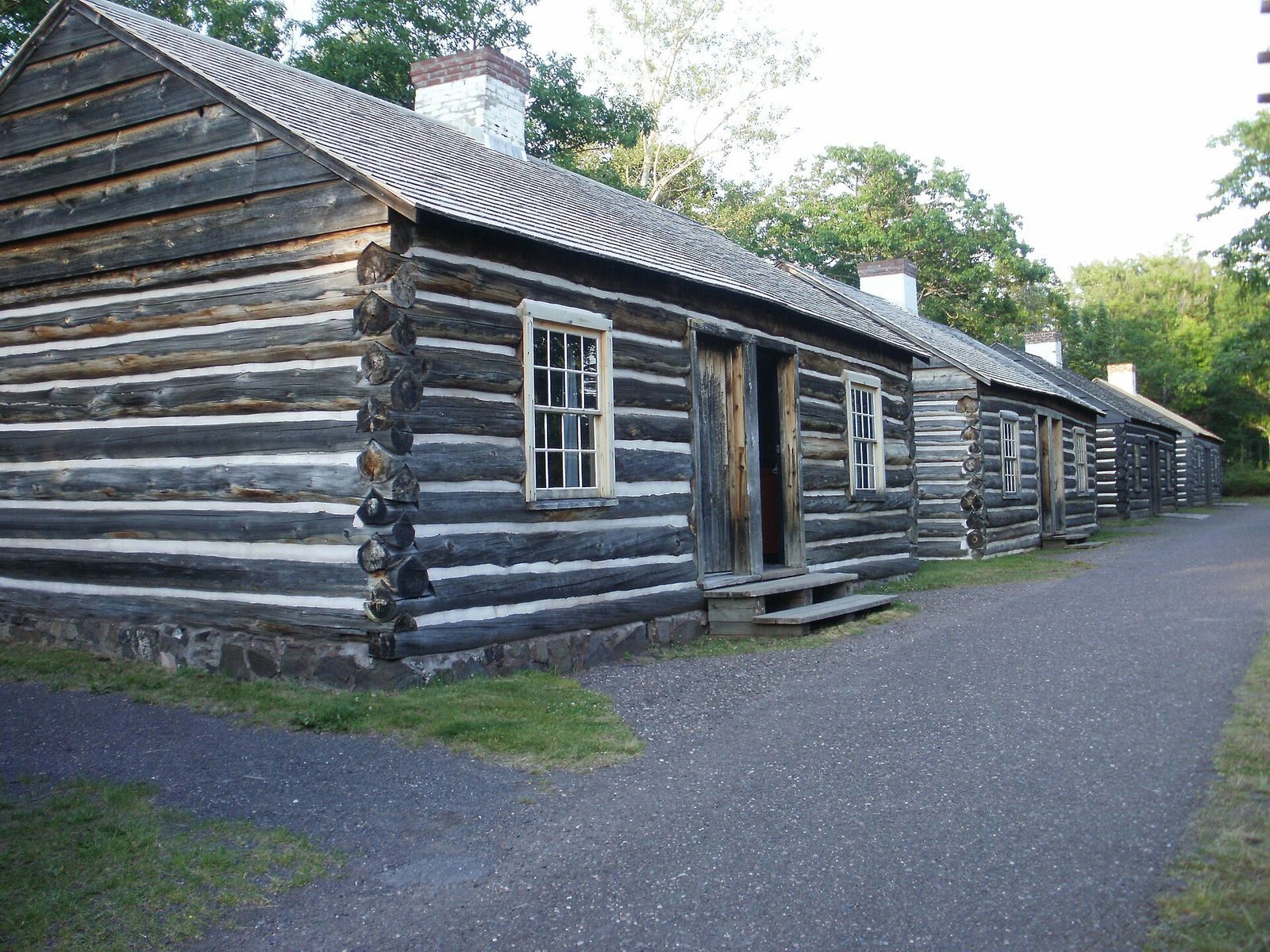
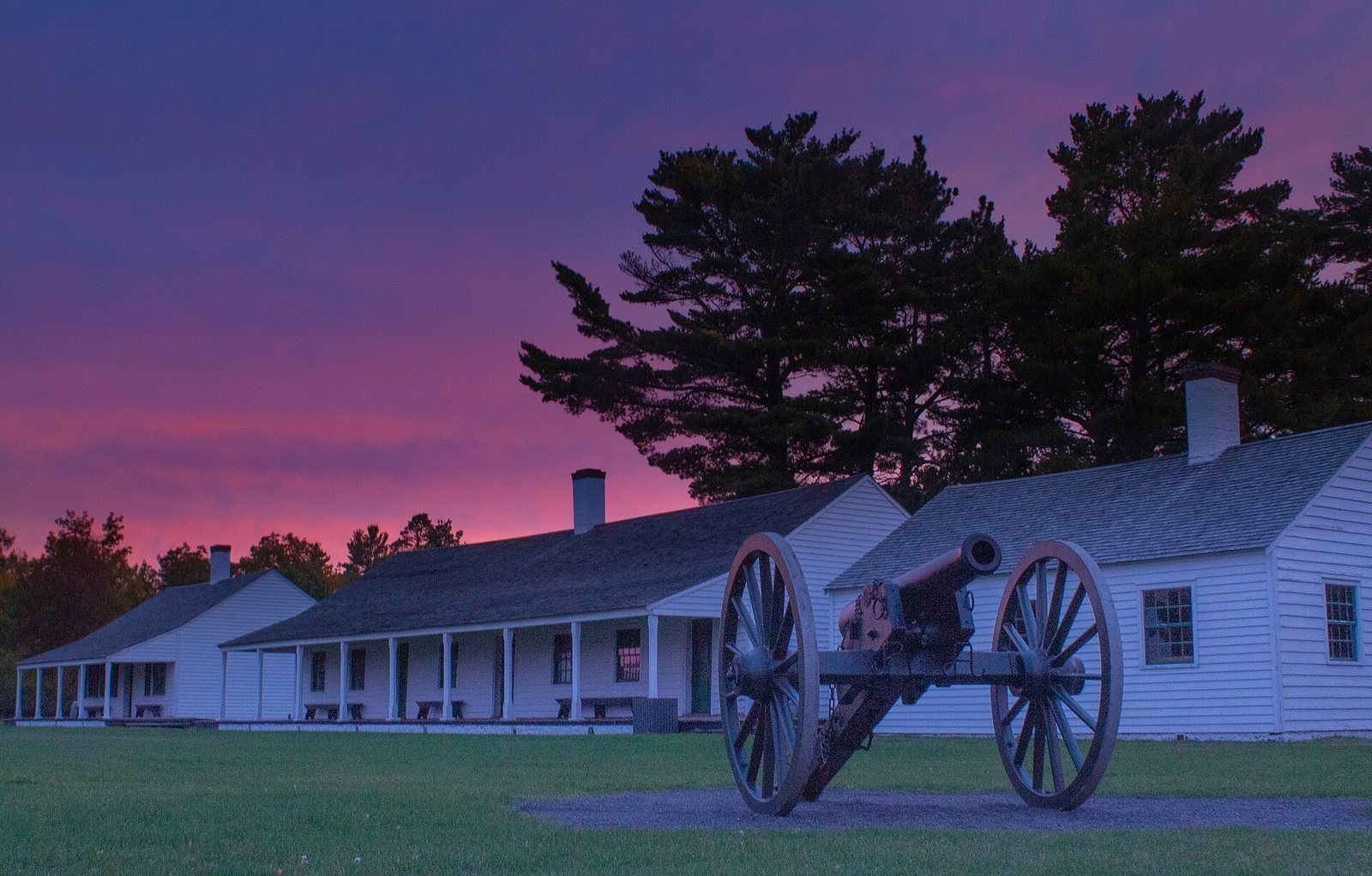
Fort Wilkins lies east of Copper Harbor on the strip of land between the harbor and the northern shore of Lake Fanny Hooe. The Army constructed 27 buildings to serve two full-strength infantry companies. Several original buildings survive, while others have been rebuilt after archaeological excavation.
Fort buildings
The post’s buildings supported military duties, accommodation, storage, and daily work. They included a guardhouse and a powder magazine, a secure building for gunpowder and ammunition; seven officers’ quarters, two barracks, and four homes for married enlisted men; and two mess halls, a hospital, and a storehouse. Other facilities included a sutler’s store, run by a civilian merchant who supplied the post, a quartermaster’s store for military supplies, a bakery, blacksmith’s and carpenter’s shops, an icehouse, stables, and a slaughterhouse.
Copper Harbor Lighthouse
The lighthouse complex occupies the end of the eastern point at the harbor entrance, a point sometimes called Hays Point. Work on the complex began in 1848, and the lighthouse itself was built in 1866.