Fort Margherita: A River Defence Fort in Kuching, Malaysia
Site at a Glance
- Rating
- 4.6
- Popularity
- Very Low
- Country
- Malaysia
- Primary era
- Modern
- External website
- Open
- Eras represented
- Modern
- Civilizations
- Unclassified
- Site type
- Military
- Remains
- Fort
On this page5 sections
History
Fort Margherita is a nineteenth-century fort in Kuching, Malaysia, built in 1879 in the style of an English castle by Charles Brooke, the second Rajah, or ruler, of Sarawak. Constructed at a cost of $8,100 in Sarawak dollars, it formed part of the Brooke dynasty’s rule and was intended to protect Kuching from pirate and other river-borne attacks.
Construction and Brooke rule
The fort occupies a hill on the north bank of the Sarawak River, opposite the expanding town centre. Its position allowed it to guard the river approach to Kuching. The fort was named after Charles Brooke’s wife, Margaret Alice Lili de Windt, whom he married at Highworth in Wiltshire on 28 October 1869. After their marriage, she received the title Ranee of Sarawak. A Ranee was the wife of the Rajah of Sarawak.
Fort Margherita was part of the historical legacy of the Brooke family, which governed Sarawak before it became a British Crown Colony. It also served as a place of execution. Prisoners were executed in the courtyard until the Japanese occupation during the Second World War.
Police museum and Brooke Gallery
From 1971, the fort served as a Police Museum. It was later transferred to the Government of Sarawak and now houses the Brooke Gallery, a museum exhibition devoted to Sarawak during the rule of the Brooke family. The fort stands across the Sarawak River from The Astana, the official residence of the Yang di-Pertua Negeri of Sarawak, who is the constitutional head of state, or governor, of Sarawak.
Remains
Fortifications and tower
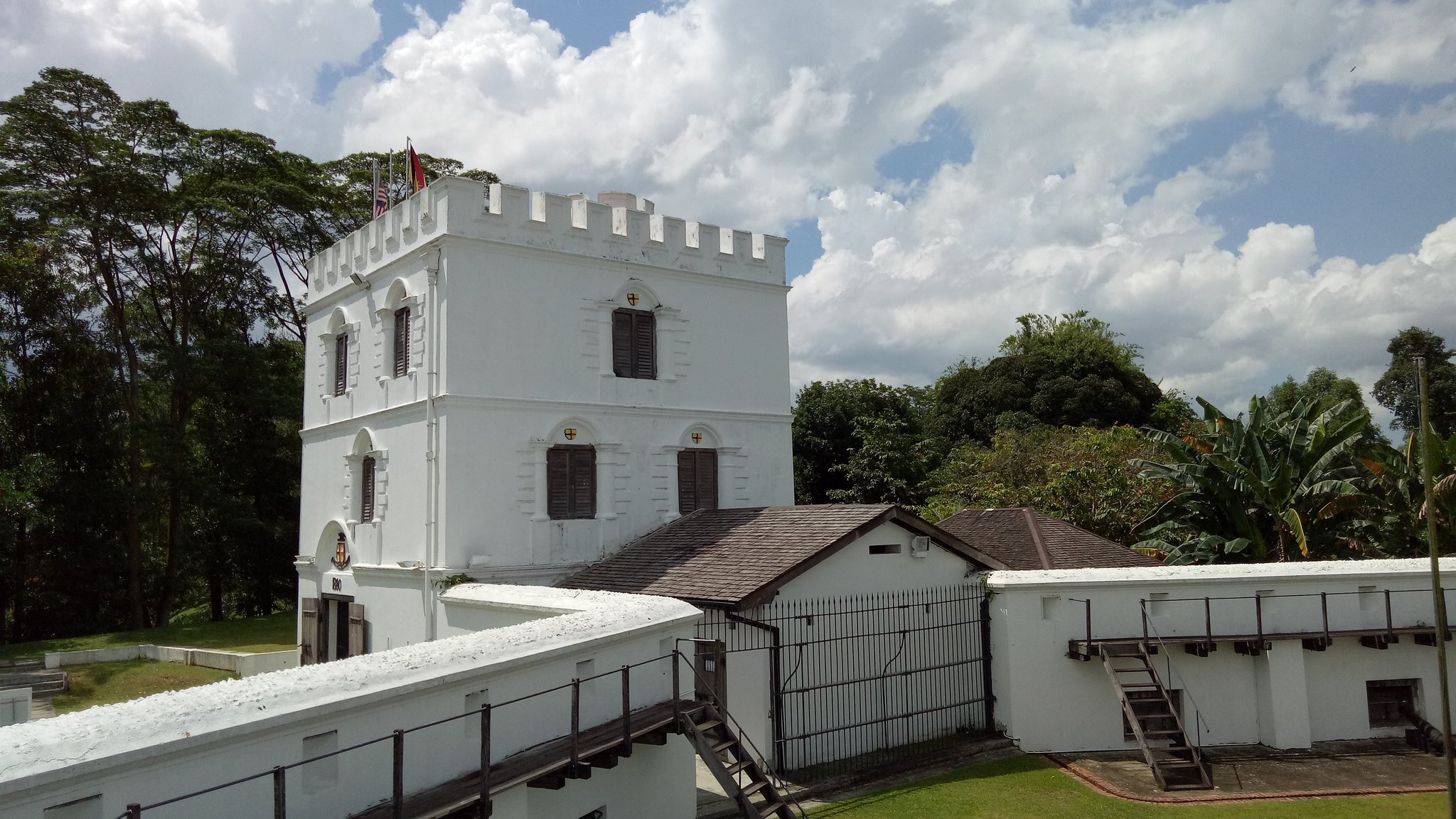
Fort Margherita is arranged around a courtyard enclosed by a high defensive wall. Its principal structure is a three-storey tower block with battlements and a watchpoint at the top. The tower and enclosing works combine the appearance of an English castle with the practical demands of river defence.
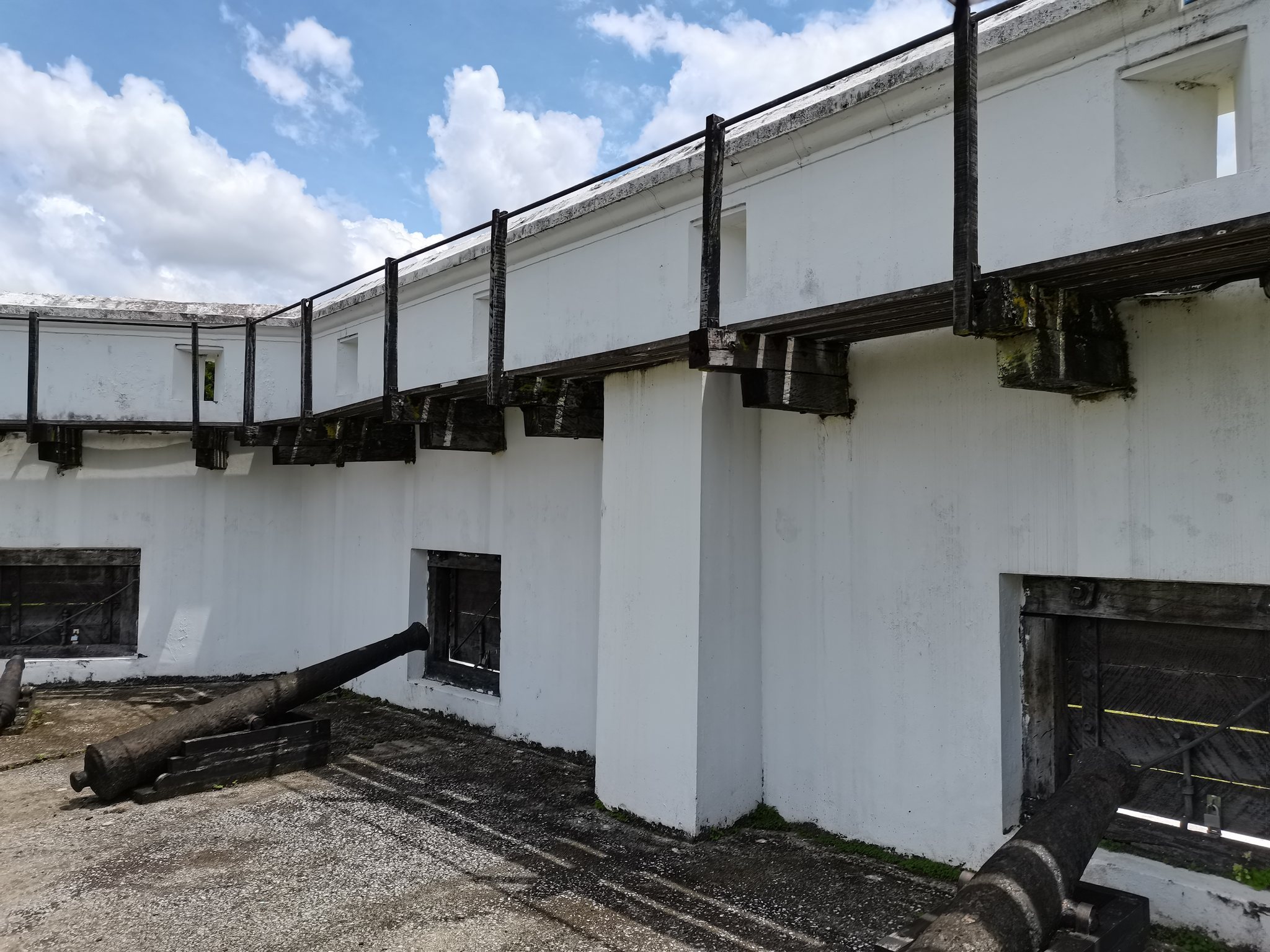
Sharp glass shards were set into the defensive wall as a protective measure. Wooden windows built into the wall served as openings for firing cannons. Together with the fort’s elevated position overlooking the Sarawak River, these features formed its defensive arrangement.