Fort Frederick: A British Fort Built to Guard Against a French Landing
Site at a Glance
- Popularity
- Medium
- Country
- South Africa
- Primary era
- Early Modern
- Eras represented
- Early Modern
- Civilizations
- British
- Site type
- Military
- Remains
- Fort
On this page6 sections
History
Construction and British control
Fort Frederick is a British fort built in 1799 overlooking Algoa Bay in South Africa. British troops constructed it to deter a possible French landing. A French force under Napoleon Bonaparte, then ruler of France, was expected to support rebels at Graaff-Reinet.
The fort was named for Frederick, Duke of York and Albany, a British royal prince and senior military figure who was then commander-in-chief of the British Army. British forces garrisoned it, but its guns never fired. The episode is often regarded as marking the beginning of British rule in the Cape Colony. Alongside the Battle of Blaauwberg, a British victory in the Cape Colony, the fort contributed to the establishment of British rule in South Africa.
The 1820 Settlers and Port Elizabeth
Fort Frederick was already established when the 1820 Settlers, British emigrants, arrived in Port Elizabeth. Captain Francis Evatt, the fort’s commandant from 1817 to 1847, helped oversee their arrival and was later buried beside the fort. Port Elizabeth developed around it.
Remains
Fort layout and construction
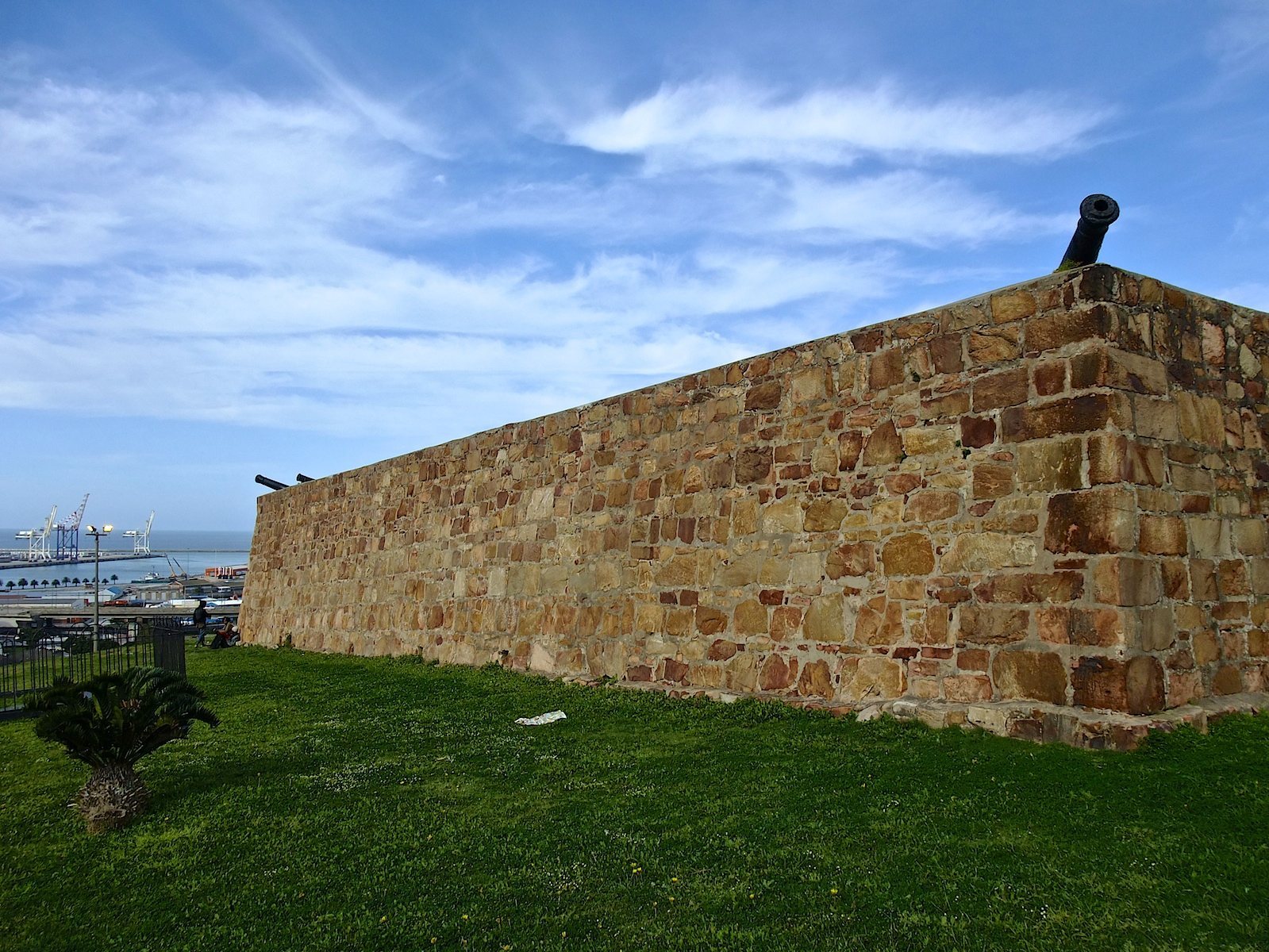
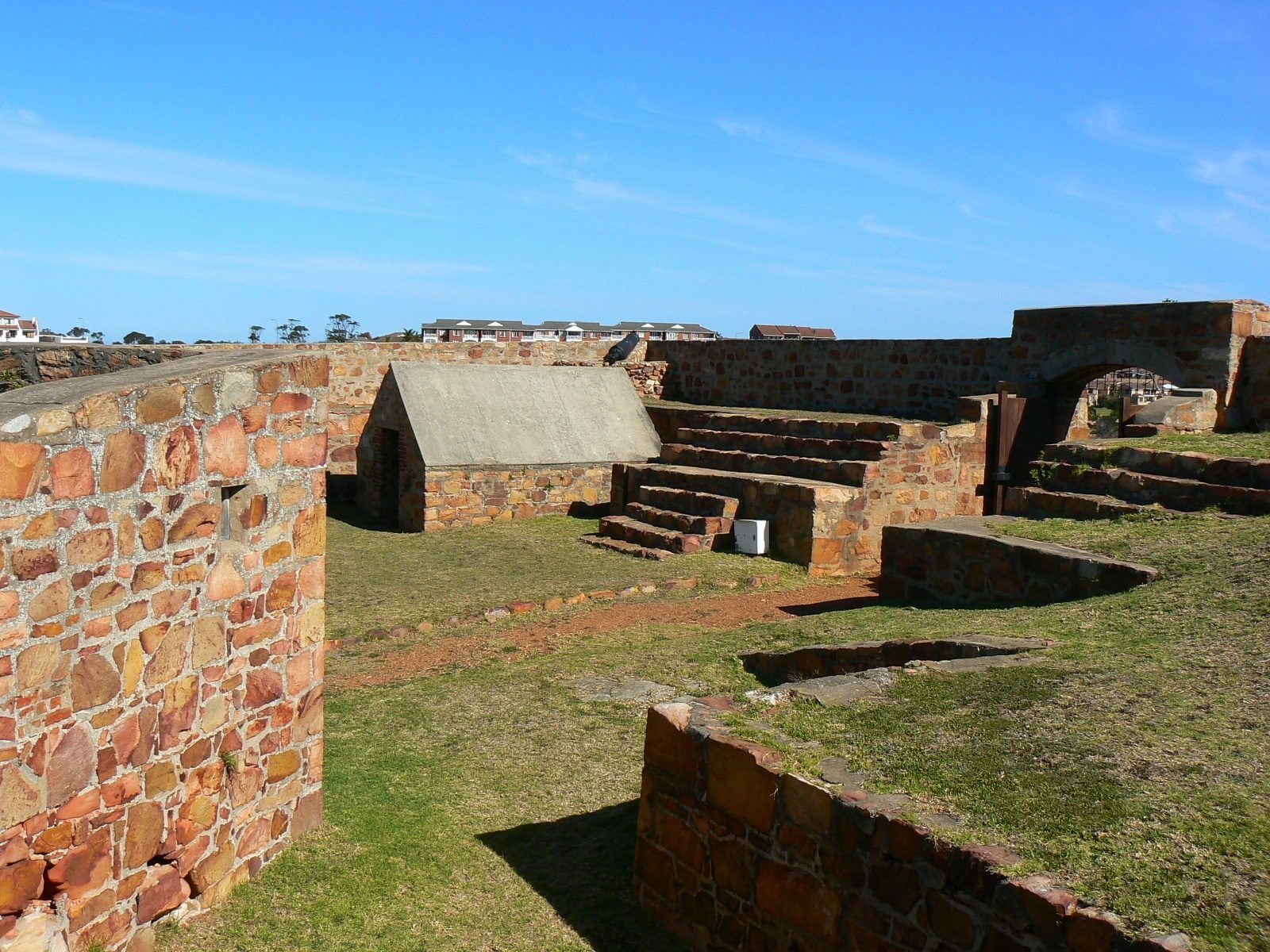
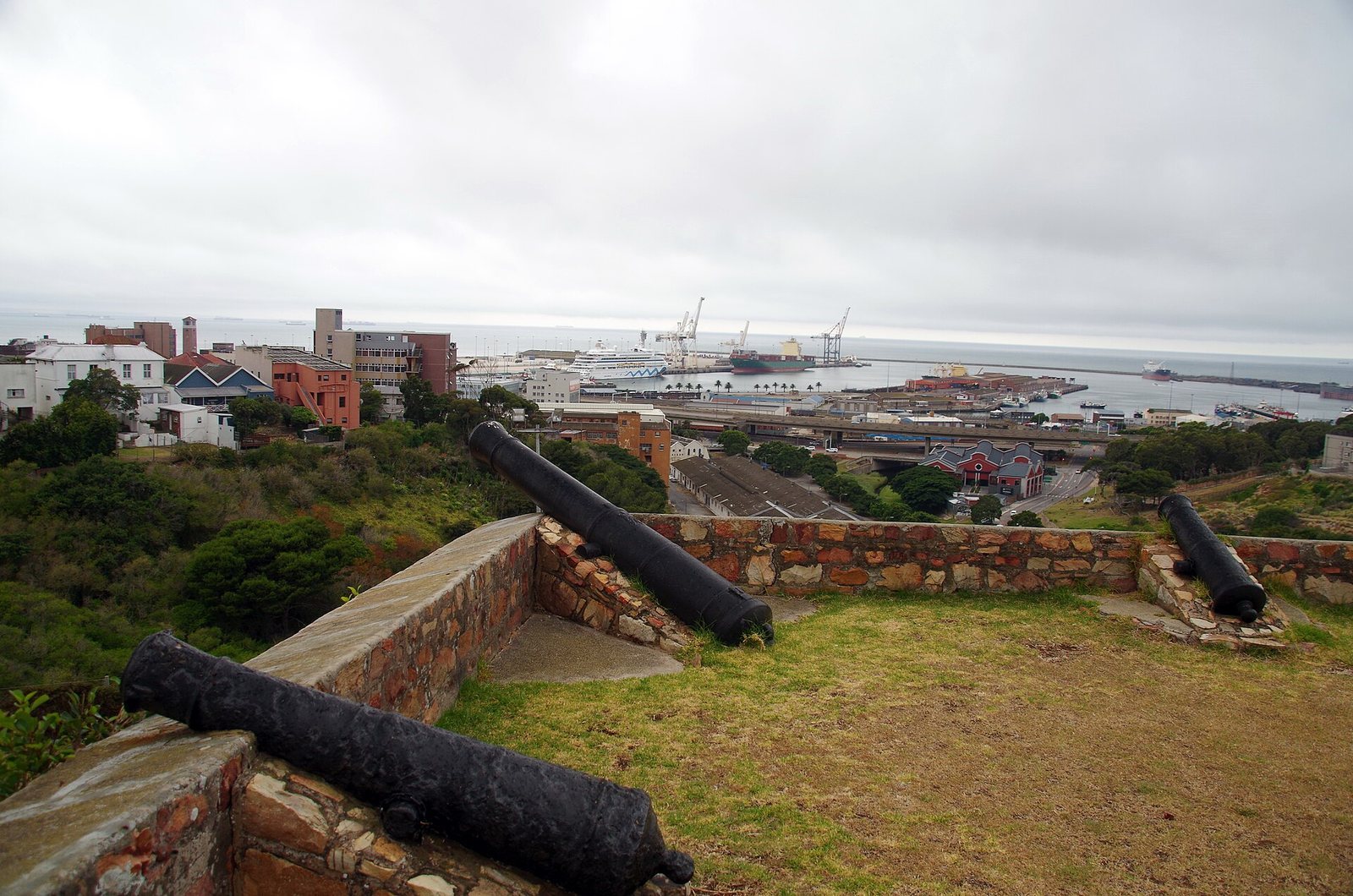
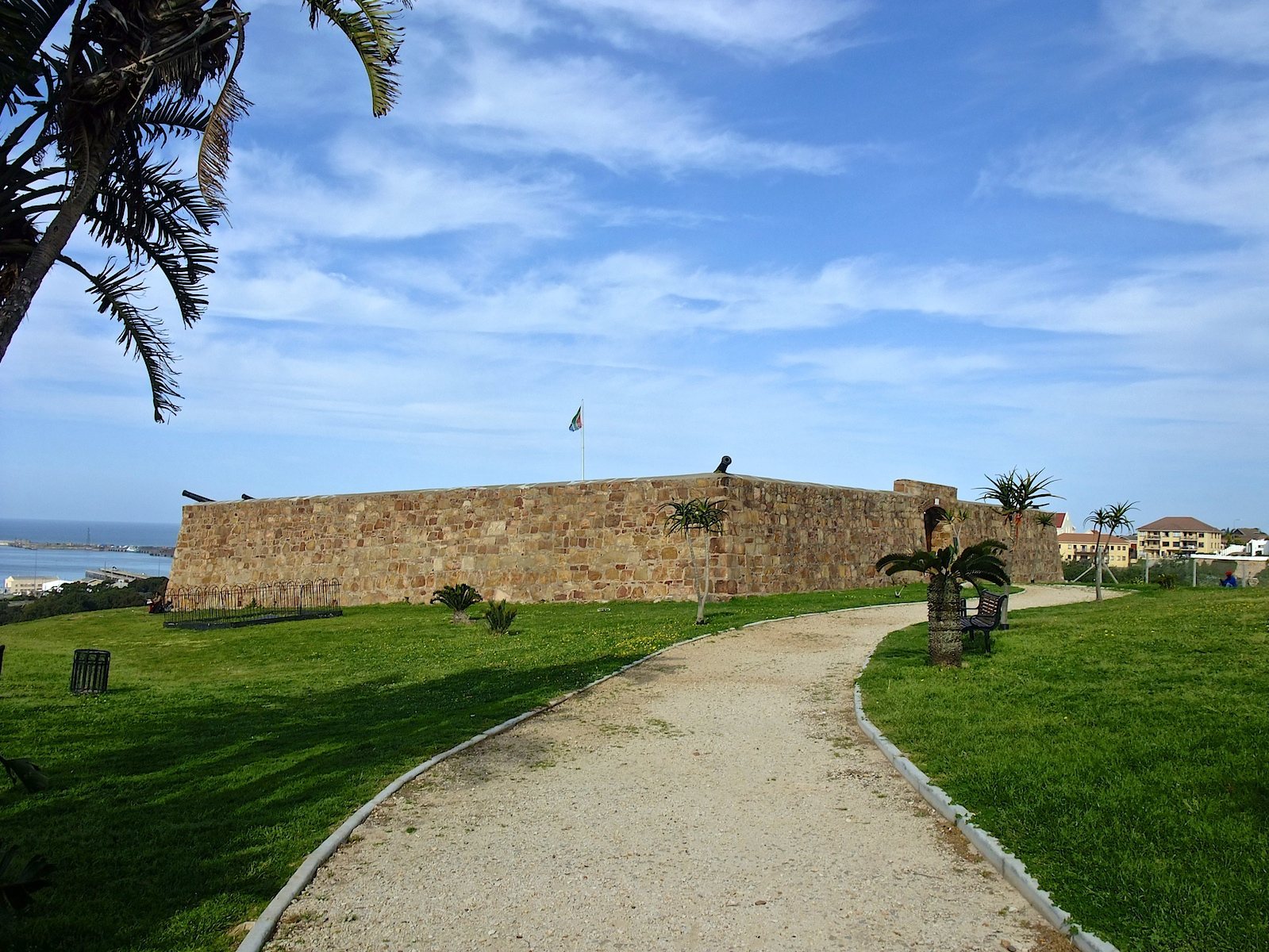
The fort occupies a natural vantage point overlooking Algoa Bay, near the mouth of the Baakens River. The bay extends from the river toward the outskirts of present-day Gqeberha. Built using local stone and wood with mortar, the fort is described as intact. Its features include a powder magazine, a store for gunpowder, and a blockhouse, a fortified building. The blockhouse’s timber upper storey burned down.
Armament and firearms
The fort’s original armament comprised two 8-pounder guns, classified by the weight of their shot, and a 5.5-inch howitzer, a gun designed to fire at relatively high angles. The museum collection includes a varied selection of muzzle-loading firearms, loaded through the open end of the barrel, dating from the later eighteenth century.