Fort Donelson National Battlefield: A Civil War Battlefield Park in Tennessee and Kentucky
Site at a Glance
- Rating
- 4.8
- Popularity
- Medium
- Country
- United States
- Primary era
- Modern
- External website
- Open
- Eras represented
- Modern
- Civilizations
- Unclassified
- Site type
- Military
- Remains
- Fort
On this page8 sections
History
Fort Donelson National Battlefield is a Civil War battlefield park in Dover, Tennessee, United States. It preserves Fort Donelson and nearby Fort Heiman, two sites associated with the Forts Henry and Donelson Campaign in the Western Theater, the principal Civil War military region west of the Appalachian Mountains. The campaign took place in 1862, after Confederate forces began constructing defenses along the Tennessee and Cumberland rivers in 1861.
Planning and construction
On May 10, 1861, Confederate engineers Adna Anderson and William F. Foster began surveying locations near the Kentucky border. Their purpose was to defend the Tennessee and Cumberland rivers, which formed important military corridors through Tennessee and Kentucky. In mid-May, Anderson laid out Fort Donelson’s water battery, a fortified artillery position beside a river, on the Cumberland’s west bank near Dover and about 12 miles from the Kentucky line.
Confederate General Daniel S. Donelson and Colonel Bushrod Johnson of the Corps of Engineers approved the site. Construction then began with a large labor force brought from the nearby Cumberland Iron Works. The position was placed among high ridges and deep hollows overlooking the river.
The Forts Henry and Donelson Campaign
In February 1862, Union Army Brigadier General Ulysses S. Grant and Union Navy Flag Officer Andrew Hull Foote captured three Confederate forts during the campaign. Grant later became commanding general of the United States Army and president, while Foote commanded Union river operations. Their victories were the Union’s first major successes of the Civil War and brought both men national recognition.
The capture of Fort Donelson and its Confederate garrison led to the capture of Nashville, Tennessee’s capital and industrial center. Nashville remained under Union control from February 25, 1862, until the end of the war. The result gave the Union effective control over much of Tennessee and delivered an early major blow against the Confederacy.
Preservation and administration
Fort Donelson National Military Park was established on March 26, 1928. The military park and national cemetery passed from the War Department to the National Park Service, the federal agency responsible for administering national parks and related protected sites, on August 10, 1933. The park entered the National Register of Historic Places on October 15, 1966, and became a national battlefield on August 16, 1985.
Public Law 108-367, enacted on October 25, 2004, increased the authorized boundary from 551.69 to 2,000 acres. Calloway County transferred Fort Heiman to the National Park Service on October 30, 2006. The site had been acquired through the Kentucky Heritage Land Conservation Fund and had entered the National Register on December 12, 1976. The park now preserves approximately 1,319 acres in Stewart County, Tennessee, and Calloway County, Kentucky.
Remains
Fort Donelson battlefield
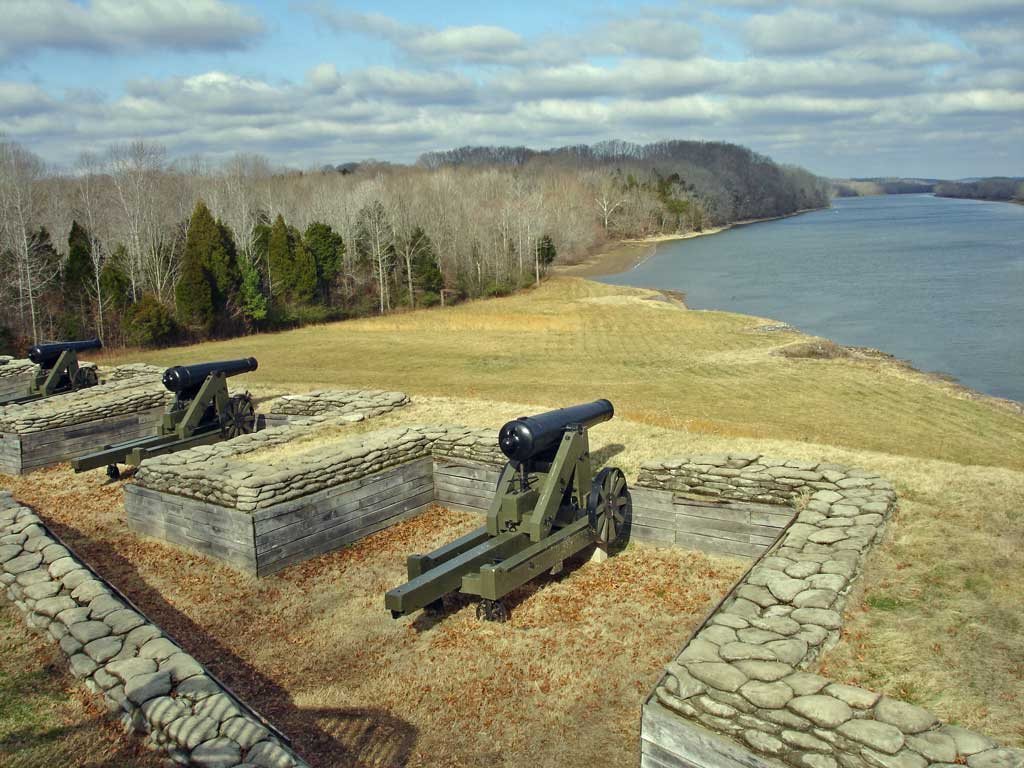
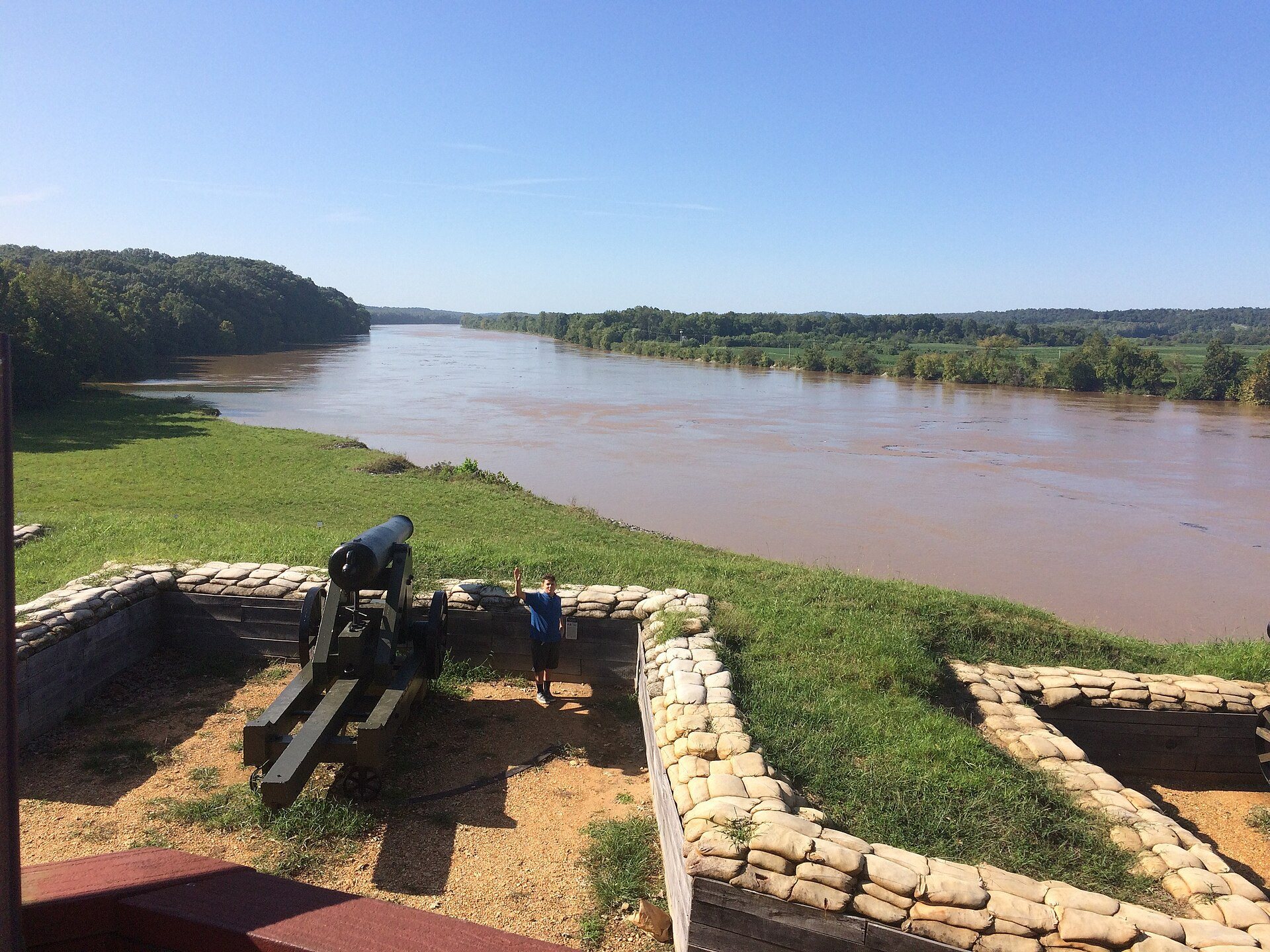
The principal portion of the battlefield lies at Dover, where the surviving landscape includes high ridges, deep hollows, river batteries, and eroded remains of Fort Donelson. The water battery occupies the west bank of the Cumberland River, reflecting the fort’s purpose of controlling and defending the river corridor. Much of the original battlefield remains in the preserved area, while later changes to the river landscape followed the construction of a dam during the 1960s. The resulting Lake Barkley occupies an area roughly similar to the river when it stood at flood stage during the battle.
Preservation has expanded through land acquisition as well as federal administration. The Civil War Trust, a division of the American Battlefield Trust, and its partners acquired 368 acres of battlefield land. Most of that acreage was conveyed to the National Park Service and incorporated into the battlefield park.
Fort Heiman
Fort Heiman lies in nearby Calloway County, Kentucky. It was a Confederate artillery battery during the Battle of Fort Henry and forms part of the wider collection of sites preserved within the national battlefield. Its transfer to the National Park Service in 2006 brought the Kentucky site into the federally administered battlefield landscape.
Fort Donelson National Cemetery
Fort Donelson National Cemetery occupies 15.34 acres in Stewart County. It contains 670 Union dead who were reinterred there in 1867, together with numerous veterans of later wars. The cemetery forms a separate commemorative landscape within the preserved area.