El Chanal: A Mesoamerican Archaeological Settlement in Mexico
Site at a Glance
- Rating
- 4.3
- Popularity
- Low
- Country
- Mexico
- Primary era
- Medieval
- Eras represented
- Medieval
- Civilizations
- Unclassified
- Site type
- Settlement
- Remains
- City
On this page13 sections
History
El Chanal is an archaeological settlement in the present-day town of El Chanal, Mexico, about 4 km north of Colima City. It flourished chiefly from about 1100 to 1400 CE, during the Mesoamerican Postclassic, an archaeological period encompassing the centuries when the settlement prospered. It was a major regional center and probably the largest settlement in the state of Colima.
Occupation and cultural connections
People may have inhabited the surrounding area as early as about 1300 BC, but El Chanal’s main period of occupation began around 1100 CE. The settlement was abandoned around 1400. Its inhabitants’ ethnic identity remains unknown, and the ceramics found there do not readily fit the Colima ceramic tradition.
Material remains, including depictions of Tláloc, a deity associated with rain, and Ehécatl, associated with wind, point to a Nahuatl cultural connection. Nahua peoples are associated with Nahuatl-speaking cultures, but these links do not establish the inhabitants’ identity. Metal associated with plumbate pottery, which has a lustrous, lead-like surface, obsidian, a volcanic glass used to make tools and other objects, and clay figures called Xantiles have been interpreted as evidence of some relationship with Tula, a major ancient city in central Mexico. Images of Xipe-Tótec, a deity associated with renewal, also form part of this evidence. Artisans with knowledge of metalworking may have been present.
Ceremonial life and traditions
The settlement’s ceremonial spaces and ballcourt were connected with beliefs about a recurring struggle between deities that governed day and night. Xólotl, linked with the evening star and the sun’s passage through the underworld, was identified as the ballgame’s patron. He accompanied the sun through the underworld and announced its victory over darkness through Venus, the morning star. Human sacrifice may have been understood as a way to aid the triumph of light over darkness.
Temples were regarded as earthly homes for deities, while plazas served as places where worshippers gathered. Some temples had broad public entrances; access to others was restricted to religious and civil authorities. The name El Chanal has been linked to folkloric beings called chanos, said to inhabit streams, and possibly to myths associated with Tláloc. One proposed interpretation gives the name the meaning place where the water guardians live.
In 1945, archaeologist Vladimiro Rosado Ojeda explored El Chanal and discovered a pyramid.
Remains
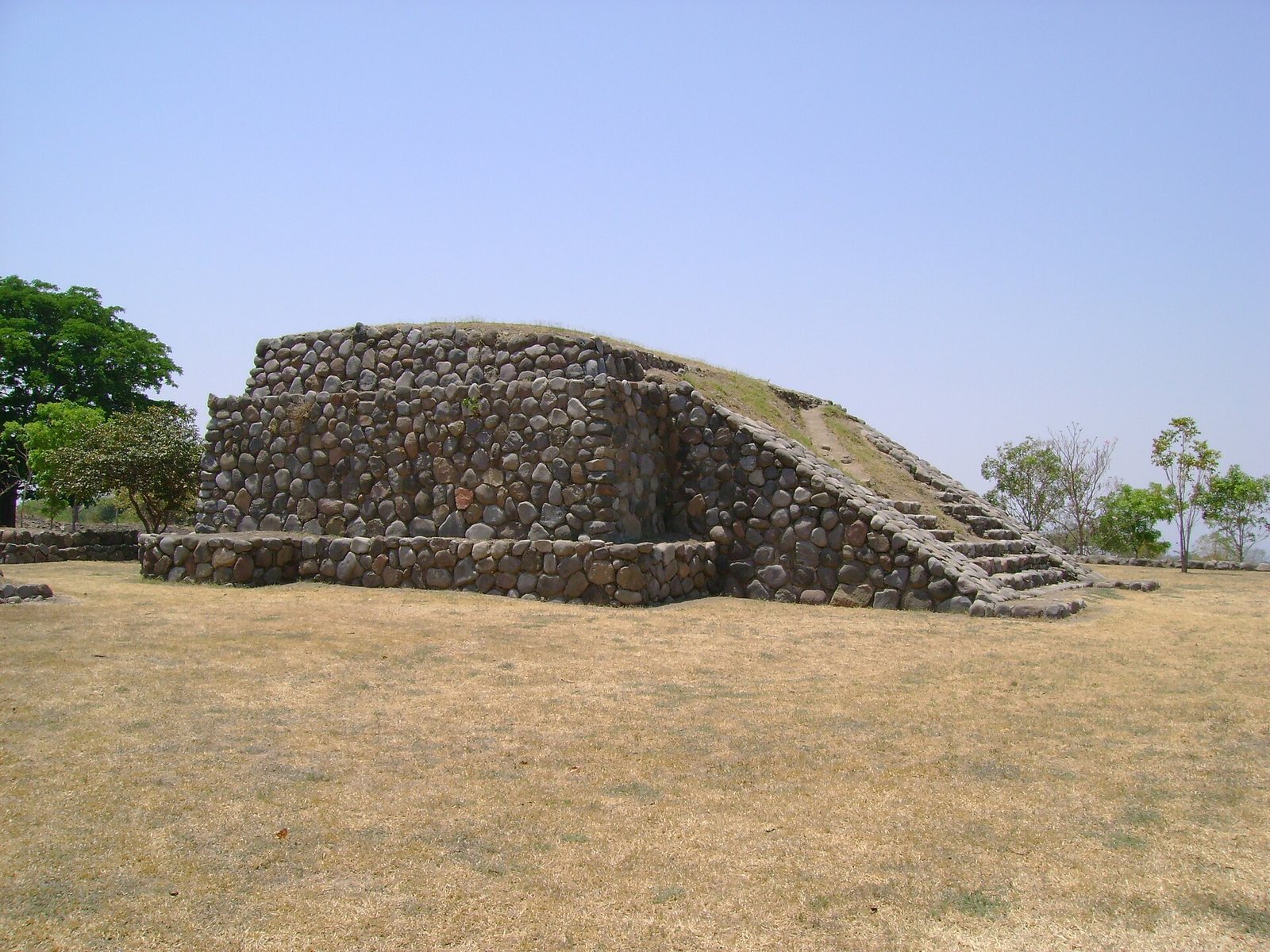
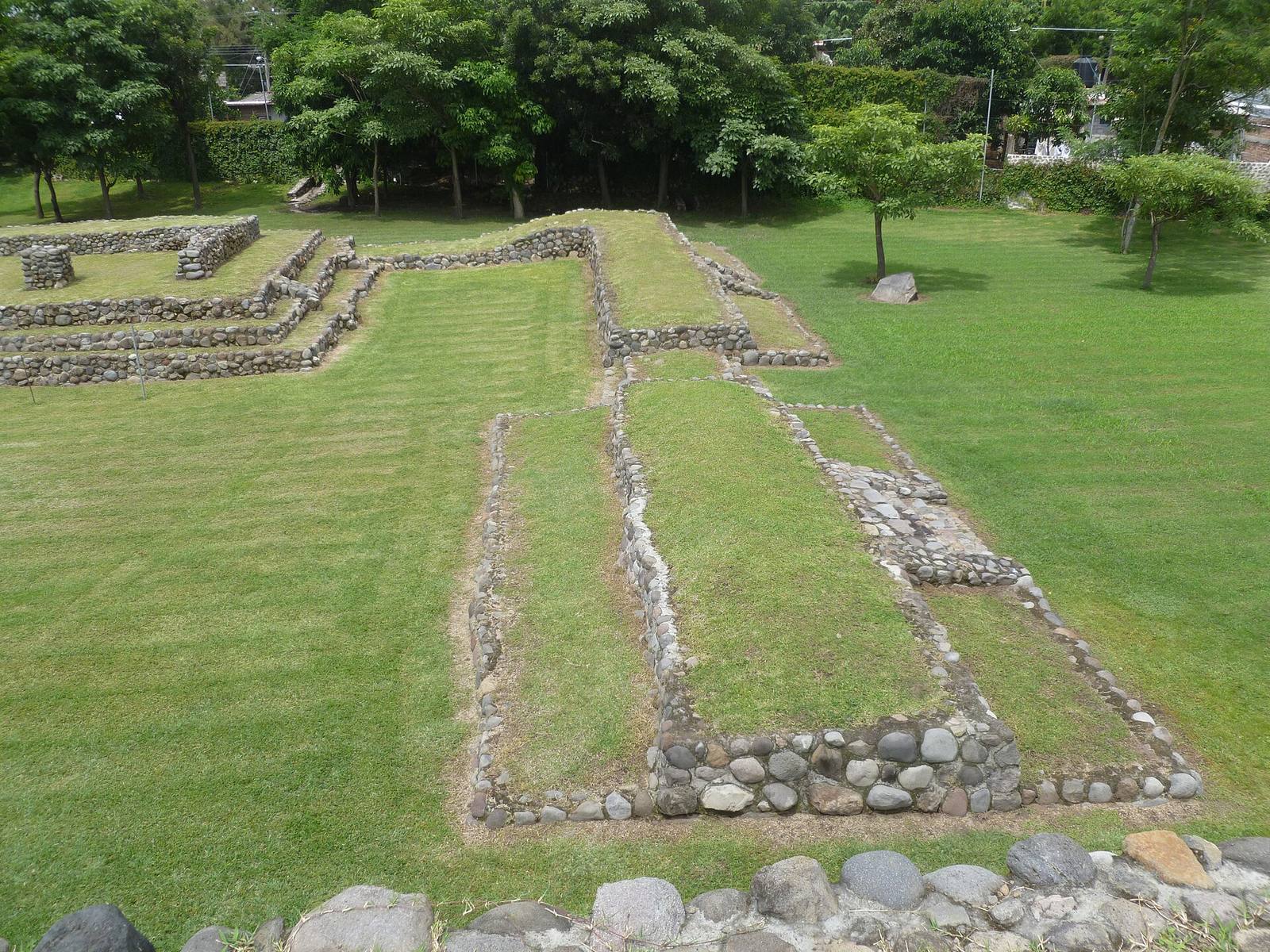
The settlement extends across both banks of the Verde River, also called the Colima River, following the valley’s natural slope from north to south. Its built features include ceremonial spaces, plazas, central altars, a ballcourt, palaces with porticoes, and a paired-temple arrangement. Six major plazas or ceremonial centers are identified. The principal structures are the Ossuary, the Pyramid, and the Great Platform.
Pyramids and carved stone
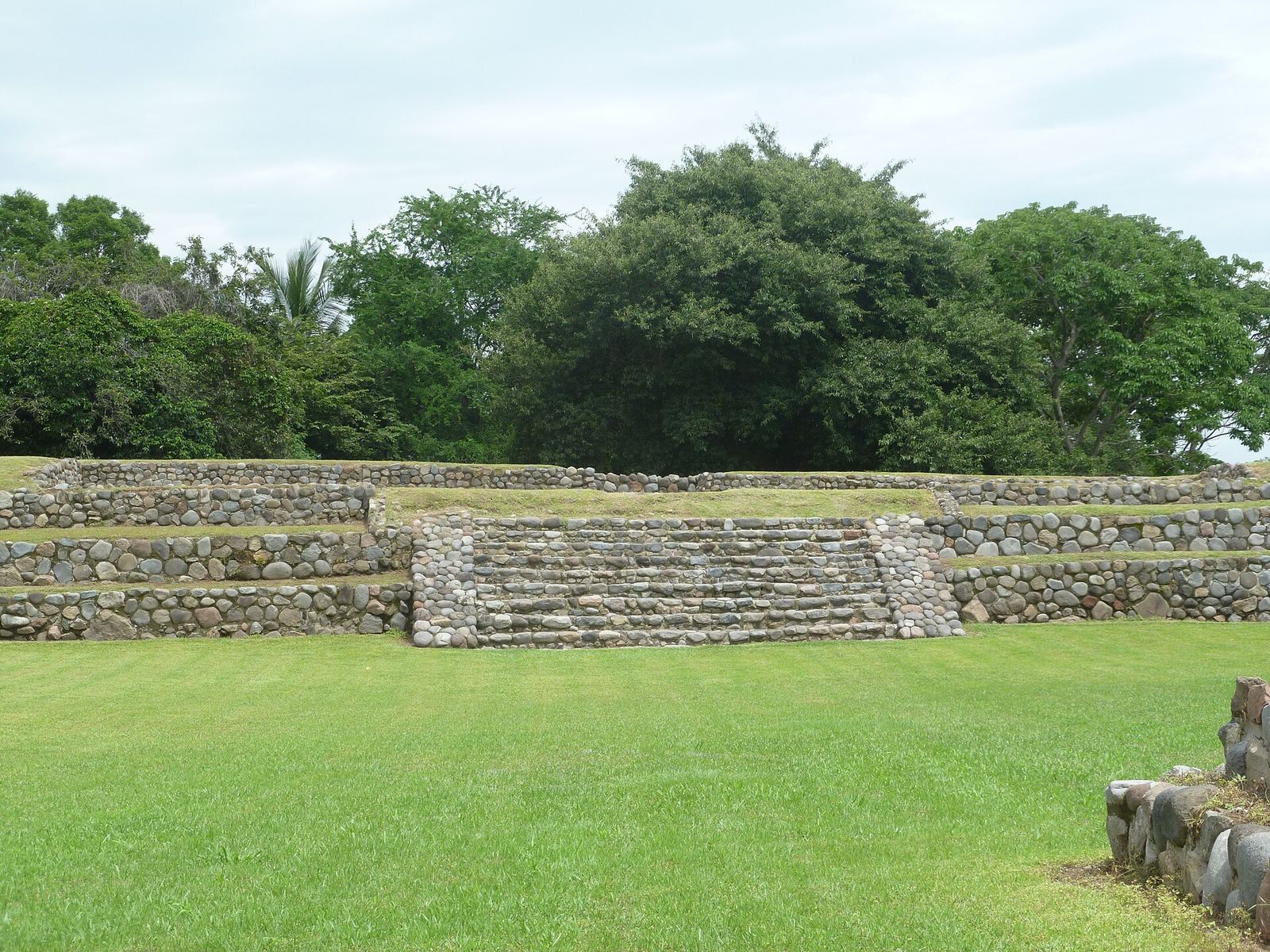
Thirteen small pyramids and relief-decorated walls form part of the site. Pyramid construction used rounded stones gathered from nearby riverbeds; some stones carry carved figures of plants, animals, and possible deities. One pyramid retains part of its stairway, including steps carved in shallow relief. Thirty-six slabs, nine on each step, depict deities including Tláloc and Ehécatl. Stone reliefs and images painted in multiple colors also show divine attributes.
Ceremonial spaces and buildings
Plaza of the Altars
This plaza contains a rectangular altar, now badly deteriorated, and a circular altar where several burials were found.
Ballcourt
The ballcourt measures 38 by 13.5 m and lies south of the Plaza of Time, with a passageway between them. It forms part of the settlement’s ceremonial area. The Mesoamerican ballgame was a ritual and athletic practice played on purpose-built courts, with meanings and rules that varied across cultures.
Plaza of Day and Night
This open space measures 60 by 80 m. A retaining wall bounds it on the south, with Structure 2 to the west and Structure 1 to the east. A broad platform held two wooden rooms with roofs made from perishable materials. Ceramics from ceremonial areas include braziers and incense burners. Handled incense burners and small censers are associated with the platform, where copal may have been burned for individual offerings.
Plaza of Time
The plaza contains some of El Chanal’s most imposing buildings. Its rectangular structure measures 24.70 by 13 m, with two sections on the west side and three on the east. An upper horseshoe-shaped room has an open portico at the front, formed by four columns. Each column measures 90 by 90 cm; the gaps between them are 2.70 m, except for the central gap, which is 3.60 m.
Near the center of the structure, facing the stairway, is a paved area measuring 1.40 by 1.40 m and made of rounded stones. North of it are the remains of a horseshoe-shaped oven measuring 1.80 by 1.50 m. Its stone, earth, and large pottery-shard side walls retain traces of a fired-clay coating.
Plaza of Water
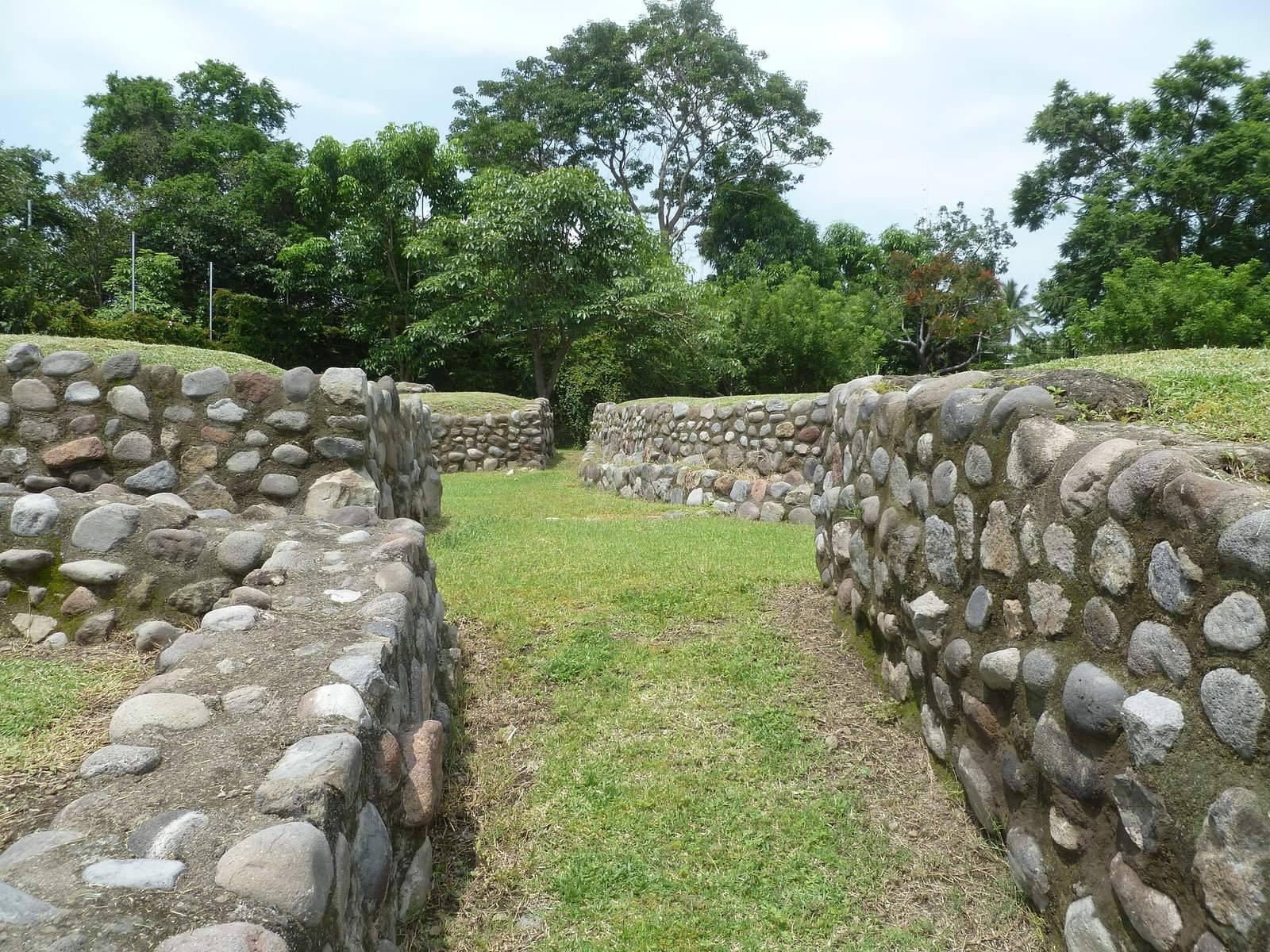
This area consists of low platforms, interior courtyards, passageways, and open plazas.
High Patio
The High Patio is the settlement’s residential area.
Plaza of the Altar
This circular construction visually dominates the Plazas of the Altars and of Time.