Duwisib Castle: A Farm Residence in Namibia
Site at a Glance
- Rating
- 3.9
- Popularity
- Medium
- Country
- Namibia
- Primary era
- Modern
- External website
- Open
- Eras represented
- Modern
- Civilizations
- German
- Site type
- Domestic
- Remains
- Castle
On this page8 sections
History
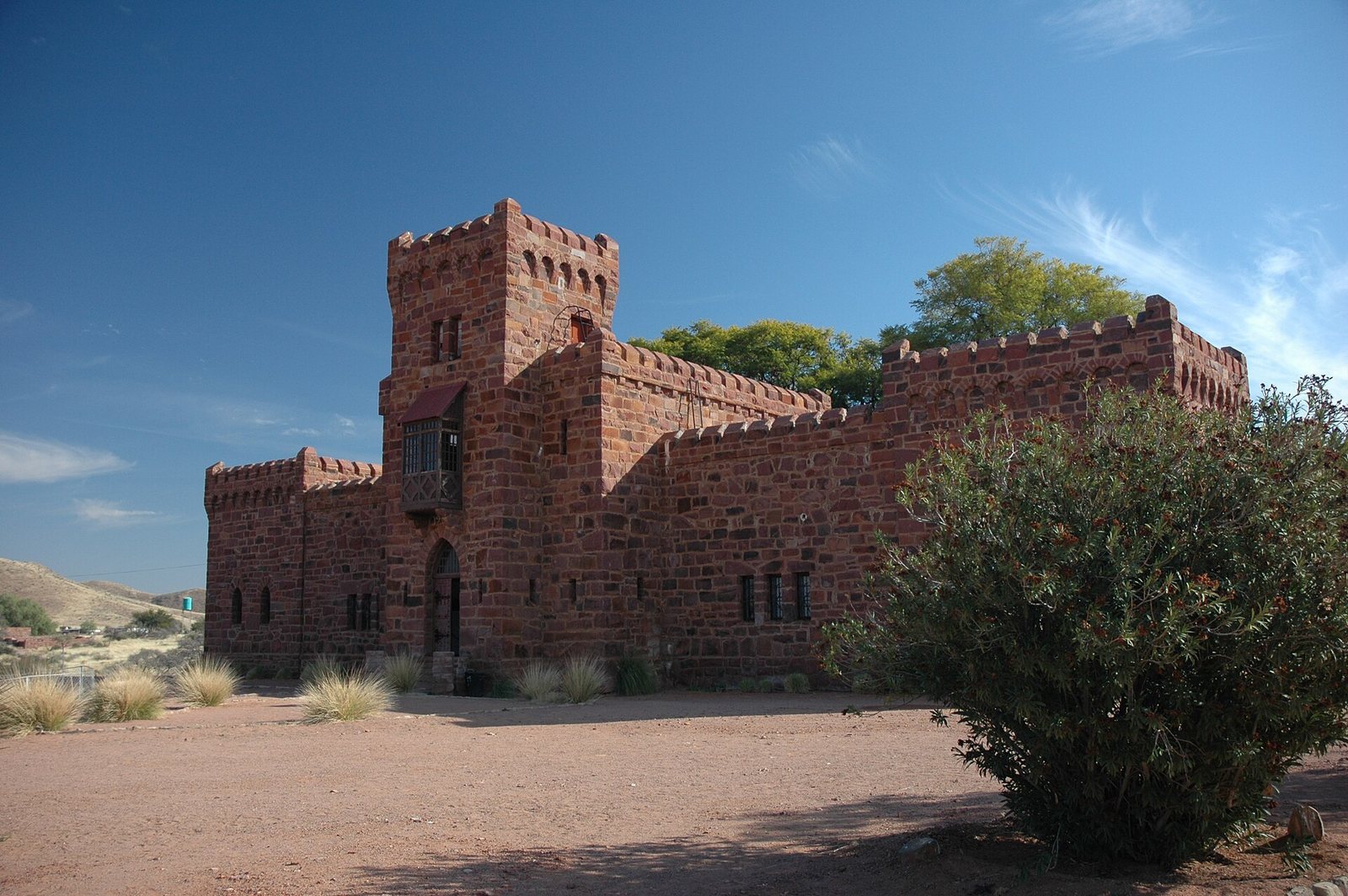
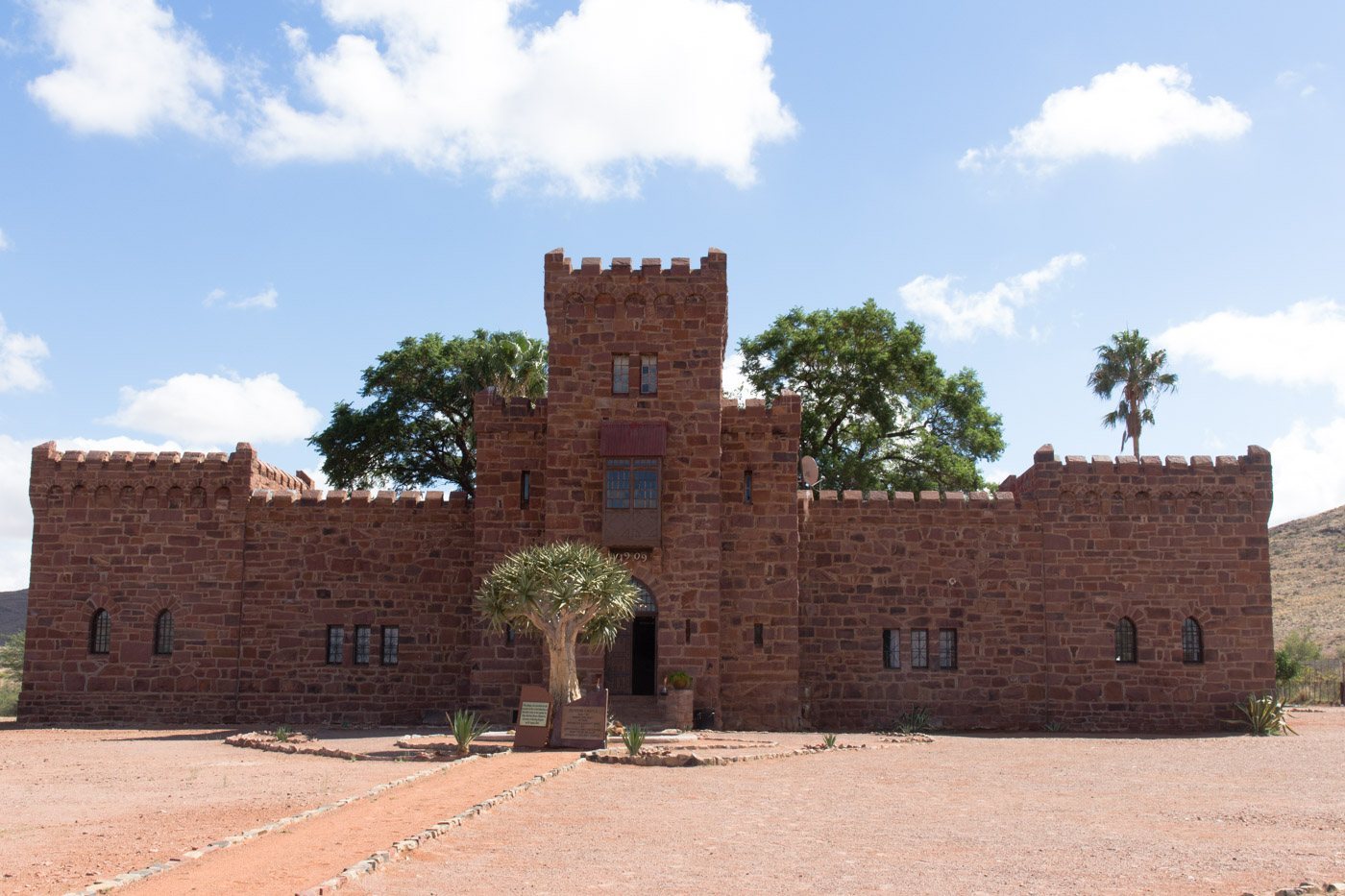
Duwisib Castle is a residence in the hills of Namibia’s southern Namib, about 72 km southwest of Maltahöhe. Built for Hans Heinrich von Wolf, construction began in 1908 and the castle was inaugurated in mid-1909. Its design combined Gothic features and a pseudo-medieval appearance with neo-Romantic architecture, a style drawing on historical forms, often medieval.
The estate and castle
Von Wolf was a Saxon artillery officer serving in German South-West Africa, Germany’s colony in what is now Namibia. After the German-Nama War, a conflict between German colonial forces and the Nama people, he returned to Germany and married Jayta Humphreys in 1907. Humphreys was an American citizen and the stepdaughter of a United States consul. The couple settled in the colony and bought eight farms near Maltahöhe, together covering 20,000 hectares. They added a further 35,000 hectares in 1910.
The Von Wolfs developed the property as a breeding farm for English and Australian thoroughbred horses. They also brought Hereford bulls and sheep from the Cape, with the sheep kept for wool production. Local residents called them Baron and Baroness because of their way of life, although neither held a noble title. During construction, they lived in a hut with their coachman and a Herero servant.
War and departure
In 1914, the First World War disrupted the couple’s journey to Europe, and their ship was diverted to Rio de Janeiro. They later continued to Europe. A tale that von Wolf travelled in disguise as a woman is a legend. He rejoined the German army and was killed at the Battle of the Somme, a major First World War battle in France, in 1916, two weeks after enlisting. Humphreys did not return to Namibia or claim the castle.
Later ownership and national status
After the Von Wolfs left, a friend took charge of the farm’s administration. The business went bankrupt shortly after the war, after wartime raids for which the South African government did not compensate it. In 1920, a Swedish family bought the property for £7,500. When its original owner died, his son assumed control, but was later killed in the Second World War while serving in the South African Air Force. The castle subsequently passed to a private company for £25,000, and the remaining land was divided and sold.
The government acquired the castle in 1979 and designated it a national site. Namibia retained that status after independence in 1990. Free-ranging Namib Desert Horse herds have been linked to horses from von Wolf’s breeding stock, but their descent from those animals remains uncertain.
Remains
The castle stands among the hills of the semi-arid southern Namib. Its three-storey structure combines a main residence with a western wing that served the farm’s administrative and other employees.
Building and construction
Rooms and courtyard
The building contains 22 rooms and has a stated floor area of 900 square metres. Seven farm and administrative employees were housed in the western wing. Palm trees planted during construction grow in the courtyard. The property is used as a museum and for accommodation, and a bedroom was refurbished for overnight stays in 2014.
Materials and workmanship
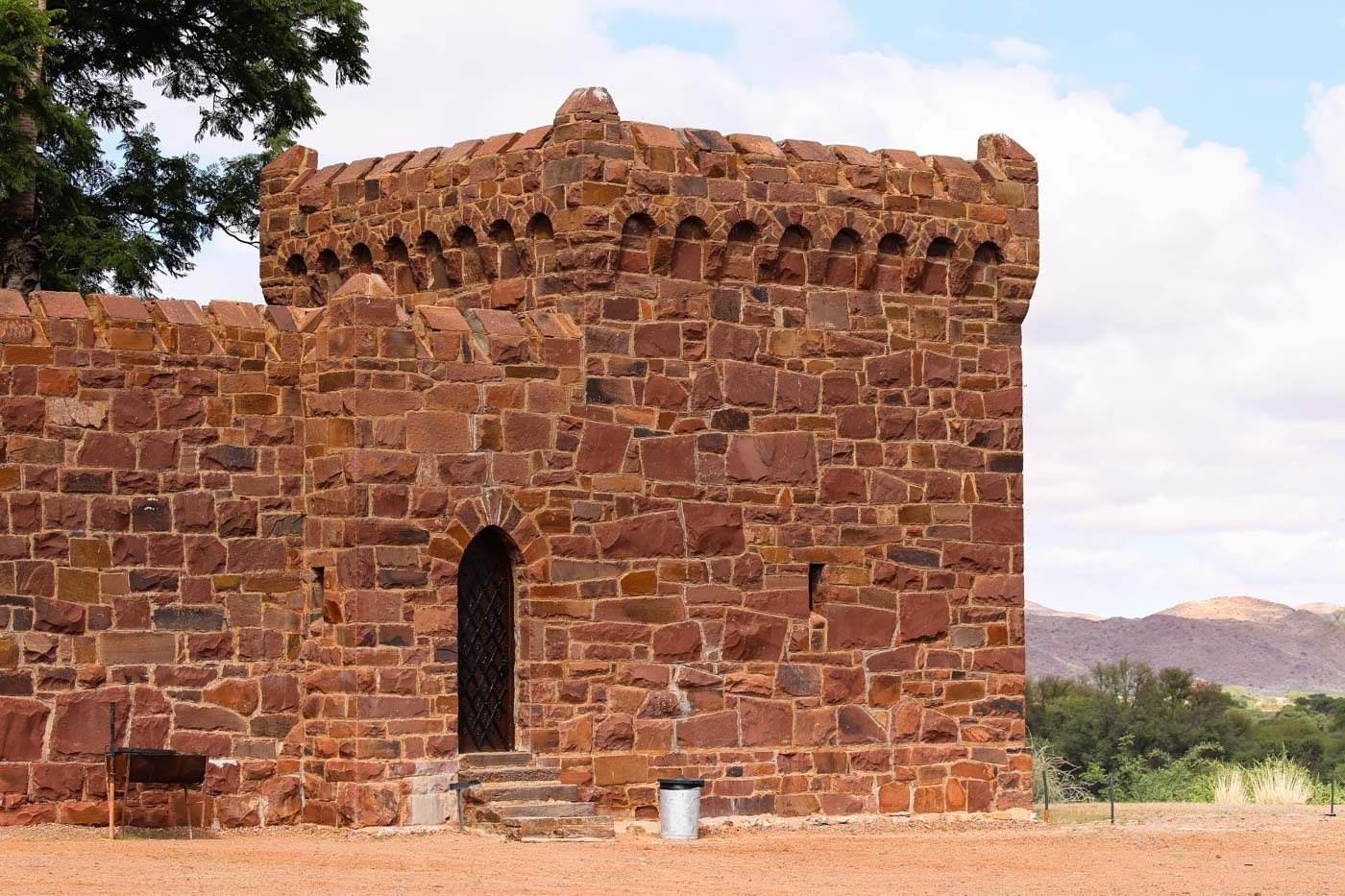
Red sandstone quarried from a hill behind the castle forms its principal building material. Iron, timber, cement, lamps and other supplies were imported from Germany, shipped through Lüderitz, then hauled about 300 km inland by wagons drawn by 24 oxen. Herero workers carried out most of the construction. Italian artisans worked on the brickwork, while European workers, including Swedes, undertook the carpentry.
Wilhelm Sander was commissioned to design the building. Its intended models included the Windhoek castles of Schwerinsburg, Sanderburg and Heinitzburg, as well as the Tintenpalast, now Namibia’s national legislative building. The castle was extensively refurbished in 1991 and renovated again in 2014.