City Palace (Treuchtlingen): A Renaissance Castle and Administrative Residence


Site at a Glance
- Rating
- 4.5
- Popularity
- Low
- Country
- Germany
- Primary era
- Early Modern
- External website
- Open
- Eras represented
- Early Modern, Modern
- Civilizations
- German, Holy Roman Empire
- Site type
- Domestic
- Remains
- Castle
On this page10 sections
History
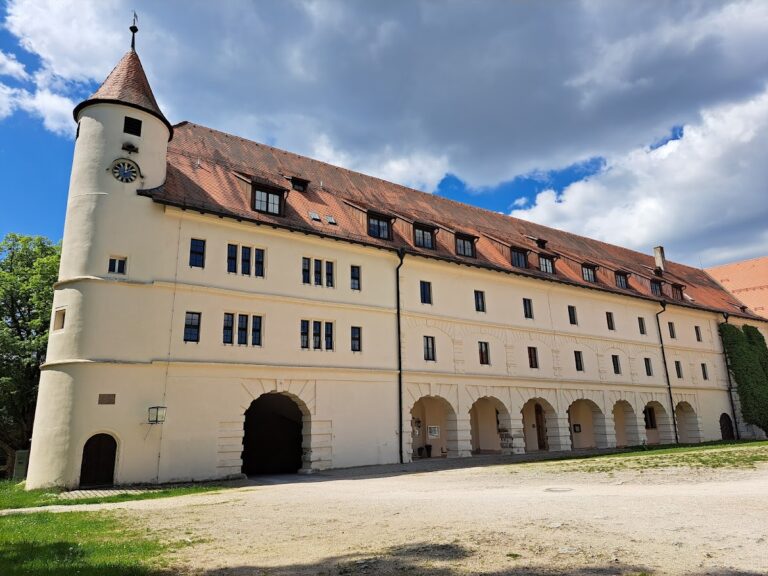
City Palace (Treuchtlingen) is a former castle in Germany, historically known as the Lower Fortress because an Upper Fortress stood higher above it. The complex probably developed from a tower-mound castle and was remodeled in 1575 as part of its Renaissance development, a period that revived classical forms and favored ordered courtyard plans and elaborate decoration.
The Pappenheim Castle
Georg zu Pappenheim purchased the castle in 1447. Veit zu Pappenheim later remodeled it in 1575, creating the basis of the Renaissance four-wing complex that survives in altered form.
Gottfried Heinrich zu Pappenheim was born here on 29 May 1594. He became a German cavalry commander during the Thirty Years’ War, the European conflict fought from 1618 to 1648 amid religious, dynastic, and political struggles. Friedrich Schiller’s phrase “That is how I recognize my Pappenheimers” in Wallenstein’s Death refers to him.
From Princely Property to Industrial Headquarters
In 1647, Albrecht II of the Principality of Ansbach, also numbered Albrecht V in another reckoning, acquired the castle for his son Albrecht Ernst. Karl Alexander of Brandenburg-Ansbach sold the building in 1791 to Frederick William III of Prussia, after which it became the seat of a Prussian administrative office.
Johann Caspar Aurnhammer bought the structurally endangered castle at auction in 1798 from the Royal Prussian-Brandenburg Domain Chamber in Ansbach. The building then served as the headquarters of the Aurnhammer family’s passementerie and silk-manufacturing enterprise until 1926. Passementerie is the production of decorative textile trimmings such as braids, cords, fringes, and ornamental borders.
Later Alterations and Public Use
The interior was altered in 1885. In 1979, the Aurnhammer family sold part of the castle to the town of Treuchtlingen and another part to Schäff Brewery. Since 1983–84, the complex has housed the spa and tourist information office, at times called a “House of the Guest,” together with information centers for the Altmühltal and Ries Geopark. The Aurnhammer Collection and a passementerie museum are also housed in the castle. The building is protected as a listed monument in the Bavarian monument register.
Remains
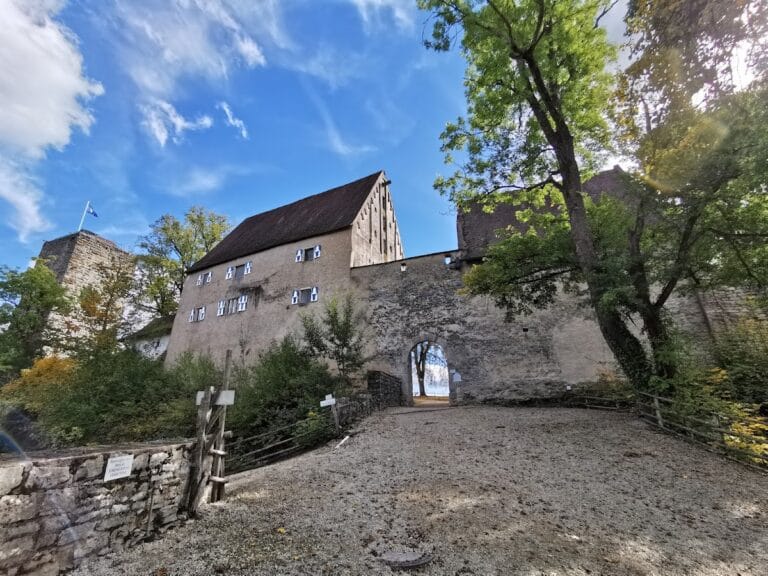
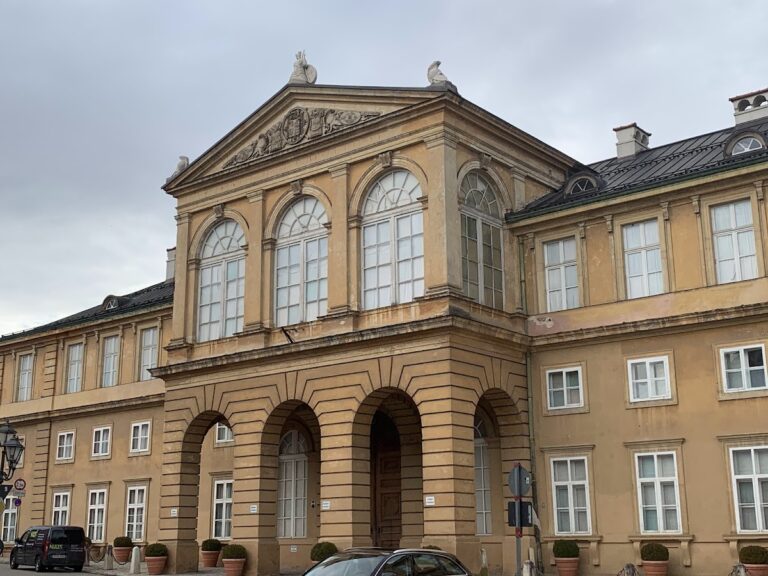
The former moated castle is a Renaissance four-wing complex arranged around an inner courtyard and set within a garden. A moated castle is a fortified residence historically surrounded or partly protected by a moat. The entrance is formed by a portal, while retaining walls, bastion towers, and parts of the fortification wall preserve elements of the earlier defensive enclosure. A bastion tower is a projecting defensive tower intended to strengthen a fortification.
Castle Wings
East Wing
The east wing rises four storeys beneath a gabled roof and includes a bay tower. A separate description identifies a three-storey wing built in 1852, although its exact wing designation is uncertain.
North Wing
The north wing has three storeys and a shallow hipped roof. Its ground-floor core dates from the sixteenth century, while the upper floors were added in 1842. The facade was simplified in 1935.
South Wing
The south wing was rebuilt in 1872, forming part of the later development of the courtyard complex.
Interior and Commemorative Features
Historic interiors include valuable stucco work, Renaissance ceilings, and several tiled stoves. These features preserve elements of the building’s decorative and domestic character alongside its later structural changes.
A statue of Gottfried Heinrich von Pappenheim stands in the former castle moat. The castle also preserves the Pappenheim Cross, a protected stone cross dated 1620. It was probably erected by Pappenheim either in thanks for recovering from illness or to mark the granting of his regiment and his promotion to colonel. The original cross is kept in the castle, while a cast stands in Treuchtlingen’s municipal park.
Nearby sites