Church of the Nativity of the Most Holy Theotokos in Jarabina: A Greek Catholic Parish Church
Site at a Glance
- Popularity
- Very Low
- Country
- Slovakia
- Primary era
- Modern
- Eras represented
- Modern
- Civilizations
- Austria-Hungary, Habsburg, Hungarian
- Site type
- Religious
- Remains
- Church
On this page8 sections
History
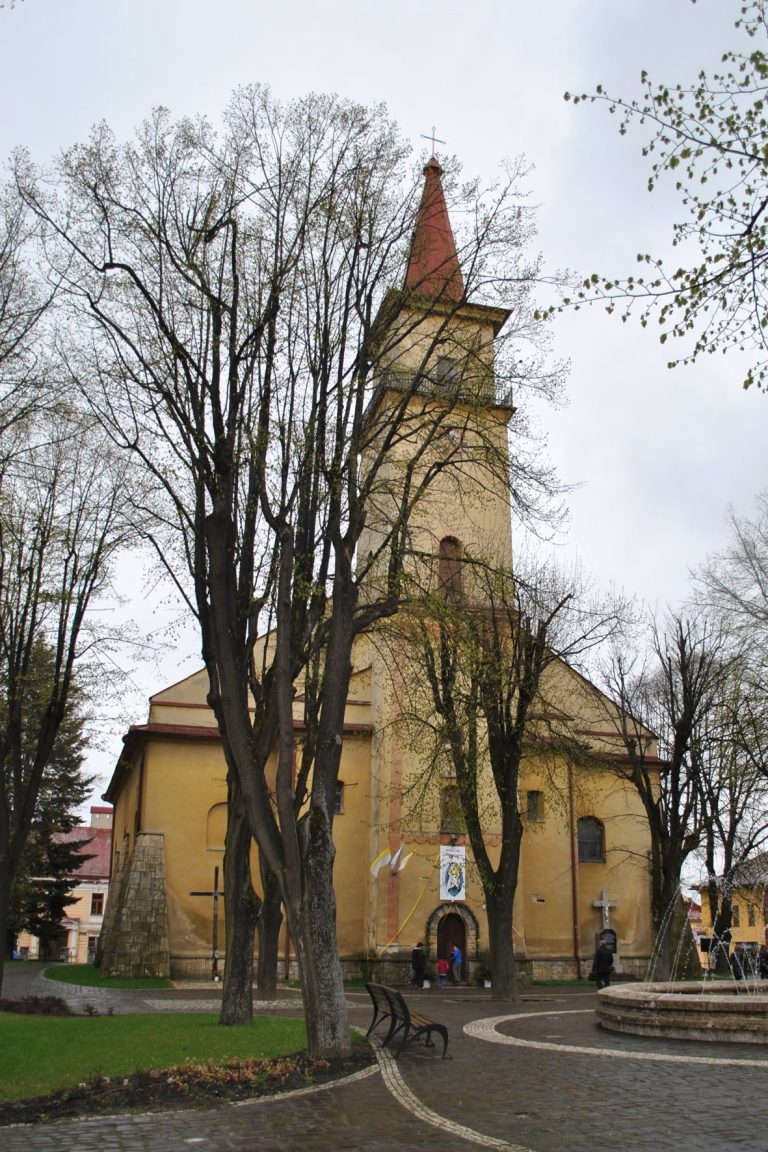
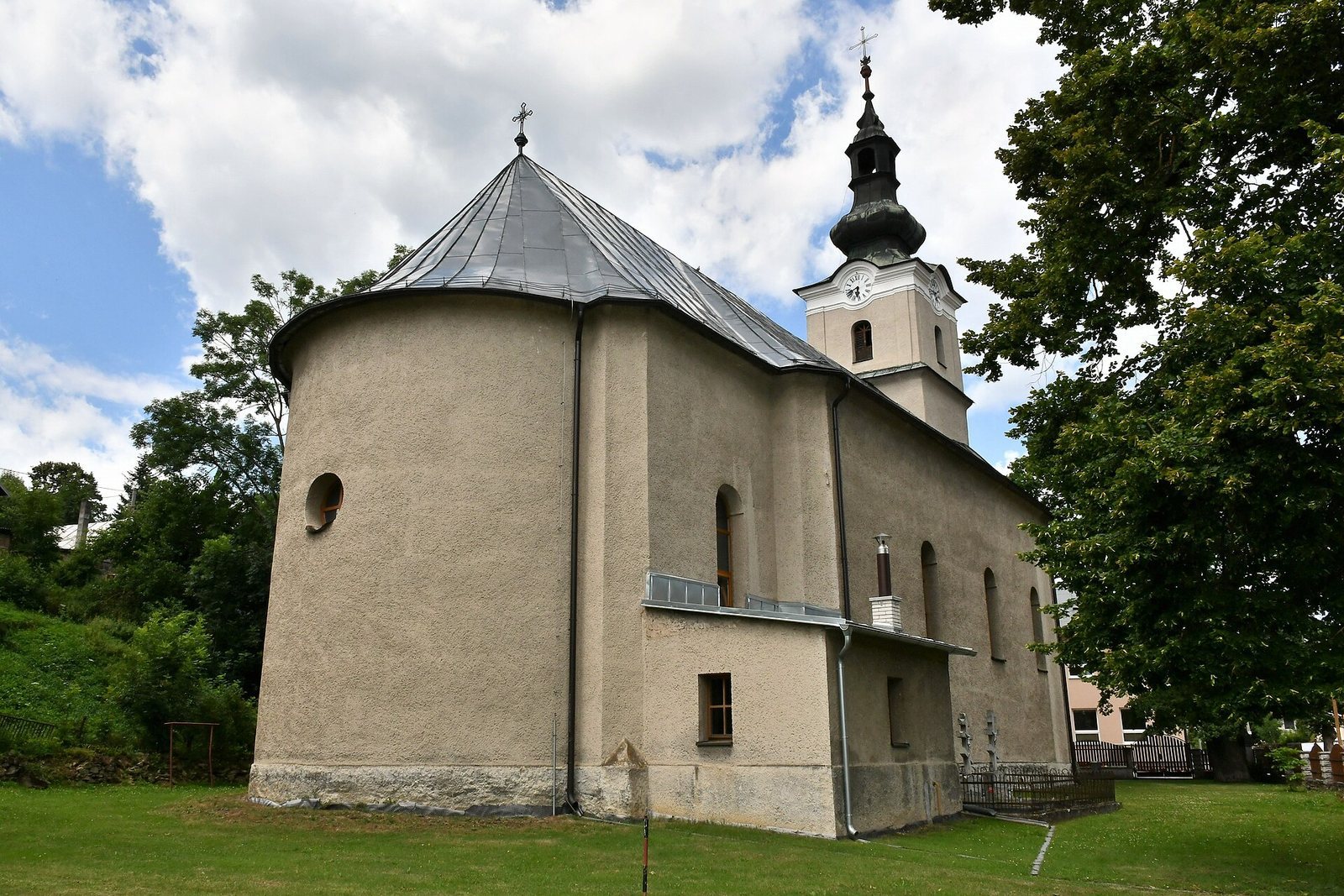
The Church of the Nativity of the Most Holy Theotokos in Jarabina, Slovakia, is a Baroque Greek Catholic parish church. Baroque is a European architectural and artistic style associated with elaborate forms and ornament. The church’s dedication celebrates the birth of Mary, the mother of Jesus, whom Christians call the Theotokos. Construction began in 1803 under Francis II, Holy Roman Emperor, known as Francis I in his Austrian imperial title. Italian master masons completed the church in 1809, the year it was consecrated. The parish belongs to the Prešov Archeparchy, an Eastern Catholic archdiocese, and the Stará Ľubovňa protopresbyterate, a parish grouping comparable to a deanery.
Ownership and recognition
After the Prešov Sobor, a 1950 assembly associated with the suppression of the Greek Catholic Church in Czechoslovakia, the church passed into Orthodox Church hands. In 1963, it was designated a National Cultural Monument of the Slovak Republic.
The church returned to Greek Catholic ownership in 1995, after the Velvet Revolution.
Remains
Church and surrounding features
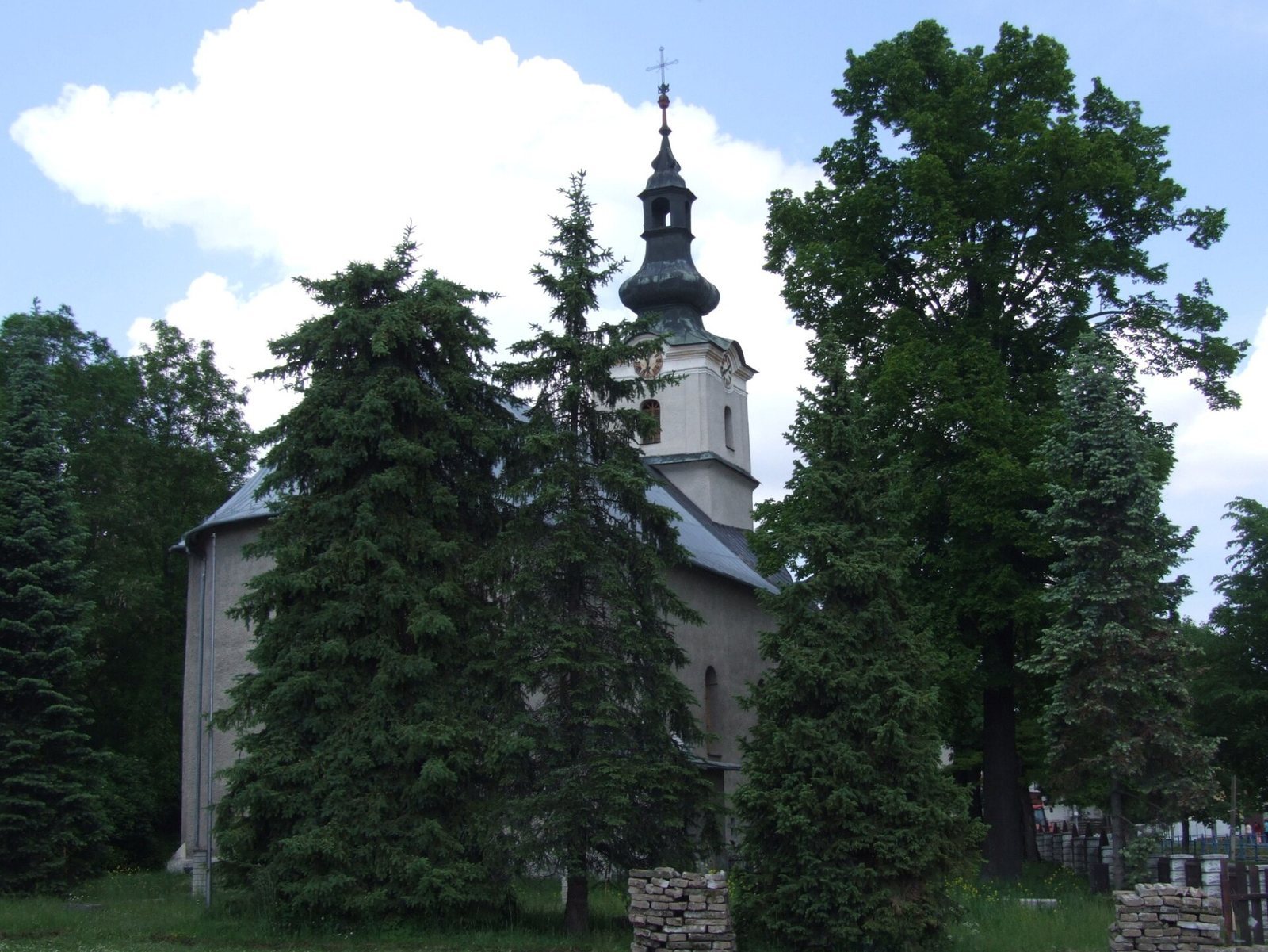
The Baroque church stands on the site of an earlier wooden church. Its surviving features include changes to the building, interior furnishings and bells, while planted oak trees grow around it.
Church fabric
Alterations in 1894 added a sacristy. The roof received a sheet-metal covering, the floor was tiled, interior painting was added, and a clock was installed on the tower.
Interior furnishings
The church’s furnishings include an altar, four candlesticks and an iconostasis, a screen bearing religious icons.
Bells
Two bells were acquired in 1905, and the larger was named Nikolaj. The church later had four bells; in 1917, three were used to make cannons.
Oak trees
The oak trees planted around the church are approximately 200 years old.