Chogha Golan: An Aceramic Neolithic Settlement in Iran
Site at a Glance
- Popularity
- Medium
- Country
- Iran
- Primary era
- Stone Age
- Eras represented
- Stone Age
- Civilizations
- Unclassified
- Site type
- Settlement
- Remains
- Village
On this page5 sections
History
Chogha Golan is an early settlement in the foothills of the Zagros Mountains in Iran, occupied from about 12,000 to 9,600 years ago during the aceramic Neolithic, the phase before pottery came into use. It is among the earliest known settlements of this period in Iran, and its history offers evidence for the gradual development of plant cultivation.
Its inhabitants relied mainly on wild plants and hunting. Over roughly 2,000 years, people at the settlement shifted from gathering and managing wild species toward cultivating plants and using domesticated crops. This was a gradual process rather than a sudden change.
Dam workers found the site in the early 1990s, and archaeologist Ali-Mohammad Khalilian later brought it to the attention of the archaeological community. Teams from the University of Tübingen and the Iranian Center for Archaeological Research investigated Chogha Golan in 2009 and 2010, conducting excavations and dating work under the direction of Nicholas Conard and Mohsen Zeidi. An Iranian team led by Hojjat Darabi later resumed excavations. Iran has registered the site as a national monument.
Remains
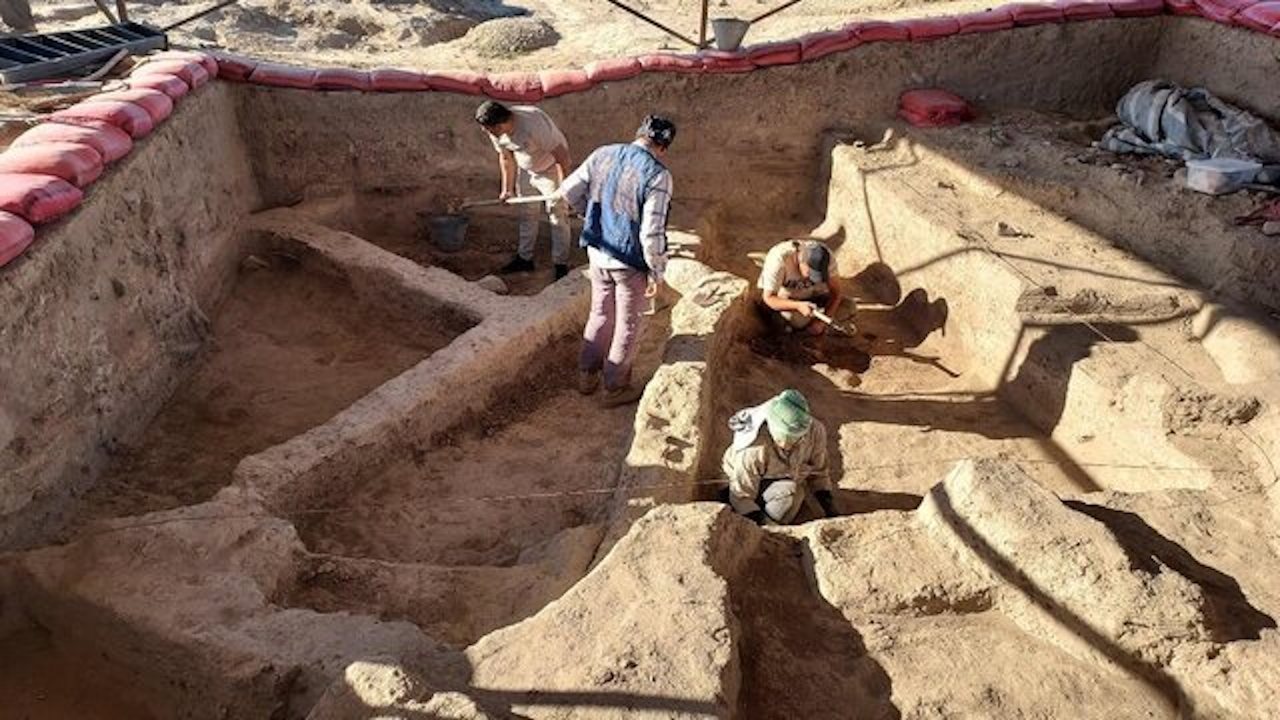
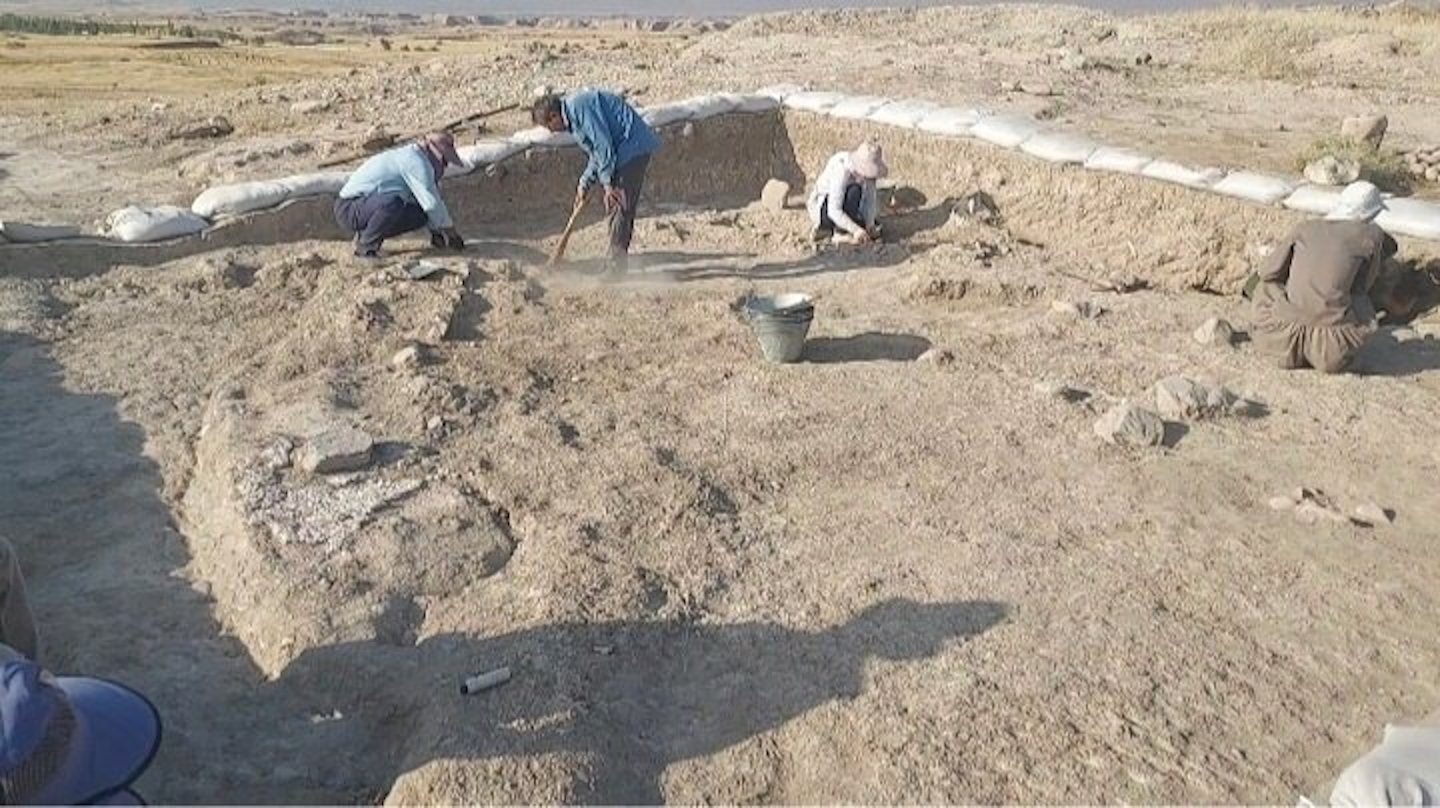
The settlement covers about 2 hectares on the semi-arid Amirabad Plain, at an elevation of approximately 485 metres. It lies around 30 kilometres north of Mehran, about 200 metres from the right bank of the Konjan Cham River, and near Golan village, roughly 2 kilometres south of Amirabad Dam. Chogha Golan is a tell, a mound formed by successive layers of human occupation. It rises about 7–8 metres and contains approximately 8 metres of cultural deposits, divided by archaeologists into 11 layers called horizons.
Buildings and surfaces
Excavated buildings include rooms set at angles to one another, with walls made of mudbrick and earth. Their floors were plastered; some were painted red, while others were coated with gypsum. The site also provides evidence that people fired gypsum at an early date.
Plant remains
More than 100,000 charred plant remains, representing 110 species, have been analyzed. The assemblage includes grasses and legumes, among them wild barley and wheat, domesticated emmer wheat, lentils, peas, chickpeas, beans, and plants used as fodder. Wild barley occurs throughout the sequence, beginning in Horizon XI, and was the main cereal before emmer appeared. Emmer, an early form of domesticated wheat, first occurs in Horizon II and is also present in Horizon I; after its introduction, it became the dominant cereal. The abundant seeds and chaff make this plant assemblage dense in comparison with those from contemporary sites and some later Bronze Age settlements.
Animal remains
Ten clay figurines depict animals. The animal bones are chiefly from sheep and goats, alongside gazelle, red deer, pigs, cattle, and fish. Tortoise, hedgehog, red fox, and Eurasian lynx are also represented.