Chiquihuitillos: A Rock-Art Site in Nuevo León
Site at a Glance
- Rating
- 4.1
- Popularity
- Very Low
- Country
- Mexico
- Primary era
- Bronze Age
- Eras represented
- Bronze Age
- Civilizations
- Unclassified
- Site type
- Civic
- Remains
- Rock Art
On this page8 sections
History
Indigenous use and early chronology
Chiquihuitillos is an archaeological rock-art site in Mina, Nuevo León, Mexico. Set in a desert region between Mina, Villaldama, and Bustamante, it was visited or inhabited by Indigenous Alzapa groups who spoke Coahuilteco, one of the Indigenous languages of northeastern Mexico and adjoining areas. The site appears to have served more as a visiting or ceremonial place than as a permanent settlement. Its possible ceremonial use, and a possible connection with observing the stars, remain interpretations rather than established facts.
The engraved images appear to predate the painted ones and may represent a separate tradition. The paintings resemble the Pecos style, a regional tradition of painted rock art associated with the Rio Grande and Pecos River area, and are approximately 4,000 years old on that basis. Human presence in the wider region extends back about 10,500 years. Nearby sites include Boca de Potrerillos in Mina, dated to about 7,600 years ago, and Cueva Ahumada in García, dated to about 6,000 years ago. Chiquihuitillos may belong to a similarly early period, although the age of its rock art remains uncertain.
Regional tradition and interpretation
Archaeologist and University of Monterrey professor William Breen Murray regarded Chiquihuitillos as one of the most important concentrations of rock art in the region. The quantity of its paintings, together with similarities to nearby sites, places it within a wider northeastern Mexican tradition. Research by Solveig A. Turpin identified related sites in northern Coahuila and supported the interpretation that the Chiquihuitillos style spread southward on the Mexican side of the border.
Similarities between this style and rock art in Nuevo León have been associated with shamanistic practices, meaning rituals involving specialists seeking contact with supernatural or altered states of experience, and with the use of peyote, a psychoactive cactus used in some Indigenous ritual traditions. These connections are interpretive. The paintings and engravings nevertheless contribute important evidence for understanding hunter-gatherer life and the use of simple technologies to engage with the natural environment. The site is administered by Mexico’s National Institute of Anthropology and History and has helped reshape interpretations of the prehistory of northeastern Mexico, a region long under-researched because Indigenous remains in its northern deserts were often treated as insignificant.
Remains
Rock-art landscape
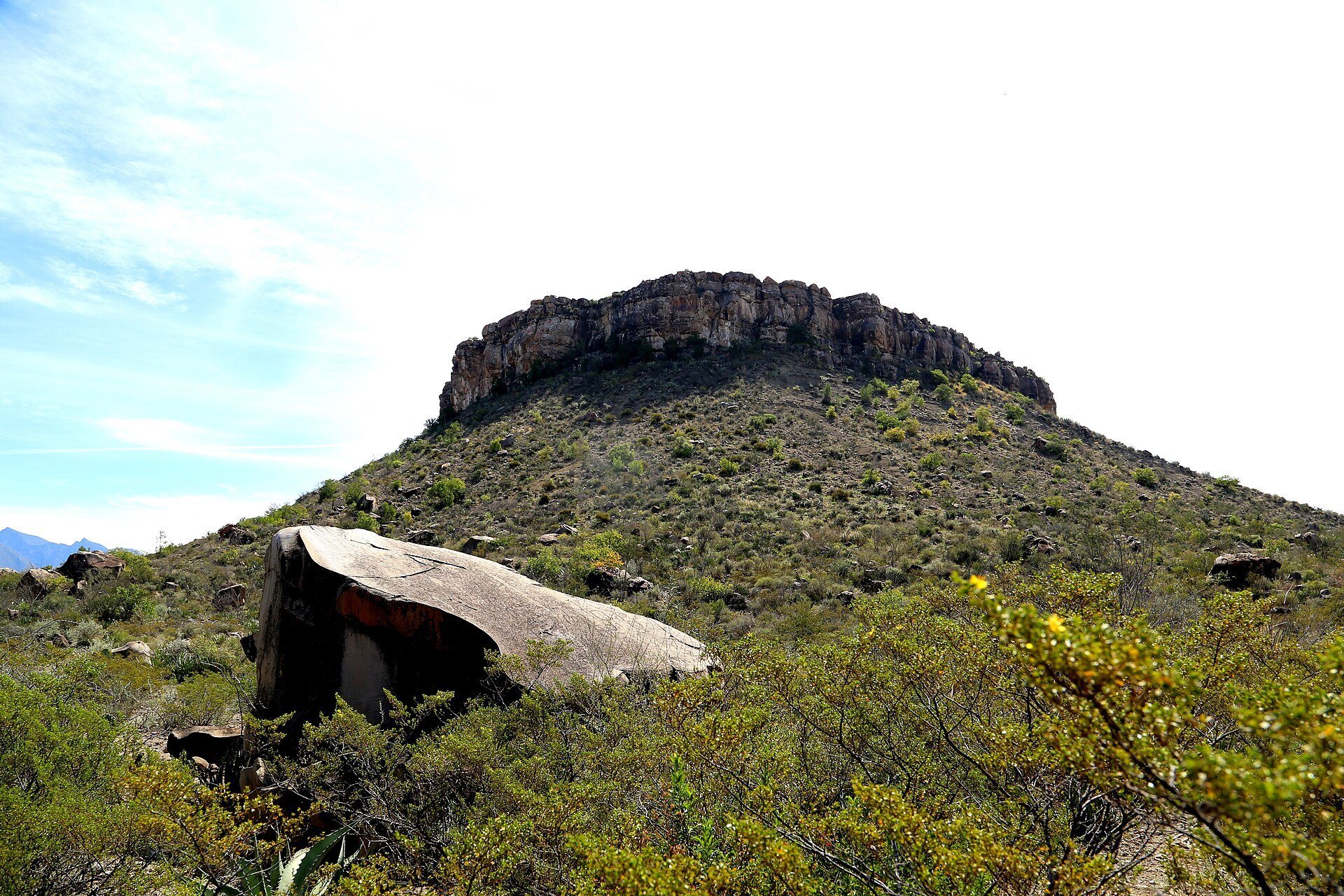
Chiquihuitillos occupies a landscape of hills, ravines, cliffs, rock shelters, and a plateau rather than one dominated by monumental buildings. Extensive painted and engraved imagery is distributed across exposed rock surfaces. The main painting zone covers a broad area, while thousands of engraved rocks extend across the lower part of a hill. Further petroglyphs occur at both the base and summit of the plateau.
Painted rock surfaces
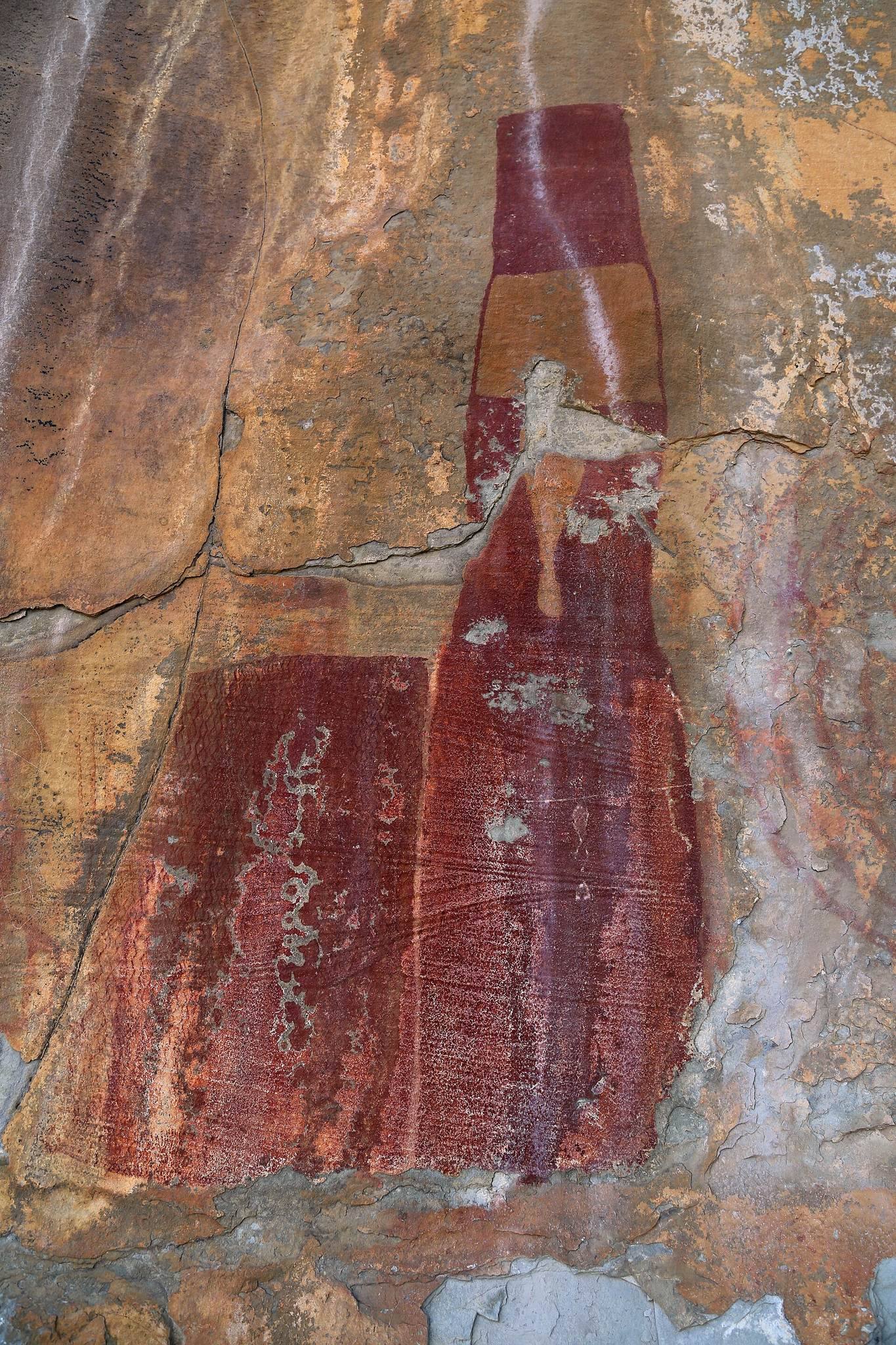
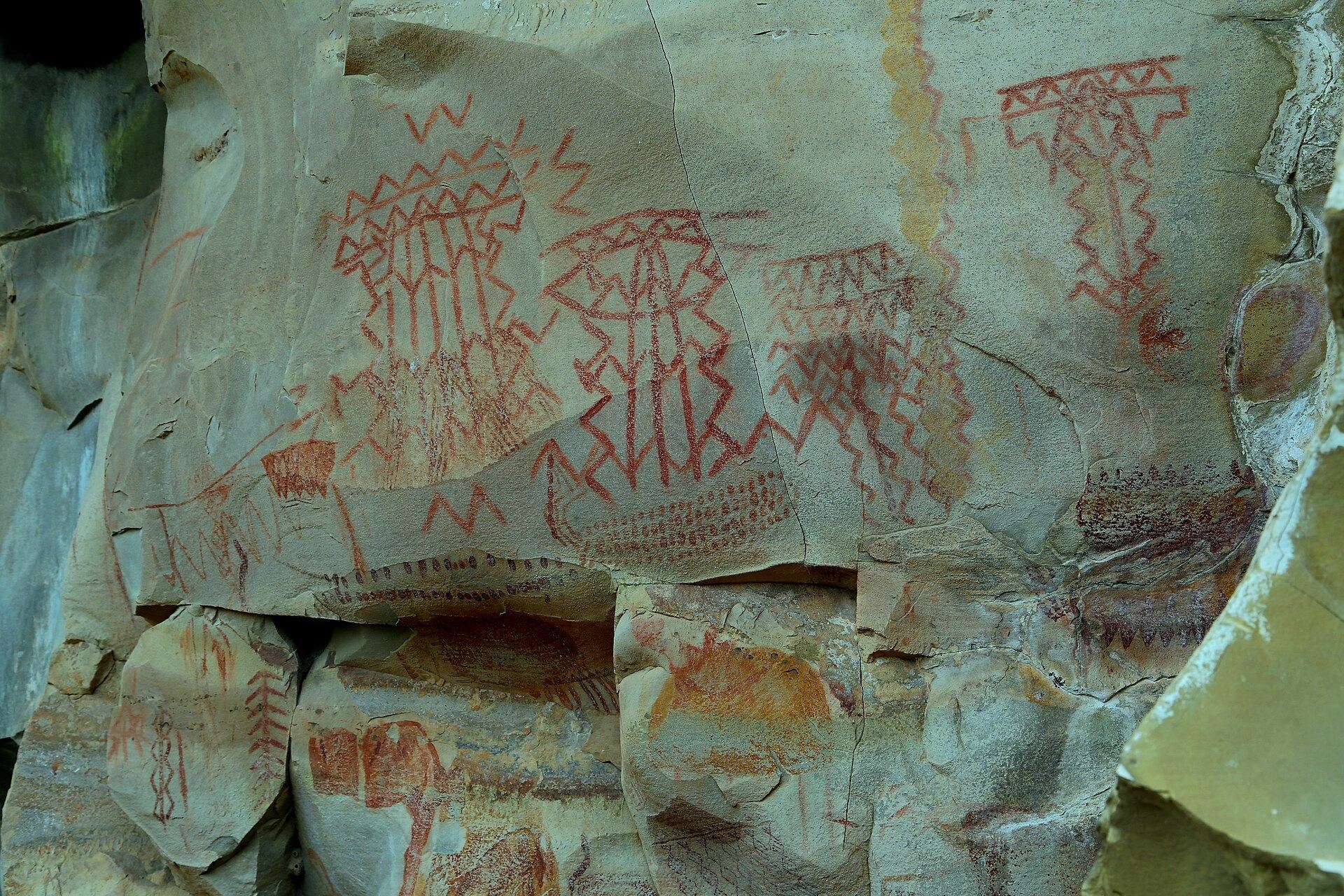
The paintings were created by applying natural pigments directly to the rock. They are polychrome, using red, white, black, orange, and yellow. Some may represent astronomical motifs, although the paintings are not interpreted exclusively in astronomical terms. Their resemblance to the Pecos style links them with a painted-rock tradition associated with the Rio Grande and Pecos River region.
Engraved rocks
The petroglyphs were made by pecking and scraping the native rock, removing or abrading parts of its surface. They include representational figures, abstract symbols, and simple marks. Their visible difference from the paintings suggests that the two forms may have been produced by separate traditions, although recurring patterns connect them within the broader rock-art culture of northeastern Mexico.
Distribution of the Chiquihuitillos style
The style named after the site extends approximately 60 kilometers northward through Villaldama, Bustamante, and Lampazos, reaching as far as Candela in Coahuila. Its southwestern distribution includes Mina, García, and part of Ramos Arizpe Municipality. This spread places Chiquihuitillos within a regional network of related rock-art locations rather than as an isolated group of images.